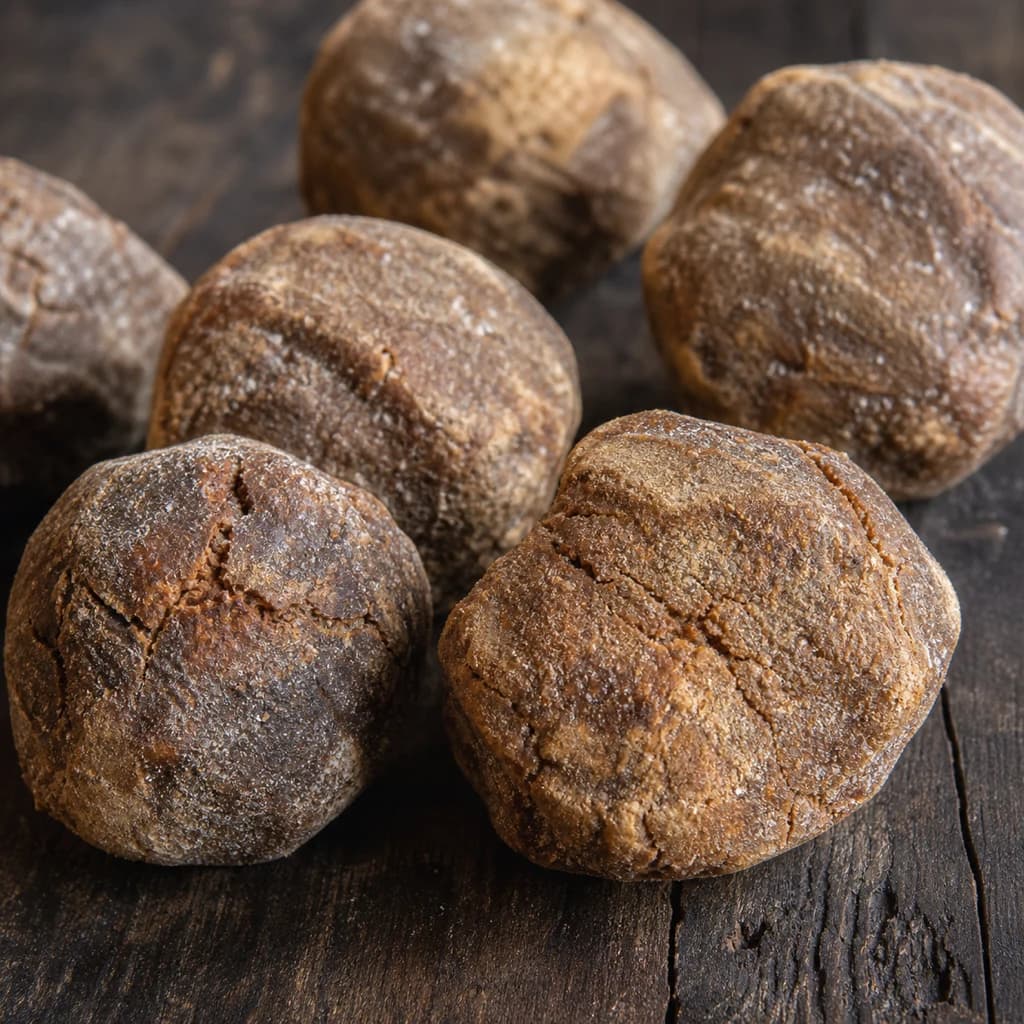
Natural form
Hard jameed balls in their dried, salted form — dark brown, rough-surfaced, and dense.
Shows the preserved product exactly as purchased or stored, letting readers recognize jameed on sight before any preparation begins.
Dairy & Eggs
Jameed (Dried Yogurt)
Hard, dried salted yogurt balls reconstituted into the tangy sauce for Jordanian mansaf.
Jameed is dried, salted, fermented yogurt traditionally made from sheep's or goat's milk and shaped into hard balls or sold as a paste. It is rehydrated and cooked into a tangy, creamy sauce that defines mansaf, the national dish of Jordan. Its sharp, salty, sour flavor comes from the long fermentation and drying that preserve it for months.
Jameed is a preserved dairy product made by straining yogurt, heavily salting it, and sun-drying the concentrate into hard balls or irregular blocks. The word jameed means "hard" or "dry" in Arabic, a direct reference to its dense, rock-like texture. This ancient preservation technique allowed Levantine communities to capture the nutritional value of dairy before refrigeration—a practical solution to storing yogurt through scorching summers. Reconstituted in warm water, it dissolves into a smooth, pourable sauce with an intensely tangy, salty, and umami-rich flavor that fresh yogurt cannot replicate. The sauce forms the soul of mansaf, Jordan's national celebratory dish, but it also enriches soups, stews, and flatbreads throughout the Levant. Jameed carries centuries of Bedouin culinary logic: concentrated, portable, shelf-stable, and deeply savory. When you work with it, you are working with a living tradition that connects a dish to its geography and history.
- Measured in
- g
- Storage
- Pantry
Allergens
Types & varieties
Made by straining yogurt, salting it, rolling into balls or pressing into blocks, then sun-drying for several days. The most authentic form with the deepest flavor.
Richer, fattier, and more flavorful; traditional in many Palestinian preparations.
Lighter in color and flavor compared to sheep or goat milk versions; more common in commercial production.
Some preparations include dried mint or other herbs mixed into the yogurt before drying, adding a subtle herbal note to the finished sauce.
Produced in larger batches with more consistent quality; often softer and reconstitutes faster than artisan versions.
Common uses
Tips & pitfalls
- Soak jameed in warm (not boiling) water for 30 minutes to several hours—the harder and older the jameed, the longer the soak; very hard jameed may need 2–3 hours or overnight
- Crush or crumble hard jameed before soaking to dramatically speed up reconstitution
- The soaking water becomes your sauce base—strain it through a fine-mesh sieve to remove any undissolved grit
- Start with less jameed than you think necessary; the flavor is highly concentrated and salty—add more gradually to taste
- If the sauce separates or breaks while cooking, remove from heat immediately and whisk vigorously, or add a splash of cold water while whisking
- Traditional jameed has a pungent, sour smell when dry—this is normal and diminishes significantly once reconstituted
- Commercial jameed is often softer than artisan versions and reconstitutes much faster; adjust your soaking time accordingly
- Store in a cool, dry place in a sealed container; jameed absorbs moisture readily and will mold if exposed to humidity
- Quality matters: look for uniform grayish-white color without dark spots; authentic jameed should be so hard you cannot dent it with a fingernail
Nutrition
Energy
397 kJ · per 100 g
Where the calories come from
Protein
4.4g
9% DV
Carbs
19g
7% DV
Fat
0.2g
0% DV
Fiber
0g
0% DV
Sugars
19g
of which
Sodium
58mg
3% DV
Source · USDA FoodData Central · approx. Yogurt, fruit variety, nonfat
View on FDC →In the shops
Matched grocery products
No matched grocery products for Jameed (Dried Yogurt) yet.
Good to know
- Origin
- Jordan & Palestine (Levant region)
- Type
- Preserved dairy product (sun-dried)
- Primary Form
- Hard balls or irregular blocks; grayish-white to yellowish color
- Milk Source
- Traditionally goat, sheep, or cow milk or a blend
- Key Flavor
- Intense tangy, salty, umami-rich; concentrated yogurt taste
- Shelf Life
- Months to years when kept dry; traditionally stored in cloth bags or sealed jars
- Reconstitution Time
- 30 minutes to several hours in warm water depending on hardness and age
Substitutes
- Labneh + Lemon Juice — Mix 1 cup labneh with juice of ½ lemon and a pinch of salt. Provides a tangy dairy base but lacks the concentrated umami intensity of true jameed. Use sparingly.
- Sour Cream + Buttermilk Blend — Combine equal parts sour cream and buttermilk for a similar tangy, thick sauce consistency, though the flavor concentration differs significantly.
- Dried Yogurt Powder — Reconstitute with warm water per package directions. The closest substitute to true jameed but difficult to source outside the Levant.
- Plain Yogurt + Salt + Dried Mint — Fresh yogurt with salt and dried mint approximates the flavor profile but cannot match the intensity or the traditional sauce texture. Use only as a last resort.
Pairs with
Also called
Dried Yogurt · Jameed Balls
Appears in these dishes


Related

Whole Milk
Rich, full-fat milk for drinking, coffee, sauces, and baking
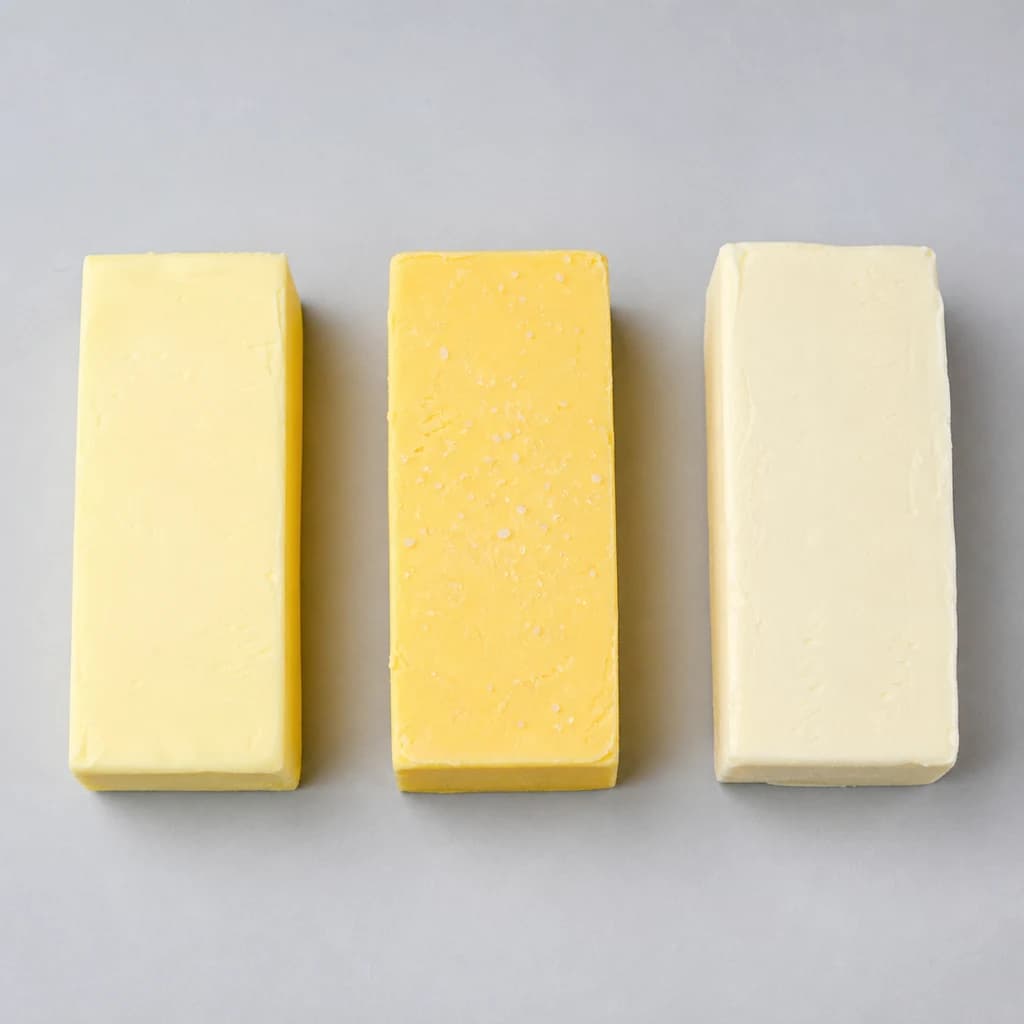
Butter
Golden fat for searing, baking, and finishing a sauce
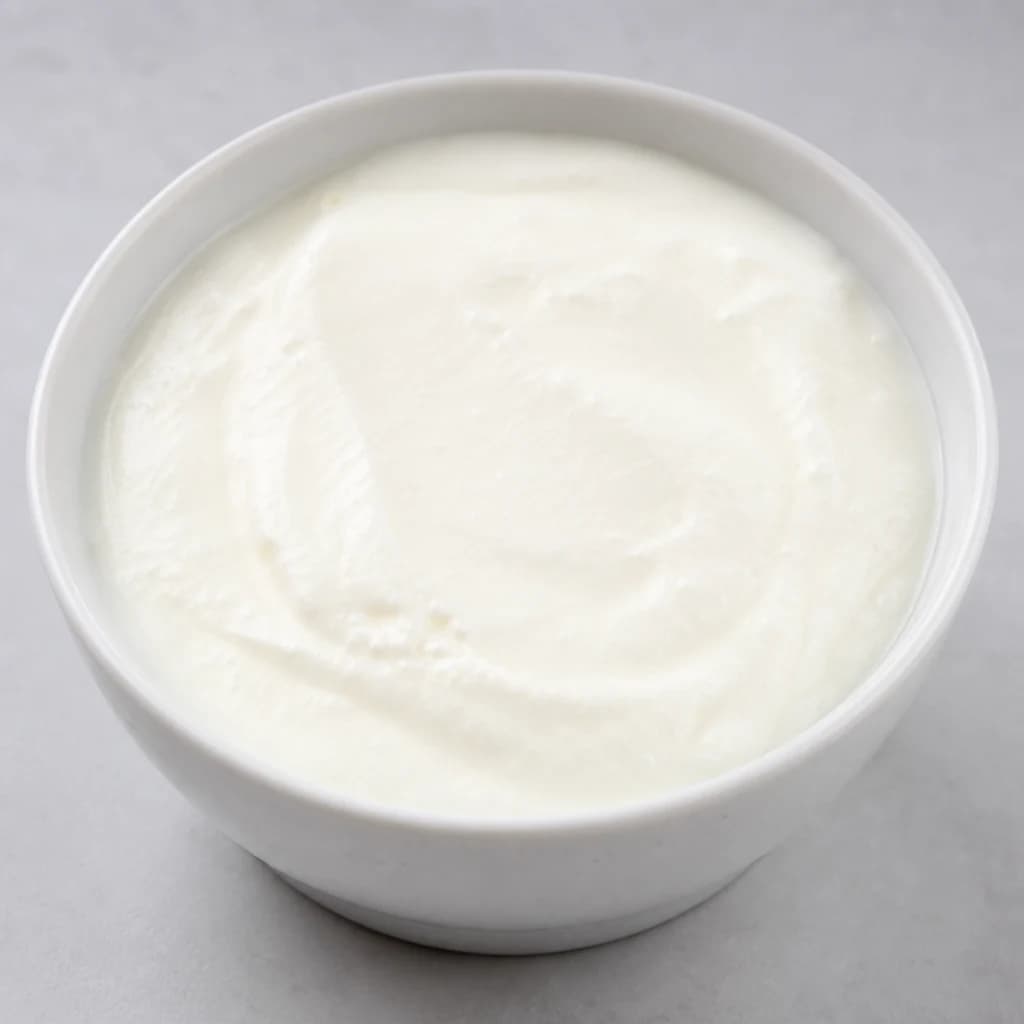
Yogurt
Tangy, creamy culture for breakfast, sauces, and marinades
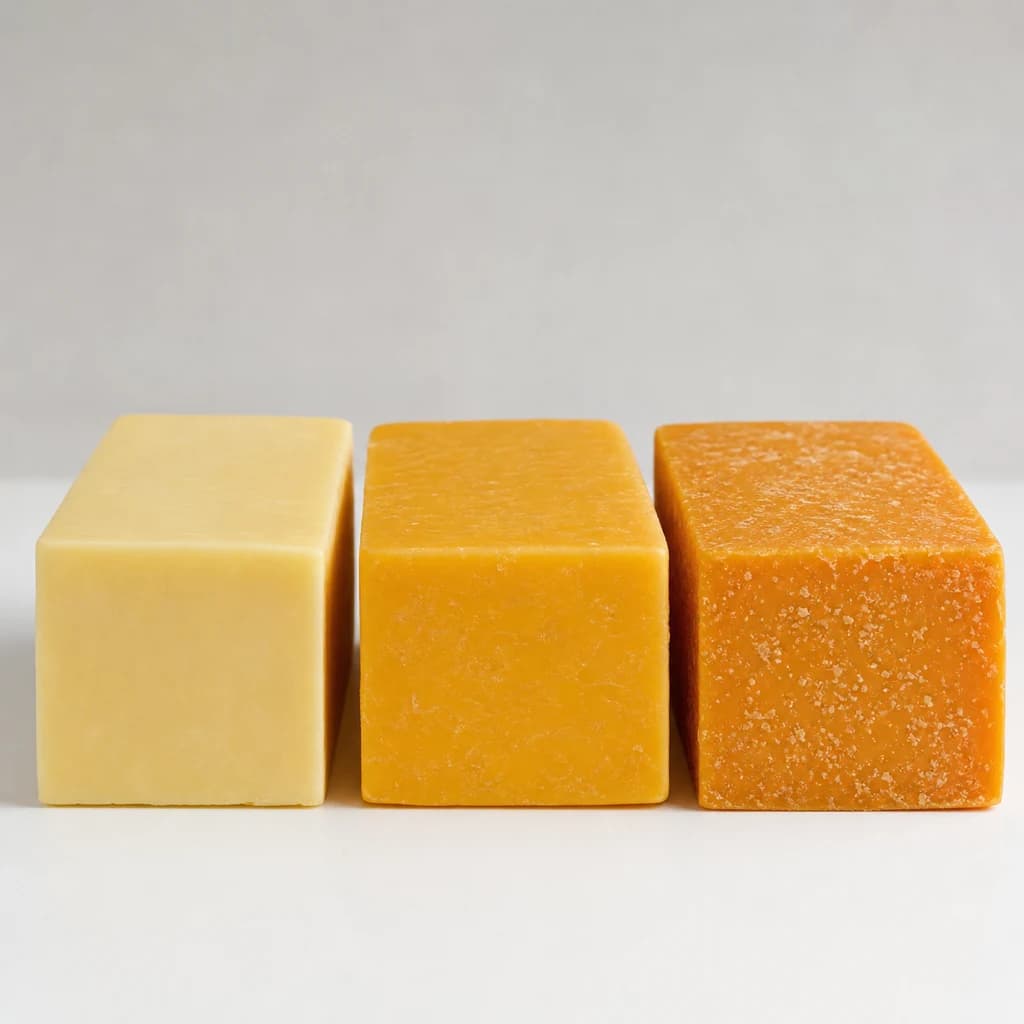
Cheddar Cheese
Sharp, melty cheese for sandwiches, gratins, and grating

Skim Milk
Fat-free milk for lighter drinking, coffee, and cooking
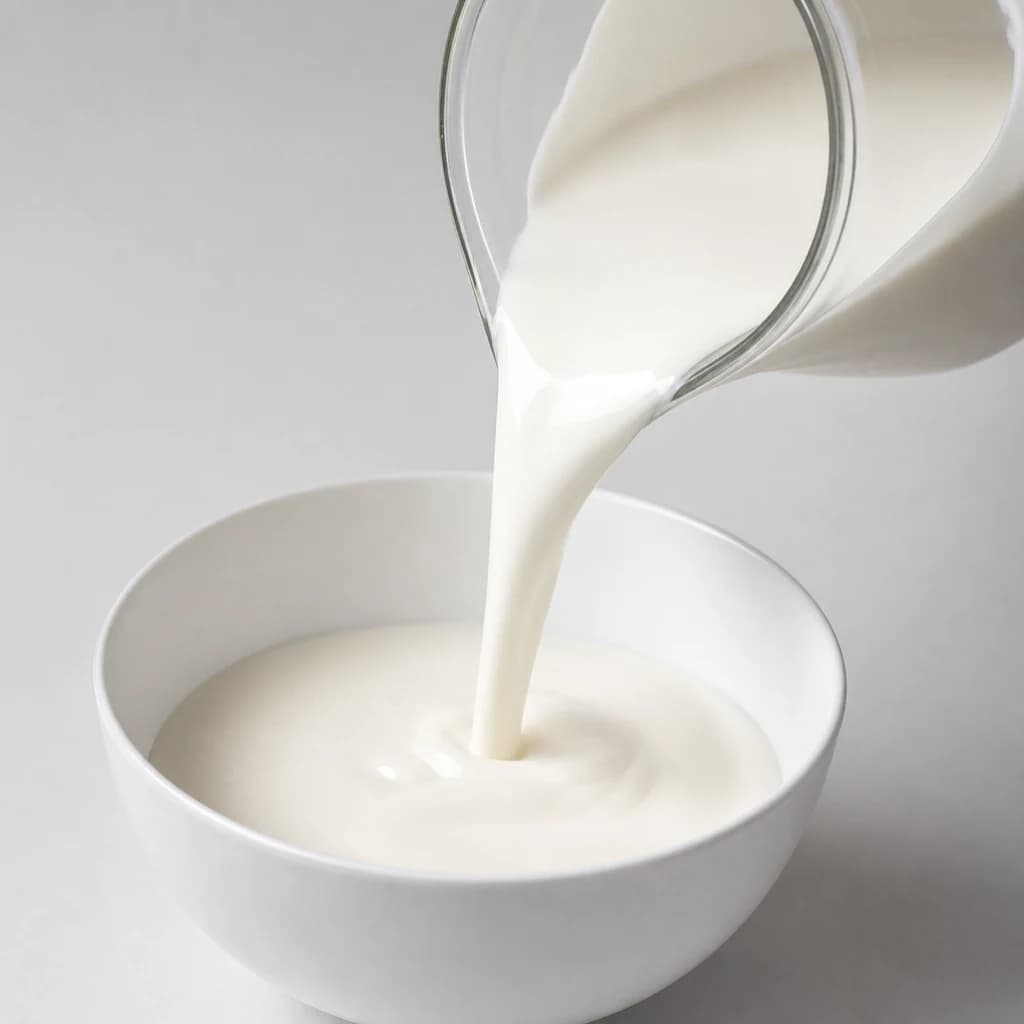
Heavy Cream
Rich cream that whips, enriches sauces, and sets ganache

Sour Cream
Tangy, thick cream for dolloping, baking, and dips
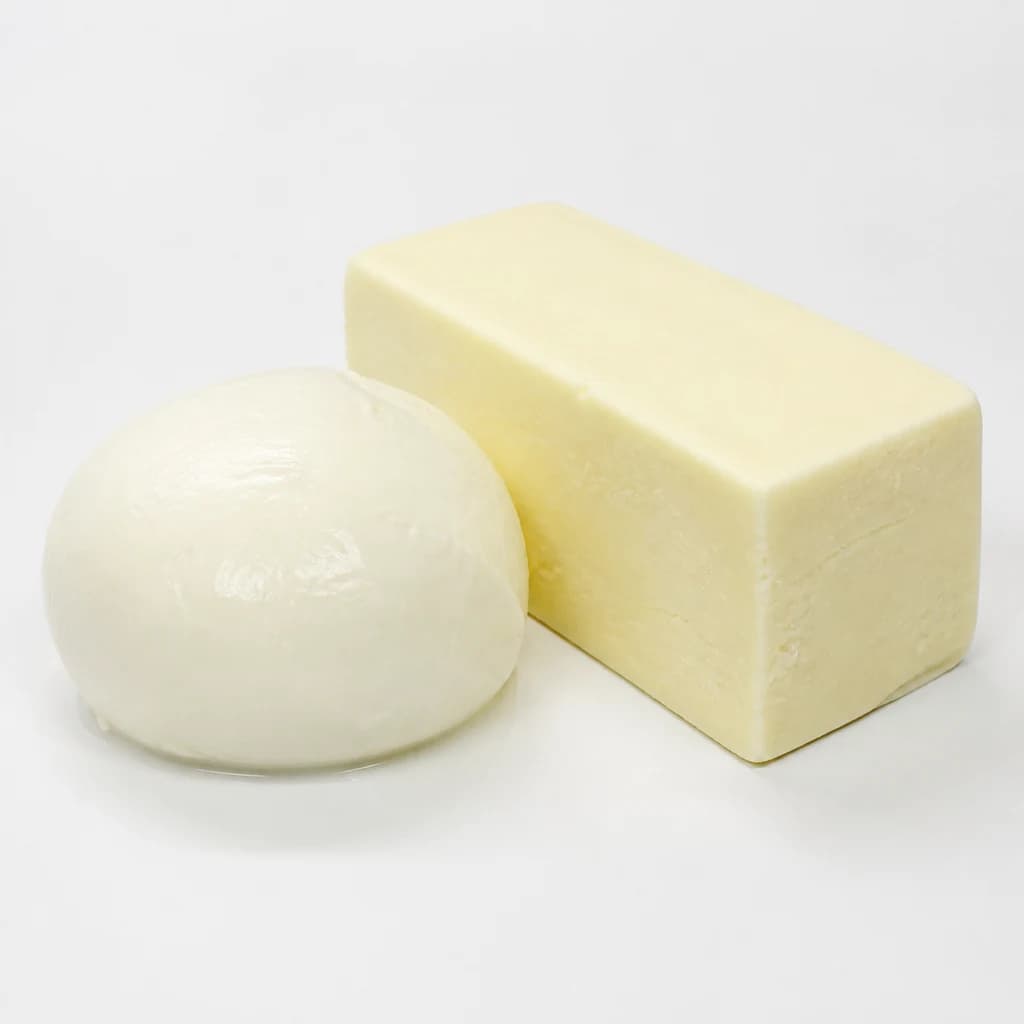
Mozzarella
Soft, milky cheese that melts into stretchy pizza pulls