Proteins
Lamb Offal
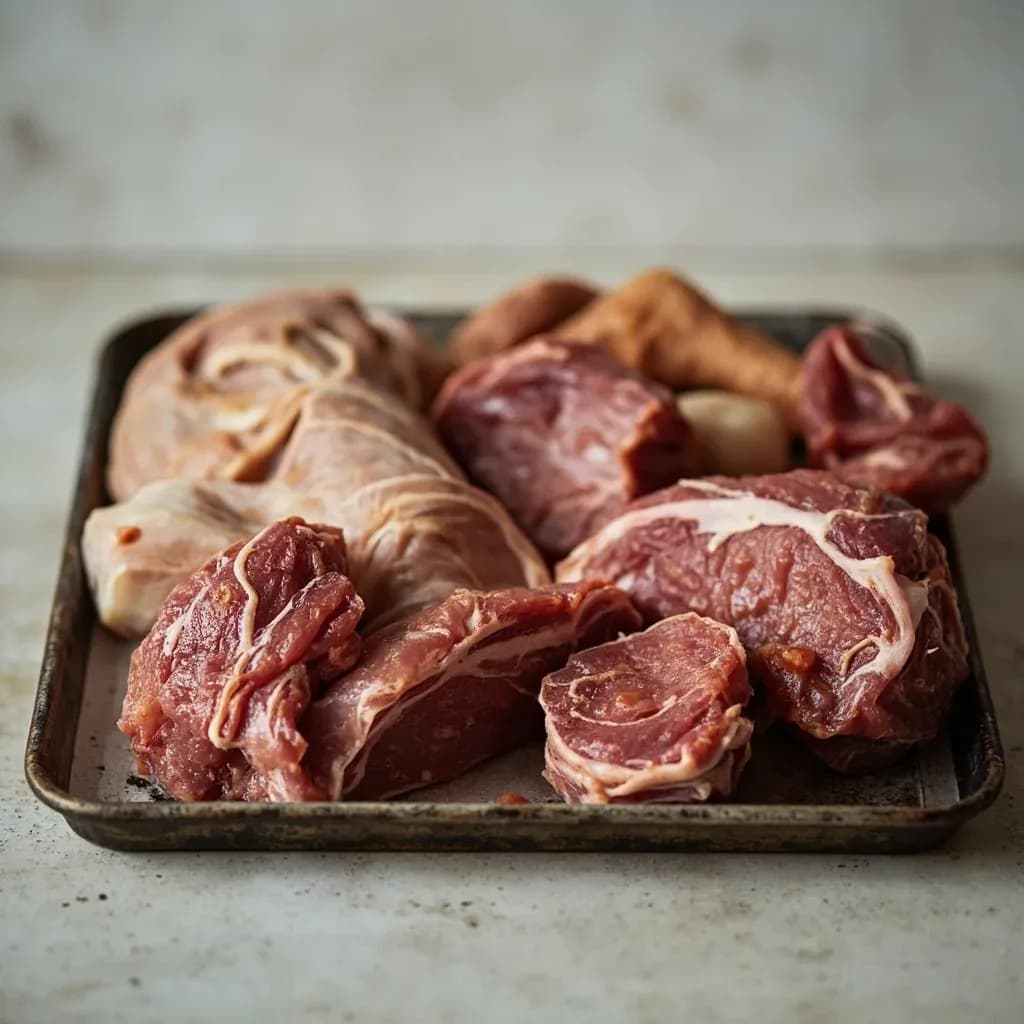
Mixed lamb organs (liver, lung, intestine) used in haggis, fry-ups and spiced stews.
Lamb offal is the assortment of edible organs from a lamb, including liver, lungs, heart, kidneys and intestines. These rich, mineral-tasting parts are central to dishes like Scottish haggis, Greek kokoretsi, and South Asian spiced organ fries. Offal cooks quickly and is often paired with bold aromatics to balance its strong flavor.
Lamb offal—liver, kidneys, heart, sweetbreads, tongue, tripe, intestines, and spleen—represents the most intensely flavored and nutritionally concentrated parts of the animal. These organs were the cook's treasure for millennia, not afterthoughts; traditional cuisines from Scotland to Morocco built entire dishes around them. Each organ behaves differently: delicate items like liver and sweetbreads demand quick, high-heat treatment, while collagen-rich heart and tongue require long, patient braising. The flavor is unapologetically bold—mineral, savory, and deeply rich—while each cut contributes its own character: liver delivers robust intensity, kidneys add a gamey edge, heart is beefy and muscular, and sweetbreads offer creamy, melt-in-mouth luxury. Modern home cooks often overlook offal, but those who learn its language discover extraordinary versatility and value. A single lamb yields only a handful of each organ, making them relatively scarce and worth seeking out from a trusted source.
Organ meats are among the most nutrient-dense foods known. Liver and sweetbreads are particularly concentrated sources of B12, iron, zinc, copper, and vitamin A. Offal represents roughly 10–15% of the carcass weight—two kidneys, one liver, one heart, and one to two tongues per animal. They are highly perishable and must be used within 1–2 days fresh or frozen for up to 3 months if well-wrapped. Peak availability aligns with spring lambing in traditional raising regions, though quality offal is available year-round from commercial slaughter.
- Measured in
- g
- Storage
- Fridge
Types & varieties
Most common; pale pink-beige when raw, brown-gray when cooked; must be sliced thin and cooked quickly over high heat or it becomes chalky
Two per lamb; encased in fat and connective membrane that must be removed; split, core, and soak before cooking; used in grillades, curries, and full breakfasts
Lean, firm, hollow; quarter and sear, or stuff and roast whole; flavor is beefy, texture is muscular—benefits from long braise or quick high-heat sear
Thymus gland (neck and chest area); creamy, melt-in-mouth when properly cooked; must be soaked, pressed, and browned in butter; a premium delicacy
Lean, collagen-rich; requires 2–3 hours braising; peel after cooking; excellent sliced for sandwiches or tacos de lengua
Spongy, iron-rich; traditional in British fry-ups and Scottish recipes; must be soaked and parboiled before further cooking
Rumen stomach; sold cleaned (green tripe) or untreated (blanket tripe); requires long cooking with aromatics; used in hearty stews and soups
Cleaned and processed as natural sausage casings; also used as filling in certain traditional Scottish preparations
Formerly a key ingredient in traditional Scottish haggis; commercial availability is now extremely limited in most markets due to regulatory restrictions
Quality and Sourcing
The single most important factor in cooking offal is freshness. Unlike muscle meat, organ meats have no protective exterior and deteriorate rapidly. Offal from a supermarket shelf days after slaughter will have developed unpleasant flavors and textures that no amount of cooking can rescue. Seek a butcher you trust—ideally one who breaks down whole carcasses on-site—or visit an ethnic market where turnover is high. Fresh liver should be pale pink-beige without any gray or green discoloration. Kidneys should be firm and glossy. Smell is a reliable indicator: fresh offal smells clean and meaty, not sour or ammonia-like. When you find a good source, buy in small quantities and use immediately.
- Freshness is non-negotiable—smell the offal before buying; sour or ammonia notes mean it's past its prime
- Supermarket offal is often days old; butcher shops and ethnic markets typically have faster turnover
- Buy only what you can use within 24-48 hours, or freeze immediately in airtight wrapping
- If your source doesn't stock offal, ask—they can often order it from their supplier
Common uses
Tips & pitfalls
- Source from a butcher you trust—offal must be exceptionally fresh; it goes rancid faster than muscle meat
- Most offal benefits from a 1–2 hour cold water soak with a splash of vinegar or lemon juice to draw out blood and impurities
- Liver: never overcook—it turns dry and chalky; cook in thin slices, 60–90 seconds per side in a screaming-hot pan
- Kidneys: remove the tough central core and membrane completely or they will be inedibly chewy
- Sweetbreads: soak 4 hours, blanch 5 minutes, press under weight for 2 hours, then sear—this achieves the prized crispy-soft contrast
- Heart: stuff the hollow cavity with herbs and breadcrumbs for a spectacular roast, or slice and quick-sear for tacos
- Tongue: braise in court-bouillon (water, onion, carrot, celery, bay) 2–3 hours until tender; the skin peels off easily after cooking
- Tripe: if buying unprepared, soak 24 hours in salted water, then scrub thoroughly under running water before cooking
- A heavy-bottomed pan or cast iron is essential for getting sufficient Maillard browning on quick-cooking offal
- Season boldly—offal's intense flavor handles (and needs) strong partners: garlic, cumin, paprika, capers, mustard, Worcestershire
- Do not crowd the pan when searing offal; proper searing means the pan is hot enough that the offal sings on contact
Nutrition
Nutrition
No USDA FoodData Central match for Lamb Offal yet. We surface a per-100 g profile once a generic whole-food entry is matched and verified.
In the shops
Matched grocery products
No matched grocery products for Lamb Offal yet.
Good to know
- Type
- Edible organ meats and visceral parts from lamb (sheep under 12 months)
- Flavor
- Rich, mineral, intensely savory; varies by organ—liver is robust, kidneys are gamey, heart is beefy-tender, sweetbreads are buttery-mild
- Texture
- Ranges from silky (liver, sweetbreads) to firm-chewy (heart, tongue) to spongy (lungs, spleen)
- Nutrients
- Extremely high in B12, iron, zinc, copper, vitamin A (liver); liver and sweetbreads are among the most nutrient-dense foods known
- Shelf life
- Highly perishable—use within 1–2 days fresh; freeze for up to 3 months if well-wrapped
- Season
- Year-round from commercial slaughter; peak availability aligns with spring lambing in traditional raising regions
- Yield
- Offal represents roughly 10–15% of carcass weight; kidneys (2), liver (1), heart (1), tongue (1–2) per animal
Substitutes
- Beef offal — Beef liver, kidney, and heart are the closest substitutes; flavor is slightly deeper and more pronounced, but work at the same ratios
- Veal offal — Veal sweetbreads and liver are considered even more delicate; excellent substitute where a milder flavor is desired
- Goat offal — Virtually interchangeable in traditional preparations; goat liver and kidneys are the standard offal in South Asian, Caribbean, and Mexican cuisines
Pairs with
Also called
Liver, Lung, Intestine · Lamb Organs · Pluck
Appears in these dishes
Related

Egg
The kitchen's everything ingredient — bind, leaven, enrich, or fry

Chicken Breast
Lean, quick-cooking white meat for everyday dinners

Ground Beef
Versatile minced beef for burgers, ragù, tacos, and meatballs

Pork Loin
Lean, tender roasting cut that stays juicy with care

Salmon
Rich, rosy fish that roasts, grills, or cures beautifully

Egg White
Pure protein that whips to airy peaks for meringue and more

Egg Yolk
Rich, golden yolk for custards, mayonnaise, and pasta

Quail Egg
Tiny, speckled eggs for garnishing and elegant bites