Proteins
Meatballs
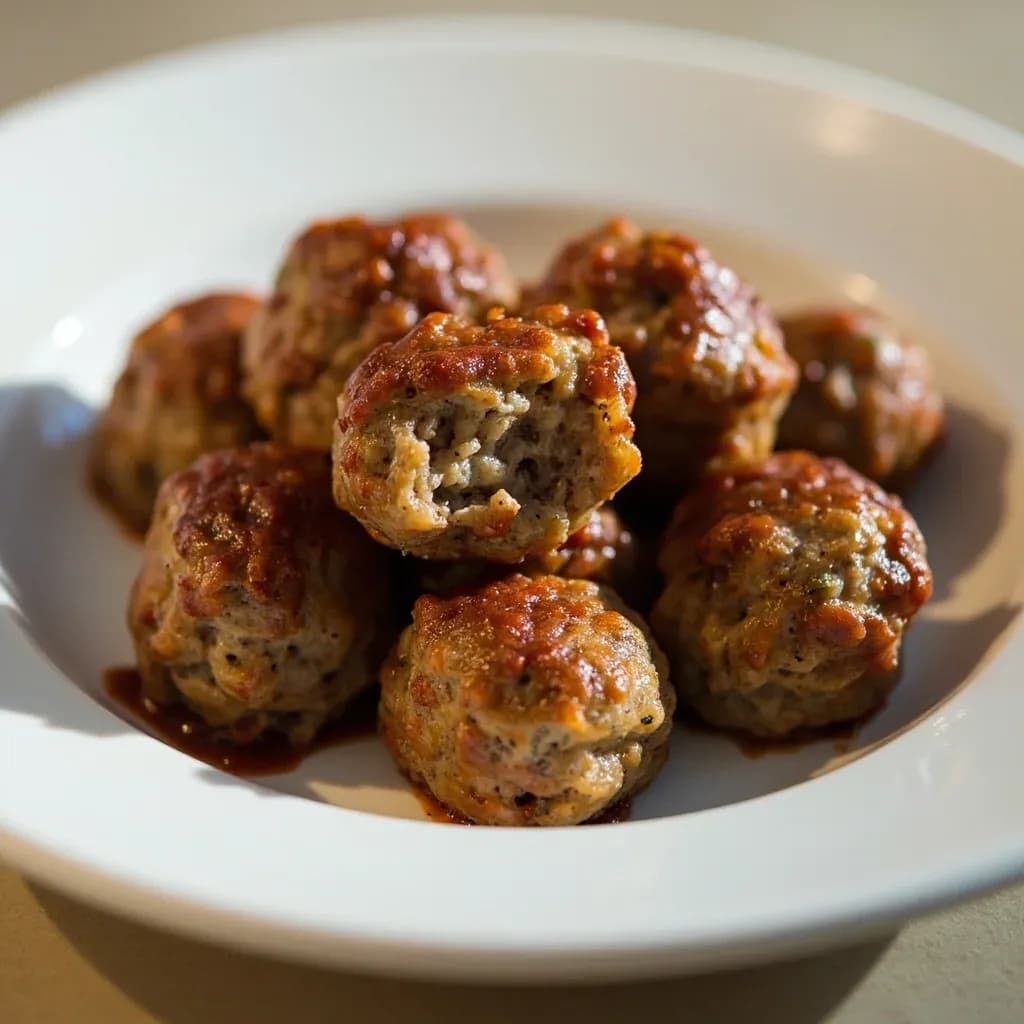
Seasoned ground-meat balls — Italian, Swedish, Nordic, and beyond — browned then simmered in sauce or gravy.
Meatballs are spheres of seasoned ground meat (beef, pork, veal, or a blend) bound with breadcrumbs, egg, and aromatics. They appear worldwide: Italian polpette in tomato sauce, Swedish köttbullar in cream gravy, and Danish frikadeller and Norwegian kjøttkaker. They are typically browned then finished in their accompanying sauce.
Meatballs are seasoned balls of ground meat—beef, pork, veal, lamb, turkey, chicken, or any combination thereof—cooked by browning, baking, braising, or simmering. They appear in virtually every culinary tradition and represent one of the oldest methods of transforming less expensive, tough, or irregular cuts of ground meat into an appealing, uniform dish. Ancient Roman recipes from Apicius include minced meat shaped into balls, and the technique spread through trade routes to Scandinavia, the Middle East, and East Asia, each region adapting the concept to local tastes and pantry staples.
The binding is essential: eggs, breadcrumbs, soaked bread, or rusk provide structure and prevent the proteins from tightening excessively during cooking. Fat content matters enormously—meat that is too lean produces dry, dense meatballs; the ideal is roughly 70% lean to 30% fat, which is why many recipes blend pork with beef. Seasonings, shape, size, and cooking method vary dramatically by cuisine, from tiny ½-inch Swedish köttbullar to 3-inch Italian polpette, but the core principle remains: season, bind, shape, and cook. Resting the raw mixture in the refrigerator before shaping allows the fats to firm up, making the meatballs easier to handle and less likely to fall apart during cooking.
Meatballs function as weeknight protein, party appetizer, soup filler, sandwich star, and special-occasion centerpiece. They are forgiving enough for beginners yet rewarding enough for skilled cooks to refine over a lifetime. Whether simmered in tomato sauce, floated in clear broth, braised in cream gravy, or tucked into a hoagie roll, meatballs deliver comfort and versatility in a tidy, hand-held form.
- Measured in
- piece
- Storage
- Fridge
Allergens
Types & varieties
Larger, typically made with beef or beef-pork blend, bound with breadcrumbs and egg, served with tomato sauce alongside pasta or as a standalone dish.
Small, traditionally 1-inch, made with pork-beef or pork-veal blend, mixed with soaked breadcrumbs and cream, served with cream gravy and lingonberry.
Flat, pan-fried patties of pork, veal, or both, seasoned with onion and parsley; more patty than ball but considered a Scandinavian meatball variant.
Large, flattened meatballs of beef or beef-pork, served with brown sauce, potatoes, and lingonberry jam.
Made with beef or lamb, mixed with breadcrumbs, onion, mint, and oregano; often fried and served with tzatziki or in salads.
Long or oval shapes of lamb or beef, seasoned with cumin, coriander, and paprika; grilled, baked, or braised rather than fried.
Beef or pork meatballs in almond-flour breadcrumbs, poached in caldo or a light tomato broth.
Smaller pork-beef balls seasoned with cumin and chipotle, simmered in red or green chili broth.
Giant pork meatballs, sometimes with crab or shrimp added, braised with cabbage in savory broth.
Ground pork or pork-shrimp meatballs, poached in dashi-based soup with vegetables.
Pork or shrimp meatballs served in clear broth with noodles and fresh herbs.
The Binding Question
The binder is what separates meatballs from hash. Without it, the proteins tighten violently in the heat and you get a dense, tough sphere rather than a tender one. Classic binders include fresh breadcrumbs soaked in milk (panade), eggs, grated onion (which releases starch and moisture), and soaked bread or rolls. For a firmer meatball, use more binder; for a softer, more delicate result, use less. A standard ratio is ¼ cup breadcrumbs and 1 egg per pound of meat, but this varies by tradition—Swedish köttbullar rely heavily on the bread-cream mixture for their pillow-soft texture, while Turkish kofta may contain no bread at all, relying on the fat content and handling technique alone.
- Soak breadcrumbs in milk or cream for 5 minutes before mixing—this adds tenderness and moisture to the finished meatball.
- Grated onion (not chopped) distributes evenly and adds sweetness and water content without creating pockets.
- For extra-soft Italian polpette, use stale bread soaked in milk rather than dried breadcrumbs.
Cooking Methods Compared
Pan-frying delivers the most flavor through Maillard browning but requires attention and batch management. Bake meatballs on a wire rack set over a sheet pan at 400°F (200°C) for 20–25 minutes—this allows heat circulation and fat drainage, producing a browned exterior without the need for flipping. Braising—browning first, then simmering in liquid—yields the most tender result as the moisture gently cooks the interior; this is how Swedish köttbullar and Italian polpette in sauce are traditionally made. Simmering in broth or sauce directly (skipping the brown) produces pale but perfectly cooked meatballs suited to soups and braised dishes where color matters less than texture.
- Brown in batches over medium-high heat without crowding—overcrowding causes steaming and a pale, steamed exterior rather than a crust.
- If baking, place on a wire rack over a sheet pan to allow heat circulation and fat drainage.
- For the most reliable internal temperature, use an instant-read thermometer inserted into the center of the largest meatball.
Common uses
Tips & pitfalls
- Combine fattier meat (pork) with leaner meat (beef) for moisture and flavor; 70% lean to 30% fat is ideal for most preparations.
- Do not overmix the meat—mix until just combined or the meatballs will be dense and tough.
- Chill the formed meatballs for 15–30 minutes before cooking to help them hold shape during browning.
- Use an ice cream scoop or cookie scoop for uniform size and even cooking across the batch.
- Avoid moving meatballs frequently while browning; let a crust form undisturbed for about 2–3 minutes per side.
- Add a splash of Worcestershire or soy sauce to the meat mixture for umami depth without altering the flavor profile noticeably.
- For the most reliable internal temperature, use an instant-read thermometer inserted into the center of the largest meatball.
Nutrition
Energy
824 kJ · per 100 g
Where the calories come from
Protein
21g
42% DV
Carbs
8g
3% DV
Fat
9g
12% DV
Fiber
4.6g
16% DV
Sugars
1.3g
of which
Sodium
550mg
24% DV
Source · USDA FoodData Central · Meatballs, meatless
View on FDC →In the shops
Matched grocery products
No matched grocery products for Meatballs yet.
Good to know
- Type
- Ground meat (or meat mixtures) formed into balls and cooked
- Typical Meats
- Beef, pork, veal, lamb, turkey, chicken, or combinations thereof
- Typical Size
- 1 to 2 inches (2.5–5 cm) diameter, depending on cuisine and tradition
- Cooking Methods
- Pan-frying, baking, braising, or simmering in liquid
- Internal Safe Temp
- 160°F (71°C) for beef/pork; 165°F (74°C) for poultry
- Shelf Life (raw)
- 1–2 days refrigerated; 3–4 months frozen
- Shelf Life (cooked)
- 3–4 days refrigerated; 2–3 months frozen
- Yield
- Approximately 4–6 meatballs per 4 oz (115 g) of meat, or 12–16 from 1 lb (450 g)
- Difficulty
- Beginner-friendly
- Equipment
- Mixing bowls, hands or ice cream scoop for portioning, skillet or sheet pan, instant-read thermometer
Substitutes
- Ground turkey or chicken — Leaner alternative; add 1 tablespoon oil per pound to compensate for leanness and do not overcook to prevent dryness.
- Plant-based meat crumbles — Use an equal amount by weight; expect softer texture; best results in baked or simmered preparations rather than pan-frying.
- Lentils or chickpeas — For vegetarian versions, mash and bind with egg and breadcrumbs; shape and cook similarly, though texture differs significantly from meat.
- Ricotta-stuffed variations — Add a small ball of whole-milk ricotta to the center of each meatball before sealing for a luxurious Italian-style alternative.
Pairs with
Also called
Meatballs (Kjøttkaker) · Pork-Veal Meatball Mix (Frikadeller) · Köttbullar · Polpette
Appears in these dishes
Related
Egg
The kitchen's everything ingredient — bind, leaven, enrich, or fry
Chicken Breast
Lean, quick-cooking white meat for everyday dinners

Ground Beef
Versatile minced beef for burgers, ragù, tacos, and meatballs
Pork Loin
Lean, tender roasting cut that stays juicy with care
Salmon
Rich, rosy fish that roasts, grills, or cures beautifully

Egg White
Pure protein that whips to airy peaks for meringue and more
Egg Yolk
Rich, golden yolk for custards, mayonnaise, and pasta

Quail Egg
Tiny, speckled eggs for garnishing and elegant bites