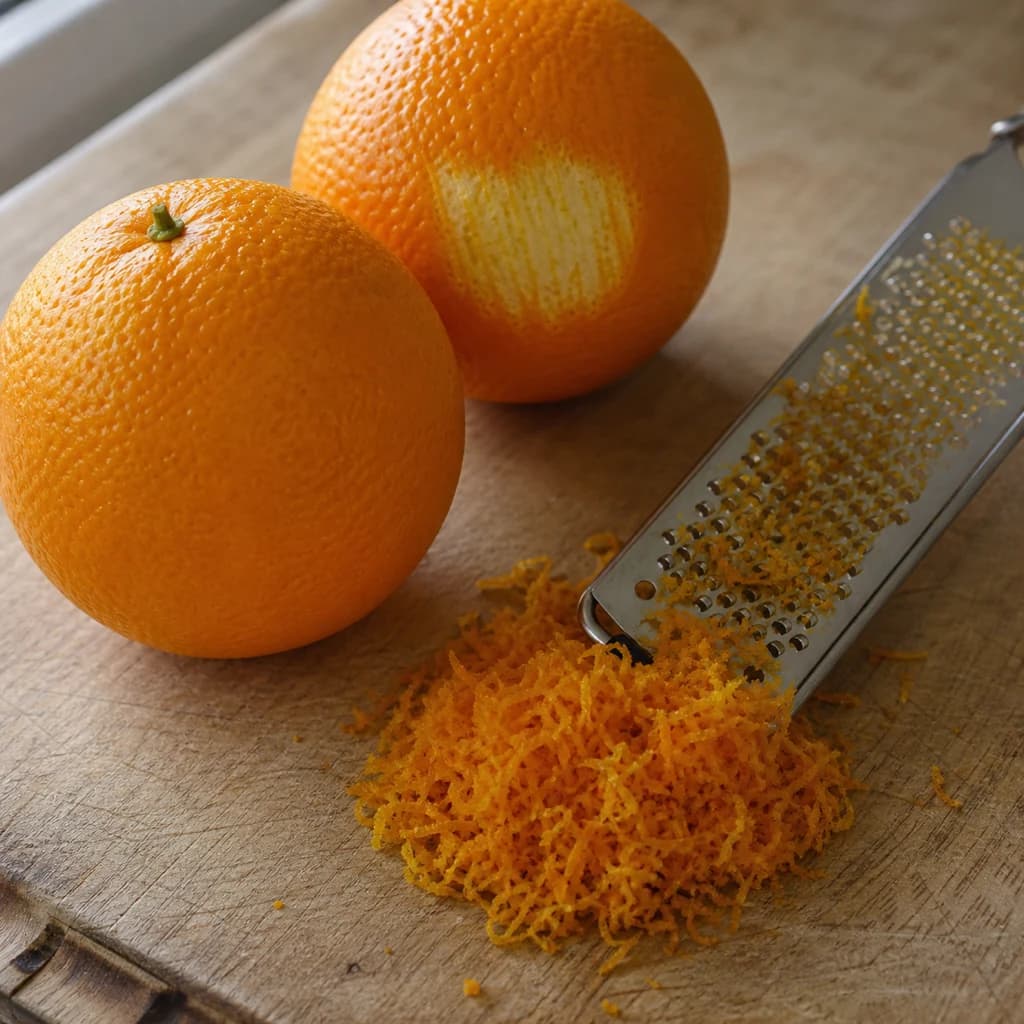
Natural form
Fresh whole oranges beside a microplane, with bright curls of zest just grated off.
Shows the intact source fruit and the grating process together, teaching readers exactly what orange zest is and where it comes from.
Produce
Orange Zest
Fragrant outer orange peel that adds bright citrus aroma to sweet and savory dishes.
Orange zest is the thin, brightly colored outer layer of the orange peel, packed with aromatic oils and free of the bitter white pith. It is grated or finely peeled to perfume baked goods, marinades, sauces, braises and cocktails with concentrated citrus flavor. Dried orange peel is used similarly in Chinese and herbal cooking.
Orange zest is the outermost colored layer of an orange peel, a thin skin that contains concentrated aromatic oils stored in microscopic glands. Unlike the white pith beneath it, the zest carries virtually no bitterness—what you taste is pure citrus fragrance, bright and floral with intense orange aroma that far surpasses juice or pulp. The oils in zest are volatile compounds, primarily limonene, which give citrus its characteristic bright scent but dissipate quickly under heat and prolonged storage. This is why zest behaves differently than juice in cooking: it perfumes a dish rather than adding acidity, and its delicate aromatics are easily lost if added too early or cooked too long. A little zest goes a remarkably long way—overuse will overpower both sweet and savory dishes, overwhelming the other flavors rather than lifting them.
- Measured in
- g
- Storage
- Fridge
Types & varieties
Most common eating and juicing orange; thin, smooth skin makes zesting easy; available spring through summer
Seedless, easy to peel, thick skin ideal for zesting; peak season November–March
Deep burgundy or ruby pigment in skin and flesh; more berry-like, complex flavor with raspberry and cherry notes
Intensely aromatic, more astringent; traditional for marmalade and savory preparations like Moroccan tagines; available very briefly in January–February
Pink-fleshed navel hybrid; mild, sweet, low-acid flavor; excellent for delicate applications
Tangerine-grapefruit hybrid; exceptionally fragrant zest with more volatile oils; very bright and floral
Zest vs. Pith: The Critical Distinction
The confusion between zest and pith is one of the most common sources of citrus cooking failures. The zest is the thin, brightly colored outer skin that contains all the aromatic oils. Directly beneath it lies the pith—a thick, white, spongy layer that is bland in flavor but intensely bitter. When you zest an orange carelessly, you often shred both layers together, and that bitter pith gets distributed throughout your dish. Always check your zest: it should be bright orange or yellow, with no white streaks. If you see white, pick it out or pass the zest through a sieve to separate the fine bits.
- Color: zest is colored; pith is white
- Texture: zest is thin and oily; pith is thick and spongy
- Flavor: zest is aromatic; pith is bitter
- When using a microplane, stop when you reach the pith layer
Why Frozen Oranges Zest Better
If you've ever struggled with a zester gumming up or the peel tearing rather than grating cleanly, try this: freeze whole oranges for 30 minutes before zesting. The firm, cold flesh supports the delicate zest structure and prevents the oils from smearing. The zest lifts off in clean, fluffy curls rather than clumping. This technique is especially helpful with thick-skinned oranges that resist normal zesting.
- Freeze oranges 30 minutes before zesting
- Cold fruit prevents oil smearing and tearing
- Easier to achieve even, fine zest
- Works especially well with thick-skinned varieties
Common uses
Tips & pitfalls
- Always wash and dry oranges thoroughly before zesting—conventional oranges are often coated with food-safe wax and may carry pesticide residue
- Use a microplane grater for the finest, most tender zest that incorporates seamlessly into batters and doughs
- Zest before juicing—the structural integrity of the peel is better before the fruit has been compressed
- If a recipe calls for both zest and juice, zest first, then juice the same orange for flavor consistency
- Freeze whole oranges first—frozen citrus zests more easily without tearing or gumming up
- Add zest toward the end of cooking to preserve volatile aromatic compounds that dissipate with prolonged heat
- Pressing too hard with a zester crushes the pith into the zest, adding unwanted bitterness
- Substituting dried orange peel for fresh zest is a common mistake—dried works for spice mixes but not as a direct substitute in baking or fresh applications
Nutrition
Energy
264 kJ · per 100 g
Where the calories come from
Protein
1.3g
3% DV
Carbs
15.5g
6% DV
Fat
0.3g
0% DV
Fiber
4.5g
16% DV
Sodium
2mg
0% DV
Source · USDA FoodData Central · approx. Oranges, raw, with peel
View on FDC →In the shops
Matched grocery products
 €3.75
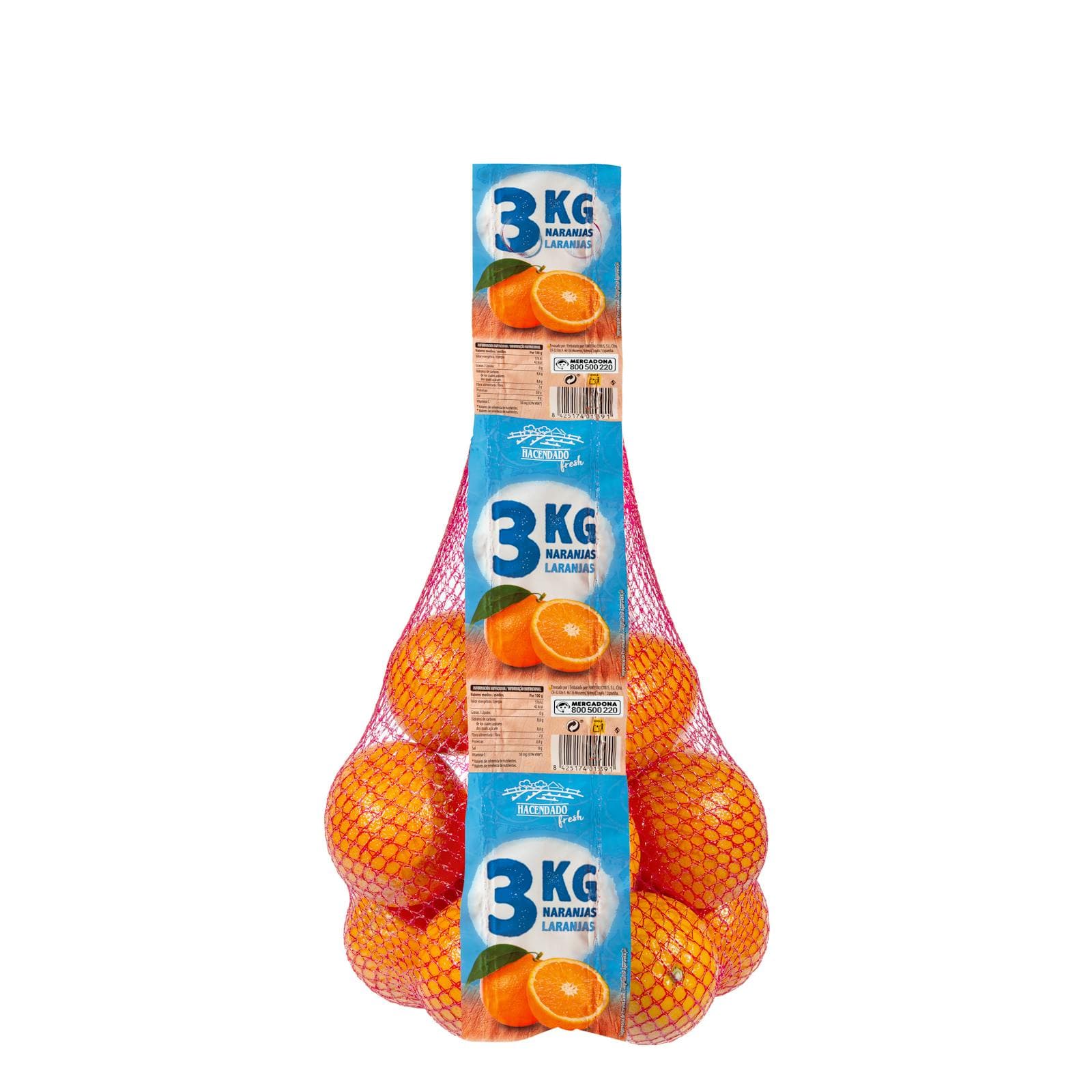
€3.75Oranges
3 kg · Mercadona
 €4.75
€4.75Oranges
5 kg · Mercadona
 €0.57
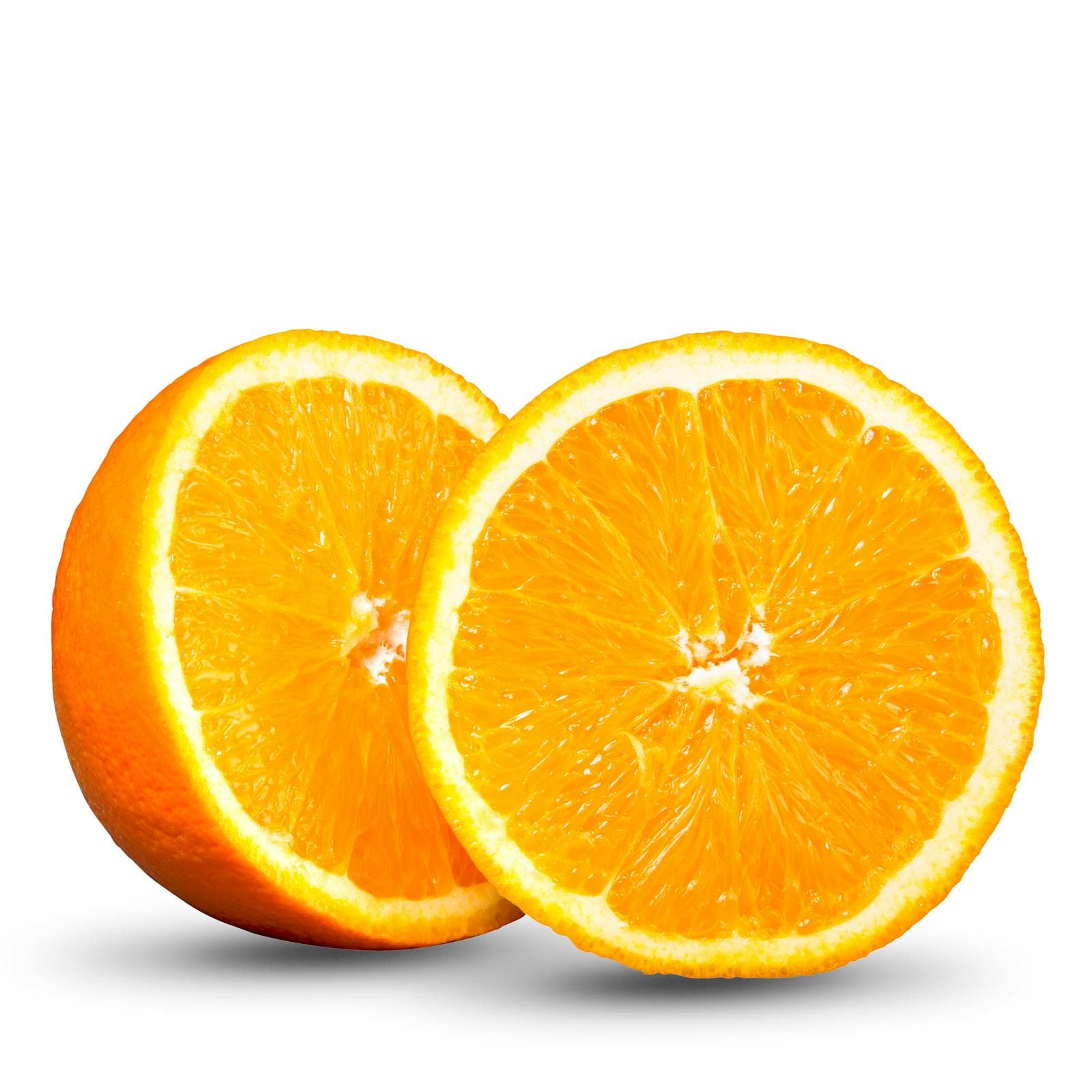
€0.57Table Oranges
310 g · Mercadona
 €0.58
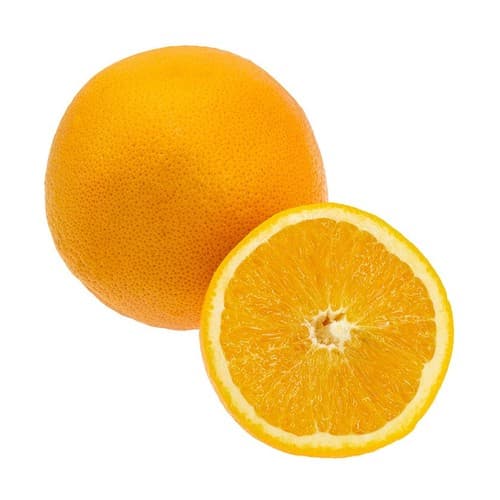
€0.58Orange 1 unit
ud · Bonpreu
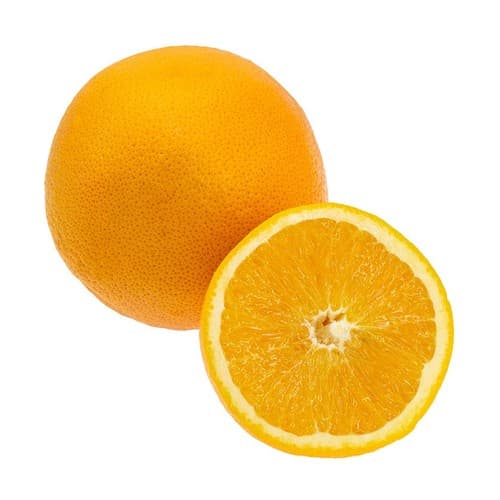 €0.65
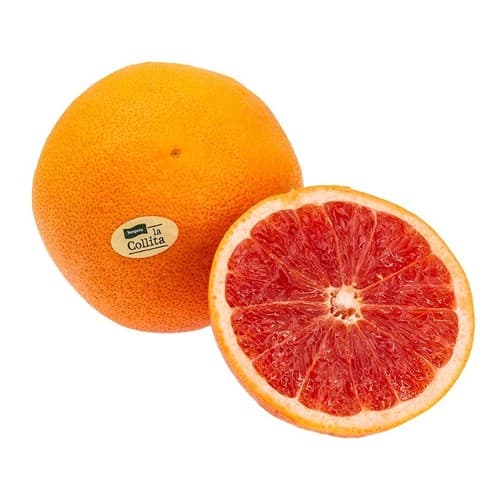
€0.65Orange 1 unit
Bonpreu
 €0.98
€0.98Orange 1 unit
ud · Bonpreu
Good to know
- What it is
- The outermost colored layer of an orange peel, containing concentrated aromatic oils in tiny glands
- Flavor
- Bright, floral citrus with intense orange aroma; far more concentrated than juice or pulp
- Yield
- Approximately 1 tablespoon (6 g) of packed zest from one large orange
- Equipment
- Microplane grater, fine zester, or vegetable peeler for strips; avoid box graters
- Peak season
- Winter through early spring, though available year-round
- Storage (fresh)
- Refrigerate in sealed bag up to 2 weeks; freeze on parchment-lined tray, then transfer to freezer bag indefinitely
- Key difference
- Zest is the colored peel only—never include the white pith beneath, which is bitter and spongy
Substitutes
- Lemon zest — Most common substitute; use equal amount; more tart, less floral than orange
- Lime zest — More astringent and herbal; use slightly less—its flavor is sharper than orange
- Grapefruit zest — More bitter and assertive; use sparingly in sweet applications; works well in savory
- Meyer lemon zest — Sweeter, more floral than regular lemon; closer in character to orange
- Orange extract — Use ½ teaspoon per tablespoon of zest; lacks fresh citrus oils; won't provide texture or brightness
- Candied orange peel — Chop finely; substitute 1 tablespoon candied for 1 tablespoon fresh zest; adds sweetness and chewy texture
Pairs with
Also called
Dried Orange Peel · Grated Orange Peel
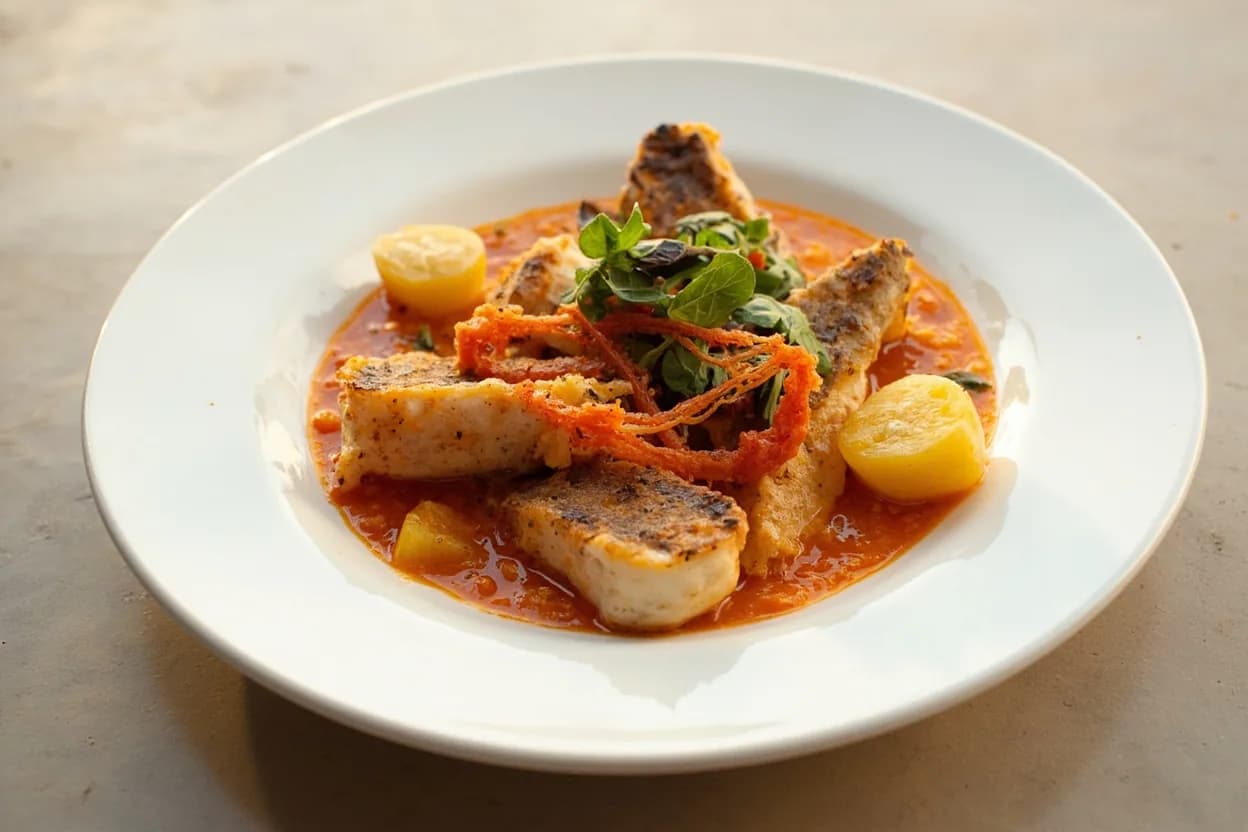
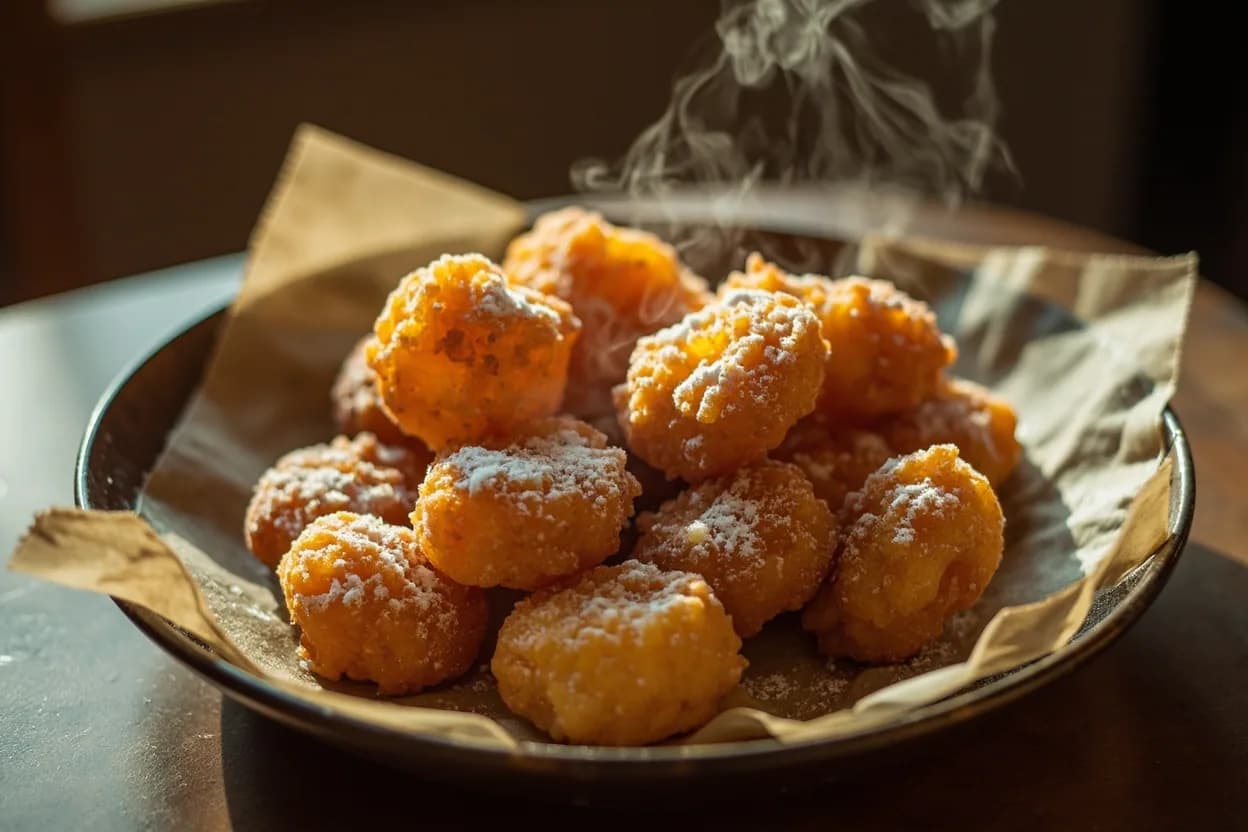
Appears in these dishes




Related

Tomato
Juicy, sun-sweet fruit for sauces, salads, and slow-cooked depth

Yellow Onion
The aromatic backbone of soups, sofritos, and braises

Garlic
Pungent cloves that perfume nearly every savory dish

Lemon
Bright, acidic citrus that wakes up almost any dish

Potato
Humble, hearty staple — roast, mash, fry, or boil

Carrot
Sweet, crunchy root — raw, roasted, or the base of a sofrito

Cucumber
Cool, crisp, and watery — for salads, pickles, and tzatziki

Lettuce
Crisp leaves for salads, wraps, and a fresh crunch