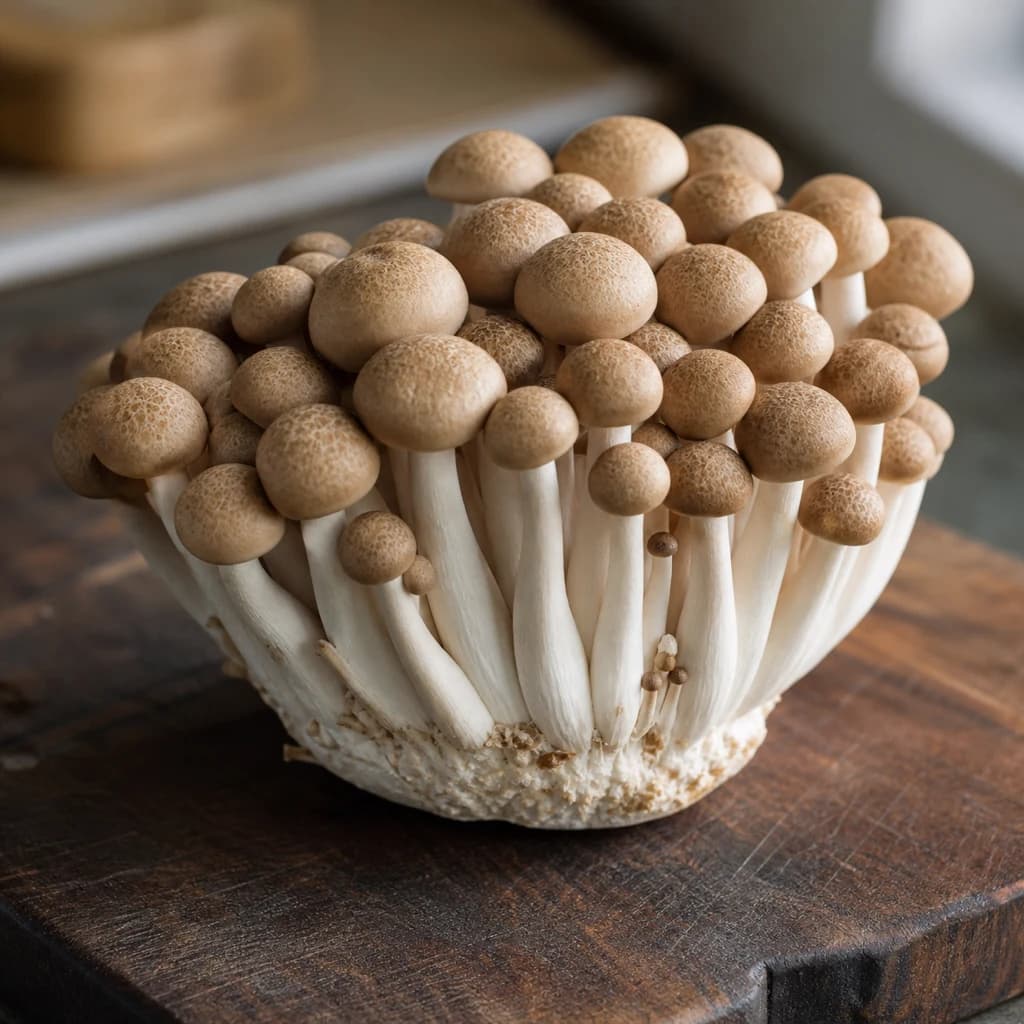
Natural form
Shimeji mushrooms sold in clusters, showing the shared base and small rounded caps.
Shows the defining characteristic — tight clustered growth on a shared stem base — that makes shimeji instantly recognizable in markets.
Produce
Shimeji Mushroom
Clustered Japanese mushrooms with small caps and a nutty, savory taste, used in stir-fries, soups, and hotpots.
Shimeji are small Japanese mushrooms that grow in tight clusters on a shared base, sold as brown (buna) or white (bunapi) varieties. Bitter raw, they develop a pleasant nutty, slightly shellfish-like savoriness once cooked, making them ideal for stir-fries, miso soup, rice dishes, and nabe hotpots. The base is trimmed off and the cluster pulled apart before cooking.
Shimeji refers to a group of cultivated Japanese mushrooms from the Hypsizygus genus, prized for their firm, meaty texture and concentrated nutty-savory flavor. Unlike many mushrooms that turn rubbery with extended cooking, shimeji holds its structure remarkably well, making it a versatile workhorse in both Western and Asian kitchens. The mushrooms grow in tight clusters of 20 to 50 small caps, each 1 to 3 centimeters in diameter, attached to a common base. When cooked properly, shimeji develops a pleasant crispness at the edges while retaining a satisfying bite throughout. Raw shimeji, however, carries a noticeable bitterness and can cause digestive discomfort in some individuals—this is a mushroom that demands cooking before consumption. Its excellent water retention means negligible shrinkage when heated, giving you substantial volume and texture in the finished dish.
The cultivated shimeji found in markets descends from the species Hypsizygus marmoreus, grown on hardwood sawdust blocks typically from beech or oak trees. These are not the same as wild shimeji species (Lepista species), which are separate organisms rarely found in commercial channels. Japanese breeders developed the distinctive white cultivar in 1986, expanding the palette beyond the original tan-brown varieties. The flavor profile intensifies through Maillard browning—those golden, slightly crispy edges you see in a proper sauté are where shimeji's nuttiness peaks. When added to soups or braises, the mushrooms absorb surrounding flavors without becoming soggy if added toward the end of cooking, a behavior that distinguishes them from more delicate varieties like enoki.
- Measured in
- g
- Storage
- Fridge
Types & varieties
The most widely available variety. Tan-brown caps with cream stems. Mild, slightly nutty flavor. Sold as whole clusters with the root block intact. Direct equivalent to the 'beech mushroom' name used in Western markets.
A white-capped cultivar developed in Japan in 1986. Slightly more delicate than the brown variety with a milder, sweeter flavor. Ideal when you want a subtler mushroom presence in the dish.
Dark brown to almost black caps. Slightly chewier texture with a stronger, more pronounced nutty flavor. Less commonly cultivated and sometimes harder to find outside specialty Asian markets.
Why Shimeji Deserves a Regular Place in Your Kitchen
Shimeji occupies a unique niche among cultivated mushrooms. It has the meatiness of cremini but the structural integrity that cremini loses when overcooked. It has the delicate appeal of enoki but actually holds together in soups and stews. And unlike shiitake, which can become soft and spongy, shimeji maintains a pleasant resistance that stands up to robust cooking methods. The flavor is honest and unobtrusive—it won't dominate a dish, but it won't disappear either. This makes it an excellent bridge ingredient that adds umami, texture, and visual interest without demanding attention. For home cooks building weeknight dinners, shimeji is forgiving: it browns reliably, doesn't release excessive moisture, and won't turn to mush if you get distracted. Its clusters can be cooked whole for presentation or broken apart for even distribution throughout a dish. The root block, often trimmed away, is technically edible and excellent for adding to homemade stocks where it contributes substantial umami depth.
- Shimeji and beech mushroom are the same product—'shimeji' is the Japanese retail name, 'beech mushroom' is the Western commercial term
- The white variety is a cultivar developed in 1986; it is not a different species but has a milder, sweeter flavor
- Black shimeji has the most pronounced nutty flavor but is less commonly available
The Raw Question: Why Must Shimeji Be Cooked?
Unlike some mushrooms that are safe to eat raw, shimeji contains compounds that produce a bitter taste and can cause gastrointestinal discomfort in certain individuals when uncooked. Heat destroys these compounds and transforms the flavor entirely—the bitterness vanishes, replaced by a rich, nutty sweetness that develops through browning. This is not a case of raw being merely unpalatable; it's genuinely worth avoiding for digestive reasons. The cooking requirement is also an opportunity: the Maillard reaction that occurs when shimeji browns creates hundreds of new flavor compounds, which is why a two-minute sauté produces such dramatically better results than simply blanching. Always cook shimeji for at least three to four minutes over medium-high heat until the edges begin to turn golden, regardless of the dish you're preparing.
- Blanching alone is not sufficient—shimeji must reach Maillard browning for optimal flavor
- Even blanched and cooled shimeji used in raw applications may retain some bitterness
- The root block (根部) is edible when cooked and excellent in stocks
Common uses
Tips & pitfalls
- Separate clusters into individual mushrooms or small bunches before cooking rather than using whole clusters intact; this allows even browning and better texture throughout the dish.
- Never eat raw. Always sauté, boil, grill, or otherwise cook thoroughly for at least 3–4 minutes until edges begin turning golden—this is non-negotiable for both flavor and digestibility.
- For the best nutty flavor, sauté in butter or oil over medium-high heat until the edges are lightly crispy and golden. The Maillard reaction develops complexity that plain cooking misses.
- Store properly in a paper bag or loosely wrapped in paper towels in the refrigerator. Sealing shimeji in plastic creates trapped moisture that accelerates spoilage and causes sogginess.
- Do not add shimeji too early to soups, stews, or braised dishes—it will absorb excess liquid and lose its pleasant texture. Add in the last 5–10 minutes of cooking instead.
- When buying, select firm, plump caps with no browning, drying, or sliminess. Any signs of softening indicate age and diminished quality.
- The root block (根部) that gets trimmed away is edible and excellent for homemade stocks; save it in a freezer bag until you have enough for a batch.
- If freezing is necessary, blanch briefly, cool immediately, then freeze in airtight containers. Expect some texture degradation after thawing.
Nutrition
Energy
92 kJ · per 100 g
Where the calories come from
Protein
2.5g
5% DV
Carbs
4.3g
2% DV
Fat
0.1g
0% DV
Fiber
0.6g
2% DV
Sugars
1.7g
of which
Sodium
6mg
0% DV
Source · USDA FoodData Central · approx. Mushrooms, brown, italian, or crimini, raw
View on FDC →In the shops
Matched grocery products
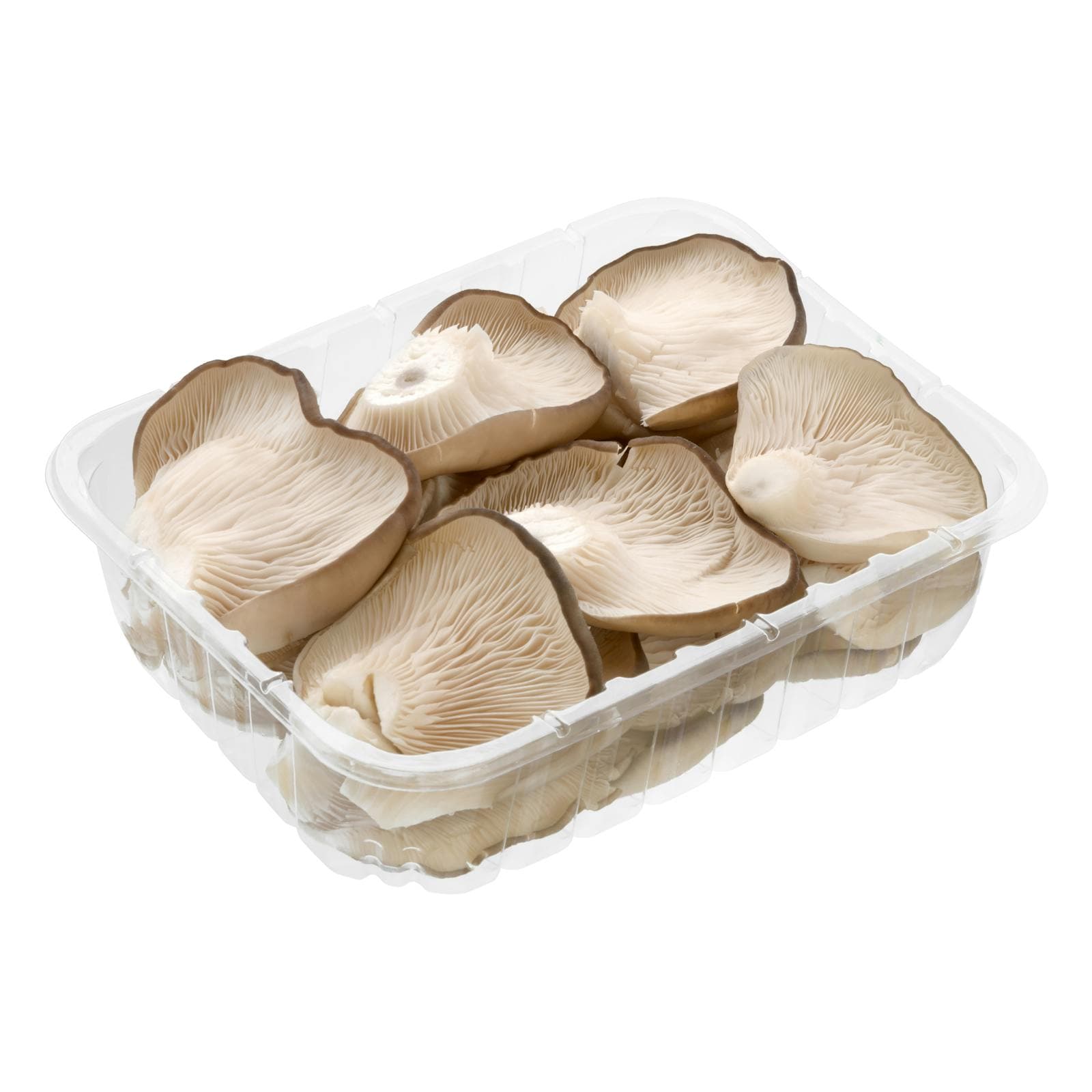 €2.05
€2.05Mushrooms
250 g · Mercadona
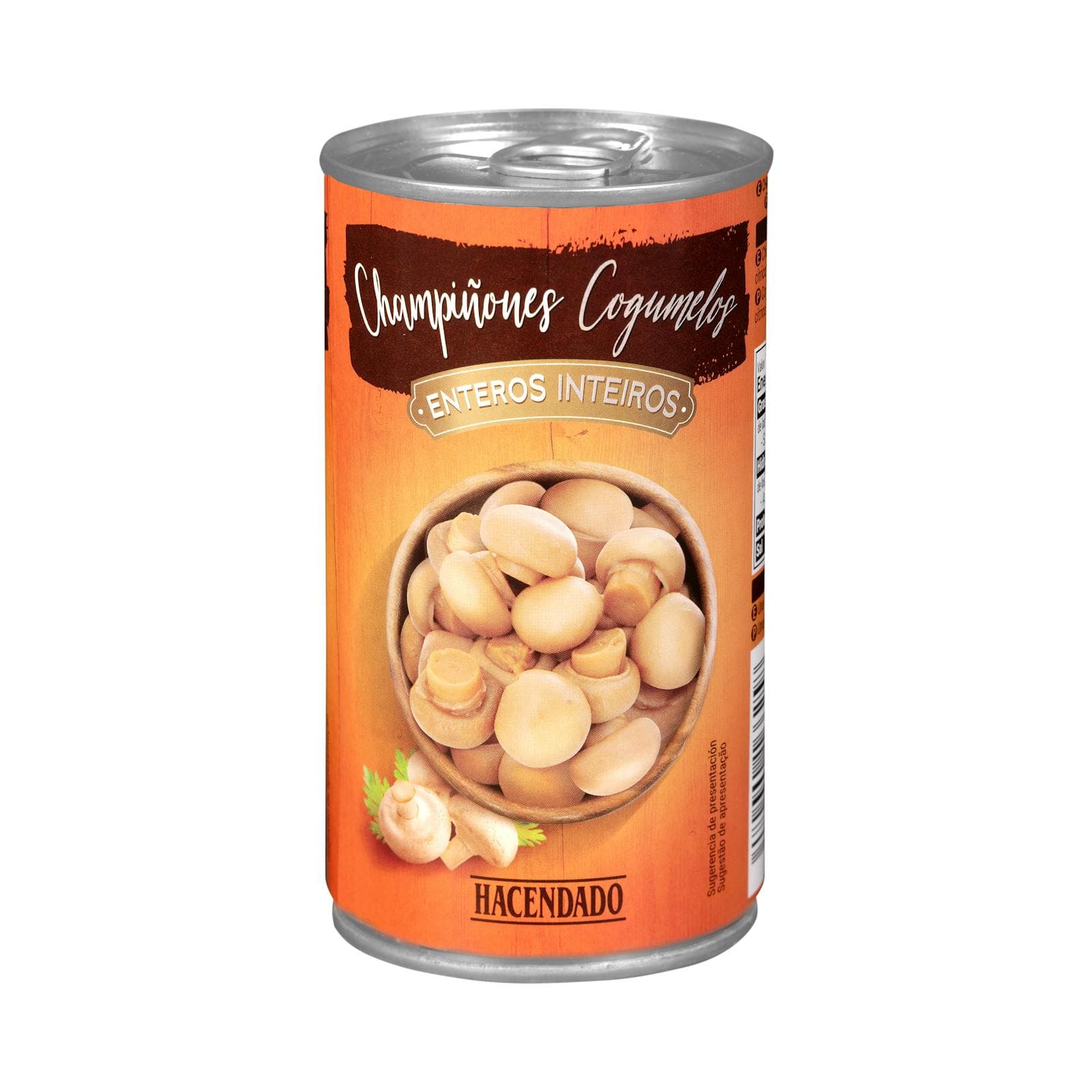 €1.45
€1.45Whole Mushroom
Hacendado · 355 g · Mercadona
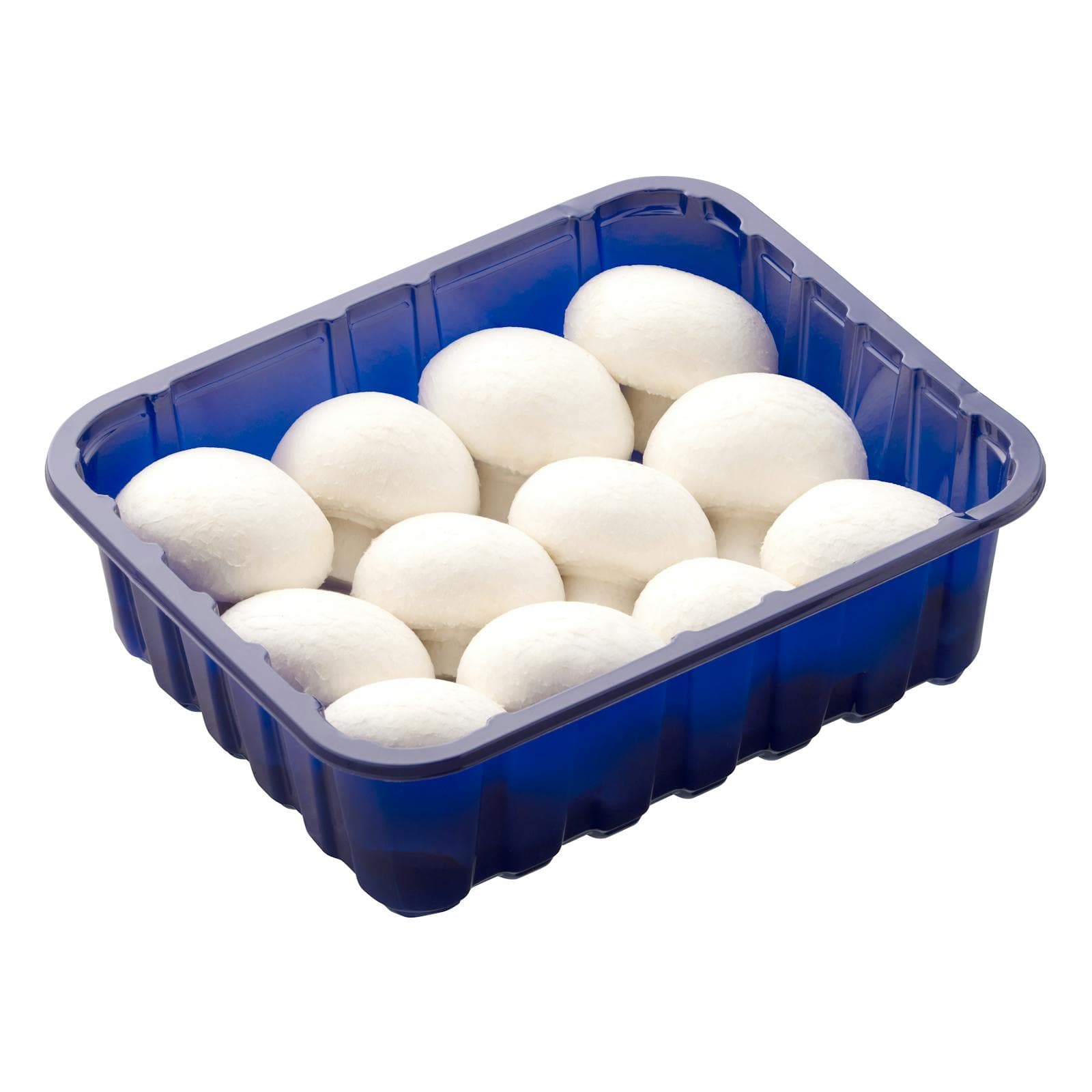 €1.50
€1.50White Mushrooms
300 g · Mercadona
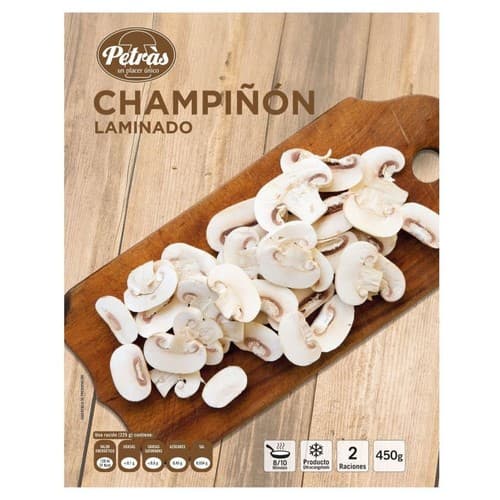 €1.99
€1.99Sliced Mushrooms
PETRAS · kg · Bonpreu
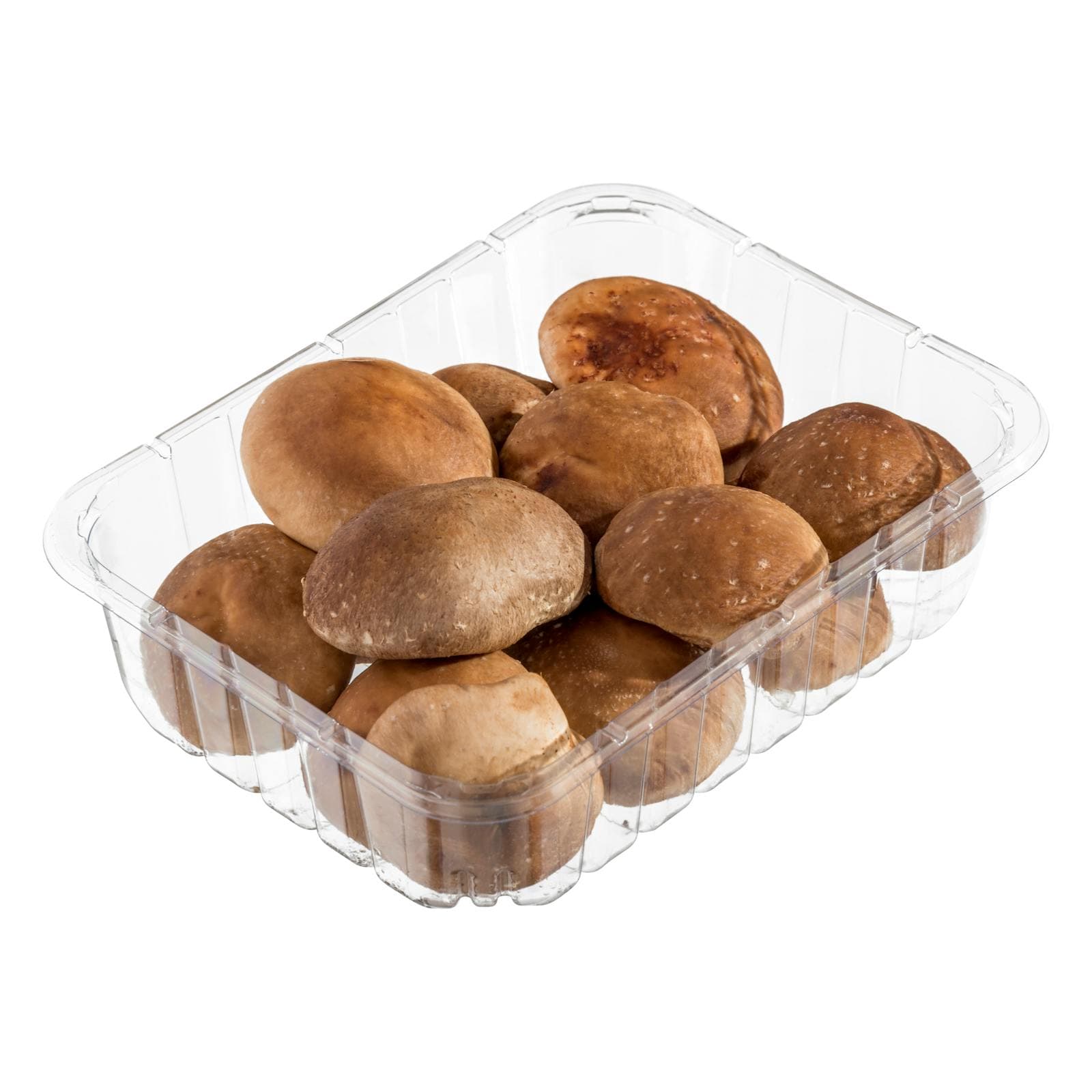 €3.96
€3.96Shiitake Mushrooms
300 g · Mercadona
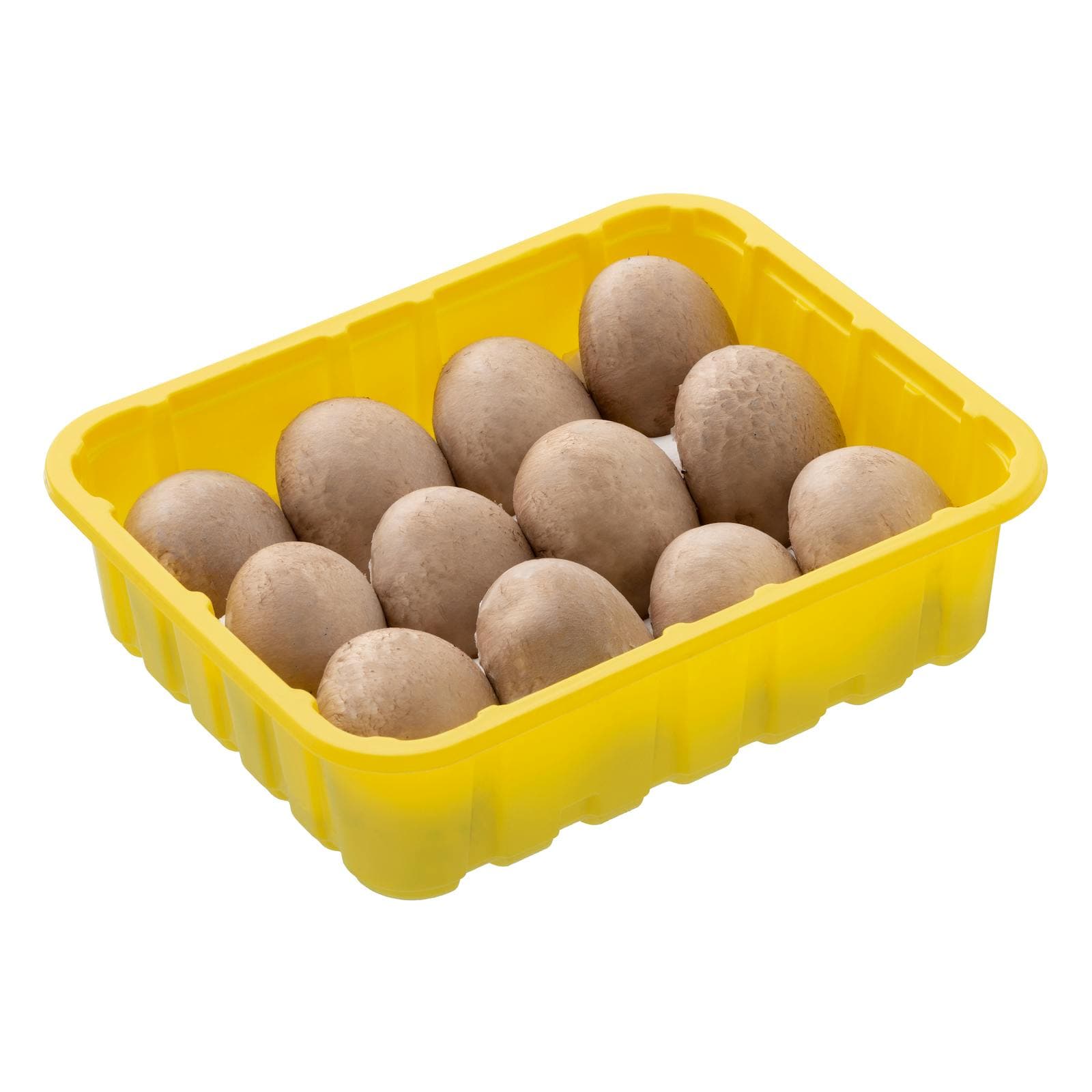 €2.16
€2.16Portobello Mushrooms
300 g · Mercadona
Good to know
- Scientific Name
- Hypsizygus marmoreus
- Origin
- Japan; cultivated on beech, oak, or other hardwood sawdust blocks
- Season
- Year-round as a cultivated product, peak quality in cooler months
- Flavor Profile
- Nutty, savory, mild umami; sweeter and more complex when browned; bitter when raw
- Texture
- Firm, meaty, slight crunch; holds structure well even with prolonged cooking
- Cap Size
- 1–3 cm diameter; clusters of 20–50 individual caps each
- Color
- Bunashimeji: tan-brown caps with cream stems. White shimeji: cream to ivory. Black shimeji: dark brown-gray.
- Storage
- Refrigerate in paper bag or loosely wrapped in paper towels; use within 5–7 days. Never seal in plastic.
- Must Cook
- Always. Raw shimeji is bitter and can cause digestive upset in some people.
- Yield
- Minimal shrinkage when cooked; retains volume and texture throughout cooking
Substitutes
- King Oyster Mushroom — Similar meaty texture and umami profile; cook using the same methods. Cut lengthwise into strips for best results and comparable presentation.
- Beech Mushroom — Direct substitute—same species, different common name used in Western markets. Interchangeable in any recipe.
- Shiitake — Different texture (softer when cooked) but similar umami depth. Best as a flavor substitute when shimeji is unavailable; reduce cooking time slightly.
- Enoki — Much smaller and more fragile than shimeji; not a true substitute but can work in delicate soups where a lighter mushroom texture is acceptable.
Pairs with
Also called
Buna-shimeji · Beech Mushroom · Brown Clamshell Mushroom
Related
Tomato
Juicy, sun-sweet fruit for sauces, salads, and slow-cooked depth
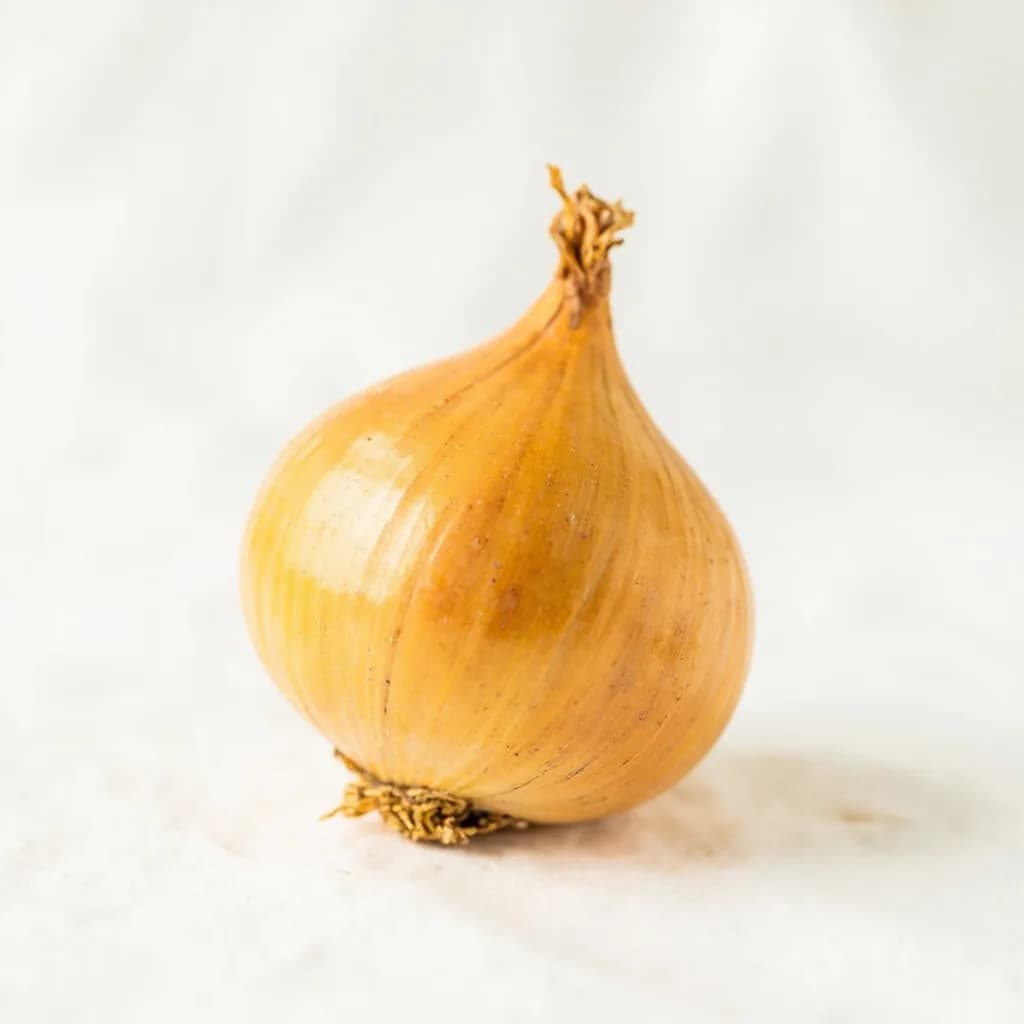
Yellow Onion
The aromatic backbone of soups, sofritos, and braises
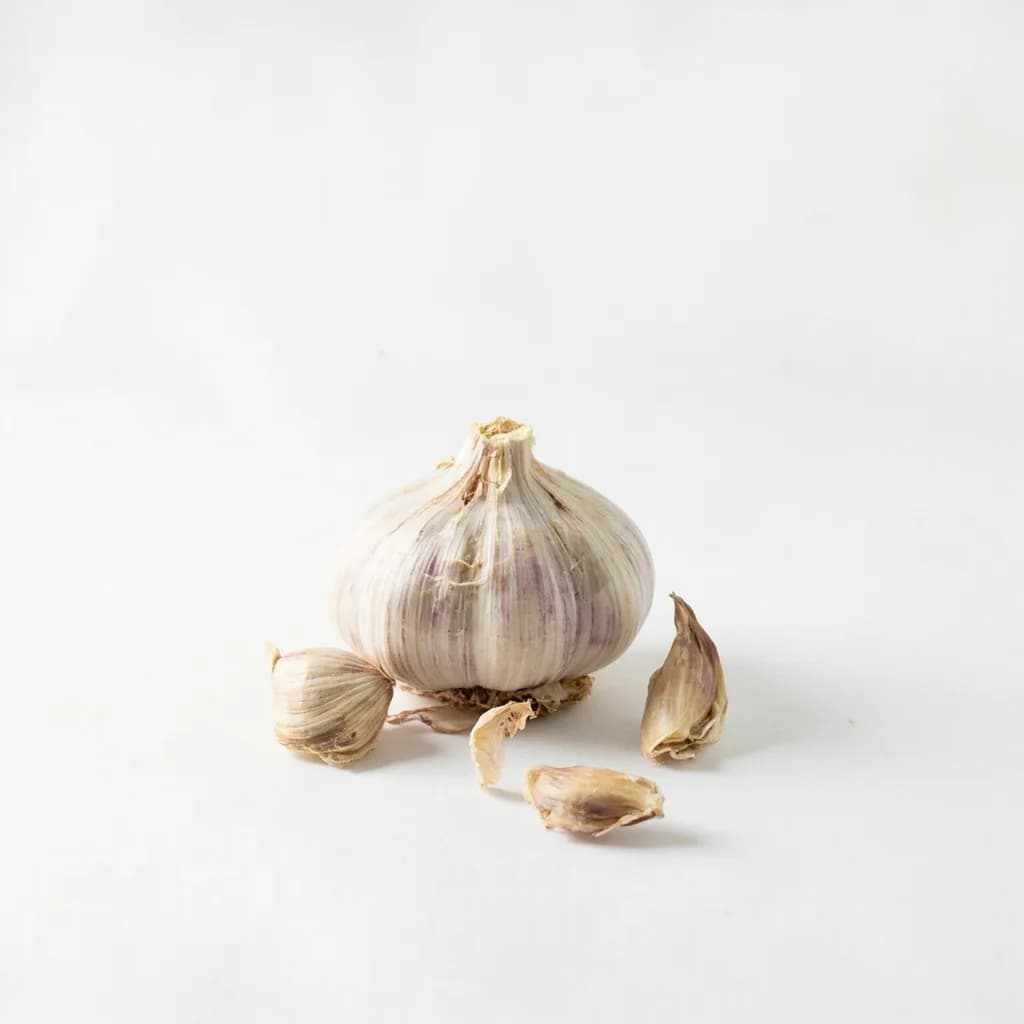
Garlic
Pungent cloves that perfume nearly every savory dish
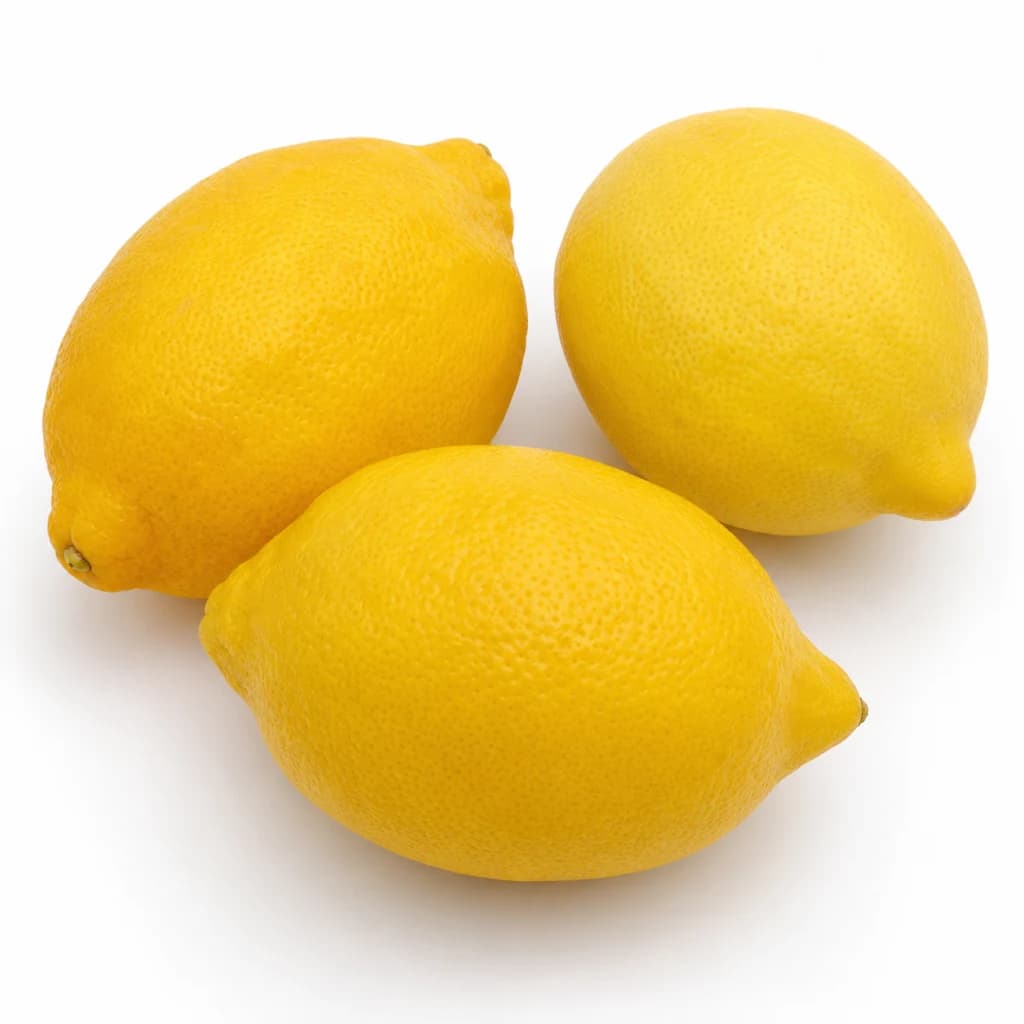
Lemon
Bright, acidic citrus that wakes up almost any dish
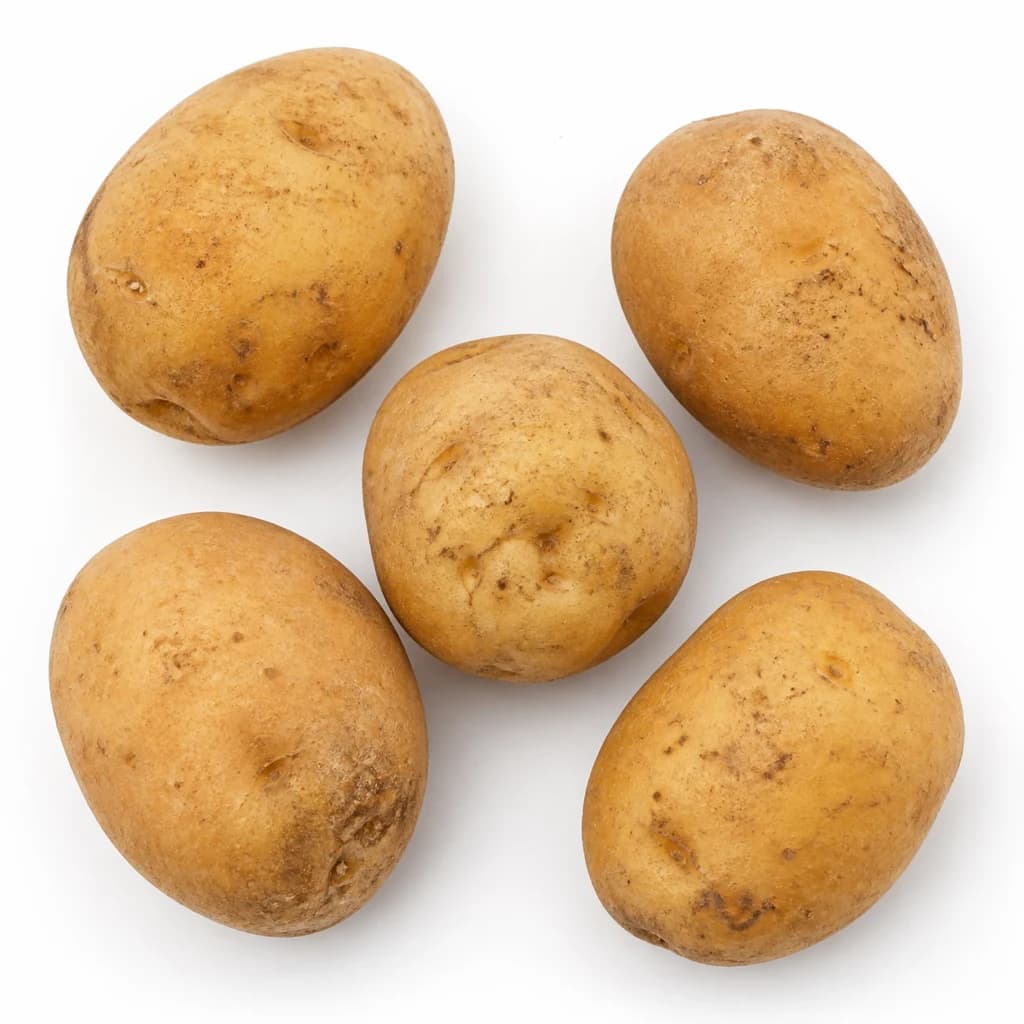
Potato
Humble, hearty staple — roast, mash, fry, or boil
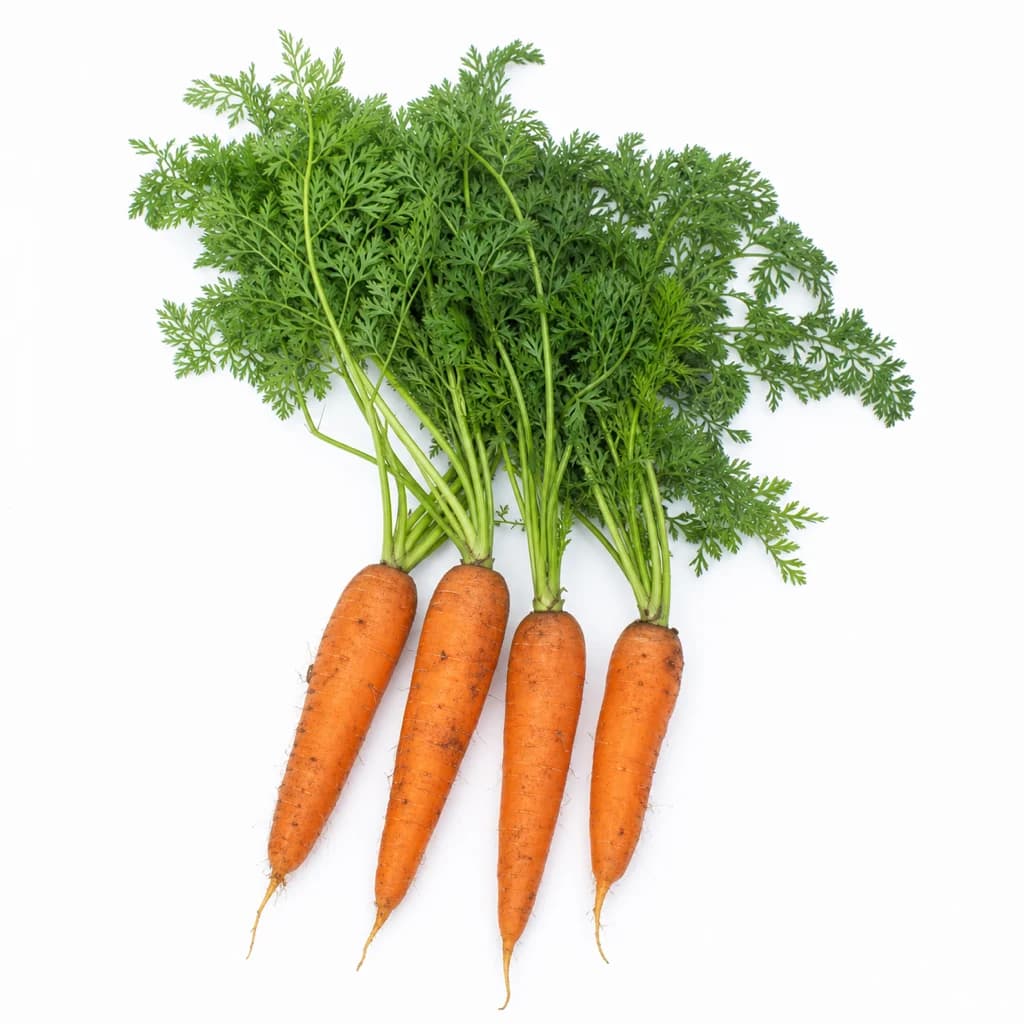
Carrot
Sweet, crunchy root — raw, roasted, or the base of a sofrito
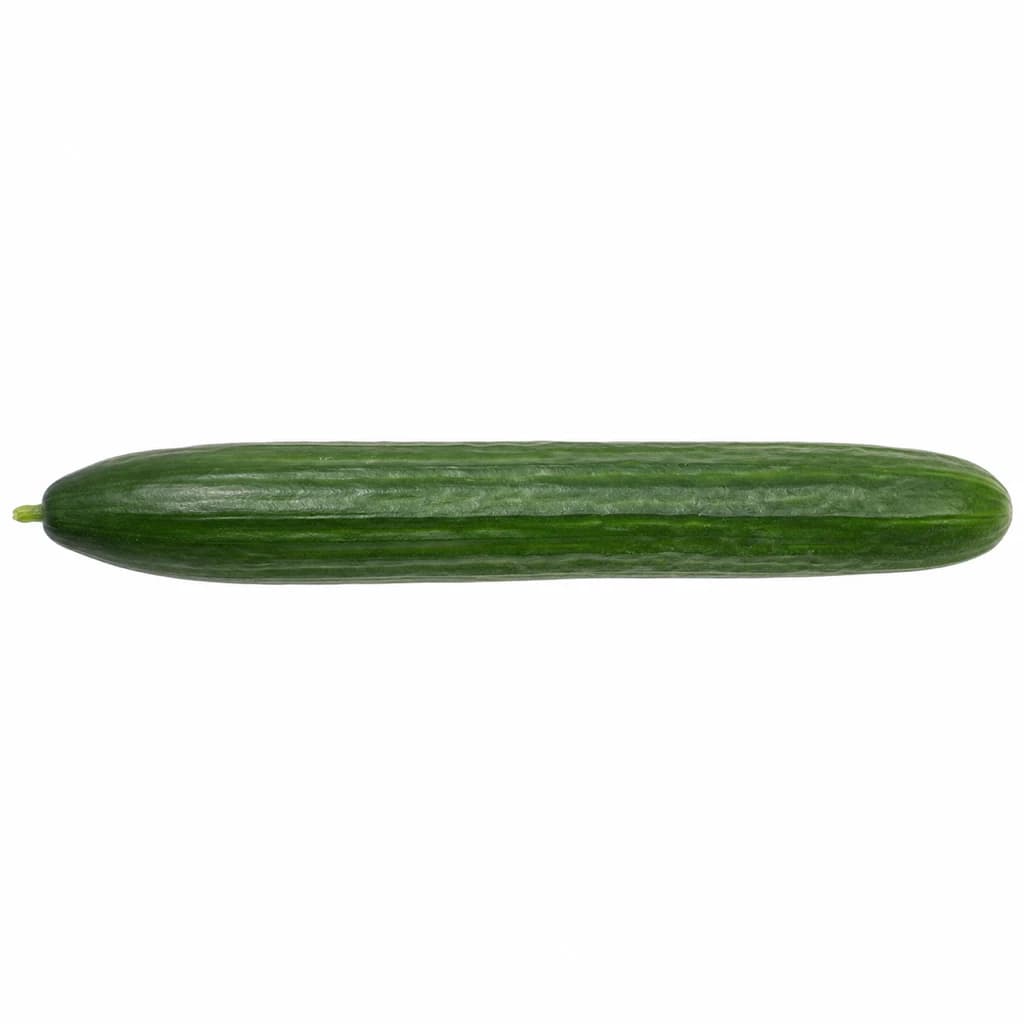
Cucumber
Cool, crisp, and watery — for salads, pickles, and tzatziki

Lettuce
Crisp leaves for salads, wraps, and a fresh crunch