Proteins
Cured (Spanish) Chorizo
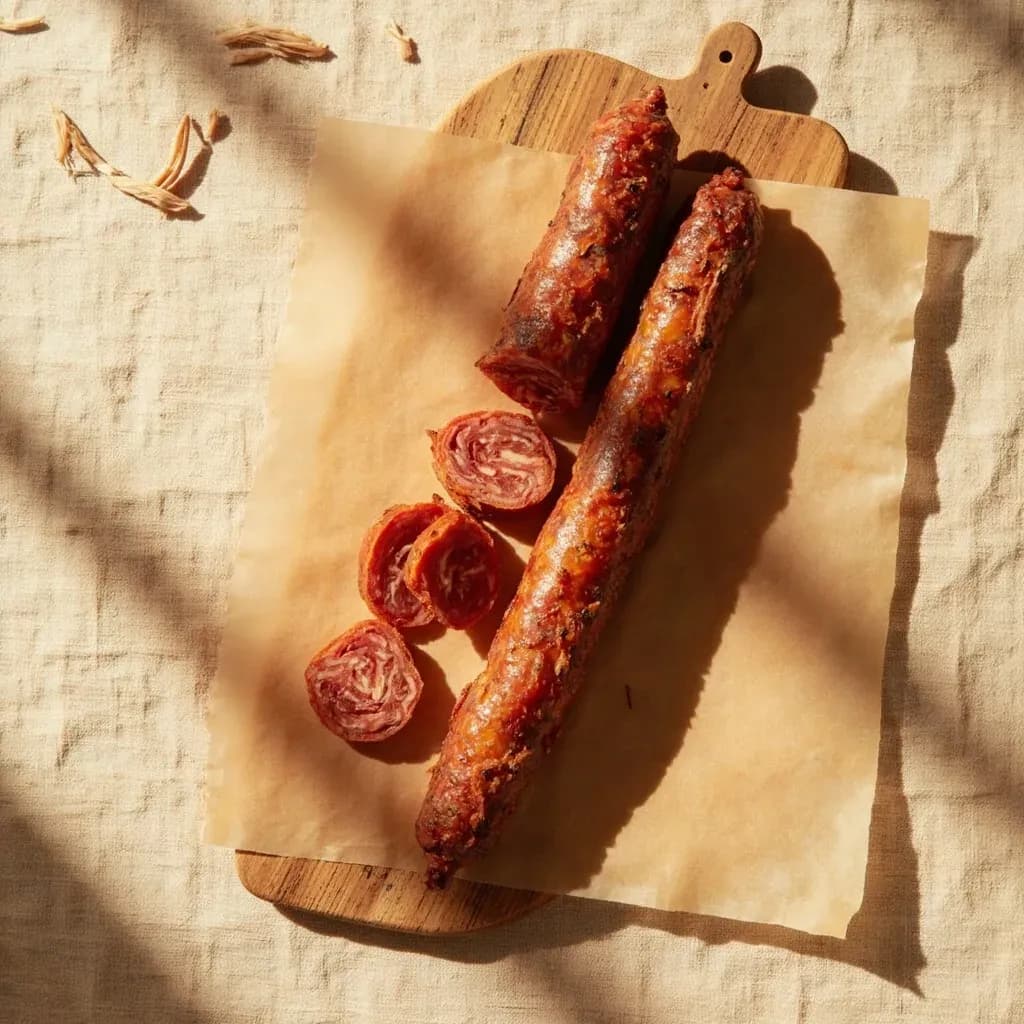
Firm cured pork sausage seasoned with smoked paprika (pimentón); ready to eat sliced or fried to release red oil into rice and stews. Drier and firmer than fresh Mexican chorizo.
Spanish chorizo is a dry-cured pork sausage whose identity is built on smoked Spanish paprika — pimentón — in the same way Italian pancetta leans on pepper or Hungarian kolbász on hot paprika. The mixture is a straightforward emulsion of coarsely chopped lean pork (shoulder or loin) and pork fat, seasoned with salt, garlic, and pimentón, then stuffed into hog casings and hung to cure and dry for weeks to months. The pimentón does more than flavor: it dyes the interior a deep brick red and stains every drop of fat that escapes during cooking, producing the vivid orange-red oil that defines chorizo's role in the Spanish kitchen.
Cured Spanish chorizo is fully cured and shelf-stable, eaten much like a salami — sliced thin as a tapa or slipped into a bocadillo — and only briefly heated when added to cooked preparations. The defining kitchen move is to slice or dice it and render it in a pan, letting the paprika-loaded fat melt directly into the cooking medium. That oil is the prize: it colors the rice in paella and arroz con judías, seasons the beans in fabada and lentejas con chorizo, and lubricates the potatoes in patatas a la riojana. Long cooking is unnecessary and counterproductive because the chorizo is already cured; it will toughen and dry out if braised for hours, so it is added late.
Although 'chorizo' is used loosely in many markets, cured Spanish chorizo is a distinct product from the fresh, raw, crumbly Mexican chorizo sold in plastic tubes. The Spanish version is firm, sliceable, dense, and built on pimentón rather than vinegar and chili powders; Portuguese chouriço is its closest European cousin, typically wood-smoked and more garlic-forward. Within Spain, several regional chorizos carry IGP (Indicación Geográfica Protegida) status — Salamanca, Valladolid, and Teruel — which govern origin, breed, feed, and curing, and a wider informal range runs from the smoky chorizo de la Vera of Extremadura to the slender Pamplona eaten as a bar snack.
- Measured in
- g
- Storage
- Refrigerate
Find it in
Types & varieties
IGP protected; thick, often horseshoe-shaped; traditionally seasoned with pimentón picante (hot)
IGP protected; cylindrical, firm texture; available in dulce and picante
IGP protected; cured in cold Aragón mountain air, longer maturation, deep red color and concentrated flavor
From Extremadura; frequently smoked over oak wood, often used as a cooking chorizo rather than eaten raw
From La Rioja; the defining ingredient of patatas a la riojana and caparrones
Slender, small-diameter cured chorizo popular sliced as a tapa or bar snack
From Castile-León; firm texture, often with a higher pimentón ratio and pronounced color
A string of small chorizos linked together, traditional in Castile and the Basque Country; sold by length
Cured, narrow-diameter sausage in the chorizo family; slimmer and milder than standard chorizo
Working with chorizo in the kitchen
Because cured Spanish chorizo is already cured, the cook's job is to release its paprika fat and warm it through without drying it out. A few habits separate good results from tough, leathery bits.
- Render first, build from there. Fry sliced or diced chorizo in a little olive oil over medium heat until the red oil pools in the pan, then proceed with onions, garlic, rice, or beans in that fat. The oil is the seasoning.
- Add late to long-cooked stews. Drop chorizo into fabadas, cocidos, and lentejas only in the last 20–40 minutes; earlier and it gives up all its fat and becomes a dry nub.
- Choose diameter by use. Slender chorizos (Pamplona, sarta) keep more interior moisture and are best sliced raw for tapas. Thicker, drier styles (Salamanca, León) are sturdier in the pan and survive stirring into rice.
- Slice cold, serve warm. A short stint in the freezer (15–20 minutes) firms the fat and gives paper-thin tapa slices; for cooked dishes, slice at room temperature so the cubes hold their shape.
- Save the rendered oil. After crisping coins for a tapa, pour off the red fat into a jar — it keeps a week refrigerated and is the cleanest way to fry eggs, dress potatoes, or finish a bean soup.
Buying and storing
A whole, well-cured Spanish chorizo is one of the most forgiving cured meats in the kitchen and behaves more like a hard salami than a fresh sausage. Buying decisions come down to diameter, pimentón style, and intended use.
- Match style to dish. Hot (picante) chorizo holds its own in heavy bean stews and paellas; dulce is friendlier in egg dishes, bocadillos, and potato preparations where you want color without heat.
- Look for IGP seals (Salamanca, Valladolid, Teruel) when you want traditional production methods and consistent quality; the de la Vera seal indicates oak-smoked style.
- Store whole, uncut chorizos in a cool, dry, ventilated place — a larder or the back of a wine fridge is ideal — for several months. Once cut, wrap the cut end tightly and refrigerate, using within 2–3 weeks.
- Bring refrigerated chorizo to room temperature for 15–30 minutes before slicing; the fat softens, the slices cut cleanly, and the pimentón aroma opens up.
Common uses
Tips & pitfalls
- Prick or score the casing before pan-frying to keep the sausage from bursting and to let the red oil escape cleanly into the pan.
- For maximum color in rice, slip the meat out of the casing and dice it so the paprika fat melts directly into the dish rather than staying trapped behind the casing.
- Do not overcook: cured chorizo is already cured through; long braising dries it out. Add it in the last 20–40 minutes of a stew.
- Taste the dish before adding extra salt; cured chorizo is heavily salted and seasons a pot on its own, especially in bean and lentil preparations.
- Never substitute Mexican fresh chorizo for Spanish cured chorizo — they are different products with different textures, fat content, and flavor profiles.
Nutrition
Energy
649 kJ · per 100 g
Where the calories come from
Protein
18.8g
38% DV
Carbs
0.5g
0% DV
Fat
8.1g
10% DV
Fiber
0g
0% DV
Sugars
0g
of which
Sodium
593mg
26% DV
Source · USDA FoodData Central · approx. Sausage, turkey, fresh, raw
View on FDC →In the shops
Matched grocery products
No matched grocery products for Cured (Spanish) Chorizo yet.
Good to know
- Origin
- Spain (Iberian Peninsula); cured sausage tradition predates the introduction of New World paprika in the 16th century
- Type
- Dry-cured pork sausage, ready to eat without cooking
- Key seasoning
- Pimentón (smoked Spanish paprika), traditionally DOP La Vera or DOP Murcia
- Primary meats
- Lean pork (shoulder, loin) and pork fat (back fat, belly), coarsely chopped
- Other seasonings
- Salt, garlic, oregano or thyme in some regional recipes, sometimes wine
- Casing
- Natural hog casing or collagen
- Color & oil
- Deep brick-red interior from paprika; releases vivid red-orange oil when heated
- Texture
- Firm, dense, sliceable; drier and tighter than fresh Mexican chorizo
- Pimentón styles
- Dulce (sweet), agridulce (bittersweet/medium), or picante (hot); peppers are Jaranda, Jariza, and Bola
- Protected designations
- IGP varieties include Chorizo de Salamanca, Chorizo de Valladolid, and Chorizo de Teruel
- Curing time
- Several weeks to several months depending on diameter and climate
- Storage
- Whole uncut: cool, dry, ventilated place for months. Cut: refrigerated and well-wrapped for 2–3 weeks
Substitutes
- Portuguese chouriço — Closest European cousin; cured, paprika-laced, often smoked over wood and more garlic-forward. Use 1:1 in stews and rice, but expect a more pungent, smoky profile
- Italian soppressata calabrese — Cured pork sausage with chili; similar eating qualities and fat content, though the seasoning leans more fennel and black pepper than smoky pimentón
- Hungarian csabai or gyulai kolbász — Cured paprika sausages with a brighter, more aggressive paprika hit; works well in cooked dishes where the paprika flavor is the goal
- Cured Spanish longaniza de payés — Thinner, more herbaceous, sometimes paprika-free; works as a 1:1 substitute in cooked dishes when the recipe is pepper-led
- Smoked Spanish-style salami with paprika — Use when only the cured-paprika accent is needed; lacks the pork richness and fat rendering of true chorizo
- Diced pancetta + smoked pimentón — Last-resort substitute: render diced pancetta in olive oil and stir in a generous pinch of pimentón de la Vera to mimic the red oil and color
Pairs with
Also called
chorizo español · cured chorizo · dry chorizo · pimentón sausage
