Proteins
Tobiko (Flying-Fish Roe)
Tiny crunchy flying-fish eggs with a mild salty-sweet brine; used as a popping garnish on sushi, rice bowls, and deviled eggs, often dyed in colored varieties.
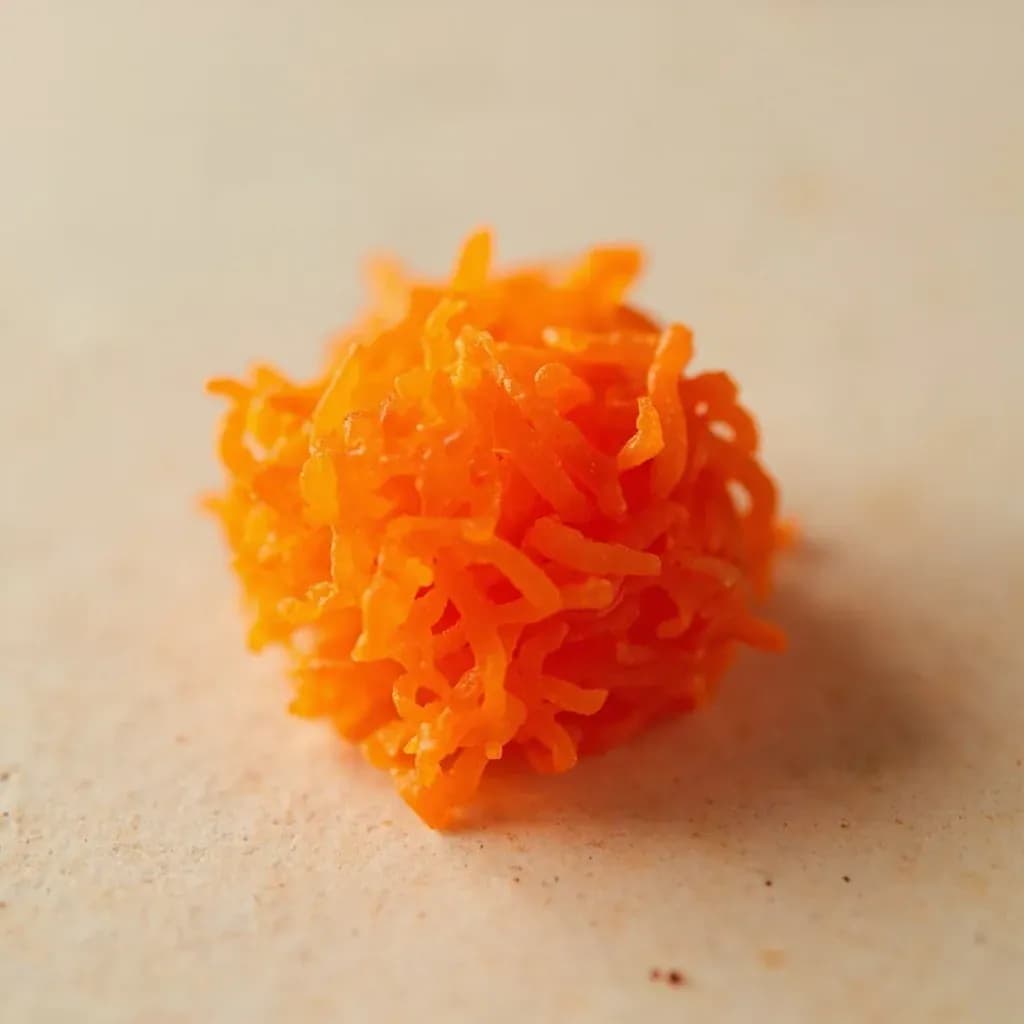
Tobiko is the roe of the flying fish — most often Cheilopogon agoo in Japanese fisheries, with related Cheilopogon and Cypselurus species harvested across the Pacific — gathered, rinsed, and given a brief cure in salt or a soy-and-mirin marinade before packing. Each pearl runs roughly 0.5 to 0.8 mm across, smaller than ikura but larger and firmer than masago, and the cure gives the eggs a crisp, almost candy-like snap rather than the wet burst of salmon roe. That texture, combined with a mild salty-sweet brininess, is exactly what sushi cooks reach for: a small spoonful adds salinity, color, and a crackle that survives cold service and a trip across a pass.
In the kitchen, tobiko wears two hats at once. It is a garnish — the orange-red sparkle that defines a California roll, a tuna tartare, or a scallop crudo — but it is also a seasoning, contributing roughly 2 to 3 percent salt by weight, so it should be used as an accent, not a primary topping. Most dyed varieties (wasabi green, yuzu yellow, squid-ink black, gold, red chili) are built on the same orange base and differ mainly in tint and a flavored accent. The product arrives ready to eat, needs only gentle thawing, and should never see heat; warm rice or a hot sauce will burst the pearls and bleed their color into the dish.
One important note for anyone sourcing: inexpensive "tobiko" sold at the sushi counter is frequently dyed masago (capelin roe). The difference is easy to feel between the teeth but easy to miss on a menu, and on a hand roll the substitution can pass unnoticed — on a composed plate, it shows immediately in texture and a slightly more pronounced fishiness.
- Measured in
- g
- Storage
- Keep Refrigerated & Tightly Sealed; Freeze For Longer Storage.
Allergens
Find it in
Types & varieties
The undyed classic; clean salty-sweet flavor and the benchmark for tasting tobiko on its own
Tinted and flavored with squid or cuttlefish ink; deeper umami and dramatic visual contrast on pale fish
Colored with chili oil, paprika, or beet; often spicier and sometimes labeled 'spicy tobiko'
Green roe with wasabi paste folded in; sharp, sinus-clearing heat that cuts through creamy sauces
Pale yellow flecked with yuzu zest or juice; citrusy and aromatic, popular on scallop crudo and hamachi
Tinted gold for celebratory plating; flavor is typically the standard orange base
Pre-mixed with shoyu, mirin, and dashi; darker brown, slightly sweeter, ready to use as a spread or topping
Tossed with sriracha or chili oil, sometimes bound with Kewpie mayo; common on tuna tartare and poke bowls
Tobiko vs. Masago (and Other Roe)
The masquerade is worth understanding, because the difference is felt in the mouth. Tobiko pearls are larger, glossier, and noticeably crisper — they fracture cleanly between the teeth and hold their shape through plating. Masago pearls are smaller, duller, and softer; they tend to clump and can go mushy if dressed too far in advance. Many sushi counters dye masago orange to mimic tobiko because it is substantially cheaper.
Ikura, by contrast, is a true liquid burst, an order of magnitude larger and far more luxurious; bottarga is a hard, grated cured roe with no pop at all but a deep savor that can echo tobiko's umami from a different angle. For vegan menus, sea grapes (umibudo) and tapioca- or algae-based pearls give the pop without the fish, though they need a hit of smoked salt or soy to stand in for the missing brininess.
- [object Object]
- [object Object]
- [object Object]
- [object Object]
- [object Object]
Common uses
Tips & pitfalls
- Add at the very end of plating — heat destroys the crunch; never set tobiko on rice that is still steaming or warm enough to melt mayonnaise
- Thaw frozen tubs in the refrigerator overnight, never on the counter or under warm water, or the eggs will bleed color and turn mushy
- Do not refreeze once thawed; portion what you need and use the rest within 2–3 days from the fridge
- Treat it as seasoning, not just garnish: at roughly 2–3% salt, a small spoonful can over-salt a dish before you've tasted it
- To make quick spicy tobiko, fold about 1 part sriracha or chili crisp into 4 parts roe just before plating — adjust to taste, never by the tub
- Reject any tub where the eggs have burst or sit in liquid; the pearls should be distinct, glossy, and snappy
- Keep tubs tightly sealed and away from garlic, onions, and other strong-smelling fridge items — the eggs pick up off-odors quickly
- If a recipe calls for tobiko on salmon or salmon roe, use a contrasting color (black, wasabi, yuzu) since orange tobiko visually disappears against orange fish
Nutrition
Energy
598 kJ · per 100 g
Where the calories come from
Protein
22.3g
45% DV
Carbs
1.5g
1% DV
Fat
6.4g
8% DV
Fiber
0g
0% DV
Sugars
0g
of which
Sodium
91mg
4% DV
Source · USDA FoodData Central · approx. Fish, roe, mixed species, raw
View on FDC →In the shops
Matched grocery products
No matched grocery products for Tobiko (Flying-Fish Roe) yet.
Good to know
- Origin
- Japan; commercially harvested in Japan, Taiwan, South Korea, and parts of Southeast Asia and the Pacific
- Egg size
- Roughly 0.5–0.8 mm in diameter — larger than masago and far smaller than ikura
- Standard cure
- Lightly cured in salt or a soy-based marinade; some versions blended with sugar, mirin, and dashi
- Salt content
- Approximately 2–3% by weight — it seasons a dish as it garnishes it
- Yield
- About 30–40 g is enough to garnish 6–8 standard sushi rolls
- Shelf life (opened)
- 2–3 days in a tightly sealed container, refrigerated at 0–4 °C
- Shelf life (sealed)
- Several weeks refrigerated from production; many domestic packs arrive frozen for roughly 6 months
- Common confusion
- Masago (capelin roe) is frequently dyed orange and sold as 'tobiko'; the two are not interchangeable in texture
Substitutes
- Masago (capelin roe) — The closest match in size and color when dyed orange; smaller, softer, slightly more fishy, and far cheaper — fine for casual rolls, weak where the pop matters
- Ikura (salmon roe) — Luxurious substitute with a true liquid burst; far larger pearls, more intensely oceanic, and considerably more expensive — use sparingly
- Bottarga (cured mullet or grey mackerel roe) — Grate finely over dishes; no pop, but concentrated savory umami — a flavor echo rather than a textural stand-in
- Sea grapes (umibudo) — Plant-based; the small green caviar-like seaweed has a real pop and works well in chilled vegan applications
- Vegan roe pearls (algae- or tapioca-based) — Look and pop like roe but lack brininess — season with smoked salt and a drop of soy or yuzu to compensate
- Paddlefish or American sturgeon caviar — Pricier and larger; useful when you want true roe texture and can adjust salt by rinsing briefly
Pairs with
Also called
flying fish roe · tobikko