
Cross-section
A halved watermelon radish reveals its magenta-pink interior against pale green skin.
The defining feature of this radish is its hidden interior; a cross-section is the essential teaching image.
Produce
Watermelon Radish
Round radish with pale green skin and vivid pink interior, crisp and mildly sweet for salads and pickles.
The watermelon radish is a heirloom daikon variety with dull green-white skin concealing a striking magenta-pink center. Crisp, juicy, and mildly peppery with a touch of sweetness, it is sliced raw into salads, shaved for crudite, or quick-pickled to showcase its color. It is at its sweetest and most vivid in cool weather.
The watermelon radish is a striking root vegetable whose cross-section reveals a vivid magenta-pink interior encircling a clean white core—a visual so dramatic it has made the variety a staple of contemporary plating. Despite its name, it carries no watermelon flavor. Botanically, it is a cultivar of the Chinese daikon (Raphanus sativus var. longipinnatus), developed and selected specifically for its interior pigmentation. The pink color comes from anthocyanins, the same water-soluble antioxidants responsible for the hue in red cabbage and blackberries. This pigment is both the radish's greatest asset and its principal culinary consideration: it bleeds readily in liquid, so cooking method profoundly affects the final appearance. The flavor is mild and faintly sweet, with less bite than small red radishes and only a subtle earthy note. Texture is firm and crisp when raw, turning tender but not soft when cooked. Its mildness is a virtue—it takes on surrounding flavors gracefully without demanding heavy seasoning, making it unusually versatile across cuisines.
The variety originated in northern China in the 19th century, where it was known as Shinrimei or similar local daikon types. It entered North American farmers' markets and restaurant kitchens under the "watermelon radish" moniker, a purely descriptive name coined for its visual resemblance to a slice of watermelon. Peak harvest falls in late autumn, and the radish is available from early fall through late winter, making it a natural fit for seasonal menus. Its shelf life is a practical advantage: properly stored in the refrigerator, it holds quality for two to four weeks, and the exterior skin is thin enough to require no peeling in most applications. Virtually the entire radish is usable.
For the cook, the watermelon radish occupies a specific niche: it delivers visual drama that few other vegetables can match in raw preparations, while remaining flexible enough for quick pickles, light cooking, and fermenting. Its mildness is its strength but also its vulnerability—strong dressings and heavy seasoning overwhelm it easily. Understanding how its anthocyanin pigments behave under heat and acid is the key to getting the most from this ingredient.
- Measured in
- piece
- Storage
- Fridge
Types & varieties
Original Chinese cultivar; most commonly sold as watermelon radish in North America
Alternative commercial name for the same variety, used in some markets and seed catalogs
Marketing name used by certain seed companies and specialty growers
Common uses
Tips & pitfalls
- Select firm, heavy radishes with smooth, unblemished skin; discard any with soft spots, cracks, or visible moisture damage
- The intensity of the pink interior varies with growing conditions—cooler weather during development deepens the anthocyanin color, so autumn-harvested specimens are often the most vivid
- Slice or cut just before serving; exposure to air causes the magenta pigment to oxidize and fade noticeably within minutes
- A mandoline set to 1/16-inch thickness produces the most translucent, elegant raw slices—thicker cuts can feel industrial
- If you must cook it in liquid, a brief blanch (30 seconds) in salted water first helps set the color more firmly before transferring to a braise or soup
- Do not over-peel—the thin green-tinged outer layer is edible and contributes a pleasant, mild pepperiness that the interior lacks
- For maximum crunch in salads, salt the sliced radish lightly, let it sit for 5 minutes, then rinse and pat completely dry; this firms the texture without making it overly salty
- Common mistake: seasoning it too aggressively. Its virtue is subtlety—strong dressings and heavy acids will dominate it rather than complement it
- Storage tip: wrap unwashed radishes in dry paper towels inside a perforated plastic bag; excess moisture is the primary cause of softening during storage
- When pickling, avoid over-marinating in highly acidic brine for more than 2 hours for the best balance of color retention and flavor
Nutrition
Energy
67 kJ · per 100 g
Where the calories come from
Protein
0.7g
1% DV
Carbs
3.4g
1% DV
Fat
0.1g
0% DV
Fiber
1.6g
6% DV
Sugars
1.9g
of which
Sodium
39mg
2% DV
Source · USDA FoodData Central · Radishes, raw
View on FDC →In the shops
Matched grocery products
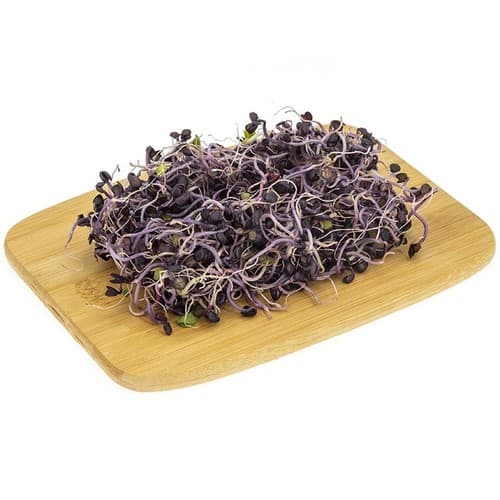 €1.69
€1.69Organic Purple Radish Sprouts in 50g Tray
BROT D'OR · kg · Bonpreu
Good to know
- Botanical name
- Raphanus sativus var. longipinnatus (Chinese daikon)
- Origin
- Northern China, 19th century; North American name coined for its watermelon-slice appearance
- Season
- Fall through early spring; peak harvest late autumn
- Typical size
- 2–4 inches (5–10 cm) diameter; larger specimens can reach 5+ inches
- Interior color
- Vivid magenta-pink to deep coral, with white core; color intensity varies with growing temperature
- Flavor
- Mild and faintly sweet; less bite than red radishes, with a subtle earthy note
- Texture
- Firm and crisp raw; tender when cooked, though color fades significantly
- Shelf life
- 2–4 weeks unwashed in the refrigerator, wrapped loosely in a perforated bag
Substitutes
- Red radish — More peppery bite and smaller size; color contrast less dramatic but similar crunch and broad usage range
- Chioggia beet — Comparable visual impact with white flesh and pink rings; earthier flavor and denser, less crisp texture when raw
- Daikon radish — Similar mild flavor and crisp texture; pure white throughout with no visual drama but excellent in Asian preparations
- Small pink radish varieties — Several boutique pink cultivars offer similar mild sweetness and coloration at a smaller scale
Pairs with
Also called
Roseheart Radish · Shinrimei Radish · Beauty Heart Radish
Related
Tomato
Juicy, sun-sweet fruit for sauces, salads, and slow-cooked depth
Yellow Onion
The aromatic backbone of soups, sofritos, and braises
Garlic
Pungent cloves that perfume nearly every savory dish
Lemon
Bright, acidic citrus that wakes up almost any dish
Potato
Humble, hearty staple — roast, mash, fry, or boil
Carrot
Sweet, crunchy root — raw, roasted, or the base of a sofrito
Cucumber
Cool, crisp, and watery — for salads, pickles, and tzatziki

Lettuce
Crisp leaves for salads, wraps, and a fresh crunch