Sauces & Pastes
White Miso (Shiro)
Short-fermented, rice-heavy miso that is pale, sweet, and mild; the gentle base for dressings, light dashi soups, and delicate fish glazes where you want savor without color.
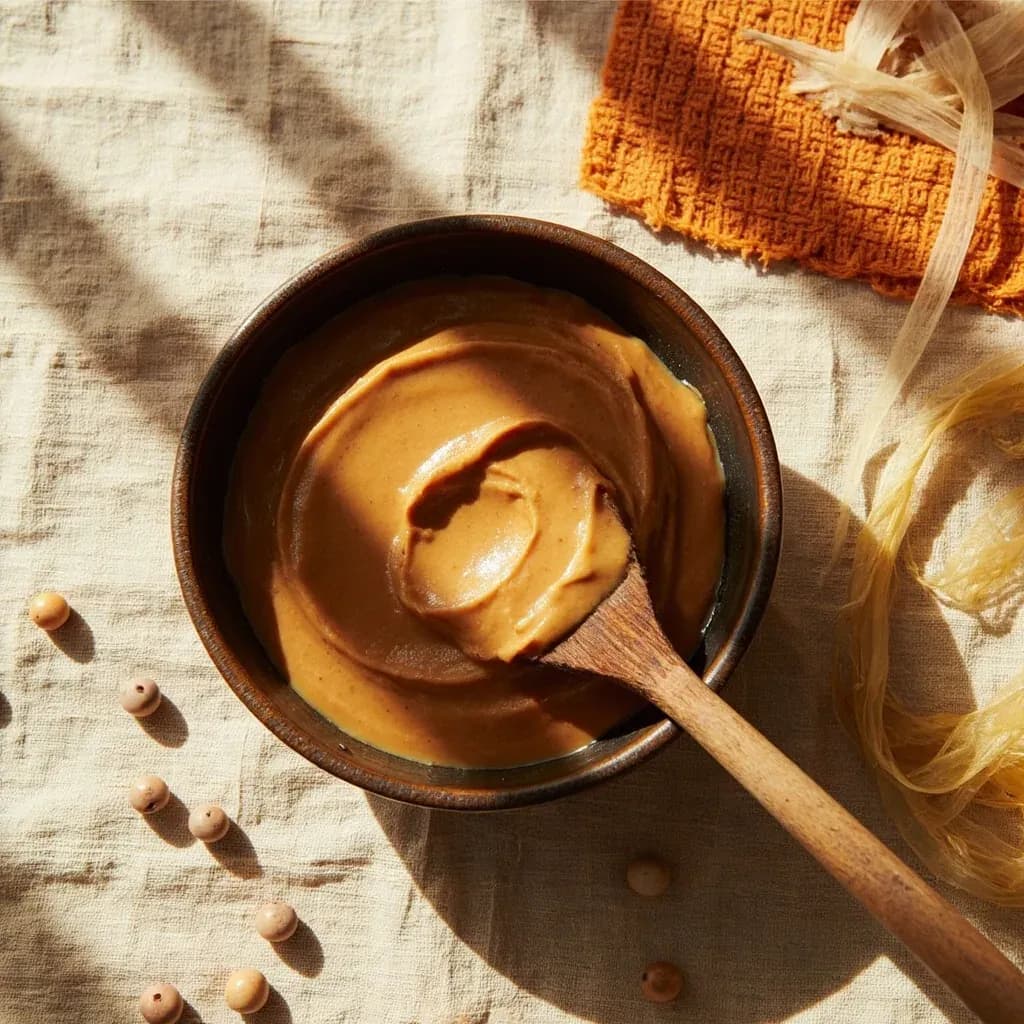
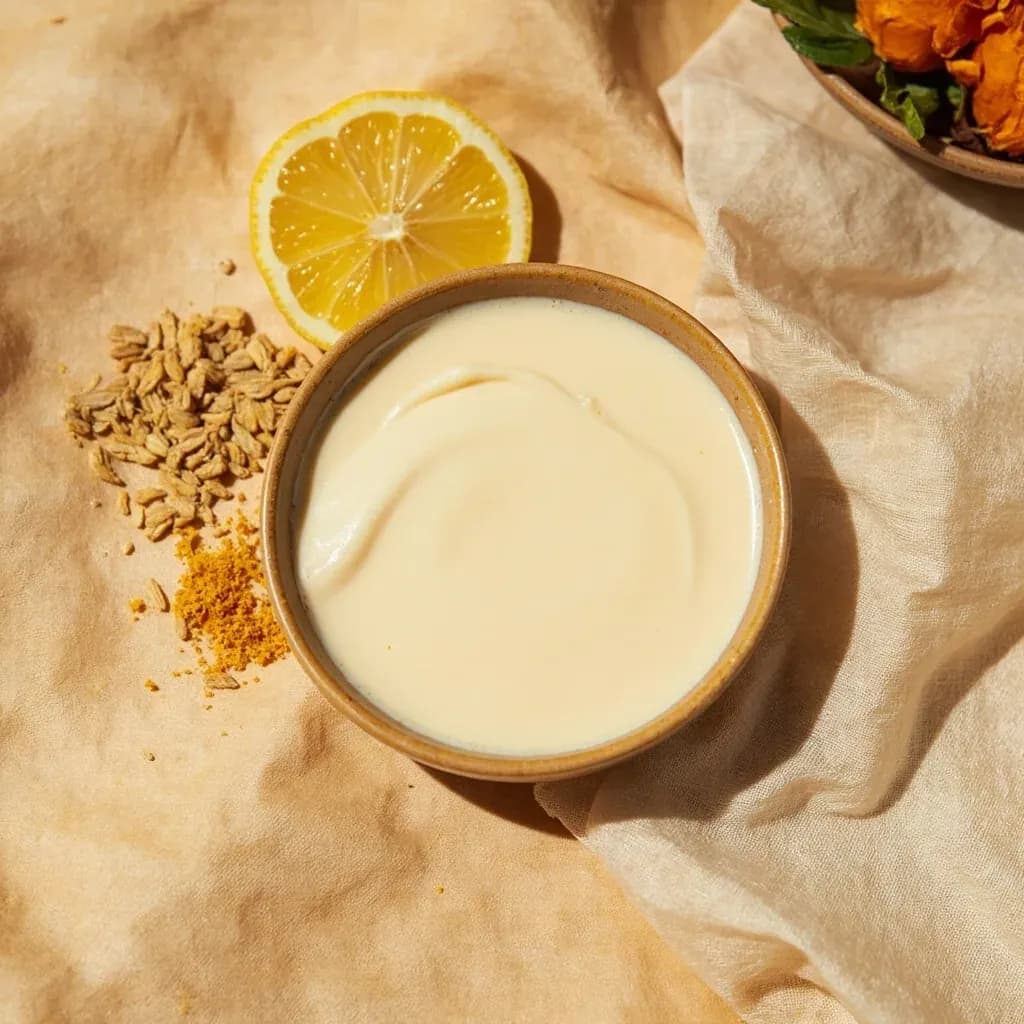
White miso, or shiro miso (白味噌), is the gentlest and sweetest member of the miso family — a short-fermented paste built around rice koji and cooked soybeans, with notably less salt and far more koji than its red or barley counterparts. That composition gives it a pale cream-to-light-tan color, a smooth soft texture, and a flavor that sits at the lighter end of the umami spectrum: honeyed, slightly nutty, with just enough salt to season without announcing itself. It is the miso you reach for when you want depth and savor without color or weight.
In the kitchen, shiro miso behaves differently from darker misos. Its aromatics are volatile and heat-sensitive — a rolling boil mutes the sweetness and kills the live cultures that give the paste its complexity — so it is almost always stirred in off the flame or tempered with warm liquid first. It also clumps when added directly to a pot and benefits from being whisked smooth with dashi, mirin, or water before it meets anything else. These two habits — temper and don't boil — are the technical foundation of nearly every successful white-miso dish.
White miso matters because it bridges the savory depth of fermented soybean paste and ingredients that would be overwhelmed by red miso: delicate white fish, light broths, summer vegetables, dairy, and fresh herbs. It seasons a vinaigrette without darkening it, glazes black cod without burying the fish, and slips into mashed potatoes or compound butter in a way red miso never could. Understanding where it sits on the miso spectrum — and what it cannot do — is what makes it a useful tool rather than a pantry curiosity.
- Measured in
- g
- Storage
- Refrigerate
Allergens
Find it in
Suits
Types & varieties
Kyoto-style shiro; the sweetest and most delicate, pale yellow, with the highest rice-koji ratio. Historically the luxury miso of the imperial court and Kyoto temples, and the defining choice for Saikyo-yaki glazes on cod and other white fish.
Nagano-region style; slightly less sweet and a touch more savory than Saikyo, with a faint fermented tang. The most common commercial white miso in Japan and a reliable everyday workhorse.
Small-producer white misos vary widely in sweetness, salt level, and grain. Some are noticeably saltier or carry a more assertive koji character than mass-market versions.
Lower-sodium commercial white misos exist; they read sweeter, spoil faster, and should be tasted before seasoning the rest of a dish.
Kyoto vs. Shinshu: choosing a white miso
Most cooks will encounter only two white misos in practice, and the difference between them is the difference between a glaze and a soup. Saikyo, from Kyoto, is the sweetest miso made in Japan — pale yellow, almost custardy, with a high koji-to-soy ratio that pushes it firmly toward dessert. It is the miso for Saikyo-yaki on black cod, for sweetened dengaku glazes on eggplant, and for any application where you want the miso itself to taste like honey and toasted rice. Shinshu, from Nagano, is what most supermarket 'white miso' actually is: a touch less sweet, a touch more savory, with a whisper of fermented tang that holds up better in broths, dressings, and compound butter. If a recipe simply says 'white miso' and does not specify, Shinshu-style is the safe assumption. Reach for Saikyo when the miso is meant to be tasted on its own — as a glaze, a finishing paste, or a sweet-savory accent.
Tempering, glazes, and the off-heat rule
The single most important habit with shiro miso is never to boil it. A rolling boil drives off the volatile esters that give the paste its honeyed aroma and destroys the live cultures that continue to develop flavor in the container. In practice this means: whisk the miso smooth with a small amount of warm dashi, mirin, sake, or water before adding it to a pot; in soups, turn off the heat, add the tempered miso, and taste before adjusting; in glazes, brush the miso mixture onto food in the final minutes of cooking rather than reducing it directly over high flame. The only exception is the long, slow Saikyo-yaki marinade, where 24–48 hours of contact with raw fish does the work that heat would otherwise do — tenderizing the flesh and driving the sweet koji flavor deep into the protein.
Common uses
Tips & pitfalls
- Never boil white miso: kill the heat and stir it in at the end, or temper with a ladle of warm liquid, to preserve the sweet aromatics and live cultures.
- Whisk shiro miso with a small amount of warm dashi, mirin, sake, or water before adding it to a pot — it clumps stubbornly when dropped in straight from the tub.
- Press plastic wrap directly onto the surface of the paste before sealing the container; the exposed top layer oxidizes and turns brown faster than the rest.
- Taste the brand before cooking with it — sweetness and salt vary considerably between Saikyo, Shinshu, and house-made styles, even within the white miso category.
- Use less than you think. White miso is mild in flavor but still salty, and a single tablespoon can season a full batch of dressing or glaze.
- For Saikyo-yaki, marinate the fish 24–48 hours — the short fermentation means the miso needs time to penetrate and tenderize the flesh; a quick dip will not do the same work.
- If a dish tastes flat, balance shiro miso's sweetness with acid (rice vinegar, lemon, yuzu) or heat (ginger, white pepper) — it lacks the deep savor of red miso and benefits from contrast.
- Freeze white miso in tablespoon-sized portions in an ice cube tray, then bag the cubes; you can drop a frozen cube directly into warm broth or a pan sauce without thawing.
Nutrition
Energy
828 kJ · per 100 g
Where the calories come from
Protein
12.8g
26% DV
Carbs
25.4g
9% DV
Fat
6g
8% DV
Fiber
5.4g
19% DV
Sugars
6.2g
of which
Sodium
3728mg
162% DV
Source · USDA FoodData Central · approx. Miso
View on FDC →In the shops
Matched grocery products
No matched grocery products for White Miso (Shiro) yet.
Good to know
- Japanese name
- 白味噌 (shiro miso); the Kyoto luxury style is 西京味噌 (Saikyo miso)
- Origin
- Japan; most associated with the Kyoto region (Saikyo) and Nagano prefecture (Shinshu)
- Primary ingredients
- Cooked soybeans, rice koji, salt, and water
- Fermentation time
- Short — typically 1 to 4 weeks for most commercial shiro; some Saikyo is aged 2–3 months
- Koji-to-soy ratio
- Rice-koji heavy, often roughly 2:1 koji to soybean — significantly more koji than red or barley misos
- Salt content
- Lower than darker misos, roughly 5–6% of finished weight
- Color & texture
- Pale cream to light tan; smooth, soft, creamy paste, occasionally slightly grainy in rustic versions
- Storage
- Refrigerate after opening (6–12 months); surface darkens but remains usable; freezes well in portioned cubes
- Heat sensitivity
- Delicate — volatile aromatics and live cultures are lost if boiled; add off the heat or temper first
- Dietary
- Naturally vegan; rice-based and contains no gluten ingredients, though check labels for cross-contamination
Substitutes
- Awase (yellow) miso — The closest readily available substitute; use roughly two-thirds the volume and add a pinch of sugar, a splash of mirin, or a little honey to approximate shiro's sweetness.
- Saikyo for Shinshu, and vice versa — Interchangeable in most recipes; Saikyo is sweeter, Shinshu is slightly more savory — adjust seasoning to taste.
- Light mugi (barley) miso — A pale, mild barley miso can stand in, but expect a nuttier, more toasted flavor and a less sweet finish.
- Red miso, diluted — A last-resort option: a small amount of red miso thinned with mirin, sake, and a pinch of sugar can approximate the color and umami, but the depth and delicacy are lost.
- Korean doenjang — Avoid as a substitute — it is stronger, saltier, and more pungent, from a different fermentation tradition. Useful only when the recipe specifically wants that assertive flavor.
Pairs with
Also called
shiro miso · sweet white miso