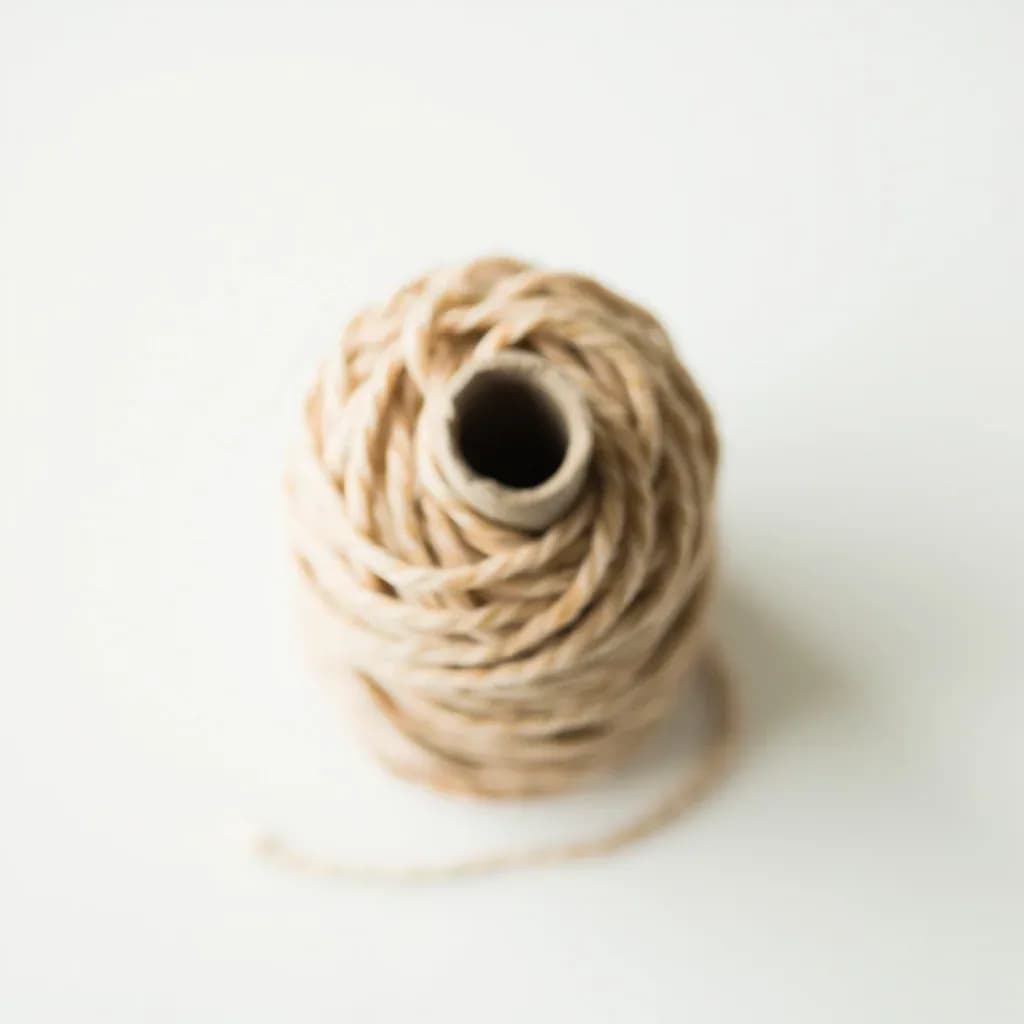
Tying & Fastening
Baker's Twine
Food-safe cotton string for trussing, bundling, and tying foods during cooking.
Baker's twine is a sturdy, food-safe cotton string used to truss poultry, tie roasts, bundle herbs, and secure rolled meats. It holds shape under oven heat without scorching or imparting flavor. The natural cotton is strong enough to cinch tightly yet easy to snip away before serving.
Baker's twine is a natural-fiber, food-safe string used to bind, truss, bundle, and secure foods before and during cooking. In the kitchen it is functionally interchangeable with butcher's twine — both are 100% cotton and chosen for one defining property: they scorch and char rather than melt, so a stray end brushing a hot oven wall will not release plastic into the roast. Most professional kitchens keep at least two spool thicknesses on hand because the gauge required to truss a quail is very different from the gauge needed to tie a standing rib roast or bundle a bouquet garni.
The string's behavior in the kitchen is governed by its fiber and ply. Unwaxed cotton grips knots well when dry, softens slightly with heat and moisture, and can be soaked in water to delay scorching during long cooks. Ply describes how many individual strands are twisted together; 4-ply is the everyday standard for poultry and small roasts, 6- and 8-ply are reserved for heavy bundling work like whole primals, hanging charcuterie, and any task where the twine bears weight. Waxed or starch-coated versions exist but are less common in professional kitchens, where the coating is sometimes seen as unnecessary for most tasks.
The familiar red-and-white striped "baker's" twine — the form that gave the supply its popular name — is the same cotton fiber, merely dyed and twisted in alternating colors for decorative presentation on pastry boxes, cheese bundles, and gift loaves. It is not stronger than plain white twine; the stripes are cosmetic. For any cooking task, the rule is the same: only natural fiber (cotton, linen, or hemp) belongs in contact with food, and only undyed white belongs in long, hot, or dye-sensitive applications.
Alternatives
Types & varieties
Plain, undyed cotton — the professional workhorse for trussing and tying.
Iconic striped decorative string for pastry boxes, cheese bundles, and gift wrapping; cosmetic, not stronger.
Pure cotton with no coating; preferred for long cooks and direct food contact.
Light starch or paraffin coating that stiffens the string and helps knots grip; less common in pro kitchens.
Natural fiber alternative with similar heat tolerance; coarser hand, used for rustic presentations and large roasts.
Choosing the Right Ply
Ply is the most useful specification on a spool of kitchen twine, and choosing correctly prevents both breakage and food damage.
- 4-ply: the everyday standard — chicken, duck, small roasts, herb bundles, asparagus ties, roulades.
- 6-ply: medium roasts, stuffed pork loin, anything where the twine bears weight during a long cook.
- 8-ply and heavier: standing rib roast, whole boneless veal breast, hanging cured meats, and any tie that supports weight over hours.
- When in doubt, choose heavier ply — an over-engineered tie will not break, but an under-engineered one will snap mid-roast and reshape the bird.
Material Safety
Cotton, linen, and hemp are the only acceptable fibers in the kitchen. Everything else is a hazard or a flavor problem.
- Never use nylon, polyester, or polypropylene twine: these melt at 400–500°F and can fuse into the surface of a roast.
- Jute is natural but sheds fibers and lends a grassy, papery flavor on long cooks — keep it out of the kitchen.
- Decorative craft string often contains unknown fiber blends and dyes; even if labeled cotton, the dye may migrate into fatty foods.
- For butchery tasks and long braises, use undyed white cotton — the dye in striped twine can bleed into pale poultry skin or white sauces.
Knots Worth Knowing
Most kitchen ties are simple loops finished with a single bow, but a few variations solve specific problems.
- Single loop and bow: the universal trussing knot — tight enough to hold, loose enough to snip off at the table without a knife.
- Surgeon's knot: a double-overhand first throw that grips greasy or waxed twine and resists slipping on a roast.
- Bridle knot: a small loop at one end used to hang sausages or tie off the neck of a stuffed bird.
Common uses
Tips & pitfalls
- Never substitute nylon, jute, or craft string — synthetics can melt into food and jutes shed fibers and flavor.
- Tie with a single loop and a bow rather than a tight double knot so the string can be snipped off cleanly before serving.
- Soak twine in water for 10–15 minutes before long roasts or low-and-slow barbecue to slow scorching.
- Truss snugly but not so tight that air cannot circulate — the goal is uniform shape, not compression of the meat.
- Cut twine with kitchen shears rather than tearing it; clean cuts prevent fraying at the knot.
- Keep twine away from direct flame, grill grates, and broiler elements — it will ignite.
- Use undyed white cotton for butchery and long-cooked dishes; reserve red-and-white striped twine for presentation and gift wrap.
- Rewrap the spool in a zip-lock bag between uses; kitchen twine absorbs grease and odors quickly and will mildew if stored damp.
Good to know
- Material
- 100% natural cotton; sometimes a light food-grade starch or wax coating
- Heat tolerance
- Scorches or chars above ~400°F (204°C); never expose to direct flame
- Standard ply
- 4-ply for everyday trussing; 6- and 8-ply for heavy roasts and hanging
- Typical put-up
- Spools of 175–600 ft, most commonly 200–300 ft
- FDA status
- Approved for food contact when 100% cotton and free of synthetic fibers, dyes, or finishes
- Origin
- Descended from traditional butcher's string; the red-and-white striped form became standard in 20th-century bakeries
- Also called
- Butcher's twine, kitchen twine, cooking string, cotton string
- Storage
- Keep dry in a sealed bag or covered spool to prevent mildew and grease absorption
Also called
Baker's Twine · Butcher's Twine · Kitchen String
Related

Skewers
Thread meat and vegetables for kebabs and grilling

Toothpicks
Pin rolls shut and test cakes for doneness

Kitchen Twine
Food-safe string for trussing roasts and tying bundles

Butcher Paper
Breathable wrap for resting barbecue and storing meat
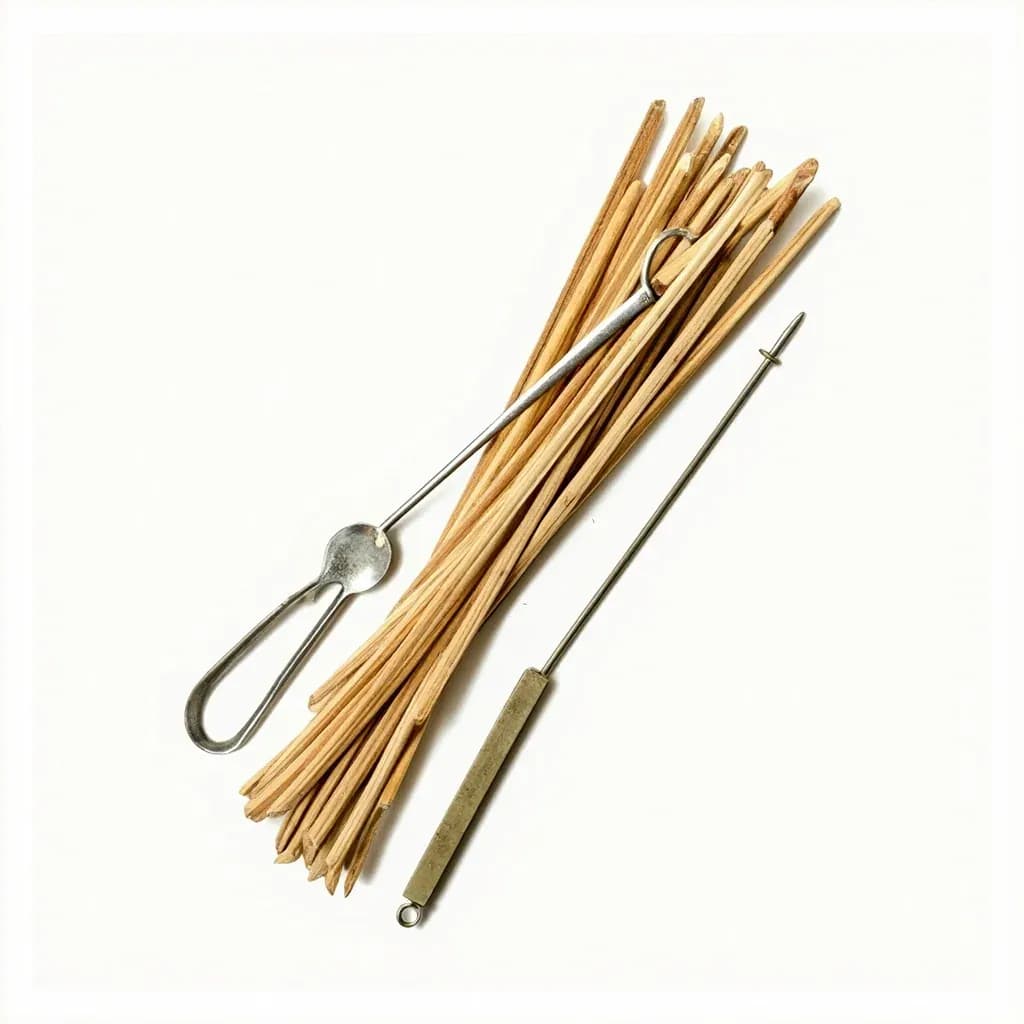
Skewer (Metal / Wooden / Bamboo)
Thin pointed rod that threads meat and vegetables for grilling, roasting, or testing doneness.
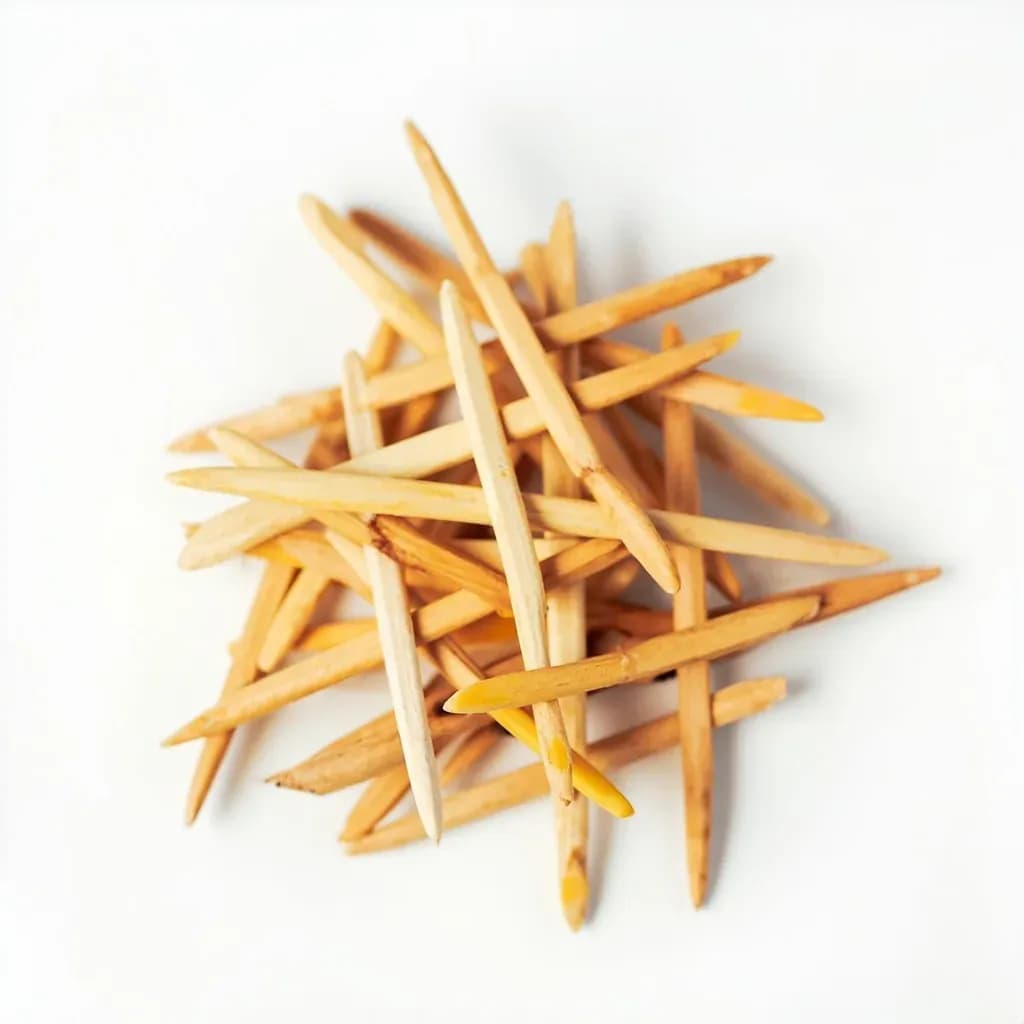
Toothpick
Small pointed wooden pick that pins rolled food shut and tests baked goods for doneness.
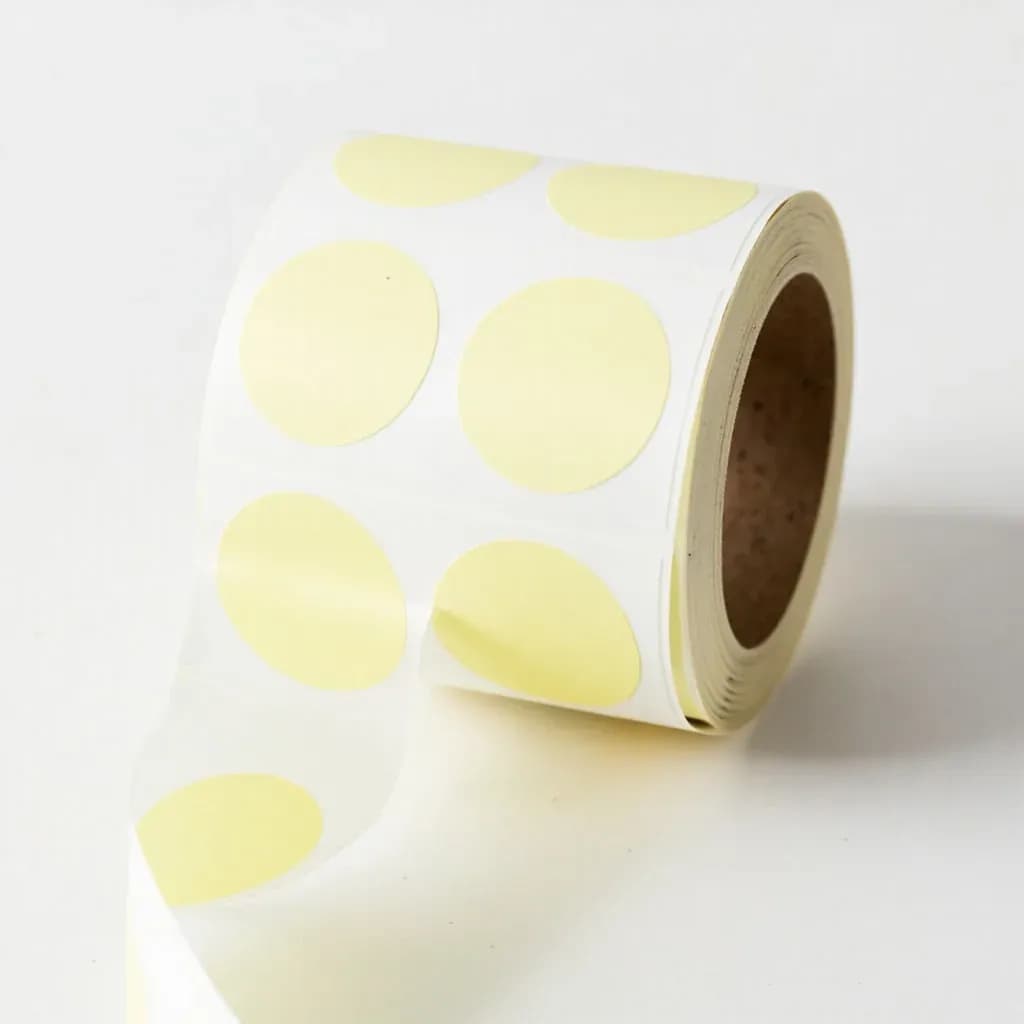
Food Storage Label (Day-Dot)
Stick-on label marking date, contents, or batch info for safe stock rotation.
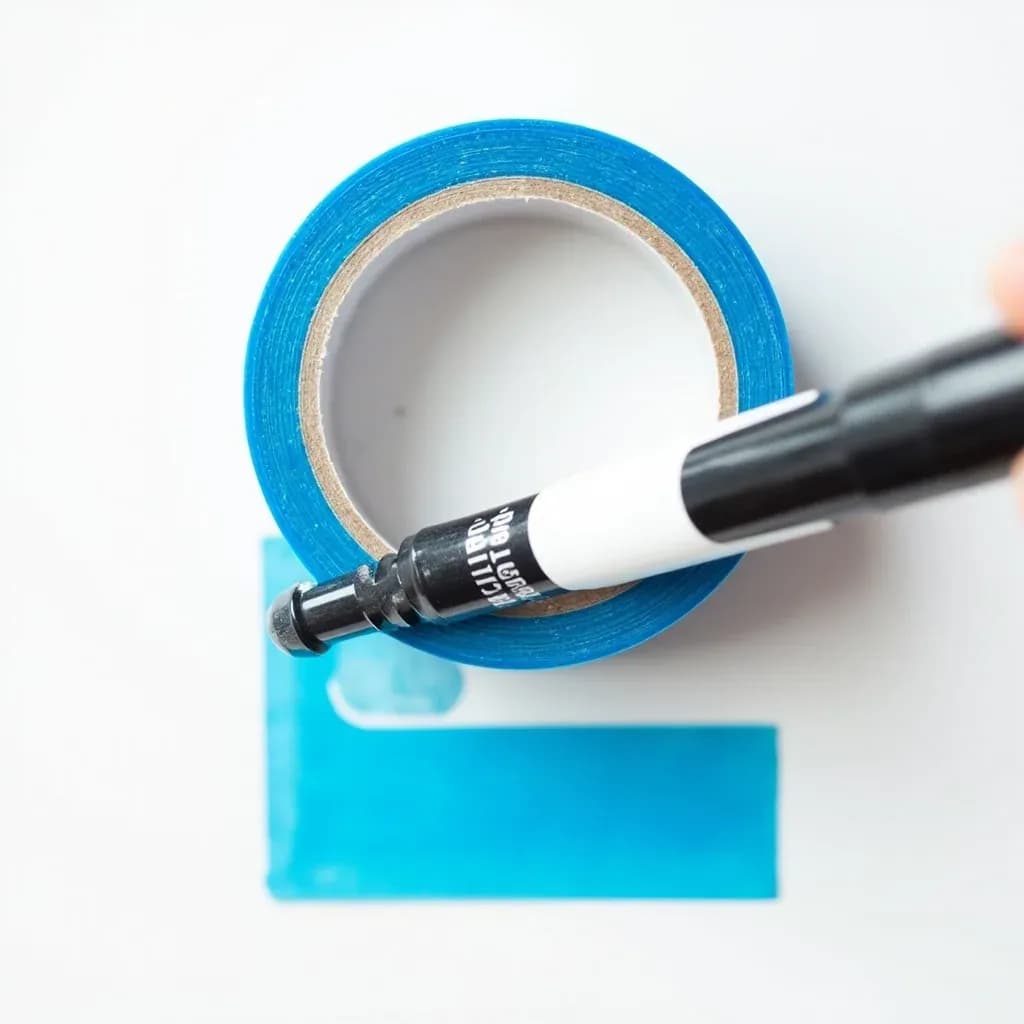
Labeling Tape
Write-on tape for marking containers with contents and dates, peeling off cleanly later.