Tying & Fastening
Bay Leaf Skewer
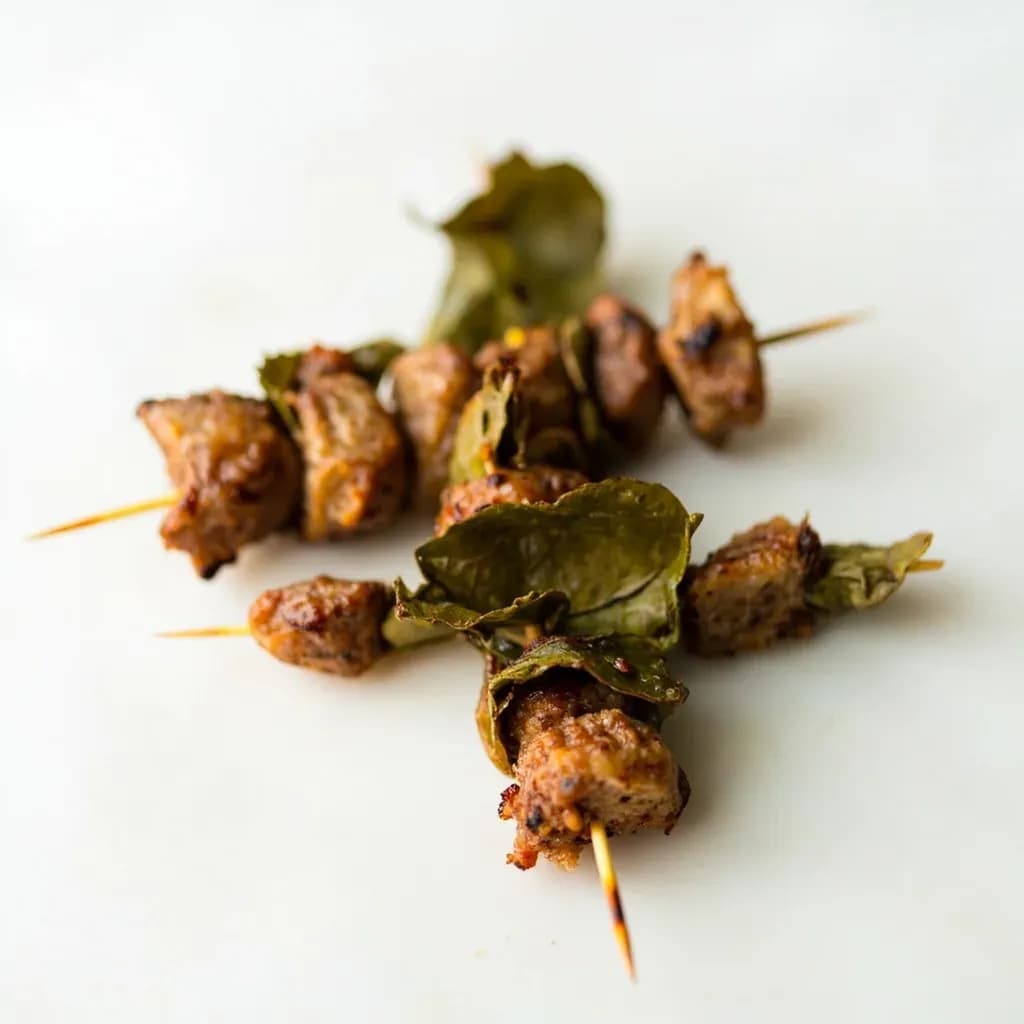
Skewers threaded with bay leaves between food pieces to perfume grilled spiedini.
A bay leaf skewer alternates fresh or dried bay leaves with meat, bread, or vegetables on a stick for grilling. The technique, common in Italian spiedini and Turkish kebabs, lets the leaves perfume each bite with their warm, herbal aroma as they char. Both metal and wooden skewers work, though wooden ones are soaked first to resist burning.
A bay leaf skewer is not so much a fastening tool as a flavor-delivery device in disguise: a plain wood, bamboo, or flat metal skewer threaded with fresh leaves of Laurus nobilis between pieces of meat, fish, or vegetables so that the leaves perfume the food as it grills. The technique is a signature of Southern Italian spiedini, particularly from Calabria, Campania, Basilicata, and Sicily, where it is known generically as spiedino al profumo di alloro — a skewer scented with bay. The leaves do double duty: they release volatile essential oils into the smoke and rendered fat while acting as physical spacers that let heat circulate evenly around each piece of food.
What distinguishes bay from other grilling herbs is the chemistry of its leaves. Laurel is rich in 1,8-cineole (eucalyptol), with supporting notes of linalool and eugenol, and these compounds vaporize rapidly when the leaves meet radiant heat and sizzling fat. The result is a cool, menthol-eucalyptus perfume that settles onto the surface of the food in a way dried bay leaves dropped into a braise never manage. Because the oils are fat-soluble, the technique works best with proteins that render — pork shoulder, chicken thighs, oily fish like swordfish and sardines, rabbit — and benefits from a brush of olive oil on leaner cuts.
A few assembly rules separate a fragrant skewer from a bitter, leafless one. Fresh, pliable leaves are essential; the brittle, olive-brown leaves sold in spice jars will shatter on the skewer and burn to ash. Skewers are built no more than thirty to sixty minutes before grilling, since salt and time wilt fresh leaves into limp ribbons. In most regional traditions the charred leaves are part of the dish — eaten alongside the food, not picked off — though the tough central ribs are discarded at the table.
Alternatives
Types & varieties
Generic Italian name for the technique — a skewer scented with bay — applied to whatever protein is on hand
Calabrian pork skewers alternating bay leaves with cubes of pork, often pancetta or fresh sausage
Sicilian swordfish skewers layered with bay leaves and lemon, traditionally built on flat metal skewers
Chicken thigh or breast pieces threaded with bay leaves, common in Campanian and Roman grilling
Whole or butterflied sardines alternated with bay leaves, a coastal Calabrian and Sicilian preparation
Rabbit pieces with bay leaves, traditional in rural Southern Italy and Sardinia
Lamb cubes with bay leaves, found in Basilicata and parts of Puglia, often served alongside grilled peppers
Vegetarian variant threading bay leaves between zucchini, eggplant, mushrooms, and peppers
Why Bay, and Why Fresh
Bay laurel is one of the few common herbs whose flavor chemistry actually shines over live fire. The leaves store their essential oils in tiny glandular cells just beneath the surface; when those cells rupture against hot fat and radiant heat, the oils flash into vapor and cling to the food. Dried bay leaves from a spice jar have already lost most of these volatiles — what remains is tough cellulose and tannic bitterness — so they char without perfuming. Fresh leaves, by contrast, are pliable enough to fold against the food, large enough to char meaningfully, and still loaded with the cineole that defines the aroma.
- Fresh leaves are deep green, flexible, and slightly glossy; dried leaves are olive-brown, stiff, and snap rather than bend
- The same principle explains why bay fades from a long braise — heat and time drive off the very compounds you want over a grill
- If only dried bay is available, brief rehydration in warm water can soften the leaves enough to thread, though the aromatic punch of fresh is never matched
Flat Metal Skewers and the Fish Tradition
Southern Italian cooks traditionally build fish skewers on flat metal skewers called spiedini a lama — long, blade-like prongs that pass through the food twice and hold it rigid. The advantage for bay-leaf work is twofold: the food cannot spin and tear the leaves loose when you turn the skewer, and the broad metal surface conducts extra heat into the leaves, charring them against the fish. For swordfish, tuna, or sardines, a flat metal skewer is almost a requirement; for chicken thighs and pork, a soaked wooden skewer is perfectly adequate.
- Double-prong flat skewers let you sandwich a layer of leaves between two pieces of fish for a fully enclosed aromatic packet
- Wooden skewers should be soaked at least 30 minutes (longer for thick ones) to prevent ignition over charcoal
- Individual portions are usually 15–25 cm long; longer shared spiedini are used for table-side presentation
Common uses
Tips & pitfalls
- Choose fresh, deep-green, pliable bay leaves — dried leaves from the spice jar shatter on the skewer and burn to bitter ash
- If only dried leaves are available, soak them in warm water for 10–15 minutes and pat very dry before threading
- Soak wooden or bamboo skewers in water for at least 30 minutes (longer for thicker ones) to prevent ignition on the grill
- Fold or tear larger leaves in half so they wrap the food and rupture more oil-bearing cells on contact with hot fat
- Thread at least 2–3 leaves between each piece of food — a sparse skewer delivers almost no aroma
- Press food pieces snugly against the leaves so the leaves char against the protein rather than in empty air
- Grill over medium-high heat rather than maximum flame; the leaves need to perfume the food, not incinerate
- Use flat metal skewers for fish and other round items so they do not spin and so the leaves make broader contact
- Build the skewers no more than 30–60 minutes ahead; salt pulls moisture from the leaves and they turn limp and leathery
- For very lean proteins (chicken breast, swordfish loin), brush the leaves and food lightly with olive oil to help carry the fat-soluble laurel oils
- Serve the charred leaves on the plate — they are traditionally eaten and provide a crisp, herbal counterpoint to the rich food, though tough central ribs should be discarded
Good to know
- Origin
- Mediterranean; strongly associated with Southern Italian grilling traditions, especially Calabria, Campania, Basilicata, and Sicily
- Material
- Skewer (wood, bamboo, or flat metal) and fresh leaves of bay laurel (Laurus nobilis)
- Leaf state
- Fresh, pliable, deep-green leaves are essential; dried leaves shatter on the skewer and burn to bitter ash
- Flavor delivery
- Volatile essential oils — chiefly 1,8-cineole (eucalyptol), with linalool and eugenol — vaporize from heated leaves and perfume the adjacent food
- Cooking method
- High-heat grilling, traditionally over wood or charcoal (alla brace); medium-high is preferable so leaves perfume the food rather than incinerate
- Typical assembly
- 2–4 leaves threaded between each piece of food, often folded or torn; 4–6 pieces and 8–15 leaves per skewer
- Edibility
- Charred leaves are traditionally eaten with the food; tough stems and central veins are discarded
- Storage of prepared skewers
- Assemble and cook within 30–60 minutes; salt draws moisture from leaves and causes wilting if held longer
Also called
Bay Leaf Spiedini Skewer · Alloro Skewer
Related

Skewers
Thread meat and vegetables for kebabs and grilling

Toothpicks
Pin rolls shut and test cakes for doneness

Kitchen Twine
Food-safe string for trussing roasts and tying bundles

Butcher Paper
Breathable wrap for resting barbecue and storing meat
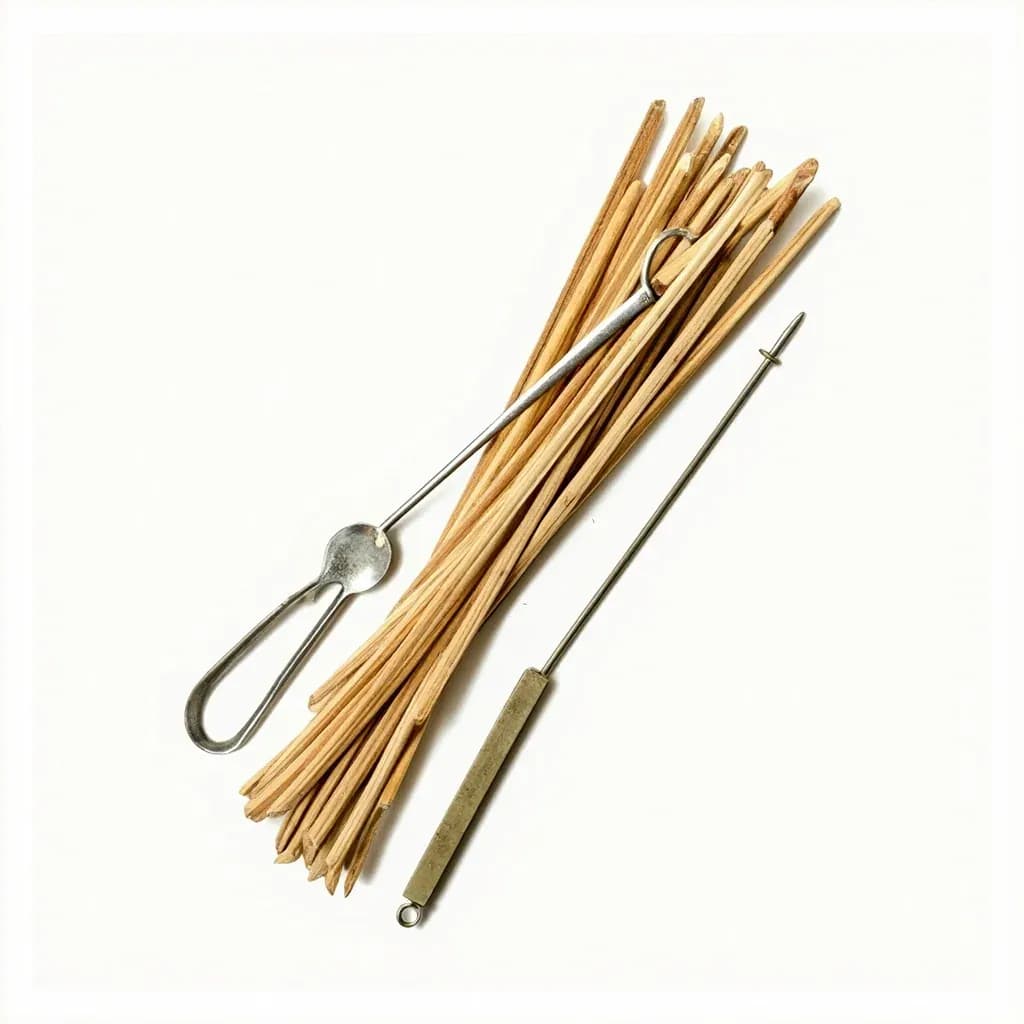
Skewer (Metal / Wooden / Bamboo)
Thin pointed rod that threads meat and vegetables for grilling, roasting, or testing doneness.
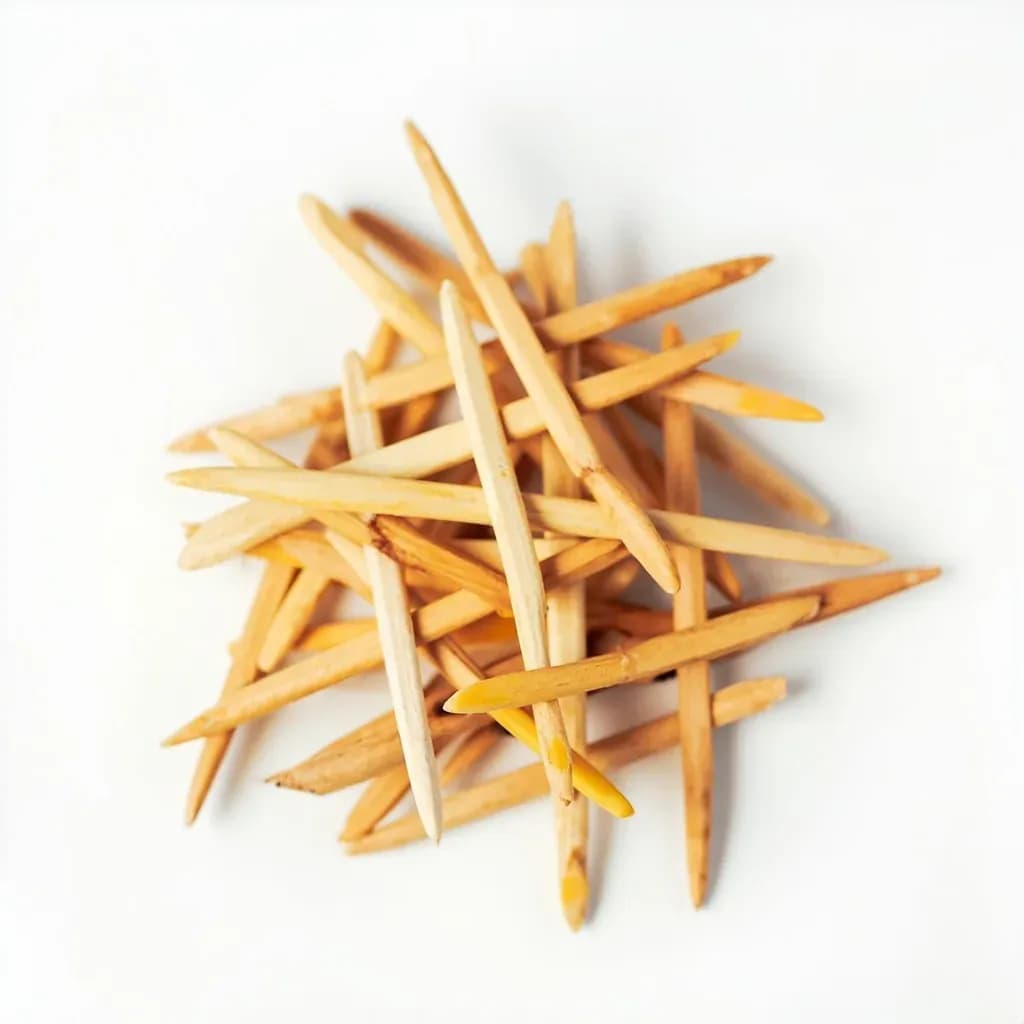
Toothpick
Small pointed wooden pick that pins rolled food shut and tests baked goods for doneness.
Food Storage Label (Day-Dot)
Stick-on label marking date, contents, or batch info for safe stock rotation.
Labeling Tape
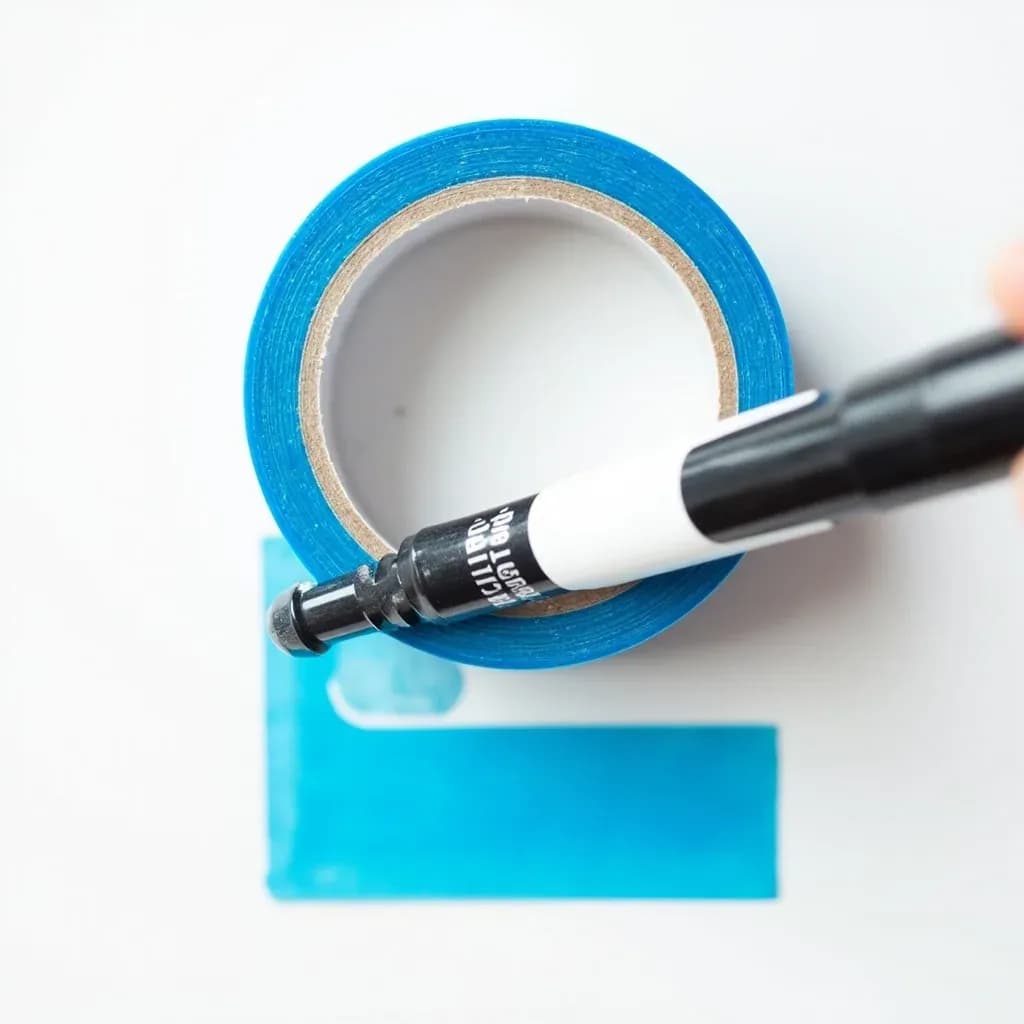
Write-on tape for marking containers with contents and dates, peeling off cleanly later.