Tying & Fastening
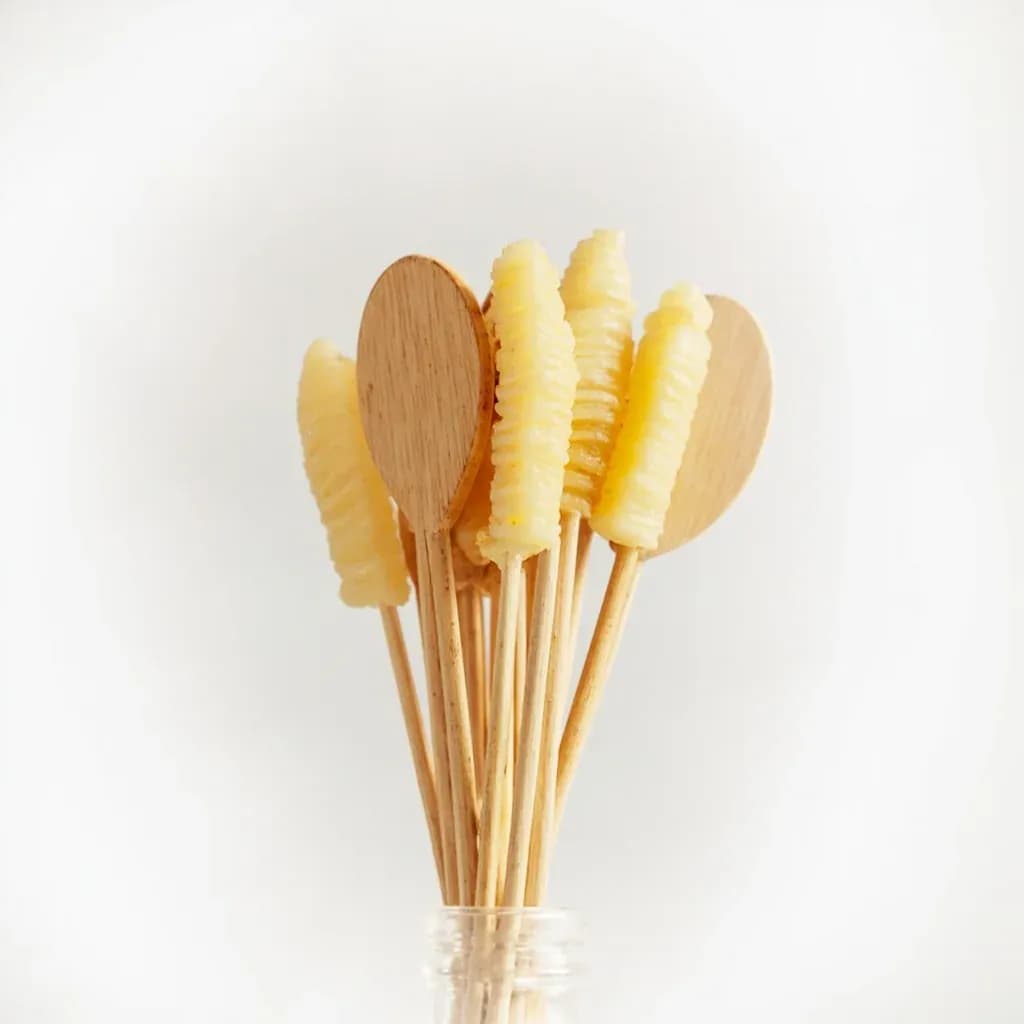
Cocktail Skewer (Pick)
Short wooden or bamboo pick for spearing garnishes, appetizers, and rolled foods.
A short pointed pick of wood, bamboo, or plastic used to spear olives, fruit, and bite-size canapes or to pin rolled and stuffed foods shut. In cooking they hold together involtini, stuffed peppers, or bacon-wrapped morsels through cooking and serving. They are disposable and often topped with a decorative knot or frill for presentation.
The cocktail skewer — also called a cocktail pick — is the smallest working member of the skewer family and one of the most-deployed tools in bar and buffet service. It does two things at once: holds a garnish or a single small portion together, and signals that the item is finished and ready to eat. At roughly 3 to 4 inches long, it is sized for one bite — a stuffed olive, a caprese stack, a Scotch egg flagged with a frill — not the longer work that bamboo skewers do on the grill.
Material choice shapes the experience. Wooden and bamboo picks are cheap, flavor-neutral, and disposable, which makes them the default for high-volume service. Stainless steel picks cost more up front but are reusable and survive the dishwasher. Plastic picks, including the brightly colored novelty shapes used in tiki bars, are essentially decorative. The frilled paper pick is a tradition of its own: a pleated paper or cellophane frill at the top turns the pick into part of the garnish, and that single detail defines British gastropub presentation for prawn cocktail, Scotch egg, and pork pie.
In practice the cocktail pick is less about cooking than about plating logic. It keeps stacked components from sliding, lets a server handle garnishes without fingers in the food, and — through color coding — turns a buffet into something a guest can navigate without asking. None of it is glamorous, but no serious bar or pass station runs without a tin of plain wooden picks within arm's reach.
Alternatives
Types & varieties
The workhorse: thin, pointed at one or both ends. Used for olives, cherries, cheese cubes, melon balls, and any single garnish.
Iconic British style with a small pleated paper or cellophane frill at the top. Traditional finish for prawn cocktails, Scotch eggs, and pork pies.
Pick with a small closed loop at the top instead of a sharp point, so it can be reused and removed without pricking fingers.
Stainless steel or chrome-plated pick shaped like a miniature sword or dagger, used in Bloody Marys and dramatic cocktail service.
Metal pick with a barbed or split tip that holds soft items — olives, pearl onions, cherries — securely without slipping.
Plastic picks molded into shapes such as umbrellas, anchors, swizzle sticks, or swords. Purely visual; common in tropical and tiki drinks.
Picks in distinct colors used at buffets to flag vegetarian, vegan, gluten-free, or allergen-free items at a glance.
5–8 inch version built for tall layered appetizers — caprese stacks, melon-and-prosciutto towers, rolled tortilla pinwheels.
Where the Cocktail Pick Sits Among Similar Tools
The cocktail pick is easy to confuse with two close cousins. A toothpick is shorter — usually under 2.5 inches — and is built for testing doneness or holding a single tiny item like a stuffed date. A bamboo skewer is much longer, typically 6 to 12 inches, and is built to thread several pieces of food for grilling or broiling. The cocktail pick occupies the middle ground: long enough to hold a small stack or anchor a generous garnish, short enough that one pick equals one bite.
Color Coding for Buffets and Platters
Color-coded picks are a professional-kitchen convention, not a consumer one. The point is to make a self-service buffet readable: a guest can identify a vegetarian, vegan, gluten-free, or allergen-free item by pick color without asking or reading a label. The system is worth borrowing even for home entertaining when more than one dietary restriction is in play.
- Assign one color per diet — for example, green for vegetarian, red for meat, blue for seafood, yellow for gluten-free — and adjust the scheme to fit the menu.
- Post the color key at the start of the buffet so guests know what each color means.
- Reserve colored picks for items that genuinely need flagging; leave plain picks on neutral items so the color signal stays meaningful.
- Reusable plastic picks in mixed colors are inexpensive and survive the dishwasher; wooden picks can be tinted, but the color may bleed into acidic foods like pickled onions or citrus.
Common uses
Tips & pitfalls
- Soak wooden or bamboo picks in water for 10–15 minutes before threading anything that will hit direct heat — grill, broiler, or open flame — otherwise they scorch and snap.
- For tall layered appetizers, step up to a longer pick (5–6 inches) so the stack stays balanced instead of leaning off the plate.
- Match pick length to garnish height in a glass: a short plain pick keeps a single olive neat in a Martini, while a sword or long pick suits a tall Bloody Mary loaded with celery, olives, and shrimp.
- Keep a few colors of picks in the kitchen — they are the cheapest insurance against a guest picking up a pork canapé when they meant the vegetarian one.
- Add frilled paper-topped picks at the last moment; the paper wilts and spots quickly under oil- or vinegar-heavy dressings.
- Store plain wooden picks in a small tin or caddy at every bar and pass station — they are the single most-used garnish tool in service.
- If a wooden pick splinters when entering a soft item, switch to a metal loop pick, or start the hole with the tip of a paring knife.
- Reusable stainless steel picks should be run through the dishwasher or a commercial sanitizer after every use; the small size makes them easy to lose in busy service, so keep a dedicated tin for them.
- When assembling a platter in advance, hold the picks in a separate container and insert them just before setting out — this keeps ingredients from shifting and the board looking clean.
Good to know
- Also known as
- Cocktail pick, party pick, food pick, hors d'oeuvre pick, frilled pick, olive pick
- Typical length
- 3–4 inches (7.5–10 cm) standard; 5–8 inch versions exist for taller stacks
- Common materials
- Bamboo, birch wood, stainless steel, food-grade plastic
- Single-use vs. reusable
- Wooden, bamboo, and most plastic picks are single-use; stainless steel and some hard-plastic picks are reusable
- Heat tolerance
- Wood and bamboo scorch over open flame; soak 10–15 minutes in water before grilling or broiling
- Flavor impact
- None — plain wood, bamboo, or metal contribute no taste to food
- Typical pack size
- Sold in bulk, commonly 100, 250, 500, or 1,000 count
- Sterilization (metal)
- Dishwasher-safe or wash in hot soapy water; can be run through a commercial sanitizer
Also called
Wood Skewer · Cocktail Pick · Toothpick (long) · Appetizer Pick
Related

Skewers
Thread meat and vegetables for kebabs and grilling

Toothpicks
Pin rolls shut and test cakes for doneness

Kitchen Twine
Food-safe string for trussing roasts and tying bundles

Butcher Paper
Breathable wrap for resting barbecue and storing meat
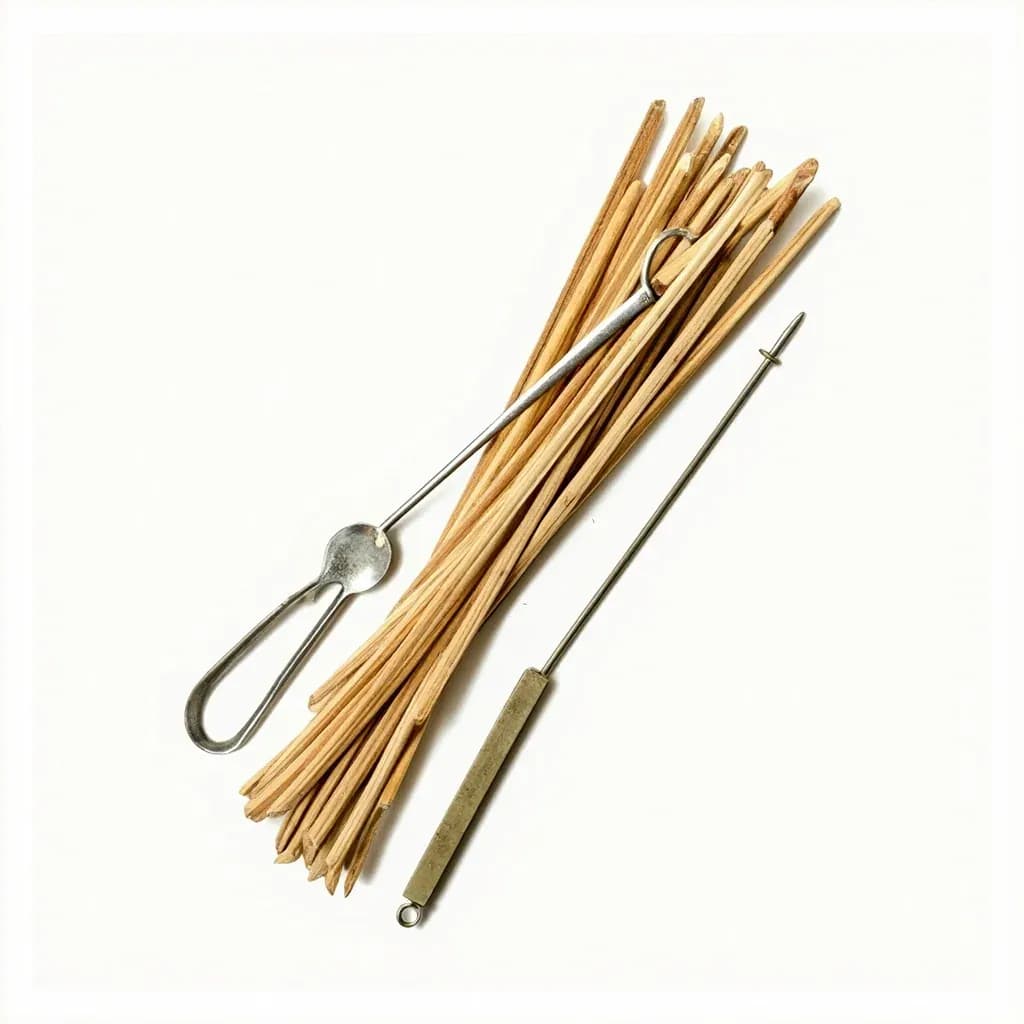
Skewer (Metal / Wooden / Bamboo)
Thin pointed rod that threads meat and vegetables for grilling, roasting, or testing doneness.
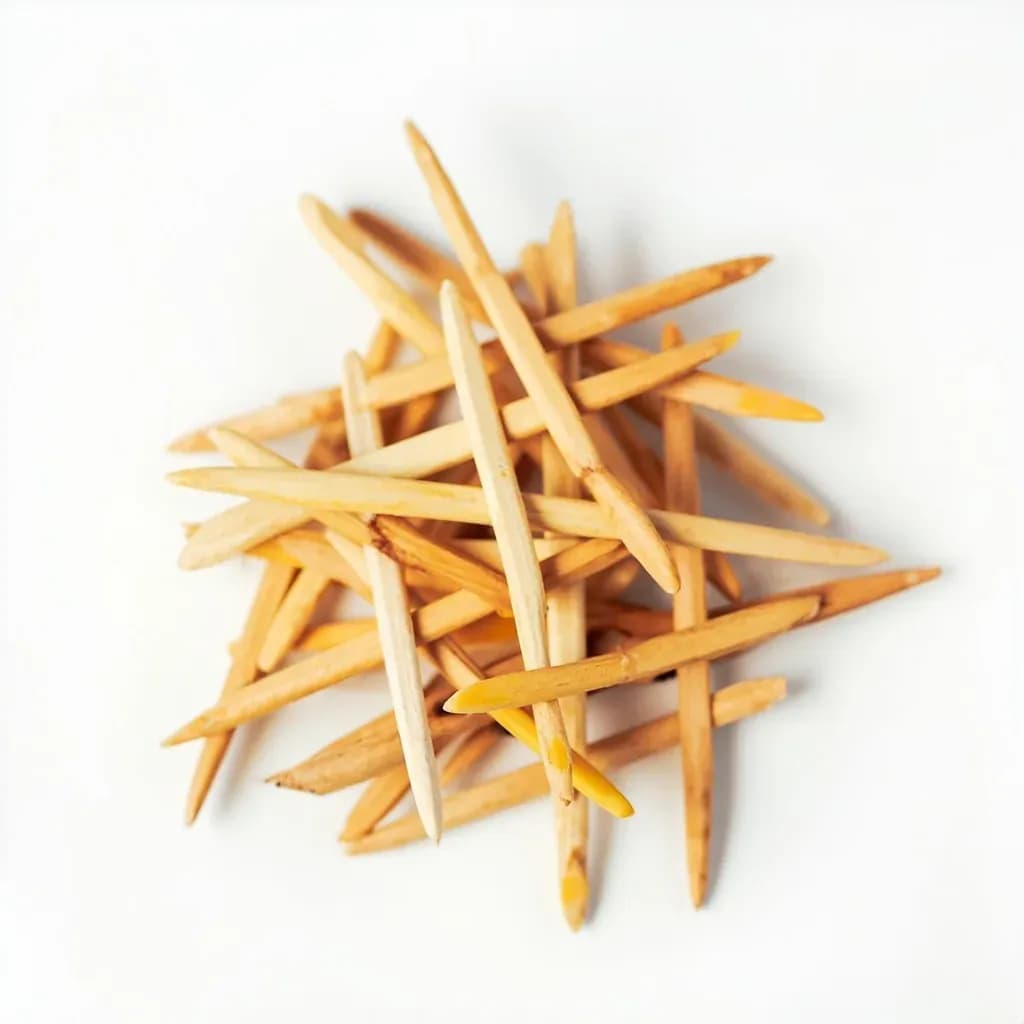
Toothpick
Small pointed wooden pick that pins rolled food shut and tests baked goods for doneness.
Food Storage Label (Day-Dot)
Stick-on label marking date, contents, or batch info for safe stock rotation.
Labeling Tape
Write-on tape for marking containers with contents and dates, peeling off cleanly later.