
Tying & Fastening
Keg Collars
Printed cardboard rings slipped over a keg neck to label beer style, batch, and dates.
A keg collar is a die-cut cardboard ring that slides over the neck of a beer keg between the chime and the valve. Breweries write or print the beer style, batch number, and fill or best-by date on it for easy identification in a crowded cooler. Because they tuck under the keg's top rim, they stay put through stacking and transport without adhesive.
A keg collar is a printed or blank ring of food-grade paperboard — or, in reusable versions, PVC — that slips over the narrow neck of a beer keg and rests between the chime and the valve. Its job is passive but critical: at the moment a keg is grabbed from a walk-in, swapped onto a tap, or rolled out at a festival, the collar is the first thing a person reads to confirm what is inside, when it was filled, and which coupler and gas pressure it needs. Compared with a full-body adhesive label, a collar lives where the eye naturally goes when the keg is upright on a dolly or stacked on its side.
The medium matters as much as the message. Cardboard is the default because it is cheap, food-safe, takes chalk and ink cleanly, and is disposable when a batch changes. That disposability is a feature, not a flaw — a fresh collar per fill is the simplest defense against taproom mix-ups, stale pours, and the confusion that follows when last week's IPA label is still clinging to this week's stout. Plastic and laminated collars earn their keep in high-turnover taprooms, outdoor festivals, and any setting where condensation would destroy a paper label within hours.
In British real-ale culture the chalk-marked cask collar is older than the modern craft-keg system and remains part of the visual vocabulary of the pub: a pump clip on the handpull and a chalked ring on the cask read as a matched set, each naming the brewery, beer, and strength. That lineage helps explain why blank, writable collars persist even in breweries that could easily afford full-color preprints — the chalk is the point.
Alternatives
Types & varieties
The most common, low-cost type; food-grade, printed or blank, used by craft breweries and UK cask-ale venues.
Plain surface designed for chalk or chalk-marker; the right choice when batch, date, and beer name change every fill.
Custom-printed with brewery name, logo, beer style, and color-coding; used for marketing and quick tap-line identification.
Wipe-clean, durable, and reused across kegs; favored in busy bars, taprooms, and outdoor festivals.
Heat-shrink band that must be broken to reach the valve; used for retail packaged-keg sales and event security.
Smaller diameter sized to fit 5-gallon ball- or pin-lock corny kegs, popular with homebrewers and small craft operations.
Sized for standard US commercial half-barrel, quarter-barrel (pony), and sixth-barrel (sixtel) Sankey kegs — all three share the same neck diameter.
Sized for firkin (9 gal), pin (4.5 gal), kilderkin (18 gal), and barrel (36 gal); traditionally chalk-marked.
Small paperboard disc or tag traditionally attached to the cask shive or slipped over the neck and chalked with the beer, brewery, ABV, and racking date; a close cousin of the cask collar rather than a strict synonym.
Sizing and fit
A keg collar only does its job if it stays put. Within the US Sankey family, half-barrels, quarter-barrels, and sixth-barrels all share the same neck and valve spec, so a single Sankey collar diameter fits all three. The clear break is between Sankey on one side and Cornelius (corny) kegs on the other: a Sankey collar is far too wide for a corny neck and slides down past the chime onto the cylinder, where the print is lost; a Cornelius-sized collar won't even pass over a Sankey neck. UK casks are sized to British specifications again, even where volumes overlap with US formats. For reusable plastic collars, a slightly snugger fit is fine because the plastic has give; for cardboard, err on the side of a clean slide so the collar does not crumple as it goes on.
- US Sankey half-barrel, quarter-barrel, and sixth-barrel (sixtel) all use one neck diameter — order once, use across sizes.
- Cornelius ball- and pin-lock corny kegs need a smaller diameter; Sankey and corny collars are not interchangeable.
- UK firkin, kilderkin, pin, and barrel collars are sized to British cask specs, not US Sankey.
- A collar that slides past the chime and lands on the cylinder is the wrong size and will not be read at the neck.
The British cask-collar tradition
In UK real-ale service the chalked cask collar is not decoration — it is the contract between brewery and pub. The brewer chalks the beer name, brewery, ABV, and the date the cask was filled or racked, and that information travels with the cask into the cellar. The pub's handpull pump clip carries the same name and strength so a customer can match what they are ordering to what is in the cellar. Re-chalking the collar when a new cask is tapped is part of the cellarman's routine, and reading the chalk is how anyone in the cellar knows at a glance what is on, what is nearly finished, and what is past its prime.
Common uses
Tips & pitfalls
- Size the collar to the keg family — all US Sankey sizes (half, quarter, sixtel) take one diameter, while Cornelius corny kegs need a smaller one; mixing the two is the most common sizing mistake.
- Slip the collar on after keg cleaning and filling but before the keg goes into the cooler, so the lineup is already labeled when staff read the walk-in.
- Use chalk or a chalk-marker on blank cardboard for fast updates between batches; permanent pen can bleed on untreated board and is harder to correct.
- Replace the collar every time the keg is refilled — old collars on refilled kegs are a leading cause of taproom mix-ups and stale-beer complaints.
- Print the required gas (CO₂ versus blended) and serving pressure directly on the collar; bar staff change kegs faster than they read memos.
- Keep a stack of blank collars on hand for last-minute test batches and one-off festival pours where preprints are not practical.
- For outdoor events and breweries selling kegs directly to the public, choose a tamper-evident shrink collar to discourage post-purchase valve swaps.
- In heavy-condensation environments — outdoor festivals, ice-bath coolers, summer cellars — use a plastic or laminated collar; wet cardboard collapses and ink runs.
- Make the date format unambiguous (DD MMM YYYY or ISO 8601) so day and month are never confused across regions or shifts.
- Do not substitute a full-body adhesive keg label for a collar; the two serve different reading distances and different identification needs.
Good to know
- What it is
- A printed or blank ring of paperboard (or plastic) that slips over the narrow neck of a beer keg to display identifying information such as beer style, batch/lot number, brewery, and dates.
- Also called
- Keg neck collar, keg sleeve, cask collar, neck ring.
- Primary material
- Food-grade printed or plain cardboard (corrugated or solid board); reusable versions are PVC or plastic.
- Fits on
- Standard US Sankey half- and quarter-barrels and sixth-barrels (sixtels) all share the same neck and accept one collar diameter; Cornelius ball- and pin-lock corny kegs use a smaller collar; UK casks (firkin, pin, kilderkin, barrel) are sized separately.
- Writing surface
- Blank cardboard collars take chalk, chalk markers, or fine-tip permanent pens; pre-printed versions carry fixed graphics and color blocks.
- Tradition
- Long-standing in British real-ale culture, where blank paperboard cask collars are chalked at the brewery to mark each cask before delivery.
- Tamper-evident variant
- Shrink-sleeve or perforated tear-strip collars signal whether a retail or event keg has been opened.
- Reusability
- Cardboard collars are single-use; plastic or PVC collars are wipeable and reused across many kegs.
Also called
Keg Collar · Keg Tag · Keg Neck Label
Related

Skewers
Thread meat and vegetables for kebabs and grilling

Toothpicks
Pin rolls shut and test cakes for doneness

Kitchen Twine
Food-safe string for trussing roasts and tying bundles

Butcher Paper
Breathable wrap for resting barbecue and storing meat

Skewer (Metal / Wooden / Bamboo)
Thin pointed rod that threads meat and vegetables for grilling, roasting, or testing doneness.
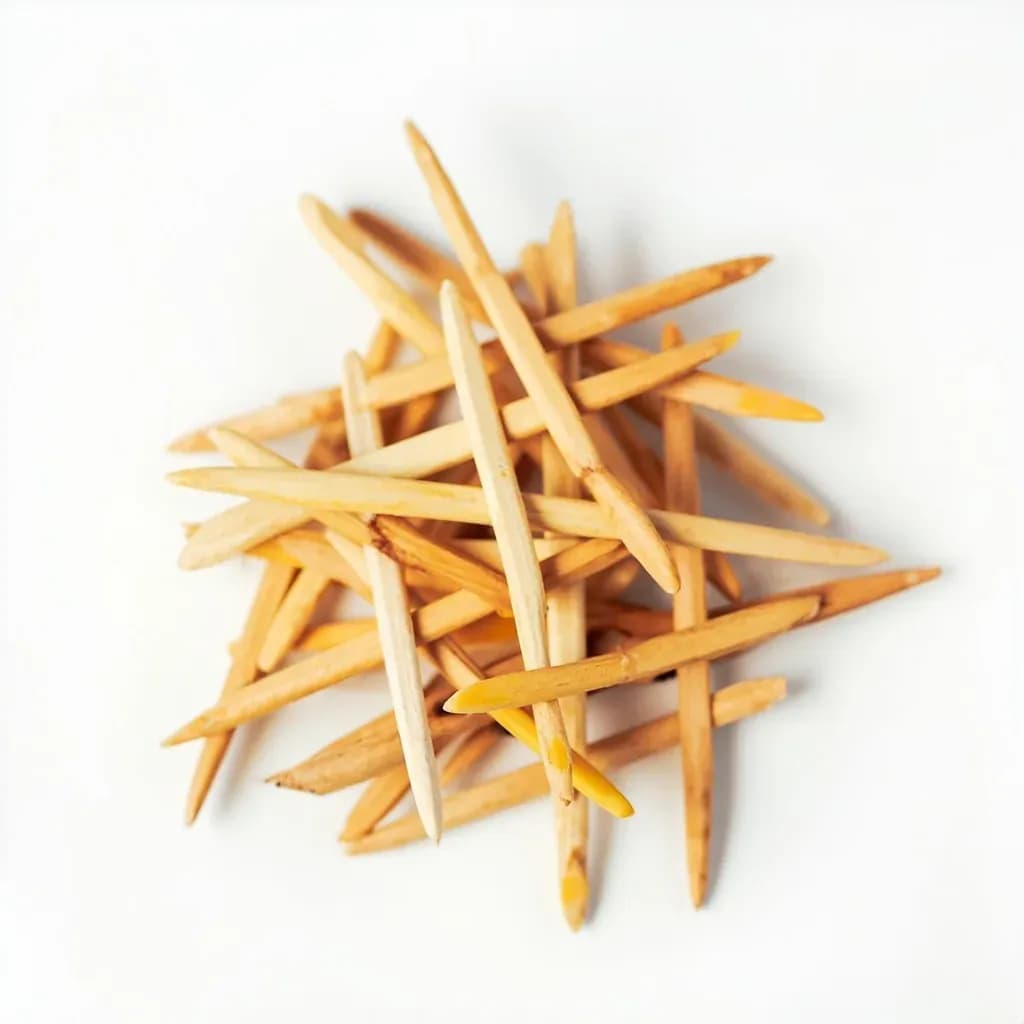
Toothpick
Small pointed wooden pick that pins rolled food shut and tests baked goods for doneness.
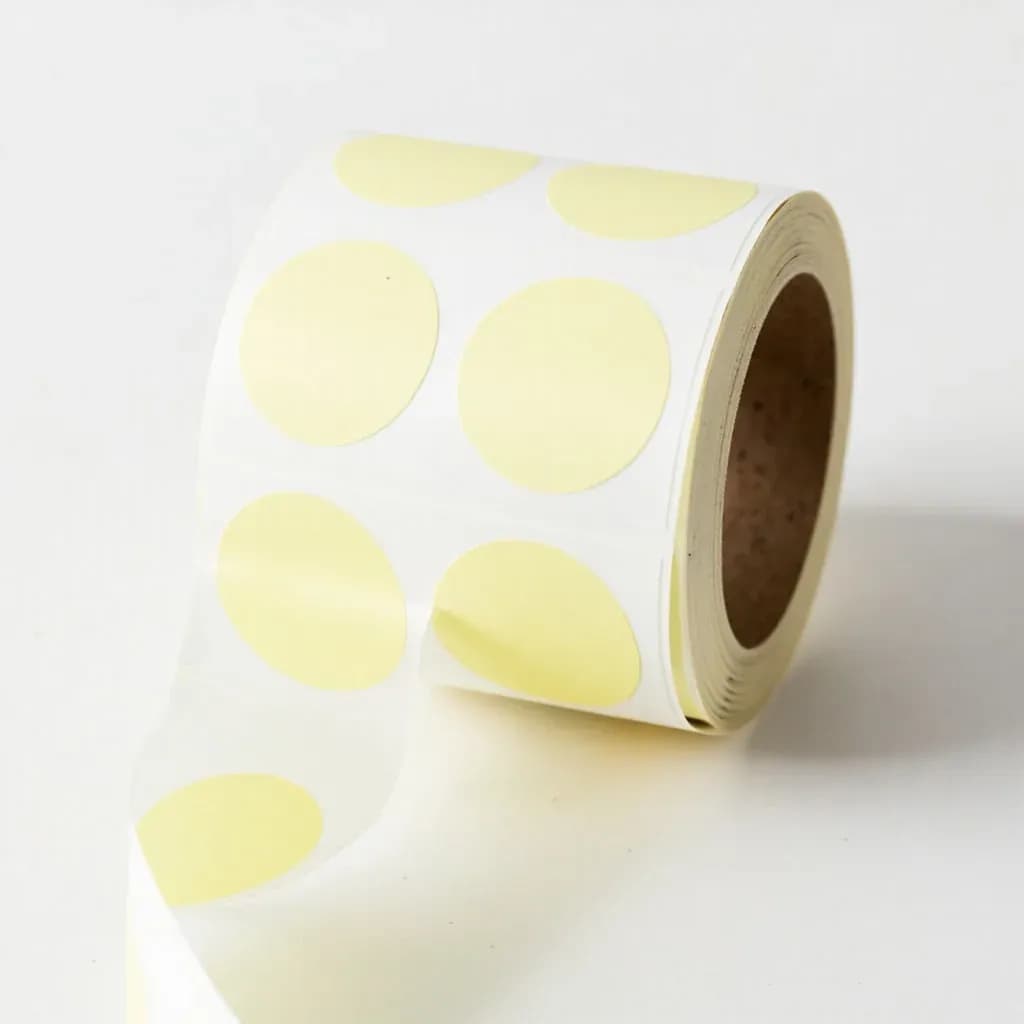
Food Storage Label (Day-Dot)
Stick-on label marking date, contents, or batch info for safe stock rotation.
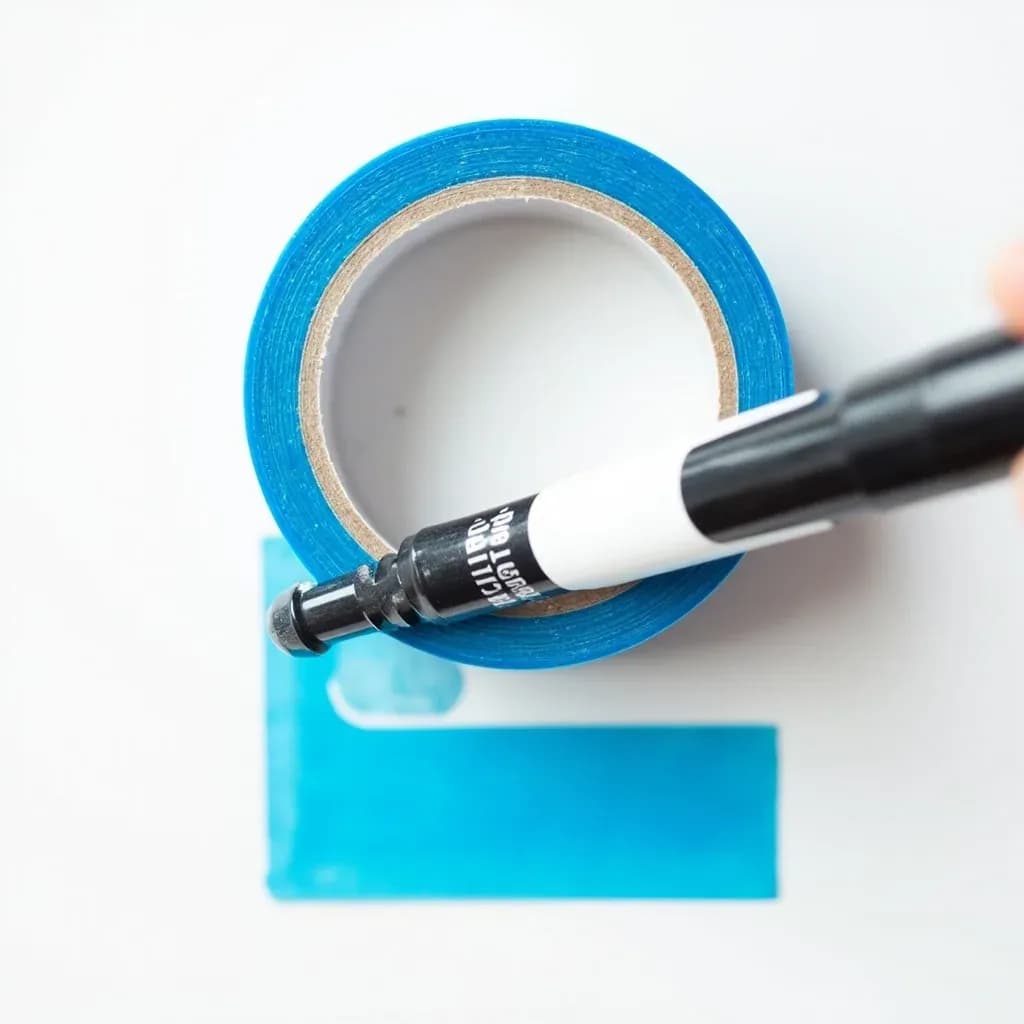
Labeling Tape
Write-on tape for marking containers with contents and dates, peeling off cleanly later.