Tying & Fastening
Meat Netting
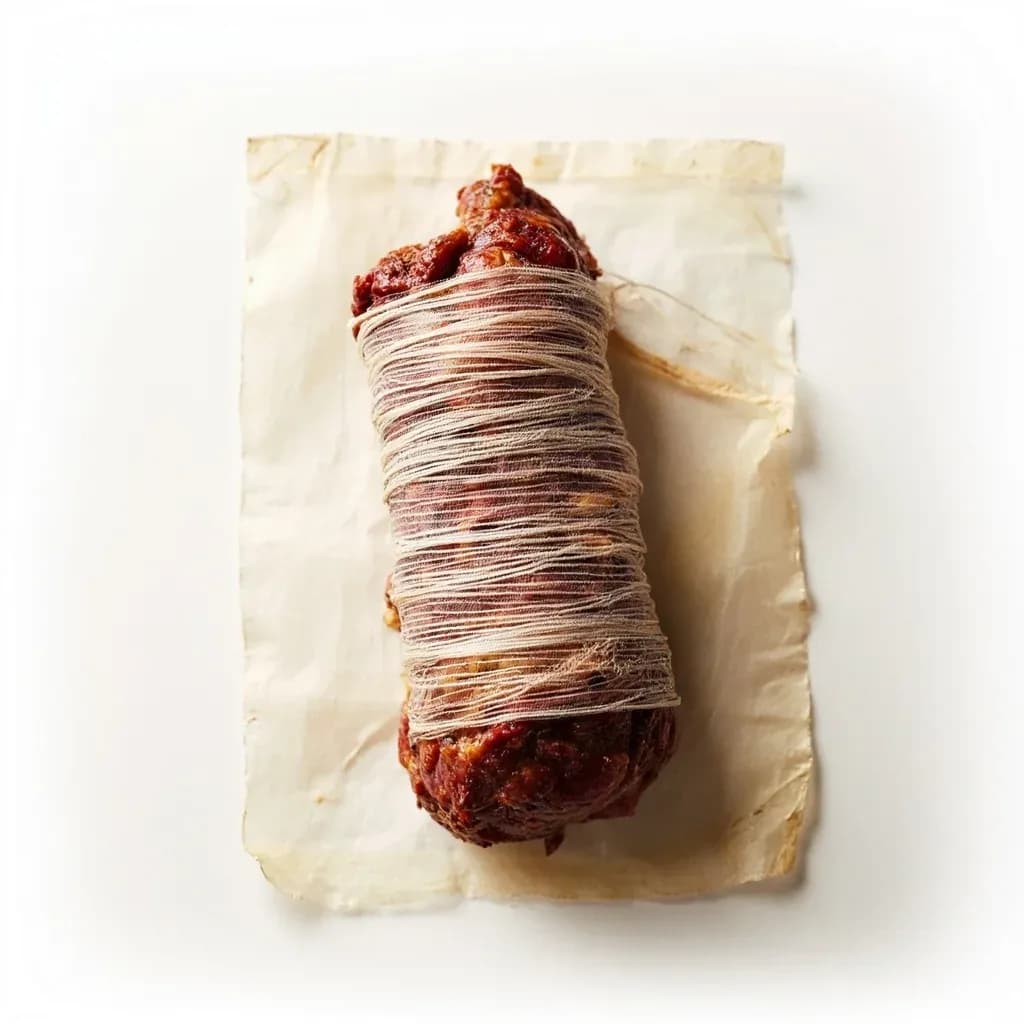
Elastic net pulled over a roast to hold its shape during cooking.
An elastic cotton or food-grade net slid over a roast, rolled joint, or boned bird to hold its shape and keep stuffing in during cooking. It distributes pressure more evenly than twine and gives the finished roast an attractive diamond pattern. The net is loaded with a netting horn or tube and snipped off before slicing.
Meat netting is a continuous elastic tube — a stretchy fabric sleeve that a cook slides over a roast, terrine, or stuffed cut to compress it evenly from every direction at once. Where butcher's twine gives you a handful of discrete pinches, netting applies uniform circumferential pressure, which is why it is the traditional tool of charcuterie for ballotines, galantines, and forcemeat terrines, and a standard fixture in butcheries shaping rolled loins. The result is a roast that cooks evenly, holds its shape as it renders and shrinks, and carves into tidy, uniform slices.
The net behaves differently depending on what it is made of. Cotton netting is breathable and tolerates high oven heat, so it can stay on through roasting; it grips best when dampened first, the small but decisive habit that keeps the sleeve from sliding off as the meat contracts. Polyester netting is the standard commercial grade, food-safe and consistent, rated for typical roasting temperatures. Latex and rubber nets stretch the most and cost the least, but their lower heat tolerance makes them better suited to cold preparations, light pressing during chilling, or low-temperature cooks.
Because the net is elastic, it does the work of dozens of individual ties and adapts as the meat loses volume — tightening as moisture renders out rather than going slack. It is not edible and should be cut away before serving, but it is reusable: a gentle hand wash in warm soapy water, a rinse, and an air-dry away from heat will keep a good cotton or polyester net in service for years.
Alternatives
Types & varieties
The traditional choice for high-heat roasting; breathable, reusable, and tolerant of deep browning. Best dampened before use so the fibers grip the meat rather than slipping.
Standard commercial grade with consistent stretch and food-safe construction; rated for typical oven roasting temperatures.
Economical and very stretchy, but with lower heat tolerance; better suited to cold preparations, terrine pressing, or low-temperature cooking.
Tight weave intended for delicate items — terrines, pâtés, galantines — where a smooth, compressed surface is the goal.
Larger openings for whole roasts, rolled stuffed loins, and cuts that benefit from airflow around the surface during cooking.
Sold in fixed diameters and lengths; convenient for portioned production in butcheries, delis, and busy restaurant kitchens.
Choosing the right diameter and mesh
The single most common mistake is buying a net that is too large for the cut. A net that simply rests on the surface does almost nothing; the elasticity only does useful work when the tube is noticeably smaller than the meat, so it must stretch to enclose the roast and grip inward.
- Pick a diameter roughly 1 to 2 in (2.5–5 cm) smaller than the relaxed circumference of the meat at its thickest point.
- Use fine mesh for delicate forcemeats and galantines, where a smooth compressed finish matters more than airflow.
- Use coarse mesh for whole roasts and stuffed loins, where air circulation around the surface helps even browning.
- For irregular or oddly shaped cuts, err slightly smaller — a tighter net reshapes the meat; a loose one just sags.
Dampening: the small habit that makes the net work
Cotton netting is the most common material in serious kitchens, and it behaves completely differently when wet than when dry. A damp cotton fiber swells slightly and grips the meat's surface, so the sleeve stays put as the roast renders and shrinks. A dry cotton net, by contrast, slides off with the first surge of juices — a frustratingly common rookie mistake.
- Soak cotton netting in cold water for a minute, then squeeze out the excess so it is damp, not dripping.
- Apply the damp net to a patted-dry roast; surface moisture between meat and mesh helps the fibers lock in.
- Polyester and latex nets do not benefit from dampening and should be applied dry.
- For very fatty or oily surfaces, rub the roast with a thin layer of mustard or oil before applying the net — this also encourages even browning under the mesh.
Removing and storing
The net is not edible and traps steam against the meat if left on the carving platter, so always cut it away with kitchen shears before slicing. A little care in washing extends the life of the elastic dramatically.
- Snip along the length of the tube with shears and lift the net off in one piece.
- Rinse in warm (not hot) soapy water, gently squeeze — do not wring or twist — and rinse clean.
- Air-dry away from direct heat or sunlight; high heat shortens the life of the elastic.
- Roll and store loosely; tightly wound nets lose stretch over time.
Common uses
Tips & pitfalls
- Select a diameter noticeably smaller than the meat so the net compresses firmly rather than just resting on top.
- Dampen cotton netting in cold water and squeeze it out before applying — the swollen fibers grip the meat and resist slipping in the oven.
- Slide the net on like a sleeve from one end, then ease and adjust so the mesh is evenly tensioned with no slack pockets.
- Tuck and tie the open ends with butcher's twine, or fold them underneath, so the roast does not bulge out as it shrinks during cooking.
- Pat the surface dry and rub with oil or mustard before applying, especially with cotton, to promote even browning under the mesh.
- Do not expect netting to crisp poultry skin — it compresses rather than dries; remove it late in cooking if crackling is the goal.
- Cut the net off with kitchen shears before carving; it is not edible and will trap steam and juices if left on the platter.
- Never put elastic netting in a hot dishwasher — high heat shortens the elastic and ruins the fit for next time.
- Match mesh size to the job: fine mesh for delicate forcemeats, coarse mesh for whole roasts that need air circulation.
- Check the manufacturer's temperature rating; cheap latex nets can deform well below standard roasting temperatures.
Good to know
- Category
- Tying & Fastening
- Material
- Food-grade polyester, cotton, or latex; latex-free versions are widely available
- Form
- Continuous elastic tube (sleeve), sold by length or as pre-cut pieces
- Common diameters
- 2, 3, 4, 5, 6, and 8 in (5–20 cm)
- Typical mesh opening
- 1/4 to 1/2 in (6–13 mm)
- Heat tolerance
- Synthetic nets rated to roughly 400°F (204°C); cotton nets tolerate higher oven temperatures
- Edible
- No — remove before carving and serving
- Reusable
- Yes, when hand-washed in warm soapy water and air-dried
- Sold by
- Rolls of 10–25 yd (9–23 m), by the yard/meter, or as pre-cut tubes
- Also called
- Roasting net, elastic meat net, butchers' net, charcuterie netting
Also called
Roast Netting · Meat Net · Butcher's Netting · Roast Net
Related

Skewers
Thread meat and vegetables for kebabs and grilling

Toothpicks
Pin rolls shut and test cakes for doneness

Kitchen Twine
Food-safe string for trussing roasts and tying bundles

Butcher Paper
Breathable wrap for resting barbecue and storing meat
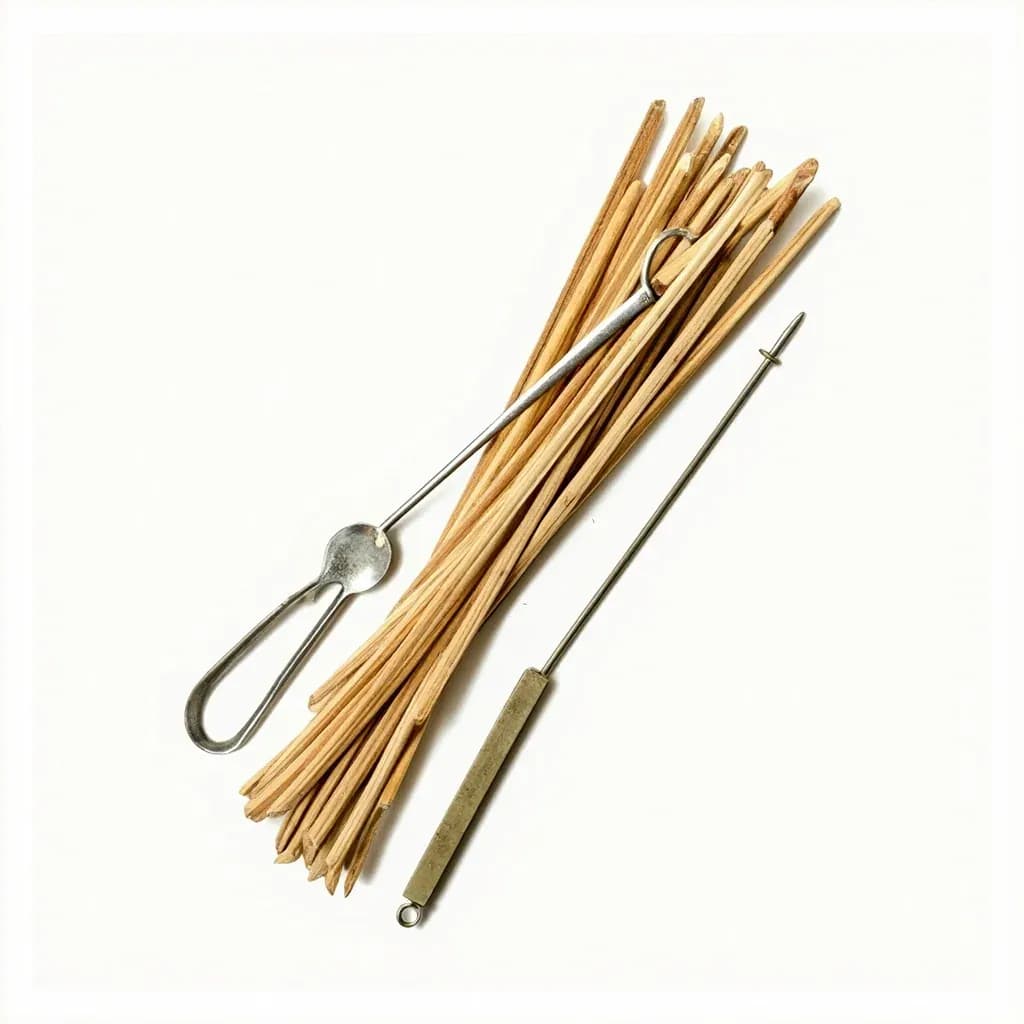
Skewer (Metal / Wooden / Bamboo)
Thin pointed rod that threads meat and vegetables for grilling, roasting, or testing doneness.
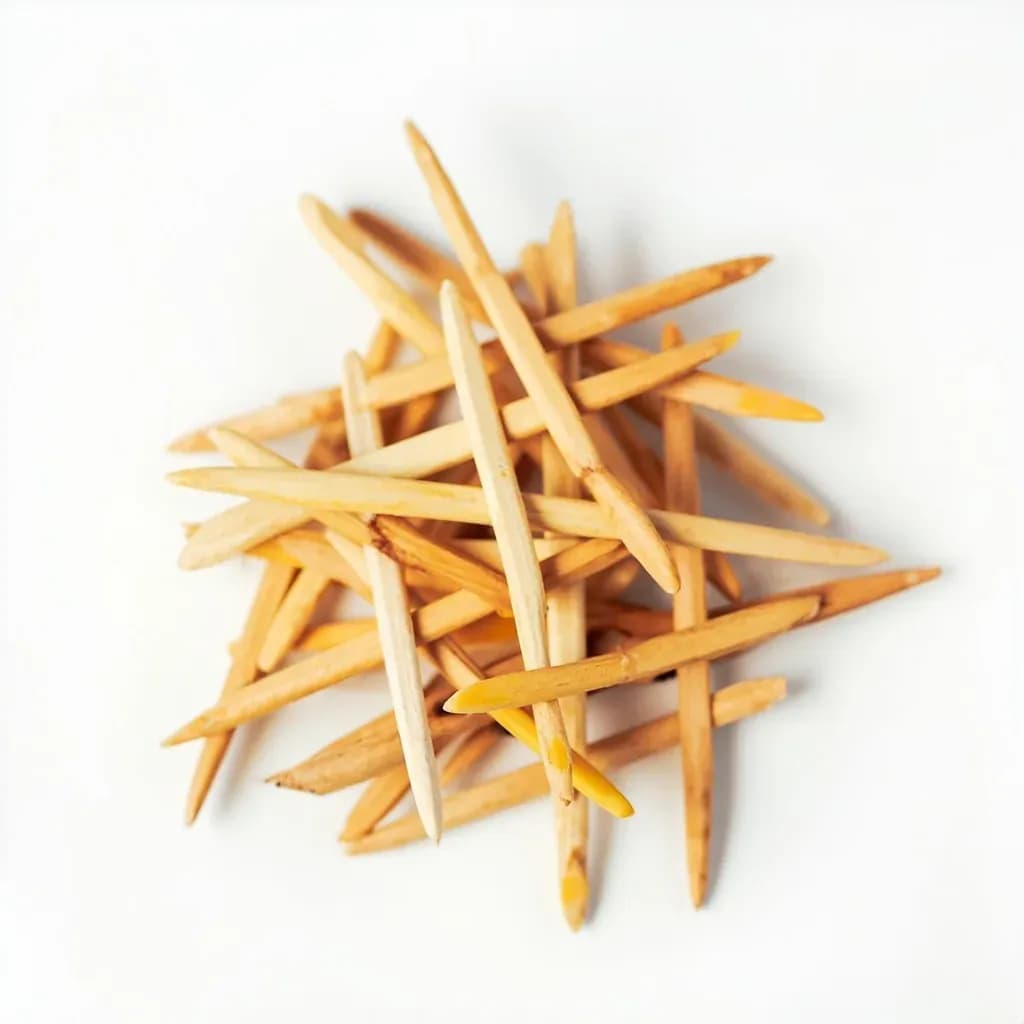
Toothpick
Small pointed wooden pick that pins rolled food shut and tests baked goods for doneness.
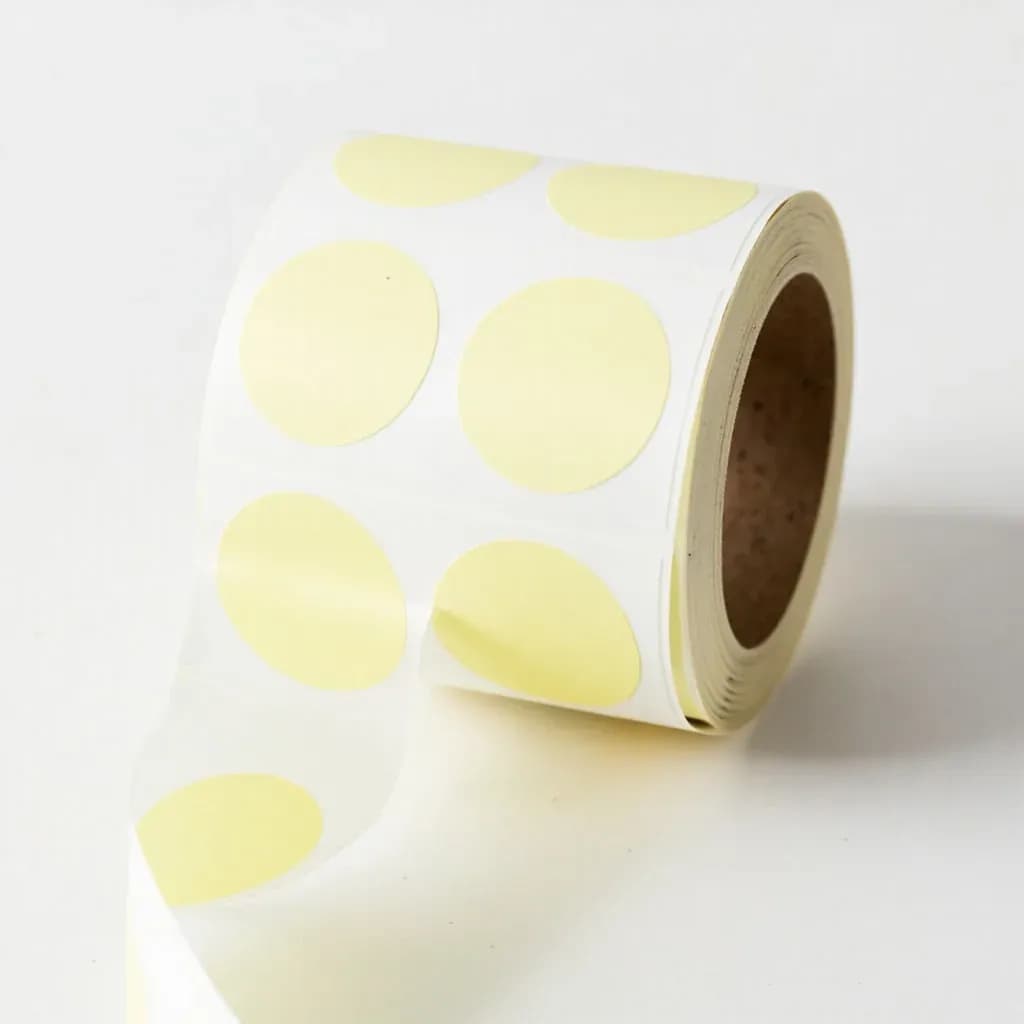
Food Storage Label (Day-Dot)
Stick-on label marking date, contents, or batch info for safe stock rotation.
Labeling Tape
Write-on tape for marking containers with contents and dates, peeling off cleanly later.