Tying & Fastening
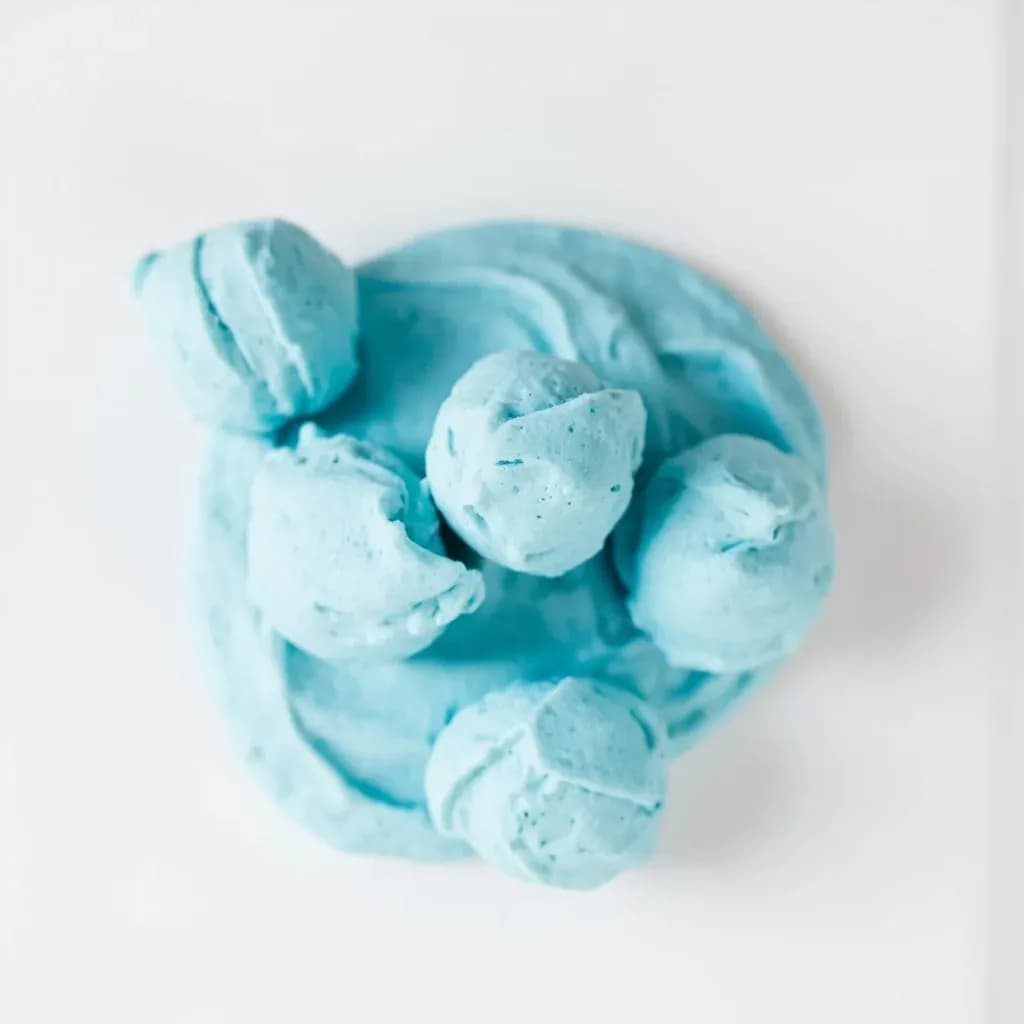
Mounting Putty
Reusable tacky putty used in kitchens and prep areas to stick up labels, charts, and signage without nails.
Mounting putty is a soft, reusable adhesive compound rolled into pea-sized balls to temporarily fix lightweight items to walls, shelves, or equipment. In a kitchen it holds up allergen charts, prep lists, recipe cards, and station labels without leaving marks. Unlike tape it peels off cleanly and can be reused many times, making it handy on surfaces that get wiped down often.
Mounting putty is a soft, kneadable synthetic polymer adhesive that grips by surface conformity and light tack rather than chemical bonding. A small ball pressed between two smooth surfaces displaces into every micro-irregularity, and the resulting close contact is enough to hold the weight of paper, light plastic, or thin metal. In a working kitchen it functions as a back-of-house consumable — the fixings layer beneath the documentation that keeps a foodservice operation compliant and legible.
For chefs and kitchen managers the practical value is operational: HACCP charts, day-dot label dispensers, allergen sheets, temperature logs, and cleaning schedules all need to be visible, updatable, and removable. Mounting putty holds them to stainless steel pass-throughs, tiled wash-up areas, and the smooth faces of refrigerators and freezers without drilling holes, and it peels away cleanly when audits demand a new chart. Compared with tape, it does not leave adhesive residue; compared with magnets, it works on non-ferrous surfaces like aluminum and stainless.
The trade-offs matter. Putty relies on a clean, smooth substrate — it fails on raw wood, painted drywall, or wallpaper, and it softens and slides near ovens, grills, and fryers. Most reputable brands are non-toxic and solvent-free, but they do pick up grease, crumbs, and dust over time, and a piece that has gone opaque or crumbly has reached the end of its working life. Choose by color (visible against stainless), form (pre-cut squares are tidy; bulk slabs are cheaper), and by how often the chart in question gets reprinted.
Alternatives
Types & varieties
The original and most recognized brand; blue, comes in 60 g slabs — high visibility against stainless
White pre-cut squares; common in North American foodservice supply catalogues
European brand; available in white and yellow, pre-cut squares
Off-white squares, sold in blister packs; widely available in hardware stores
White putty, widely available in hardware and office supply stores
Sold loose by weight in catering supply shops; the standard economical choice in larger operations
Bulk vs. pre-cut in commercial use
The single biggest practical distinction in a professional kitchen is whether the putty comes as a slab you tear off or as pre-cut squares. Pre-cut squares are cleaner to handle and faster for a manager sticking up a single chart, but they cost several times more per gram. Bulk putty sold by the kilogram in catering supply shops is the back-of-house norm: a chef can pull off exactly the amount needed, knead it, and apply it, and the saving on a 1 kg brick versus a 60 g pack of squares pays for itself within a few weeks of steady chart-mounting.
- A 1 kg bulk brick is roughly equivalent to 10–20 retail blister packs in volume, depending on pack size
- Pre-cut squares reduce waste and are easier to control for small, neat applications
- Bulk putty is more prone to drying out; always reseal in cling film or an airtight container between uses
- Used only for documentation mounting, a 1 kg brick typically lasts several months in a small-to-medium operation
Food-safety and compliance notes
Most food-safety auditors accept mounting putty as a fully removable, residue-free fixing for wall documentation, though some authorities specify the type more tightly and a few ban anything that could leave an oily halo. Putty that has absorbed grease, smoke residue, or cleaning chemicals should be replaced rather than reused, since the absorbed material can mark porous surfaces and the documentation it is holding.
- Check local food-safety audit guidance — some authorities require that wall-mounted documents use fully removable, residue-free fixings; most reputable putties meet this
- Apply putty to all four corners plus the center of larger charts so paper stays flat under kitchen steam
- Replace putty that has darkened, crumbled, or taken on visible grease — it has reached the end of its life
- Keep putty away from any surface touched by raw food; it is for documentation, not direct food contact
Common uses
Tips & pitfalls
- Knead the putty in your fingers for a few seconds before applying — warming it slightly restores full tackiness
- Apply in small balls or strips rather than one large blob; more contact points give stronger hold
- Press firmly and twist slightly as you press to maximize surface contact
- Keep a small piece on the back of a phone or tablet in the kitchen as a quick reusable fix
- Wrap in cling film or store in a sealed jar between uses to extend working life by months
- Avoid using on painted drywall in staff areas — it can pull paint off and leave an oily halo
- Do not use near hot equipment (ovens, grills, fryers); heat softens the putty and it can slide or stain
- Replace when the putty starts to crumble, lose tack, or pick up visible grease and crumbs
- If it loses grip, a quick re-knead and a wipe of the substrate usually restore hold before replacement is needed
Good to know
- Type
- Reusable pressure-sensitive adhesive putty
- Base material
- Synthetic polymer/rubber compound with mineral fillers and plasticizers
- Common colors
- White, blue (Blu-Tack), off-white, or pale yellow
- Best surfaces
- Smooth, clean, non-porous surfaces (glass, metal, sealed wood, tile, laminate)
- Surfaces to avoid
- Painted walls, wallpaper, porous surfaces, freshly finished wood, unsealed drywall
- Working temperature
- Best between roughly 10–30 °C; becomes too soft in heat and brittle in cold
- Toxicity
- Generally non-toxic; most modern versions are solvent-free
- Typical pack size
- Sold in 50–100 g blister packs or bulk 1 kg bricks for foodservice
- Reusability
- Reusable until it dries out, picks up debris, or loses tackiness
- Origin
- Invented in 1970 by Richard Bentley at Bostik; sold as Blu-Tack
Also called
Museum/Mounting Putty · Poster Tack · Reusable Poster Tack · Mounting Tack
Related

Skewers
Thread meat and vegetables for kebabs and grilling

Toothpicks
Pin rolls shut and test cakes for doneness

Kitchen Twine
Food-safe string for trussing roasts and tying bundles

Butcher Paper
Breathable wrap for resting barbecue and storing meat
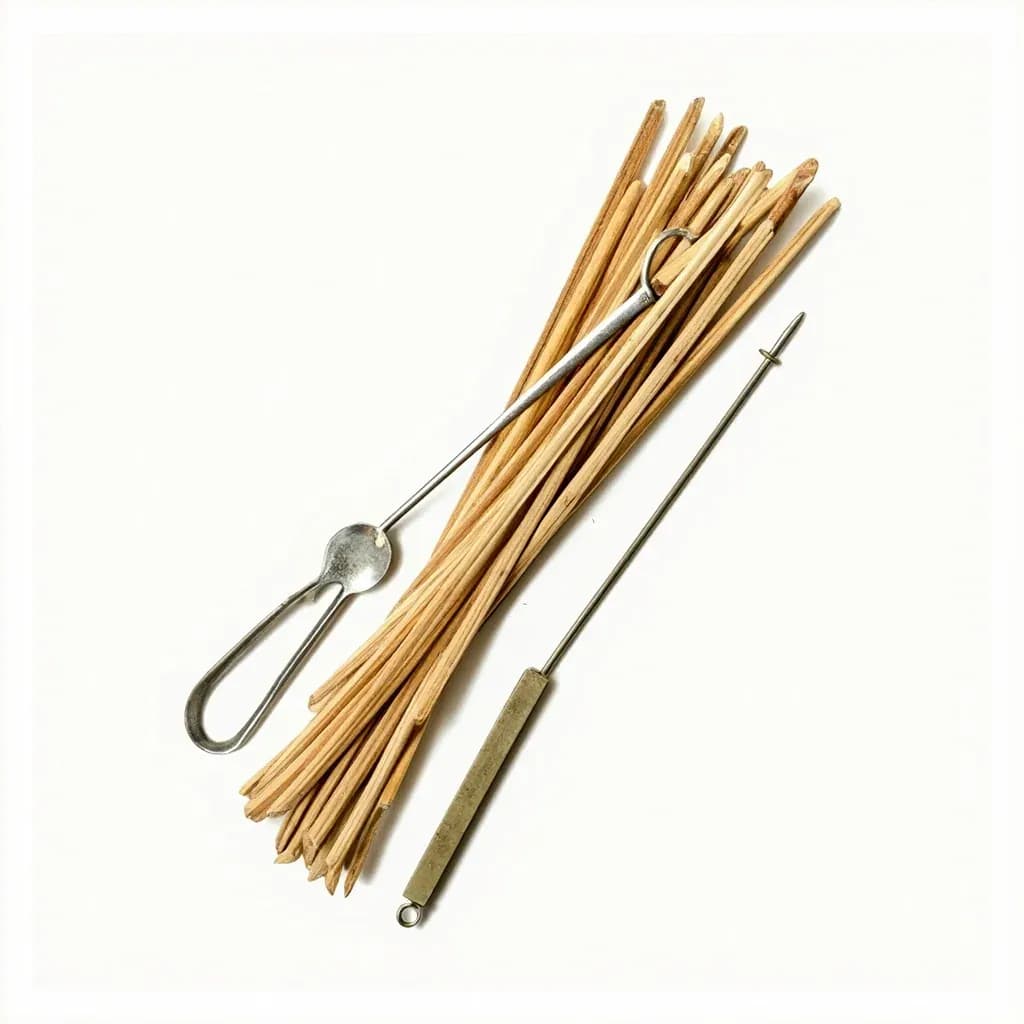
Skewer (Metal / Wooden / Bamboo)
Thin pointed rod that threads meat and vegetables for grilling, roasting, or testing doneness.
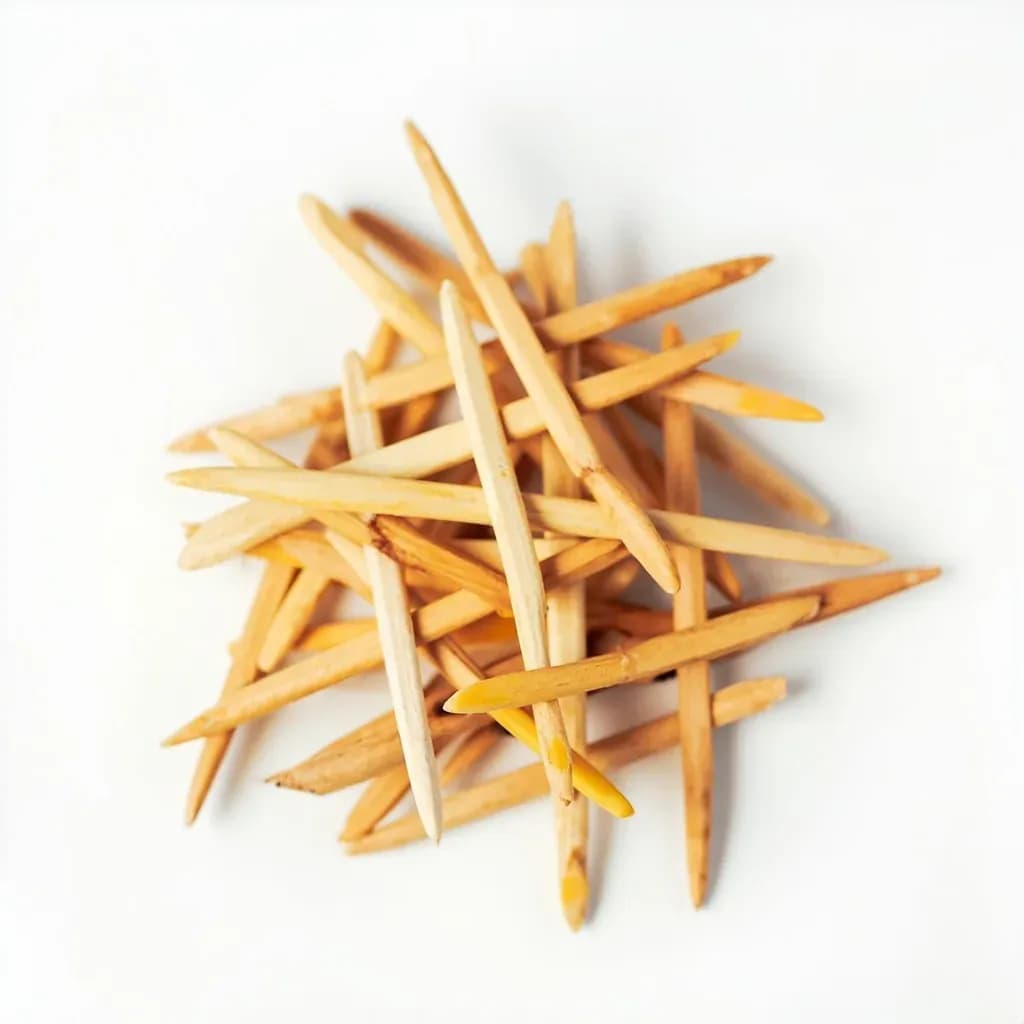
Toothpick
Small pointed wooden pick that pins rolled food shut and tests baked goods for doneness.
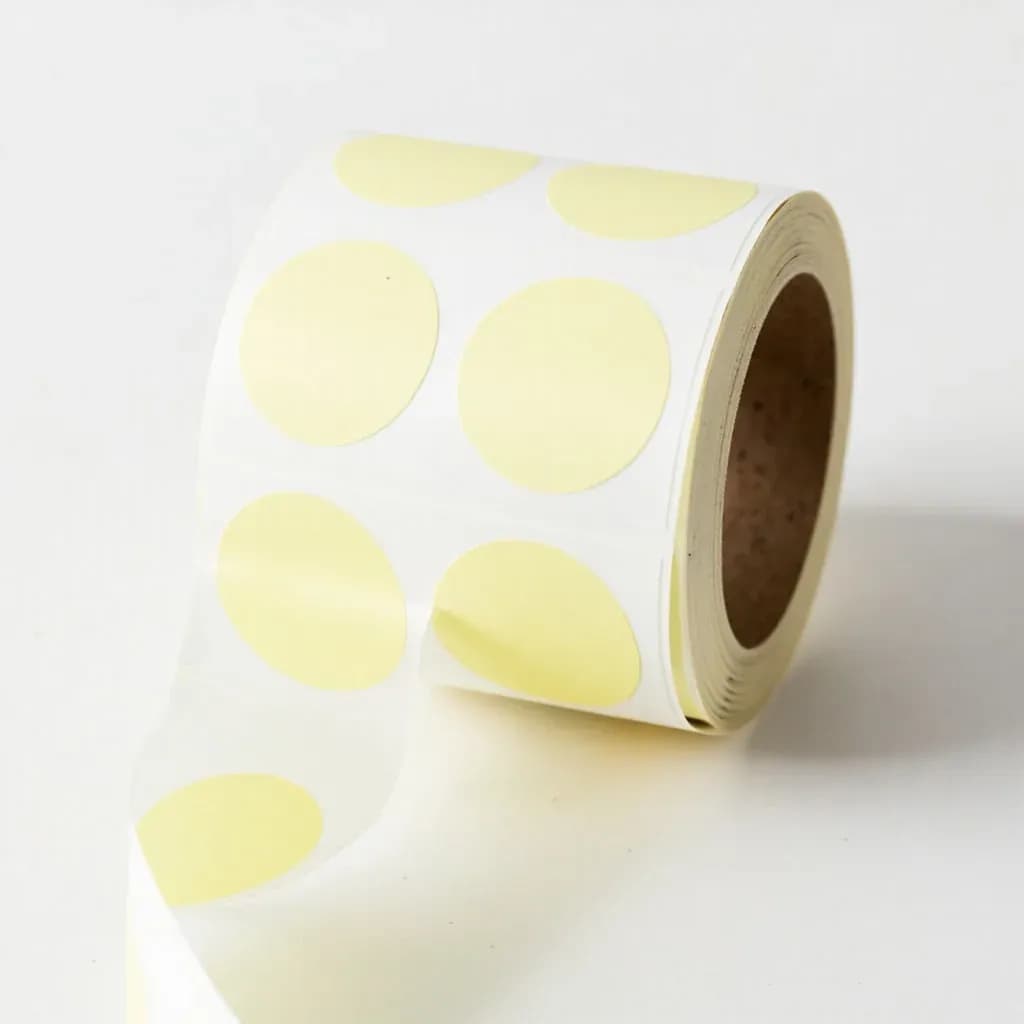
Food Storage Label (Day-Dot)
Stick-on label marking date, contents, or batch info for safe stock rotation.
Labeling Tape
Write-on tape for marking containers with contents and dates, peeling off cleanly later.