
Tying & Fastening
Palm / Reed Tying Strips
Natural palm or reed strips used to tie, bundle, and wrap foods like tamales and stuffed parcels.
Palm or reed tying strips are flexible natural fibers split from leaves and used as edible-safe ties. Cooks use them to bind banana-leaf and corn-husk parcels, secure tamales, and bundle herbs or vegetables for the pot. Softened in water first so they bend without snapping, they hold a parcel closed during steaming or boiling and lend a subtle natural look.
Palm and reed tying strips are thin, pliable ribbons of plant fiber used to bind and close leaf-wrapped parcels during cooking. They are the structural cousin to butcher's twine — flexible enough to knot by hand, strong enough to hold a tamale, a ketupat, or a banana-leaf bundle together through hours of boiling, steaming, or grilling. Most cooks meet them secondhand, while unwrapping a hallaca or a zongzi, never having seen the dried bundle they came from.
The category is broad but the principle is identical across continents: a long, flat strip of palm leaflet, bulrush, or cattail is soaked until bendable, then knotted around a leaf-wrapped package to keep it sealed under heat. The strips contribute almost no flavor — a faint grassy note from palm, near-neutrality from reed — and they are never eaten. Their job is purely mechanical, which is why traditional cooks reach for plant ties rather than cotton twine or plastic string for long, wet cooks.
Because they are sold loosely bundled and often generically labeled ("timpuna," "janur," "tule," "hoja"), these ties are easy to overlook as an ingredient. They aren't. Without a good strip, a tamale unwinds in the steamer and a ketupat loses its diamond shape before the rice sets. Treat them as a deliberate tool: soak them properly, knot them correctly, and they will hold anything a leaf can wrap.
Alternatives
Types & varieties
Strong and fibrous with a slight grassy aroma; common in North African and Middle Eastern kitchens
Sometimes called 'guano' ties; used in southern Mexico and Central America for tamales and leaf-wrapped dishes
Plaited or knotted in Indonesia for ketupat, lontong, lemang, and pepes parcels
Soft palm-fiber ribbon used for lighter jobs such as trussing stuffed fish or rolled poultry
Smooth, round, very pliable when soaked; traditional in Andean and Iberian cooking
Long, flat, ribbon-like leaves; used for wrapping and tying in Latin American and Indigenous North American cooking
Common in Vietnamese bánh tét and bánh chưng when bamboo ties are unavailable
Northern Mexican option for tying barbacoa or pit-roasted leaf parcels
Regional names and traditions
Palm and reed ties appear under different names across the cuisines that depend on them, and recognizing the local term is often the fastest way to find them at market.
- Jamaica and the English-speaking Caribbean: 'timpuna' or 'tie-tie,' usually bulrush or strip palm.
- Indonesia and Malaysia: 'janur' (young coconut palm), used for ketupat, lontong, and lemang.
- Mexico and Central America: 'tapa' or 'tamujo' for palm strips, or strips cut fresh from guano and coyol palms.
- Vietnam: 'lạt' for the thin bamboo or reed ties that bind bánh chưng and bánh tét.
Working with strips that dry out or break
Strips go brittle when fully dry and weaken quickly once soaked, so a few habits prevent mid-cook failures.
- Soak only as many strips as you'll use within a few hours; soaked strips left overnight blacken and lose strength.
- Keep unused dry strips in a paper bag or cloth sack — plastic traps moisture and invites mold or weevils.
- If a strip snaps while you pull a knot, replace it; doubling over a cracked strip creates a weak point under steam pressure.
Common uses
Tips & pitfalls
- Soak strips in warm water until they bend without snapping — under-soaked ties crack the moment a knot is pulled tight
- Blot strips with a towel before tying; waterlogged strips slip and loosen as the parcel heats
- Use a reef (square) knot — slip knots and granny knots fail under boiling
- Leave a short tail on the knot so the tie can be undone after cooking; tight, flush knots become impossible to loosen once dry
- Run the strip under cold water before unwrapping if it has dried onto the leaf during cooking
- Skip plastic twine and kitchen string for long wet cooks — they can leach or melt into the food; plant ties are the traditional choice for a reason
- For heavy parcels such as whole-roasted pig in leaves or large tamal batches, cross two strips in an X rather than relying on a single loop
- Dried-out soaked strips make passable fire-starters — a useful end-of-day use for leftovers
Good to know
- Material
- Strips split from palm leaflets (date, Washingtonia, coconut) or pliable stems of bulrush (Schoenoplectus) and cattail (Typha)
- Form
- Long, flat, flexible ribbons, typically 30–90 cm long and 5–15 mm wide
- Pre-use prep
- Soaked 10–30 minutes in warm water until pliable
- Function
- Mechanical fastening for leaf-wrapped parcels during boiling, steaming, or grilling
- Heat tolerance
- Stays intact through hours of boiling, steaming, and open-fire grilling
- Flavor imparted
- Very mild; faint grassy note from palm, essentially neutral from reed
- Reusability
- Single-use; discarded after cooking
- Shelf life
- Indefinite when kept dry; brittle when fully dry, weakens within hours when soaked
Also called
palm strips · reed ties · leaf tying strips
Related

Skewers
Thread meat and vegetables for kebabs and grilling

Toothpicks
Pin rolls shut and test cakes for doneness

Kitchen Twine
Food-safe string for trussing roasts and tying bundles

Butcher Paper
Breathable wrap for resting barbecue and storing meat
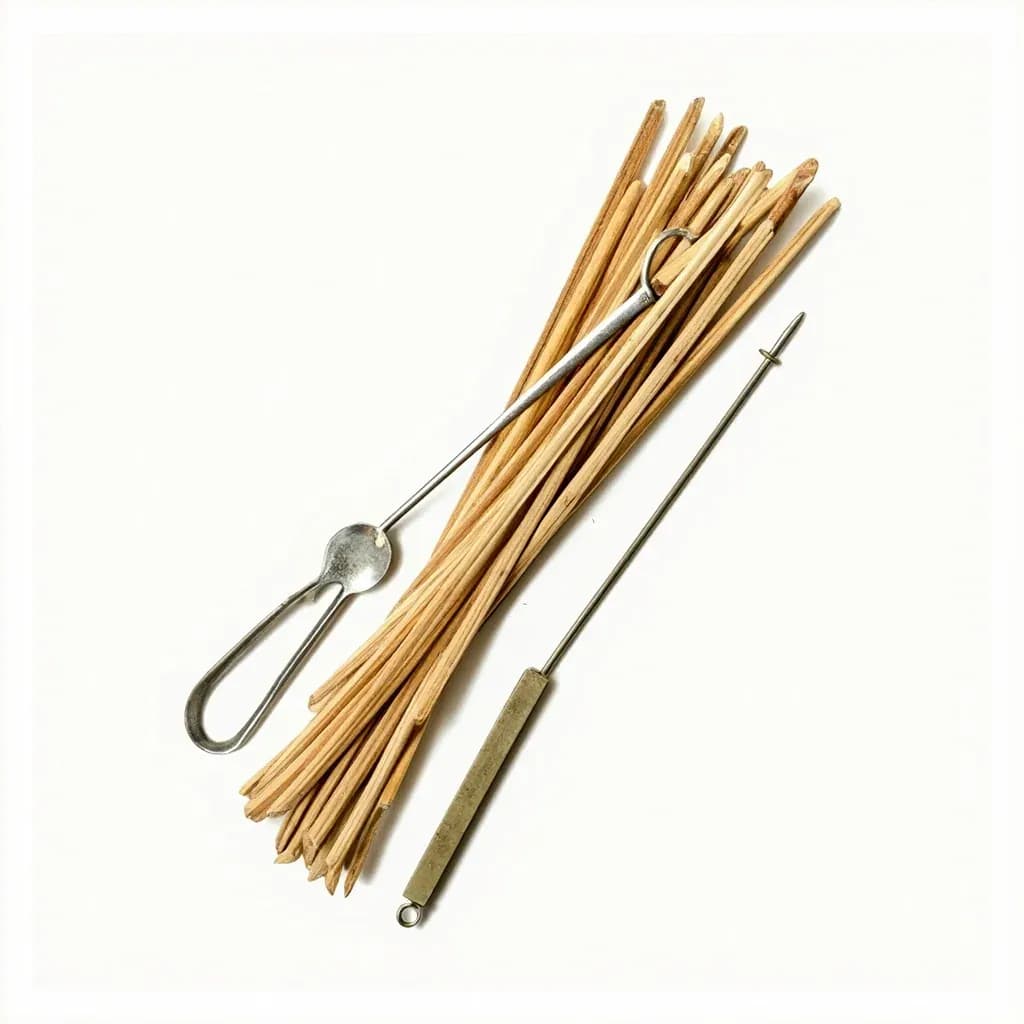
Skewer (Metal / Wooden / Bamboo)
Thin pointed rod that threads meat and vegetables for grilling, roasting, or testing doneness.
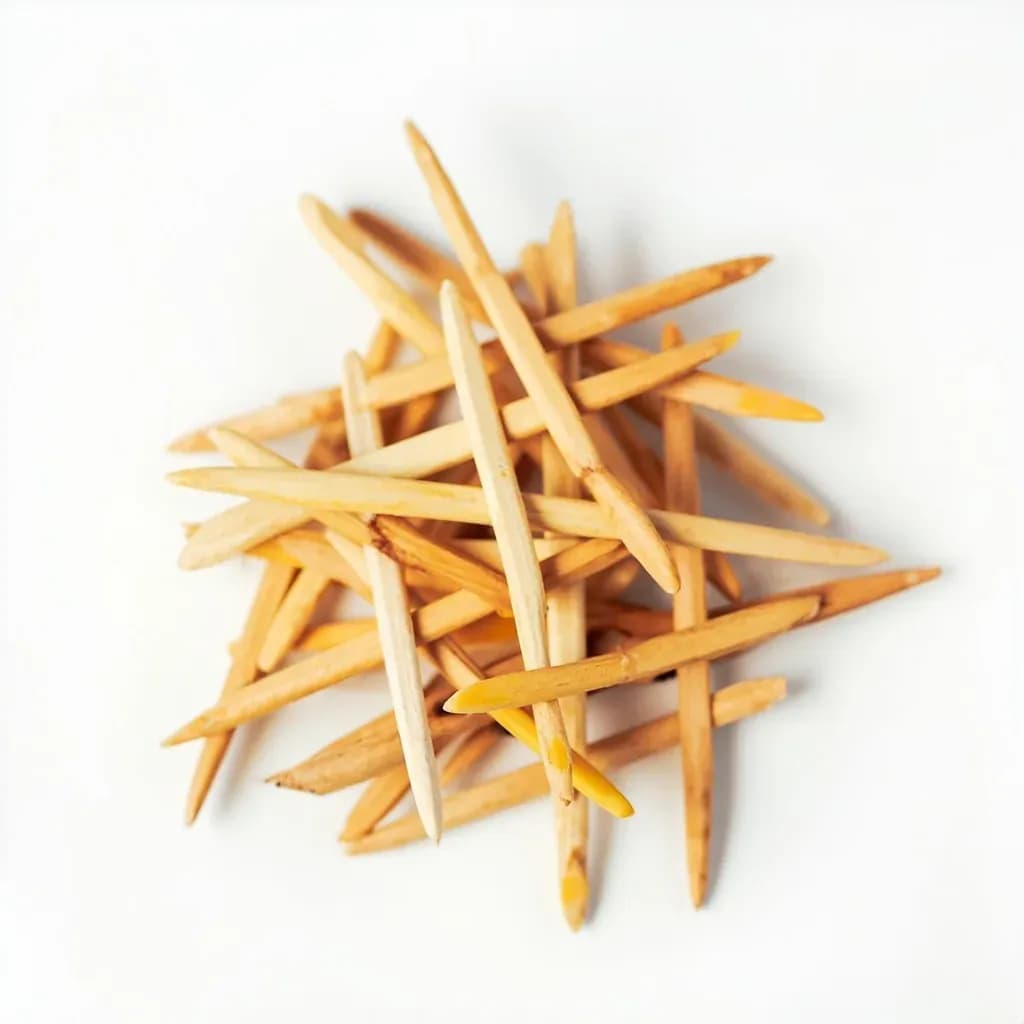
Toothpick
Small pointed wooden pick that pins rolled food shut and tests baked goods for doneness.
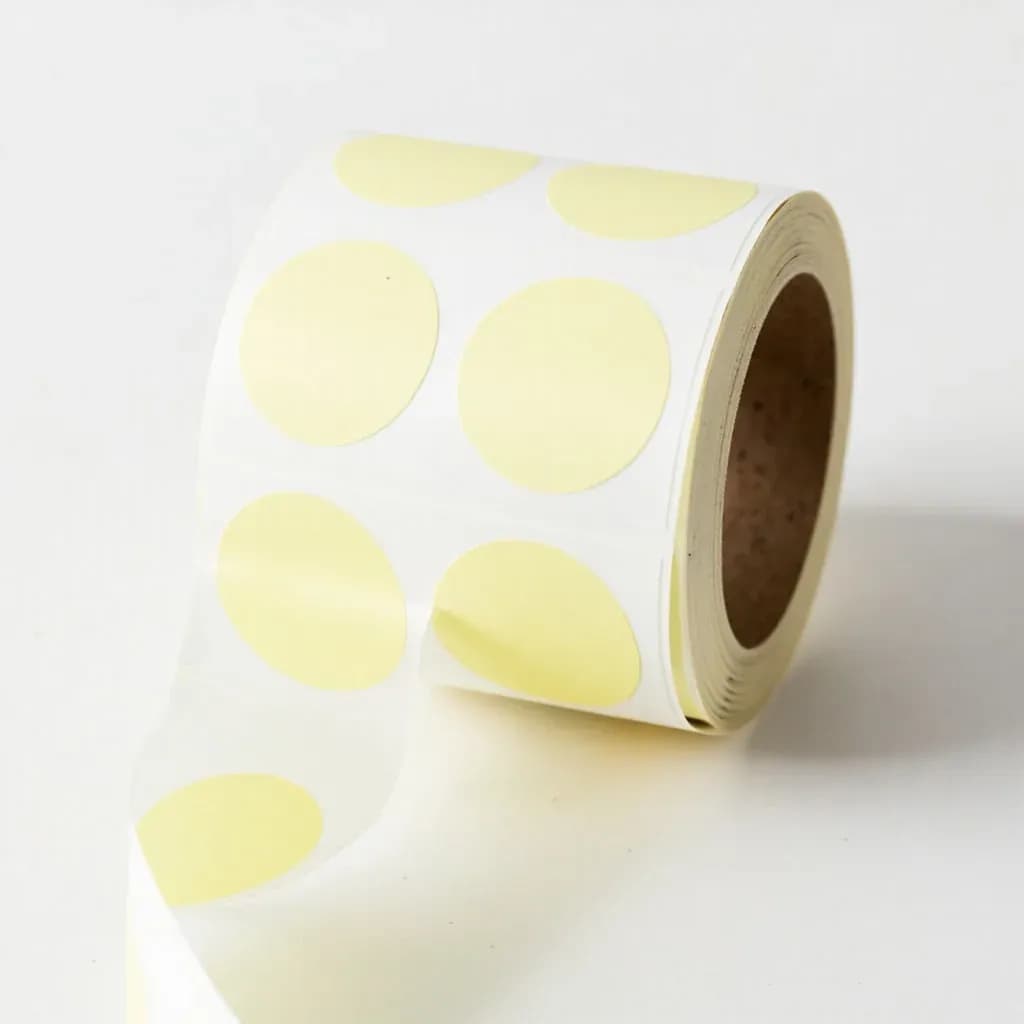
Food Storage Label (Day-Dot)
Stick-on label marking date, contents, or batch info for safe stock rotation.
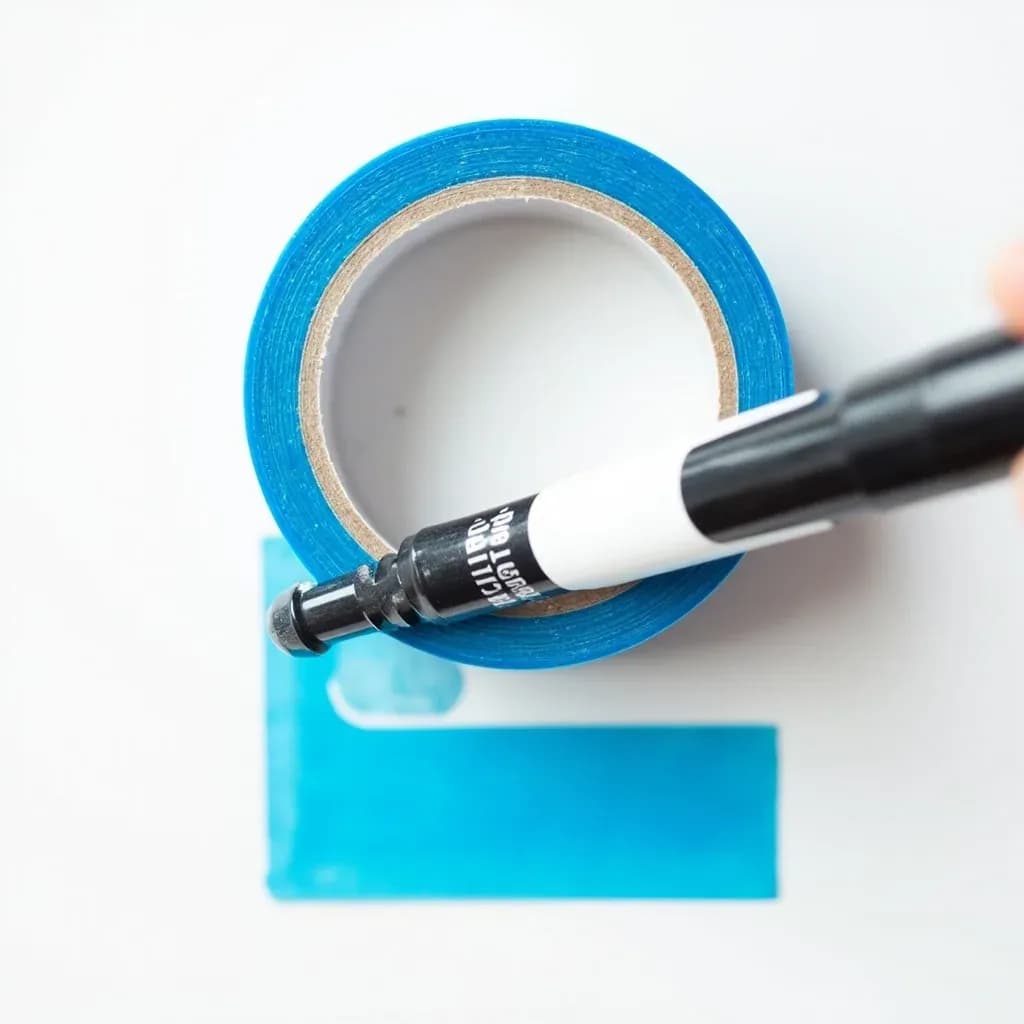
Labeling Tape
Write-on tape for marking containers with contents and dates, peeling off cleanly later.