Tying & Fastening
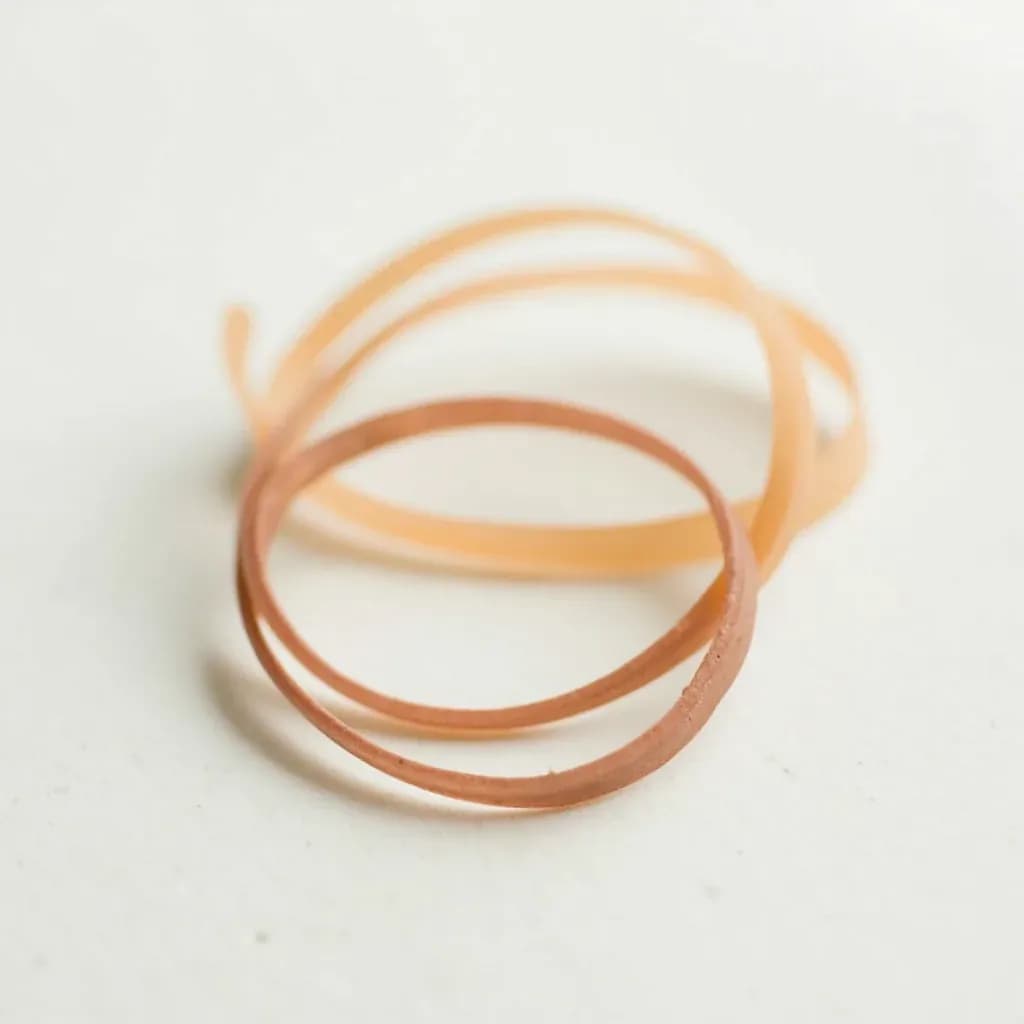
Produce Rubber Band
Stretchy elastic band for bundling herbs, greens, and vegetables.
A produce rubber band is a stretchy elastic loop used to bundle stalks of herbs, leafy greens, asparagus, and scallions. Markets and kitchens use them to keep bunches together for storage and display, and to cinch bags or hold lids. Food-safe natural-rubber versions are sized for produce stems, and they are quick to apply and remove without crushing delicate items.
The produce rubber band is the cheapest, most disposable tool on the prep line and one of the most quietly essential. A small elastic loop, sold by the pound in mixed sizes or by number (#16 through #33 being the workhorses), it does the work that twine, clips, and bag ties would otherwise do: bundling parsley, securing asparagus, marking a batch of basil, holding a stuffed loin closed while it sets. In a busy garde-manger or butcher station, a drawer of mixed bands keeps prep moving faster than any single piece of equipment in the kitchen.
What makes a band useful is its snap — the way it grips a bunch without crushing it — and the way a good band holds that snap for months. Sizing matters more than people think: too tight bruises tender herbs, too loose lets the bundle fall apart in the walk-in. Most cooks keep three or four numbered sizes on hand so they can match band to bunch, the way a florist would. Color coding (green for herbs/small, red for medium, blue or yellow for large bunches) is a restaurant convention that, once adopted, makes batch rotation and FIFO stock control visible at a glance — though suppliers vary, and color is not a reliable indicator of material.
The single most important thing to know about a produce rubber band is that it is not safe to cook with. Natural and synthetic rubber begin to soften and break down above roughly 150°F/65°C, so any band on a bunch of asparagus, a trussed bird, or a rolled involtini must come off before the item hits a pan, oven, grill, or sous-vide bath. For heat applications, food-grade silicone bands are the only reliable substitute; they tolerate oven and stovetop temperatures and run through the dishwasher for years.
Alternatives
Types & varieties
Traditional, strong grip, biodegradable; cannot be used near heat and problematic for latex-sensitive staff or diners.
Latex-free, more resistant to UV and ozone; the default in most commercial produce operations and grocery prep rooms.
Reusable, dishwasher-safe, heat-safe to roughly 428°F/220°C; the only band suitable for oven, grill, or sous vide.
Green/red/blue sets used in garde manger and prep lines to flag batch dates or distinguish herb from vegetable bunches.
Thicker, wider loops for bundling leeks, corn on the cob, or large root vegetable bunches that would snap a standard band.
Heat safety and material choice
Rubber and heat do not mix in the kitchen. Both natural latex and synthetic rubber (EPDM, polyisoprene) begin to break down around 150°F/65°C; they will soften, smoke, melt, or leave black residue on food once that threshold is crossed. The rule is simple: any rubber band must be removed before an item is poached, sautéed, roasted, grilled, or cooked sous vide. A band that survives a quick blanch is still considered a contaminant if it touches finished food, and color is no guarantee of safety — most colored produce bands on the market today are synthetic rubber, not heat-safe silicone.
- Use silicone bands for trussing poultry, securing stuffed cabbage rolls, or closing a stuffed loin that will go straight into a hot pan.
- Band a chicken with silicone before roasting and the band can go through the dishwasher and back into service for many cycles.
- Never microwave food with any rubber band attached — even brief cycles will scorch or melt it into the product.
- If a band feels tacky, has lost its snap, or shows surface cracking, retire it; oxidized rubber snaps unpredictably and is more likely to leach.
Sizing and color coding on the prep line
Working cooks tend to default to whatever band is in reach, but matching the band to the bundle is what separates a tidy prep station from a frustrating one. A size #16 (about 1.5") is right for a fistful of chives or thyme; #19 handles parsley and cilantro; #31 and #33 are reserved for kale, Swiss chard, leeks, and asparagus. Color coding adds a second layer of information — date, destination, prep cook, or category — without requiring a label.
- Stock a mixed bag of three or four numbered sizes rather than one universal band.
- Adopt a color convention (for example, red = use today, green = use tomorrow, blue = use within three days) for FIFO batch tracking.
- Keep bands in a small jar or tin on the prep table; loose in a drawer they tangle, snap, and get thrown away.
- Switch to heavy-duty pallet bands for anything thicker than a thumb's width — corn, leeks, large root bunches.
Common uses
Tips & pitfalls
- Remove any rubber band before cooking; natural and synthetic rubber melt, smoke, or leach onto food above roughly 150°F/65°C. Use silicone bands or twine for anything going on the stove, oven, grill, or sous vide.
- Keep a mix of three or four numbered sizes (#16, #19, #31, #33) so you can match band to bundle — too tight crushes delicate herbs, too loose and the bunch falls apart in the walk-in.
- Store bands in a small jar or tin rather than loose in a drawer, where they tangle, snap, and end up in the trash unused.
- Retire any band that has lost its snap, feels tacky, or shows surface cracking — oxidized rubber snaps unpredictably mid-truss and can leave black residue on food.
- Specify latex-free synthetic or silicone bands for kitchens serving latex-allergic staff or diners; most commercial produce bands are now synthetic, but check the bag rather than relying on color.
- Never microwave food with a rubber band still on it, even for a few seconds — the band will scorch or melt into the product.
- Color-code bands by day-of-week in garde manger to track prep batches at a glance and rotate stock using FIFO.
- Use a silicone band to hold a partially used avocado or lemon half against its other half under plastic wrap; the gentle pressure slows browning of the cut surface.
Good to know
- Material
- Natural rubber latex, synthetic rubber (EPDM/polyisoprene), or food-grade silicone
- Common sizes
- Sizes #16, #19, #31, and #33 (roughly 1.5" to 4" flat length) cover most kitchen needs
- Color conventions
- Green = herbs/small, red = medium, blue/yellow = large bunches (varies by supplier; color does not indicate material)
- Heat tolerance
- Natural and synthetic rubber degrade above ~150°F/65°C; silicone bands tolerate up to ~428°F/220°C
- Storage life
- Indefinite in a cool, dry, dark drawer; rubber oxidizes and snaps within 1–2 years on a sunny windowsill
- Latex-free options
- Widely available; most commercial produce bands sold today are synthetic rather than natural latex
- Origin
- Mass-produced elastic bands patented by Stephen Perry in 1845; produce-specific bands became standard with pre-bundled supermarket herbs in the late 20th century
- Cost
- Pennies per band; typically sold in 1 lb / 0.5 kg mixed bags or by numbered size
Also called
Rubber Bands · rubber band · elastic band
Related

Skewers
Thread meat and vegetables for kebabs and grilling

Toothpicks
Pin rolls shut and test cakes for doneness

Kitchen Twine
Food-safe string for trussing roasts and tying bundles

Butcher Paper
Breathable wrap for resting barbecue and storing meat
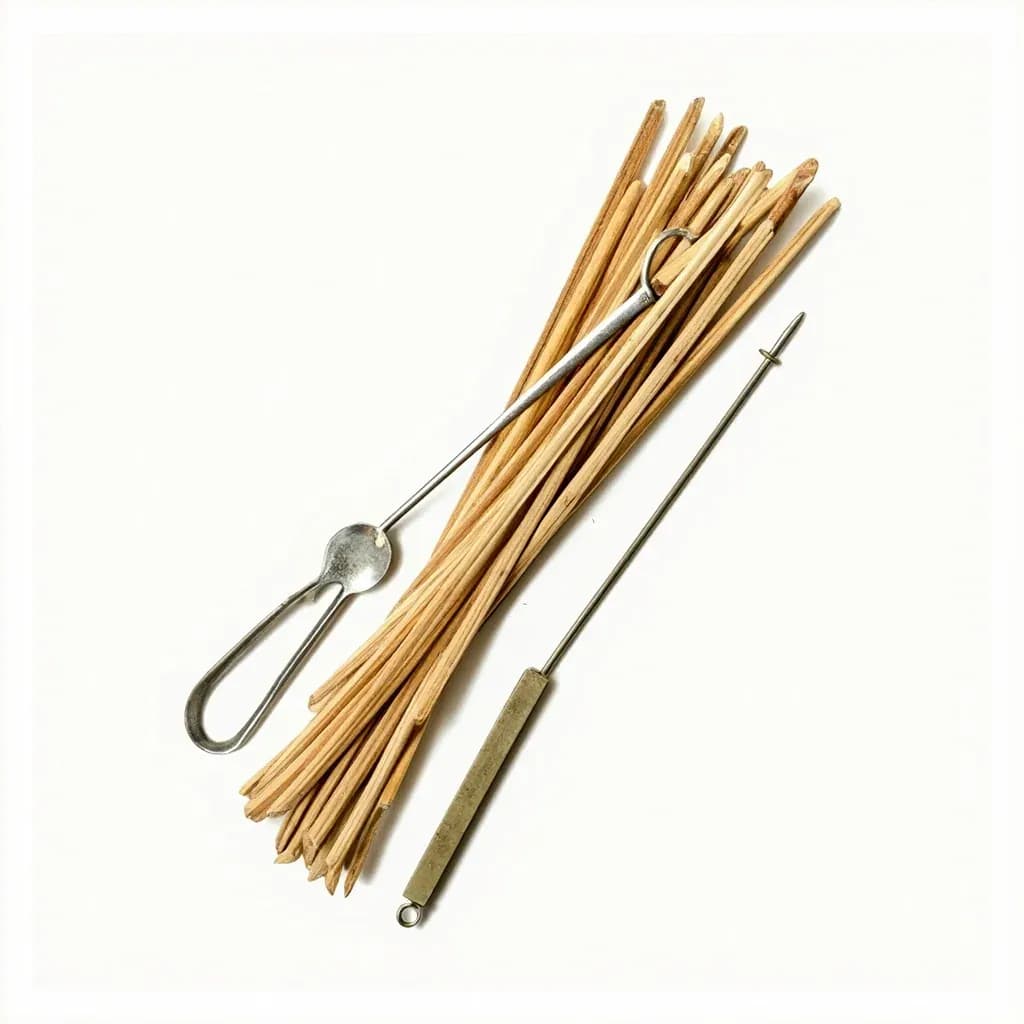
Skewer (Metal / Wooden / Bamboo)
Thin pointed rod that threads meat and vegetables for grilling, roasting, or testing doneness.
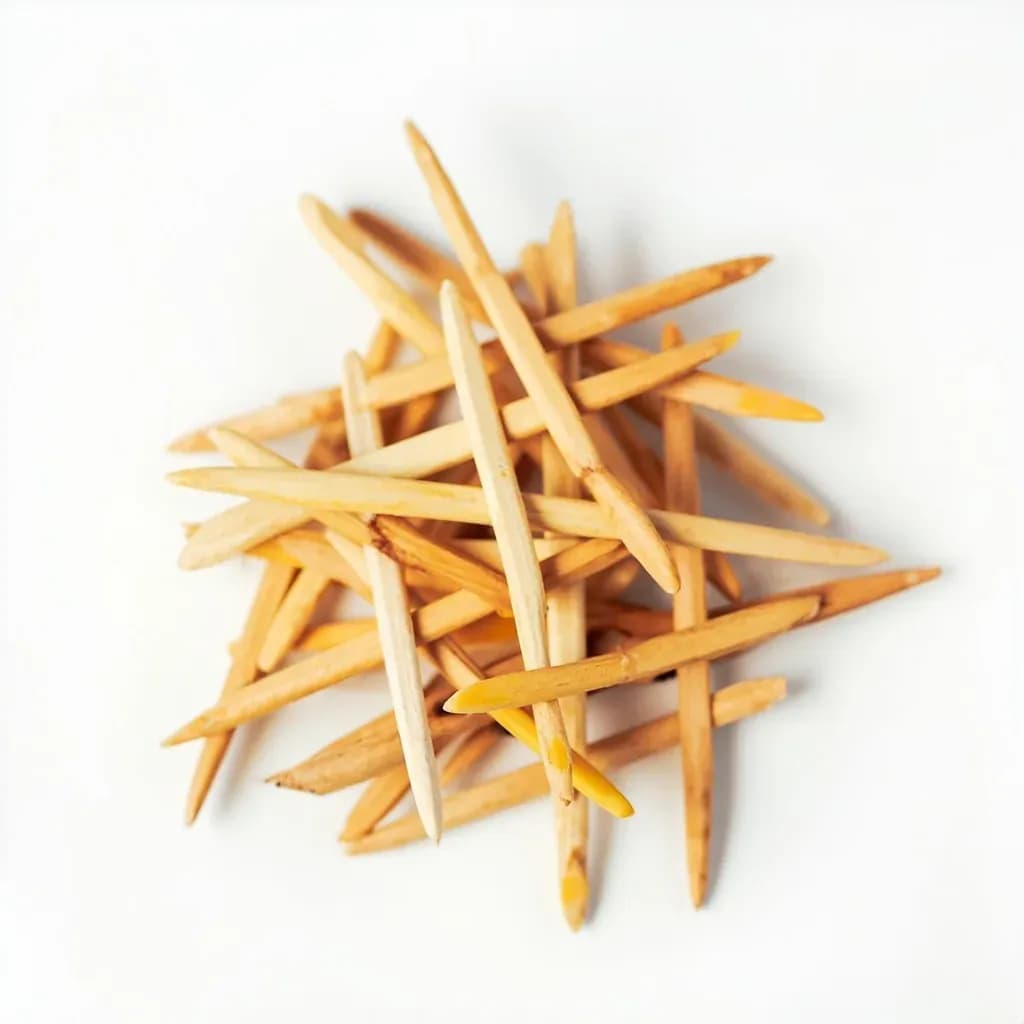
Toothpick
Small pointed wooden pick that pins rolled food shut and tests baked goods for doneness.
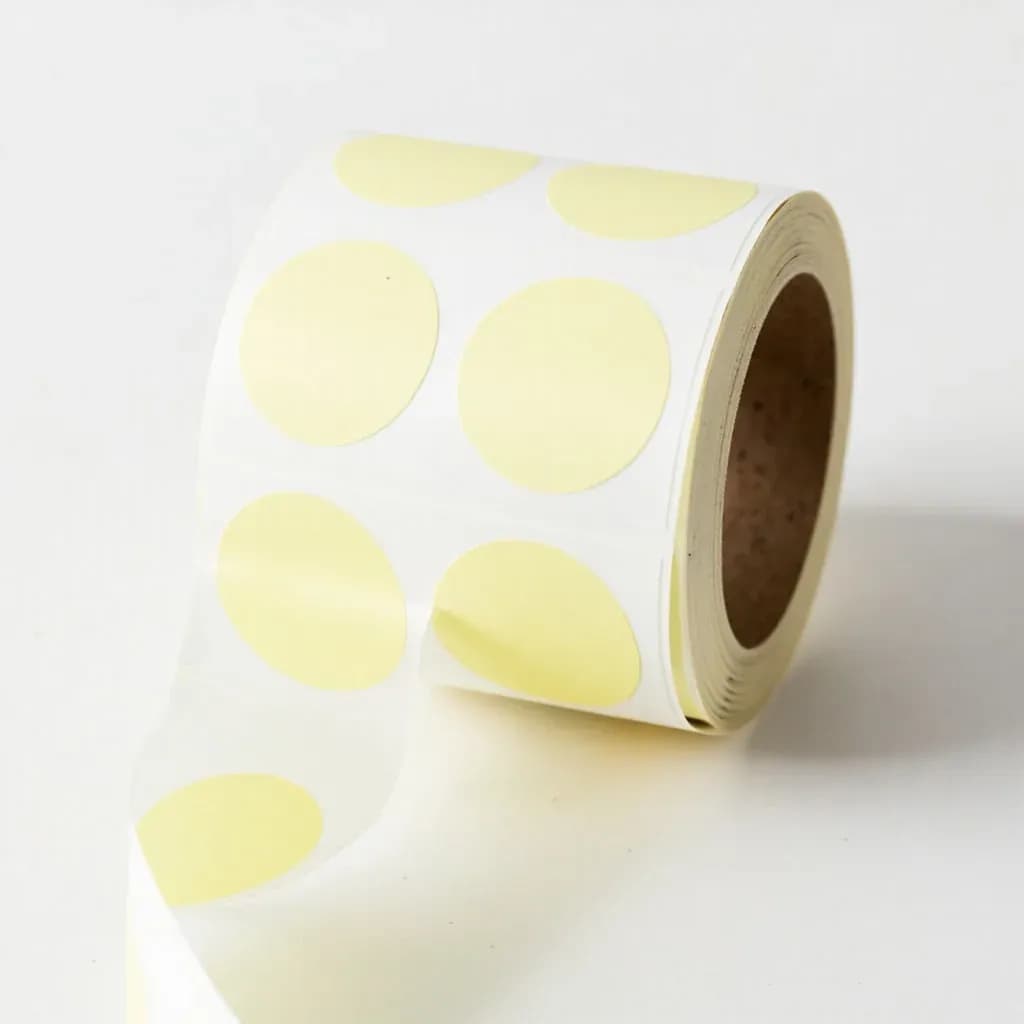
Food Storage Label (Day-Dot)
Stick-on label marking date, contents, or batch info for safe stock rotation.
Labeling Tape
Write-on tape for marking containers with contents and dates, peeling off cleanly later.