
Tying & Fastening
Queen Marking Pen
Quick-dry paint pen used by beekeepers to dab a color dot on a queen bee for easy identification.
A queen marking pen is a fine paint marker used in beekeeping to place a small dot on the back of a queen bee. The color follows a standard yearly code so the keeper can quickly spot the queen, confirm her age, and track the colony. The ink is fast-drying and non-toxic, applied gently while the queen is held or caged. It belongs to the food-production supplies a honey kitchen relies on.
A queen marking pen is a quick-drying, non-toxic paint marker purpose-built for placing a small color-coded dot on a queen honey bee's thorax. Beekeepers use it during hive inspections to spot the queen instantly among tens of thousands of workers — a task that, without a mark, can turn a routine check into a frustrating ten-minute hunt. The paint is formulated to dry in 30–60 seconds on the bee's chitinous cuticle, fast enough that the queen can be returned to the cluster before her sisters try to groom the wet pigment away.
The tool sits at the intersection of bee husbandry and apiary record-keeping. Because queens typically live several productive years but are often replaced every one or two seasons, a visible age marker helps the beekeeper track lineage, evaluate performance, and decide when to re-queen. Most commercial pens follow the International Bee Research Association (IBRA) color code, which cycles five colors across a five-year rotation so a glance at a marked queen reveals her birth year.
In practice, a queen marking pen is just a fine-tipped paint pen with the right chemistry — many beekeepers buy a Uni Posca PC-1M in the appropriate color and call it done. The dedicated bee-supply versions use a shellac- or water-based formula tuned to dry quickly on chitin and resist grooming, with a slightly larger tip suited to a bee's thorax rather than a sheet of paper.
Alternatives
Types & varieties
IBRA color for years ending in 1 or 6
IBRA color for years ending in 2 or 7
IBRA color for years ending in 3 or 8
IBRA color for years ending in 4 or 9
IBRA color for years ending in 5 or 0
Dries fastest and is most resistant to bee grooming; sold by bee-supply houses such as Mann Lake, Dadant, and Betterbee
Lower odor, slower drying, easier cleanup; gentler on the applicator tip
The de facto hobbyist standard — a fine-tip acrylic paint pen widely available at art and craft stores; works well in lieu of a dedicated queen pen
The IBRA color code
The International Bee Research Association established a five-color rotation so any beekeeper anywhere in the world can glance at a marked queen and know her birth year. The cycle repeats every five years, and the rule is simple: the digit your year ends in dictates the color. This matters far more in a community apiary or queen-breeding operation than in a single backyard hive, but even hobbyists adopt it for consistency in their own records and because the habit pays off the moment a marked queen swarms and lands in a neighbor's yard.
- Years ending in 1 or 6 → White
- Years ending in 2 or 7 → Yellow
- Years ending in 3 or 8 → Red
- Years ending in 4 or 9 → Green
- Years ending in 5 or 0 → Blue
Marking technique and safety
Marking a queen is the part of beekeeping that intimidates new beekeepers most, because a single injured queen can leave the colony queenless and on a fast downward slide. A proper marking tube or push-in cage immobilizes her against the mesh so you can dab the thorax with one steady hand while the other holds the tool. Free-handing works only with steady nerves and a queen that is already calm; the usual failure modes are crushing the abdomen, snagging a wing, or painting the eyes shut. A drone is the perfect practice subject — same-sized thorax, no stinger, and no colony consequences if you make a mess of it.
- Restrain the queen in a queen marking tube or push-in cage; never pin her by hand under pressure.
- Aim for a pinhead-sized dot on the top of the thorax; one dab, not a stroke.
- Hold the queen's wings gently over the thorax if free-handing; never squeeze the abdomen.
- Wait 30–60 seconds after marking before returning her to the cluster so workers don't groom off the wet paint.
- Mark in warm, calm conditions — cold clustered bees are harder to find and the colony is more stressed.
- Mark before introducing a queen to a new hive; an unmarked queen is often better received.
Common uses
Tips & pitfalls
- Touch the pen to the thorax only — never the wings, eyes, or abdomen; paint on the wings can ground a queen, and paint on the abdomen can clog her spiracles.
- Use the absolute minimum paint — a pinhead-sized dot is the goal, not a blob, and one dab is better than a stroke.
- Always use the current year's IBRA color so older queens are visibly older at a glance.
- Restrain the queen in a marking tube or push-in cage to steady her; free-handing usually ends in a lost queen, a stung beekeeper, or a wing injury.
- Practice on a drone first to calibrate pressure and paint volume — drones are stinger-free and dispensable.
- Wait 30–60 seconds after marking before returning the queen to the cluster so workers don't groom the wet paint off.
- Don't substitute nail polish, correction fluid, or acrylic craft paint; their fumes and drying times are wrong for bees and can kill the queen.
- Re-cap the pen immediately and store it horizontally to keep the tip from drying out and clogging.
Good to know
- Item type
- Quick-dry, non-toxic paint marker for marking queen bees
- Typical formula
- Shellac-based or water-based paint that dries in 30–60 seconds
- Tip size
- Fine point (approx. 0.7–1 mm) for a controlled micro-dot
- Color standard
- International Bee Research Association (IBRA) queen marking color code
- Marking location
- Top center of the thorax — never wings, head, or abdomen
- Drying time
- Roughly 30–60 seconds on the bee's cuticle
- Safety
- Non-toxic and safe for honey bees when applied sparingly
- Shelf life
- 1–2 years if capped tightly; tip dries out if left uncapped
Also called
bee marking pen · queen bee marker
Related

Skewers
Thread meat and vegetables for kebabs and grilling

Toothpicks
Pin rolls shut and test cakes for doneness

Kitchen Twine
Food-safe string for trussing roasts and tying bundles

Butcher Paper
Breathable wrap for resting barbecue and storing meat
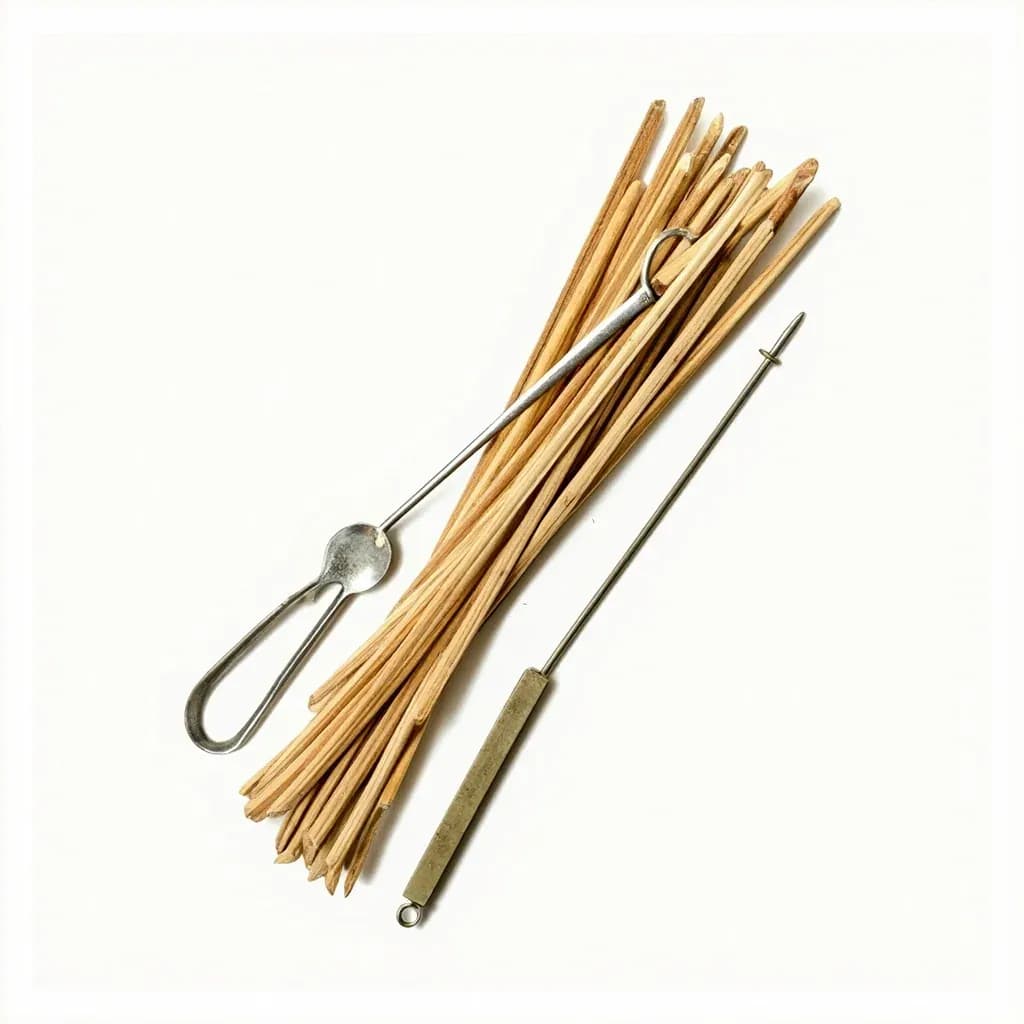
Skewer (Metal / Wooden / Bamboo)
Thin pointed rod that threads meat and vegetables for grilling, roasting, or testing doneness.
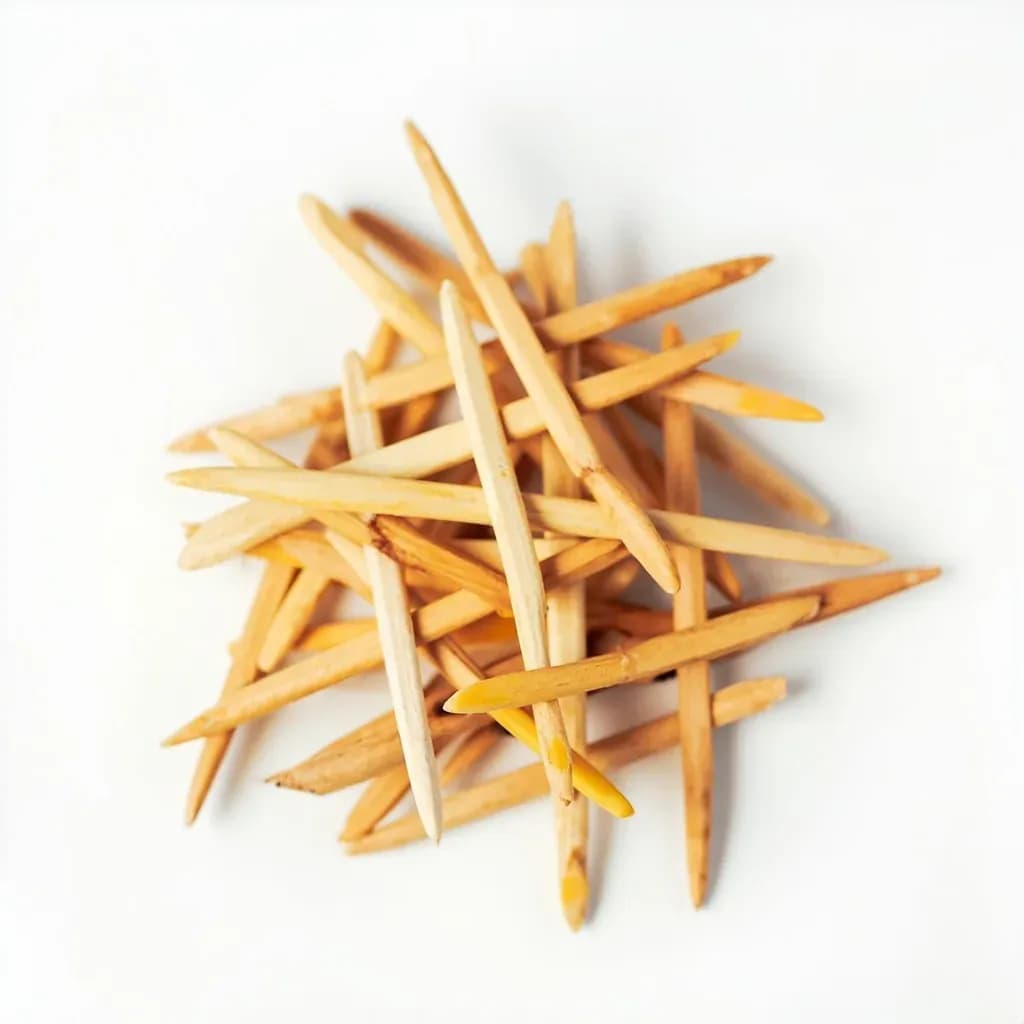
Toothpick
Small pointed wooden pick that pins rolled food shut and tests baked goods for doneness.
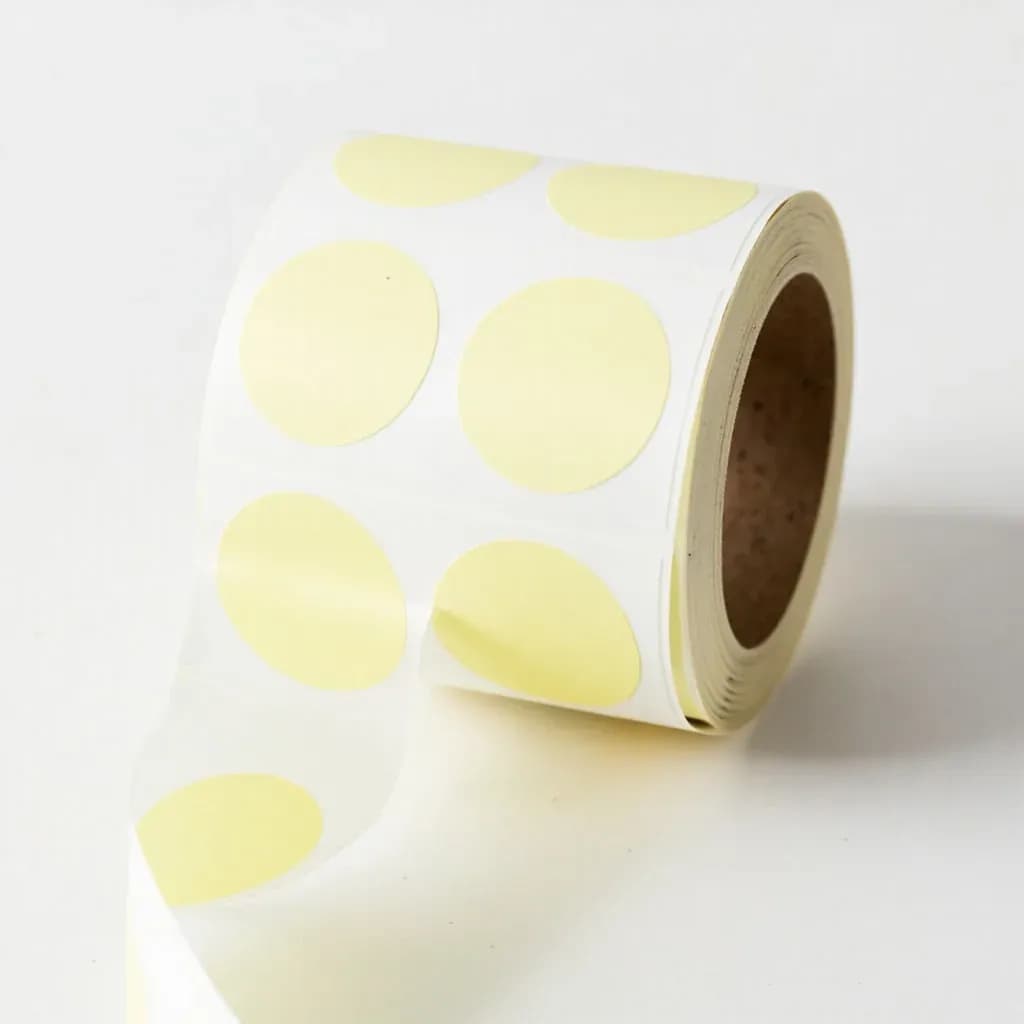
Food Storage Label (Day-Dot)
Stick-on label marking date, contents, or batch info for safe stock rotation.
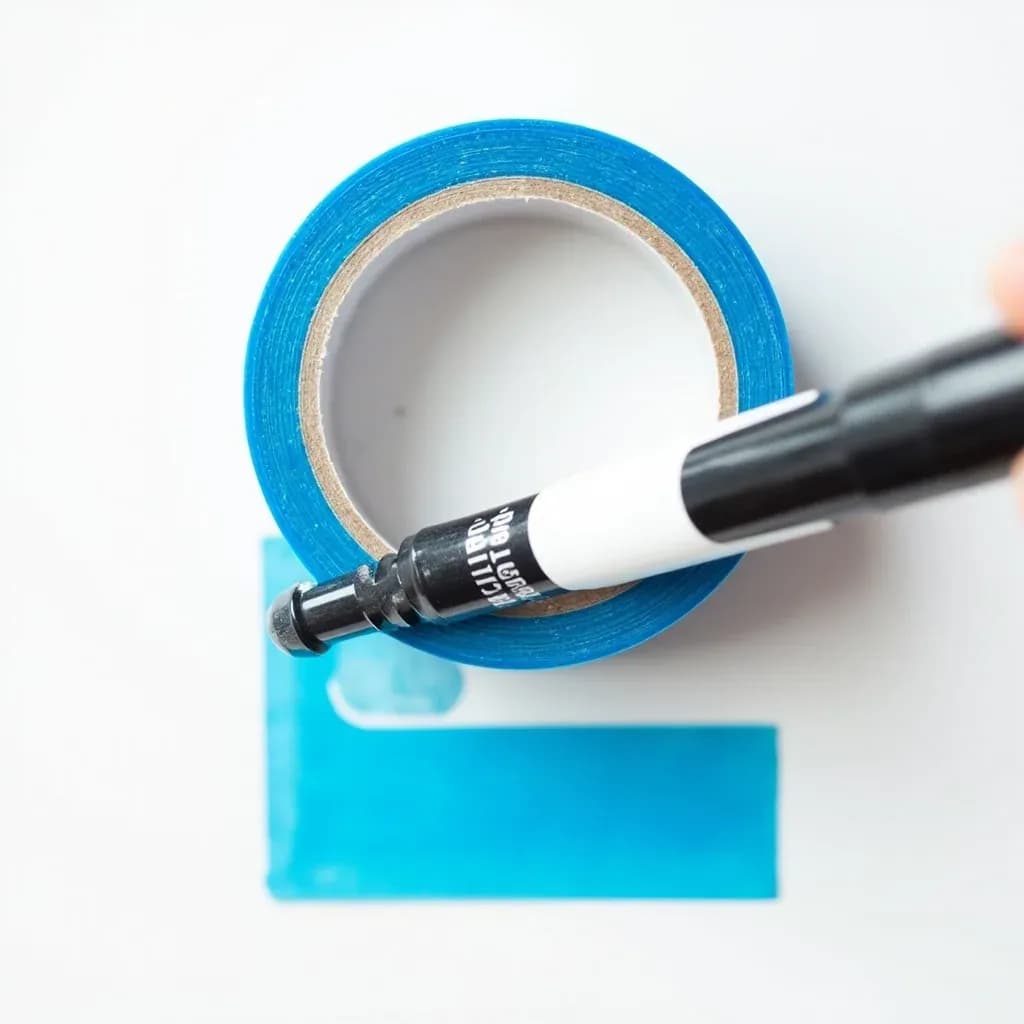
Labeling Tape
Write-on tape for marking containers with contents and dates, peeling off cleanly later.