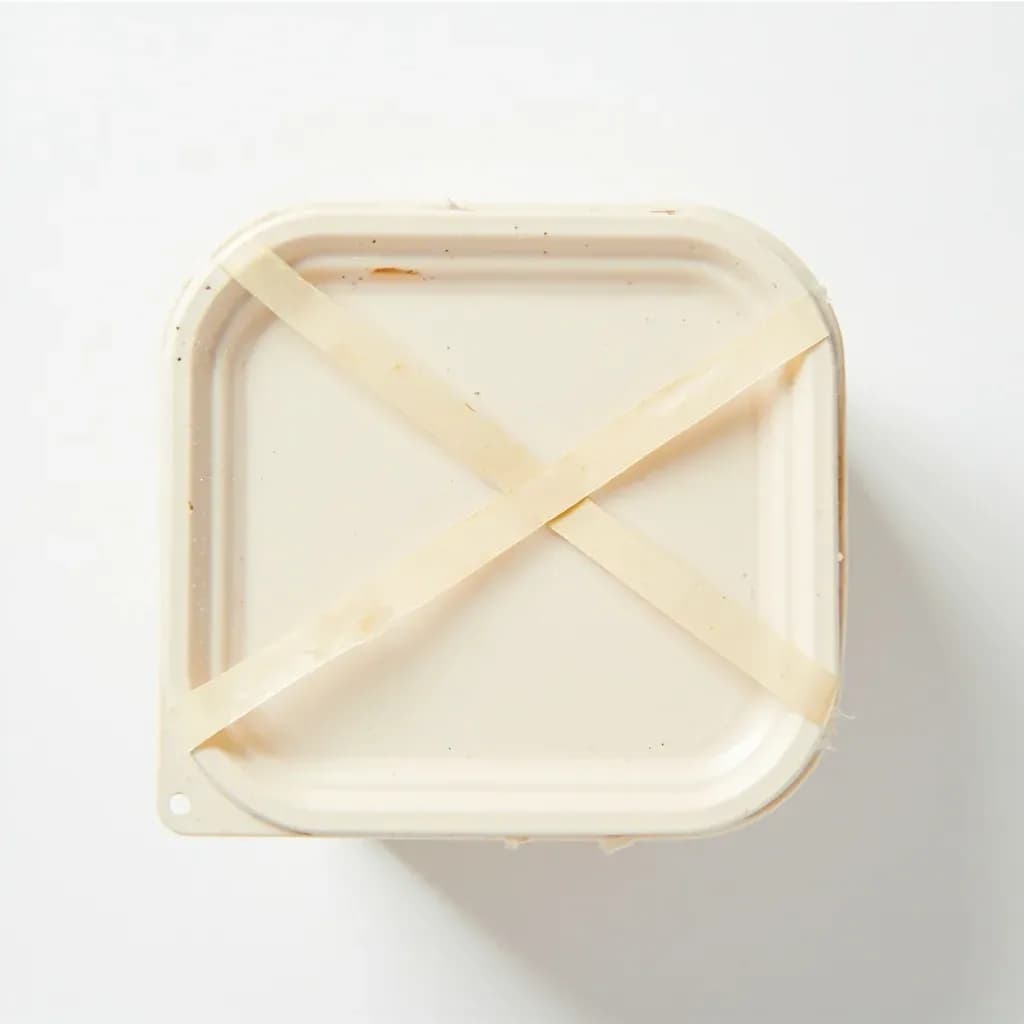
Tying & Fastening
Tamper-Evident Seal
Adhesive or breakaway seal applied to packaging to prove it hasn't been opened.
A tamper-evident seal is a sticker, label, or band designed to break, tear, or leave residue once a package is opened. Food sellers and meal-prep services apply them across container lids and bag closures so customers see the seal is intact on arrival. Once broken, the seal cannot be reapplied without obvious damage, signaling possible tampering.
A tamper-evident seal is any closure or wrapper designed to be visibly destroyed — or to leave unambiguous evidence on the container — when a package is first opened. The family includes loose plastic shrink sleeves that grip a cap and neck, foil induction liners bonded electromagnetically inside a cap, perforated breakaway rings beneath screw caps, tear-notch pouches, void-releasing adhesive labels, and numbered plastic pull-tight straps. What unites them is a single engineering principle: the seal cannot be restored to its original condition without leaving a trace, so a customer or inspector can tell at a glance whether a product has been opened since it left the producer.
These devices sit at the boundary between food safety and packaging engineering, and most cooks will encounter them as compliance and trust tools rather than as preservation tools. That distinction matters: an induction-bonded foil liner is the only common form that meaningfully contributes to shelf life by limiting oxygen and moisture ingress, while a shrink band, breakaway ring, or tear strip is essentially an "I was here" indicator. Widespread food-grade adoption dates to the 1982 Chicago Tylenol poisonings, after which the FDA issued tamper-evident packaging requirements and retailers extended the practice to bottled water, juice, jarred sauces, honey, and single-serve condiments. For the home cook the technology most often met is the two-piece mason jar lid — a heat-bonded membrane plus screw band that predates modern commercial tamper-evident packaging by more than a century.
In professional kitchens the practical concerns are container compatibility, the equipment cost of induction sealing or steam-shrink tunnels, and — increasingly — the audit trail. Sequentially numbered pull-tight seals are what link a catering tote, evidence bag, or delivery container to a specific trip, employee, and time, and they have become a quiet backbone of HACCP and FSMA Section 204 traceability programs.
Alternatives
Types & varieties
Loose PVC or PET-G sleeve that shrinks tightly around a cap and jar neck under heat; a perforated slit tears visibly when twisted.
Multi-layer foil + polymer + pulp disc placed inside a cap; an induction sealer electromagnetically heats the aluminum foil, which melts the polymer and bonds a membrane to the container mouth that must be punctured to open.
Adhesive label that leaves a 'VOID,' checkerboard, or honeycomb pattern on the substrate when peeled, or fractures destructively; common on jars, boxes, and tamper-evident bags.
Perforated plastic ring beneath a screw cap or juice-style cap that separates and stays on the bottle neck when the cap is first turned.
Flexible bag with a notched tear-initiation point and scored channel that rips cleanly on first opening; used for grated cheese, deli meats, and coffee.
One-piece plastic strap with a locking head that must be cut to release; sequential numbering supports audit trails in catering, delivery, and food transport.
Carton sealing tape that delaminates or reveals a printed message when removed; used on shipping cases of finished food.
Formed plastic enclosures fused at a flange; opening requires breaking the flange; used for single-serve jams, condiments, and portioned ingredients.
Foil or paperboard disc heat-bonded to a glass jar mouth that must be punctured to access contents; doubles as the primary vacuum seal in home canning.
Tamper-evident seal versus freshness seal
Many jarred products carry two separate devices that look similar but do very different jobs. A tamper-evident seal is a security feature that proves the package has not been opened since manufacture. A freshness button — the pop-up disc on the lid of many salsas, sauces, and vacuum-packed jarred foods — is a vacuum indicator; it shows that the headspace was evacuated at the packing facility, but it is not engineered to resist being reset and offers no proof against later opening. Treat the two independently: on most commercial jars a button that lies flush (depressed) signals intact vacuum, while a popped or domed button signals that vacuum has been lost. A depressed button under an unbroken shrink band means the jar left the factory sealed; a popped button under an intact shrink band means the same jar has lost vacuum since packing (age or temperature abuse); a depressed button under a torn or loose shrink band is the suspicious combination — the package was almost certainly opened and resealed — and should be returned.
Matching seal to container
The seal you can use is dictated by the container, not the product. Induction liners carry an aluminum foil face that the electromagnetic field actually heats; the molten polymer beneath the foil is what bonds to a continuous, flat bottle mouth under a properly torqued cap. The container itself need not be conductive — glass, PET, and HDPE all bond fine — but the mouth must be smooth and the cap must press the liner firmly and evenly against it. Shrink bands work on almost any rigid container — glass, PET, HDPE, metal — but they are decorative and evidentiary, with no barrier function. Breakaway rings require a cap mold designed with a perforated bridge. Tear-notch pouches need a film with machine-direction scoring; not every pouch stock accepts a clean tear. Before specifying a seal for a product, confirm container compatibility with the manufacturer and run a small pilot through your actual capping or filling line.
Building an audit trail with numbered seals
Sequentially numbered pull-tight seals and tear-strip pouches with lot codes turn a packaging step into a chain-of-custody record. The number on the seal applied to a catering tote, evidence bag, or delivery container is written onto the same HACCP, manifest, or FSMA Section 204 traceability record as the product lot, the employee who applied it, and the time of sealing. A torn seal with the correct number proves the tote was opened in the expected way; a missing or out-of-sequence number flags an undocumented access and triggers an investigation. For institutional, school, and food-bank shipments this practice has become standard, and it is the cheapest form of traceability a kitchen can adopt.
Common uses
Tips & pitfalls
- Always inspect the seal before breaking it: a loose shrink band, punctured induction membrane, or already-torn pull-tight strap means the product should be returned, not used.
- Match the seal type to the container — induction liners need an aluminum-faced disc against a continuous flat mouth and a properly torqued cap, while shrink bands fit nearly any rigid container but offer no oxygen or moisture barrier.
- When applying shrink bands by hand, use a heat gun on a low setting and rotate the jar continuously to avoid scorching the label or the cap; steam tunnels give faster, more uniform results for production runs.
- For induction sealing, torque the cap correctly (typically 15–25 in-lb on PET bottles) so the foil contacts the bottle mouth evenly — an under- or over-torqued cap produces leaks or unbonded seals.
- Apply pressure-sensitive security labels only to clean, dry, room-temperature surfaces; oils and condensation prevent full adhesive bond and can let a label be lifted cleanly, defeating the tamper evidence.
- Log the number of every pull-tight seal at the point of application on the delivery manifest or HACCP record so a missing or out-of-sequence number can be investigated.
- Do not confuse a freshness button with a tamper-evident seal — the button is a vacuum indicator, not a security device, and offers no proof against later opening.
- In hot-holding or refrigerated transport, choose a seal rated for the temperature range; standard PVC shrink bands distort at prolonged exposure above 60 °C (140 °F).
- Never reuse a pull-tight seal or reapply a security label — by definition, a valid tamper-evident seal must be created in a way that cannot be replicated without visible damage.
Good to know
- Category
- Food packaging security device (Tying & Fastening)
- Regulatory origin
- Widespread food-grade adoption followed the 1982 Chicago Tylenol poisonings; FDA tamper-evident packaging requirements issued in 1982, mandatory for OTC drugs and dietary supplements under 21 CFR 211.132 and 21 CFR 111
- Primary materials
- PVC and PET-G shrink films; aluminum foil + polymer/paperboard induction liners; acrylic pressure-sensitive adhesives; polypropylene pull-tight straps
- Activation
- Heat shrink at 160–200 °C / 320–390 °F via heat gun or steam tunnel; induction sealing via electromagnetic field bonding foil in 1–3 seconds
- Shelf-life effect
- Induction seals extend unopened shelf life by limiting oxygen and moisture ingress; shrink bands, breakaway rings, and tear strips are evidentiary only
- Reusability
- Single-use by design; once broken, the seal cannot be returned to original condition
- Commercial requirement
- Strongly recommended for retail bottled water, juices, jarred sauces, salsas, honey, and infused oils; mandatory for OTC drugs and dietary supplements
- Commercial cost
- Shrink bands ~$0.02–$0.10 per unit; induction liners ~$0.05–$0.20; numbered pull-tight seals ~$0.15–$0.50
Also called
tamper-evident seal · security seal · tamper seal · safety seal
Related

Skewers
Thread meat and vegetables for kebabs and grilling

Toothpicks
Pin rolls shut and test cakes for doneness

Kitchen Twine
Food-safe string for trussing roasts and tying bundles

Butcher Paper
Breathable wrap for resting barbecue and storing meat
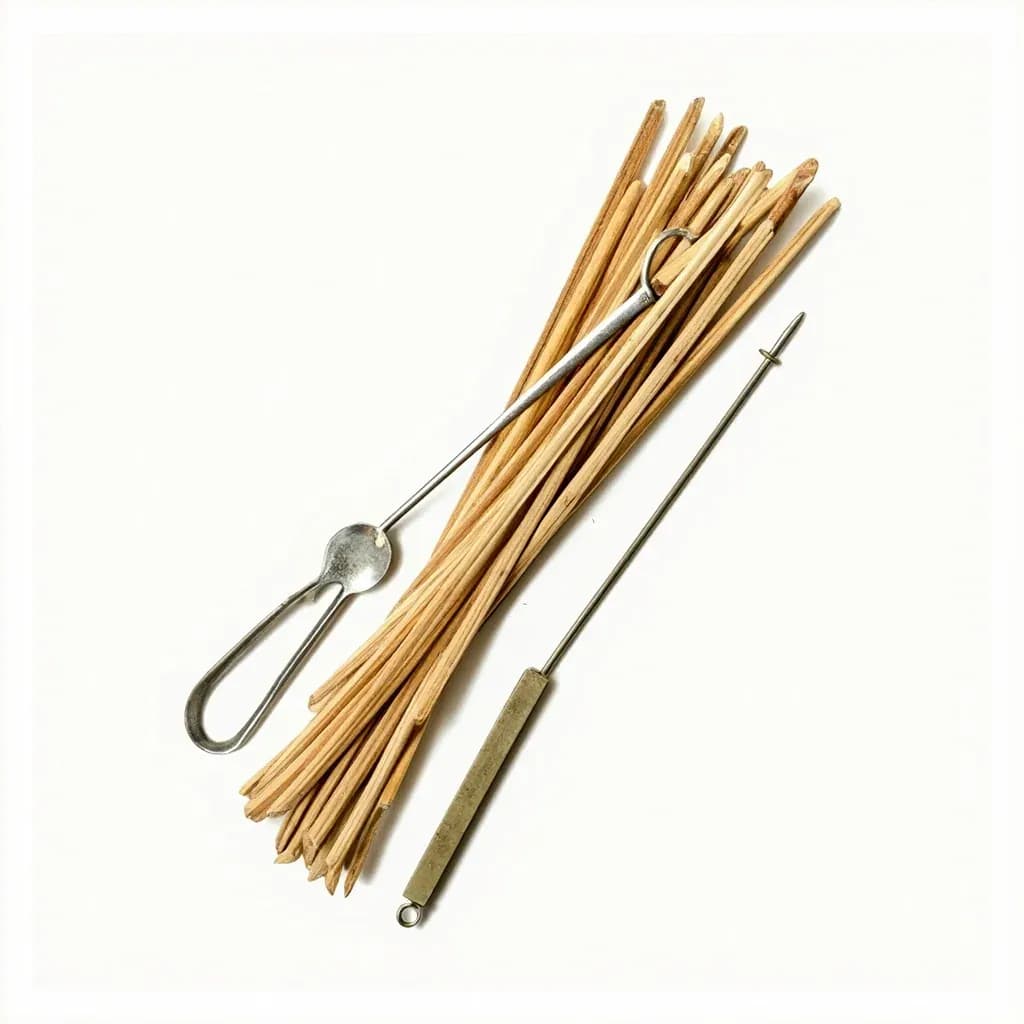
Skewer (Metal / Wooden / Bamboo)
Thin pointed rod that threads meat and vegetables for grilling, roasting, or testing doneness.

Toothpick
Small pointed wooden pick that pins rolled food shut and tests baked goods for doneness.

Food Storage Label (Day-Dot)
Stick-on label marking date, contents, or batch info for safe stock rotation.
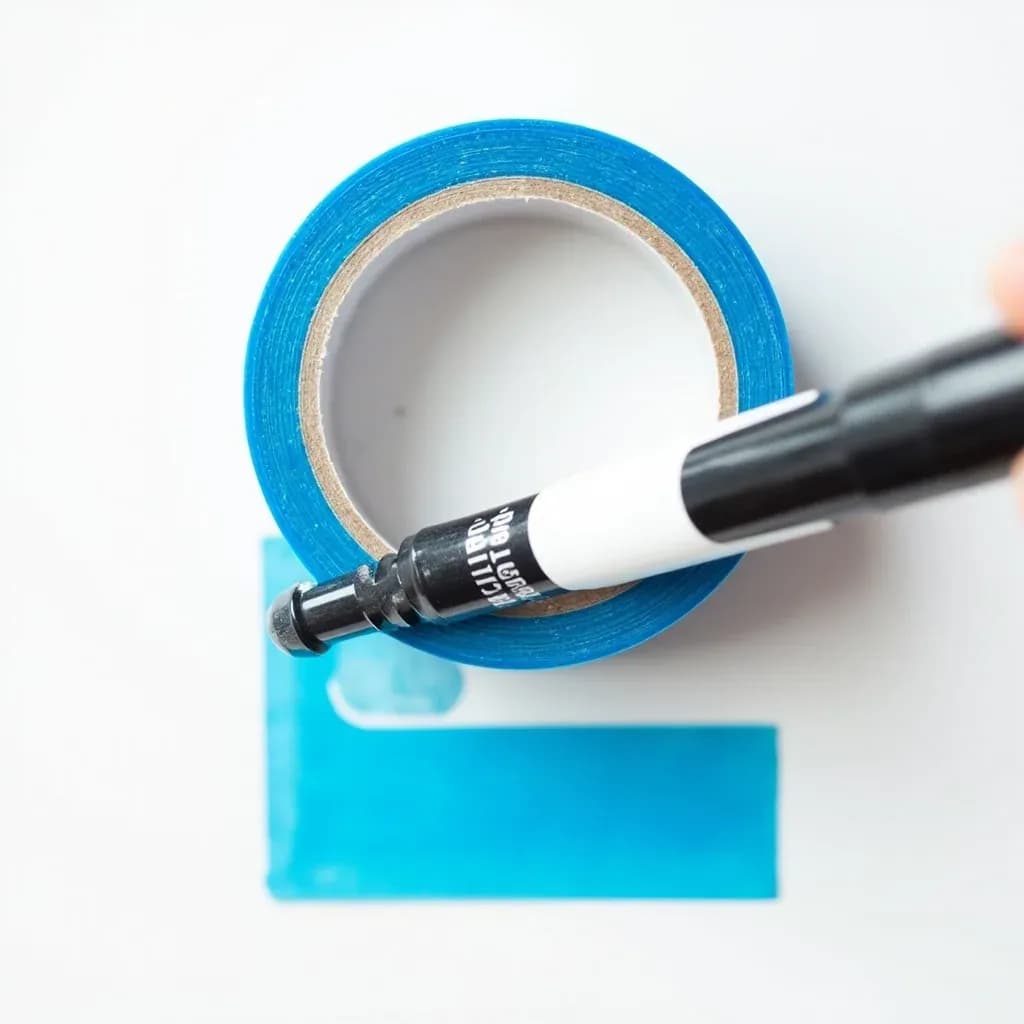
Labeling Tape
Write-on tape for marking containers with contents and dates, peeling off cleanly later.