Knives & Cutting
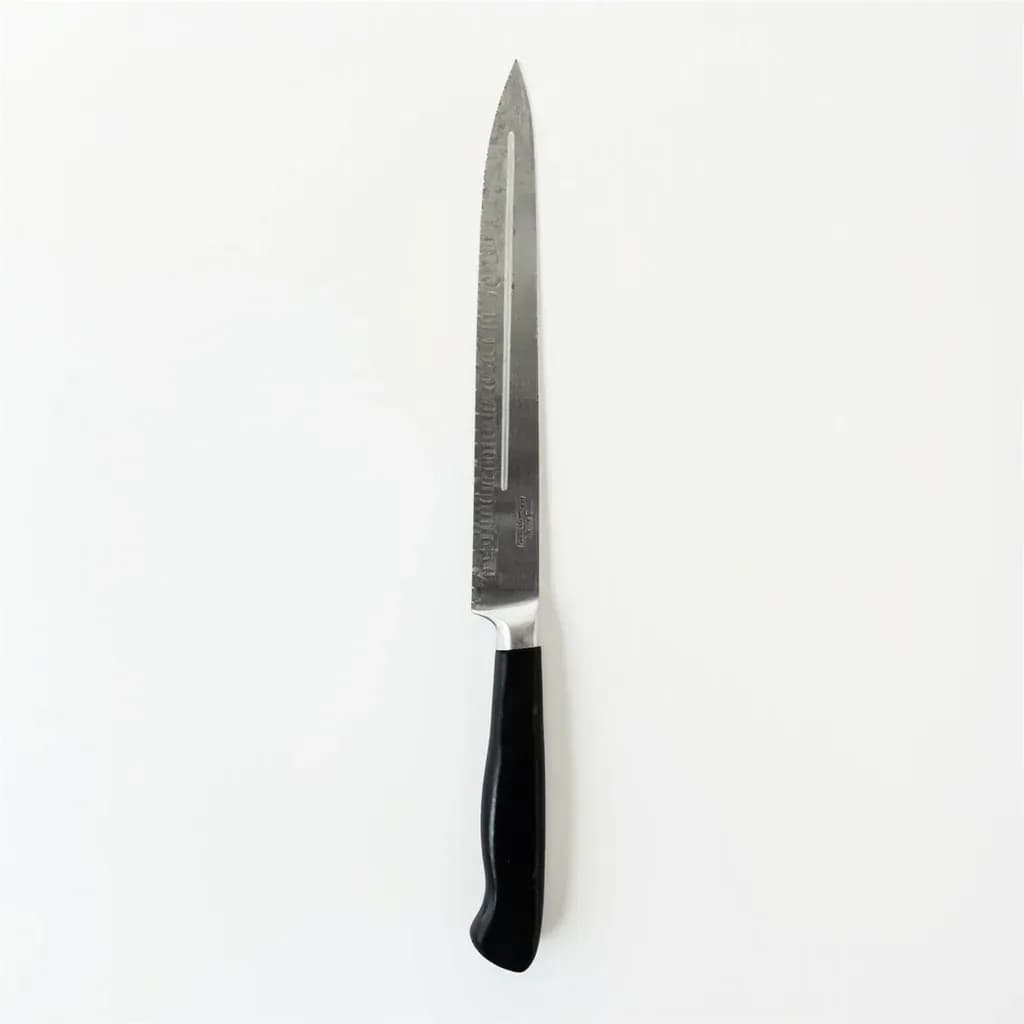
Kitchen Knife
The all-purpose cutting blade used for everyday slicing, chopping, and dicing.
A kitchen knife is the general-purpose blade at the center of nearly every prep task, used to slice, chop, dice, and mince ingredients. A serrated version with a toothed edge saws cleanly through bread, tomato skins, and other items with tough exteriors and soft interiors. Keeping it sharp makes cutting safer and more precise.
A kitchen knife is the single tool a cook reaches for more than any other, and the quality of that knife — together with the sharpness of its edge — shapes almost every moment spent at the cutting board. The term covers a family of specialized blades rather than one tool: an 8-inch chef's knife handles the bulk of daily slicing and chopping, while a paring knife, a serrated bread knife, and a boning or slicer round out a working kit.
How a knife behaves depends on its geometry. Western (typically German-style) knives carry thicker blades ground to roughly 20–22° per side, giving them a durable edge and a weighty feel that powers through dense vegetables and tough cuts. Japanese knives are ground thinner and harder at 10–15° per side, gliding through produce with less resistance but demanding more care to keep that fragile edge intact. A well-made knife should feel like an extension of the hand: balanced near the bolster, comfortable in the pinch grip, and sharp enough to fall through a ripe tomato with barely any pressure. The most consequential upgrade most home cooks can make is not buying a more expensive knife but learning to maintain an edge — a properly honed and sharpened modest blade will outperform a neglected premium one every time.
Alternatives
Types & varieties
8–10 in curved blade; the all-purpose workhorse for rocking cuts, slicing, and dicing
Japanese all-purpose; 5–7 in, flat edge, sheepsfoot tip, often with a granton (scalloped) edge to reduce sticking
3–4 in small blade for peeling, trimming, and detail work; held in-hand rather than on a board
8–10 in serrated edge for slicing bread, tomatoes, and other items with a hard exterior and soft interior
5–7 in narrow, stiff (or semi-flexible) blade for separating meat from bone
Thin, highly flexible blade for filleting fish and boning poultry
Heavy rectangular blade (6–10 in) for splitting bone, breaking down large cuts, and crushing garlic
Japanese vegetable knife; flat-edged, rectangular blade ideal for push cuts and julienne
Japanese utility knife; 4–6 in, useful for small produce and light prep
Western 4–6 in blade, a middle ground between chef's and paring
Long (10–14 in), narrow blade for roasts, brisket, and hams; often with a granton edge
Short serrated or straight-edge table knife for cutting cooked meat at the table
Building a basic knife kit
Most cooks can do nearly all of their work with three or four well-chosen blades. Start with an 8-inch chef's knife (or a santoku, if you prefer a flatter edge and lighter weight) for vegetables, meat, and general prep. Add a 3–4-inch paring knife for in-hand work like peeling apples, deveining shrimp, or hulling strawberries. A long serrated bread knife, 8–10 inches, earns its slot for bread, layer cakes, tomatoes, and any food with a tough skin and a tender interior. If you regularly break down whole chickens or fillet fish, a dedicated boning or fillet knife is the next sensible addition; a 10–12 inch slicer is worth it for anyone who smokes or roasts large cuts of meat. Quality matters more than quantity: a handful of blades that are kept sharp will outperform a drawer full of neglected ones.
- 8-in chef's knife or santoku — the daily workhorse
- 3–4-in paring knife — peeling, trimming, detail cuts
- 8–10-in serrated bread knife — bread, tomatoes, cake
- Optional: boning/fillet knife for poultry and fish
- Optional: long slicer for roasts and brisket
Sharpening and care
A sharp knife is a safe knife: it requires less force, follows the cut you intend, and is far less likely to slip and cause injury. Two routines keep an edge working. First, hone — drag the blade along a honing steel at a 15–20° angle a few times before or after each use to realign the microscopic edge that bends with cutting. Honing doesn't remove metal; sharpening does. Every few months (more often with daily use), sharpen on a whetstone: a 1000-grit stone for bringing the edge back, followed by a 4000–6000-grit stone for polish. A pull-through sharpener is a serviceable shortcut for Western blades but will abrade the thinner edges of Japanese knives. Hand wash and dry immediately after use; the dishwasher's heat, harsh detergent, and contact with other items will dull the edge and damage the handle. Store on a magnetic strip, in a block, or in an in-drawer organizer — never loose in a drawer, where the edges grind against one another and the jumble becomes a cut hazard.
- Hone before or after each use to realign the edge
- Sharpen on a 1000/4000–6000 grit whetstone every few months
- Hand wash and dry; never put a kitchen knife in the dishwasher
- Use wood or plastic boards; glass and stone destroy edges
- Store on a magnetic strip, in a block, or in a drawer organizer
Common uses
Tips & pitfalls
- Grip the blade with a pinch grip — thumb and index finger on the blade just ahead of the bolster — for control and to reduce fatigue
- Keep the knife sharp; a dull blade is the leading cause of home kitchen cuts because it requires more force and is more likely to slip
- Always use a wood or plastic cutting board — glass, marble, and stone will destroy an edge quickly
- Curl the fingertips of your guiding hand into a claw so the knuckles, not the fingertips, guide the blade
- Match the knife to the task: a chef's knife for vegetables and meat, a serrated for bread, a cleaver for bone
- For Japanese knives, never cut bone, frozen food, or hard squash — the harder, thinner edge is more brittle
- Never try to catch a falling knife — step back and let it drop
- Avoid twisting or prying with the blade; rock the knife through the cut instead, and use the spine to bear down on tough items
Good to know
- Primary use
- Slicing, chopping, dicing, and mincing food ingredients
- Typical blade length (chef's knife)
- 8 inches (20 cm) is the standard; useful range 6–12 inches
- Common blade material
- High-carbon stainless steel; also carbon steel, stainless steel, Damascus (pattern-welded), and ceramic (zirconium dioxide)
- Edge angle
- Western knives: 20–22° per side; Japanese knives: 10–15° per side
- Construction
- Full-tang (blade steel extends through the handle) is the most durable construction
- Typical weight (chef's knife)
- 7–10 oz (200–280 g), with the balance point near the bolster
- Origin
- Knives are among humanity's oldest tools (stone blades roughly 2.5 million years old); the modern Western chef's knife form developed in 19th-century France and Germany
- Key historical shift
- Stainless steel cutlery became widespread in the 1920s after Harry Brearley's development of the alloy
- Care
- Hand wash and dry immediately; hone with a honing steel before use; sharpen on whetstones periodically
Also called
serrated-knife · Cook's Knife · Utility Knife
Related

Knife
The fundamental cutting tool every kitchen is built around

Chef's Knife
The do-everything blade for chopping, slicing, and mincing

Paring Knife
Small, nimble blade for peeling and detailed in-hand work

Serrated Knife
Saw-toothed blade that slices crusty bread without crushing

Cleaver
Heavy broad blade for chopping through bone and bulk prep

Cutting Board
The stable surface every cut starts on

Mandoline
Adjustable blade for paper-thin, perfectly even slices

Kitchen Shears
Heavy-duty scissors for poultry, herbs, and packaging