 Mediterranean
Medium · Hot
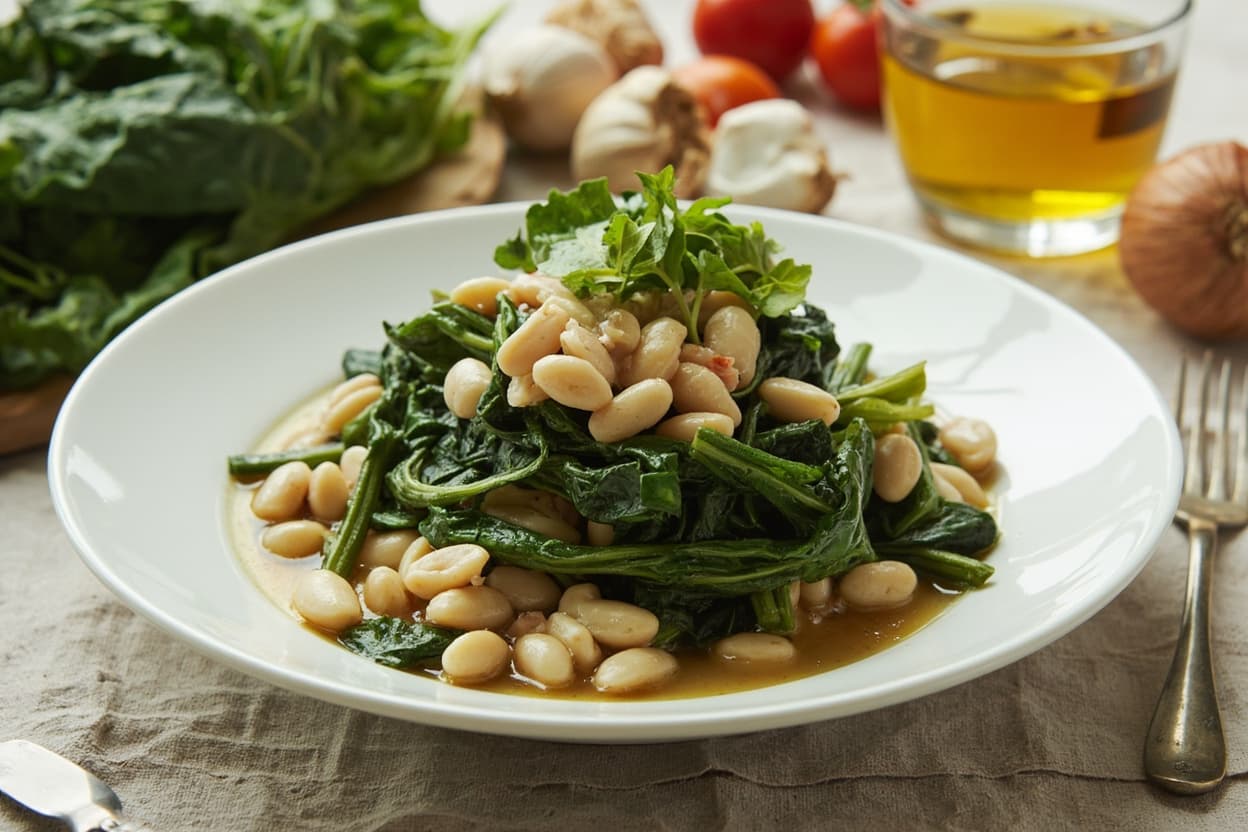
Brothy white beans with tender chard
Garlic softened in olive oil is all the flavor base this dish needs — white beans already carry a creaminess that thickens the broth on their own as they warm through. Chard is added in ribbons and cooks just until the stems yield and the leaves darken, giving color and a faint mineral note to something that is otherwise all gentleness.

Prep
15 min
Cook
35 min
Total
50 min
Method
Prepare the ingredients
1
Drain and rinse the white beans. Set aside.
2
Separate the chard stems from the leaves. Dice the stems finely and roughly tear the leaves. Wash everything well under cold water.
3
Peel and finely dice the yellow onion. Peel and crush the garlic cloves with the flat of your knife.
4
Roughly chop the parsley leaves, discarding the tough stems.
Build the broth base
5
6
Cook gently for 5 to 6 minutes, stirring occasionally, until the onion is soft and translucent but not browned.
7
Add the crushed garlic and stir for another minute, until fragrant and golden at the edges.
Simmer the beans
8
Pour in the water and add the drained white beans. Stir well to combine.
A
Nutri-Score
Excellent balance
A–E · lower is better · score -11
Calories
798
per serving
High in protein · 49gSource of fibre · 15gLow sugar · 4gLow saturated fat · 2g
Protein
49g
Carbs
129g
Fat
12g
Sat. fat
2g
Fiber
15g
Sugar
4g
Sodium
827mg
Gluten FreeVeganDairy FreeLegume RichHeart HealthyBlood Sugar FriendlyLow Sodium AdaptableHigh FiberPlant Based ProteinBalanced MealLow Saturated Fat
Nutri-Score is a general nutritional-balance guide, not medical or dietary advice.
B
Environmental impact
Low impact
A–E · lower is better · complete match
kg CO2e
0.5
per serving
BCarbonAEU all-round· carbon sets the grade
Water
0.3m³
Runoff
0.05g P
white beans drives 73% of this recipe’s estimated footprint.
Carbon from Poore & Nemecek 2018; water, land & runoff from Agribalyse — modelled averages for comparing recipes, not a measurement of your groceries.
Flavor Profile
6
Umami
3
Sweet
5
Salty
1
Sour
2
Bitter
0
Spicy
Textures
TenderSilkyCreamyBrothy
Aromas
GarlickyHerbalSavoryFruity
Kitchen Equipment
Safety & Storage
Cooking Temperature
Beans must reach a rolling simmer (185°F/85°C minimum) during the 20-minute cooking phase. Undercooked beans can cause foodborne illness. The chard should wilt completely and lose all raw texture before serving.
Storage
Cool the stew to room temperature within 2 hours of cooking, then transfer to airtight containers. Refrigerate at 40°F/4°C or below. Consume within 3-4 days for optimal safety and quality.
Cross Contamination
If this recipe is prepared in a kitchen that also handles fish, shellfish, or other common allergens, sanitize all surfaces, utensils, and cutting boards before use to prevent allergen transfer.
Handling
When crushing garlic with the flat of a knife, ensure fingers are curled away from the blade edge. Use a stable cutting board to prevent slippage during dicing and chopping tasks.
Shelf Life
Leftover bean stew can be frozen in portion-sized containers for up to 2 months. Thaw in refrigerator overnight and reheat to165°F/74°C before consuming.
High Risk Population
For elderly individuals or those with compromised immune systems, ensure beans are cooked until very tender (no firm texture remaining) to aid digestion and reduce risk of bacterial contamination.
Pro Tips
Technique
When you add the chard leaves, don't rush them. Drop them in handfuls and wait for each batch to wilt down before adding more — this patience gives you silky, tender leaves rather than soggy, waterlogged greens.
Substitution
If chard isn't available, spinach works beautifully — add it in the last two minutes only, as it wilts faster. You could also use kale, though I'd remove the tough center stems and let it cook a few minutes longer until completely soft.
Equipment
A heavy-bottomed saucepan holds the heat evenly, which is important for gentle simmering. If yours runs hot, keep the flame on the lower side — we want bubbles, not boiling.
Time Saver
Using pre-soaked beans speeds everything up considerably. If you're short on time, canned beans work well too — just drain and rinse them, and add them when the broth is already simmering, giving them only 10 to 15 minutes to warm through and absorb the flavors.
From the chef
White beans carry their own creaminess into the broth as they warm through — garlic softened in olive oil is really all the flavor base this dish needs. The chard goes in last, stems first so they have time to yield, then the leaves in ribbons that darken and turn silky in just a few minutes. The broth stays light, the beans stay gentle, and the whole pot has a mineral brightness from the chard that keeps it from feeling heavy. It is the kind of thing that improves if you let it sit two minutes before you eat.
TagsOne PotVegetarianComfort FoodBrothy
Source: generated · May 30, 2026