 Korean
Easy · Cold
Spicy Sesame Cabbage Banchan
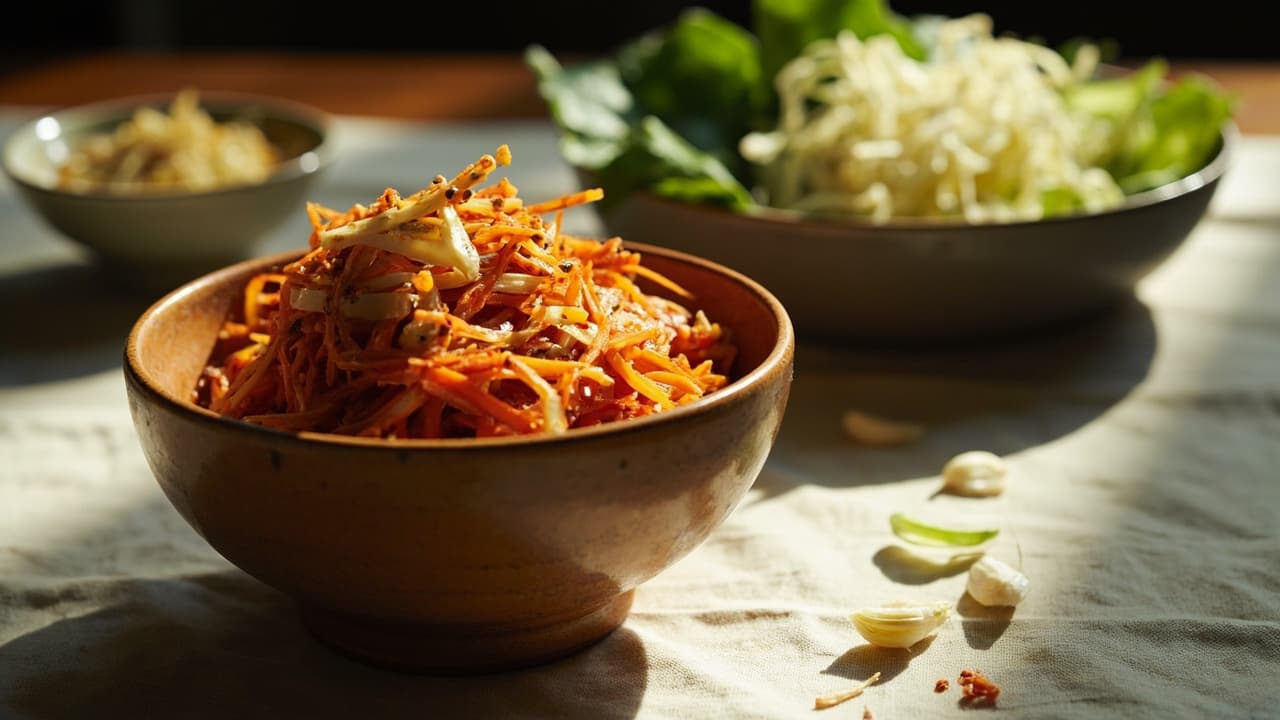
A quick-pickle banchan featuring shredded cabbage tossed in a spicy sesame-gochugaru dressing. This weeknight-friendly side dish captures the fermented, spicy-sweet, and nutty flavors Chef Jin-Soo loves.

Prep
15 min
Rest
15 min
Total
30 min
Method
Prepare and Salt the Cabbage
2
3
Squeeze the cabbage gently to remove liquid, then pat dry with clean kitchen towels.
Make the Spicy Sesame Dressing
4
In a small bowl, whisk together soy sauce, sesame oil, cayenne, white sugar, and rice vinegar until sugar dissolves.
5
Mince the garlic and add it to the dressing. Whisk vigorously to combine.
Toss and Rest
6
Pour the spicy sesame dressing over the prepared cabbage.
8
Let the banchan rest for 5 minutes so the flavors meld together.
Finish and Serve
9
Slice the scallions thinly on a bias and sprinkle over the dressed cabbage.
10
Scatter sesame seeds generously across the top.
11
Toss once more gently and serve immediately as a banchan side dish, or store in the refrigerator for up to 3 days.
D
Nutri-Score
Needs balance
A–E · lower is better · score 11
Calories
79
per serving
High in salt · 1772mgLow sugar · 2g
Protein
1g
Carbs
4g
Fat
7g
Sat. fat
1g
Fiber
1g
Sugar
2g
Sodium
1772mg
Gluten FreeVeganDairy FreeLow CarbHigh SodiumWeight ManagementDigestive HealthLow CalorieHigh Fiber
Nutri-Score is a general nutritional-balance guide, not medical or dietary advice.
A
Environmental impact
Very low impact
A–E · lower is better · includes estimates
kg CO2e
0.1
per serving
ACarbonAEU all-round· both agree
Water
0.08m³
Land
4.2Pt
Runoff
0.03g P
Cabbage drives 56% of this recipe’s estimated footprint.
Carbon from Poore & Nemecek 2018; water, land & runoff from Agribalyse — modelled averages for comparing recipes, not a measurement of your groceries.
Flavor Profile
6
Umami
3
Sweet
5
Salty
2
Sour
1
Bitter
4
Spicy
Textures
CrispyTenderFresh
Aromas
NuttyPungentHerbalToasted
Kitchen Equipment
Techniques
Safety & Storage
Allergen Warning
This dish contains soy and sesame allergens. For individuals with these allergies, the dish is not safe to consume. Verify all soy sauce used is wheat-free if avoiding gluten.
Cross Contamination
Use separate cutting boards and utensils for raw proteins and this no-cook dish to prevent cross-contamination. If using hands to toss the cabbage, wash thoroughly with soap before handling.
Storage
Store in an airtight container in the refrigerator immediately after serving. The rice vinegar and salt in the dressing provide some preservation, but proper refrigeration is essential.
Shelf Life
Consume within 3 days for optimal quality and safety. Discard any leftovers that show signs of spoilage such as off-odor, slimy texture, or discoloration.
Handling
When mincing garlic, use a stable cutting board and keep fingers curled to prevent cuts. The recipe requires no cooking, so ensure all ingredients are fresh and properly washed before use.
High Risk Population
For immunocompromised individuals, elderly, pregnant individuals, or young children, ensure all vegetables including cabbage are thoroughly washed and consider using pre-washed triple-rinsed cabbage. Use pasteurized rice vinegar to eliminate concerns about unpasteurized vinegar.
Pro Tips
Technique
After salting the cabbage, really squeeze out that extracted liquid—your banchan will be soggy and watery if you skip this step. Pat it dry with towels before tossing with dressing for maximum flavor absorption.
Make Ahead
This banchan actually tastes better the next day as the flavors meld, making it perfect for weekly meal prep. Store it in a glass jar and portion it out as a side dish throughout your week.
Substitution
If you can't find gochugaru, a good quality cayenne pepper works in a pinch, though the flavor won't have that distinctive Korean chile depth. For more authenticity, double the garlic and add a pinch of sugar.
From the chef
Salt draws moisture from the cabbage and turns each shred into a ready sponge for the dressing — that is the whole technique. The sesame oil, rice vinegar, cayenne, and garlic combine into a spicy-sweet coating that soaks in over a short rest, so the banchan tastes sharper and more cohesive after five minutes than right off the toss. Scallion and sesame seeds finish it with crunch and nuttiness. Make a batch on Sunday and it improves in the fridge for up to three days, rounding out any plain protein without any extra effort.
TagsKoreanBanchanSpicyPickledQuick PickleWeeknightVegetarianSesameCabbageEasy
AllergensSoySesameGluten
Source: generated · June 10, 2026