 Italian
Medium · Warm
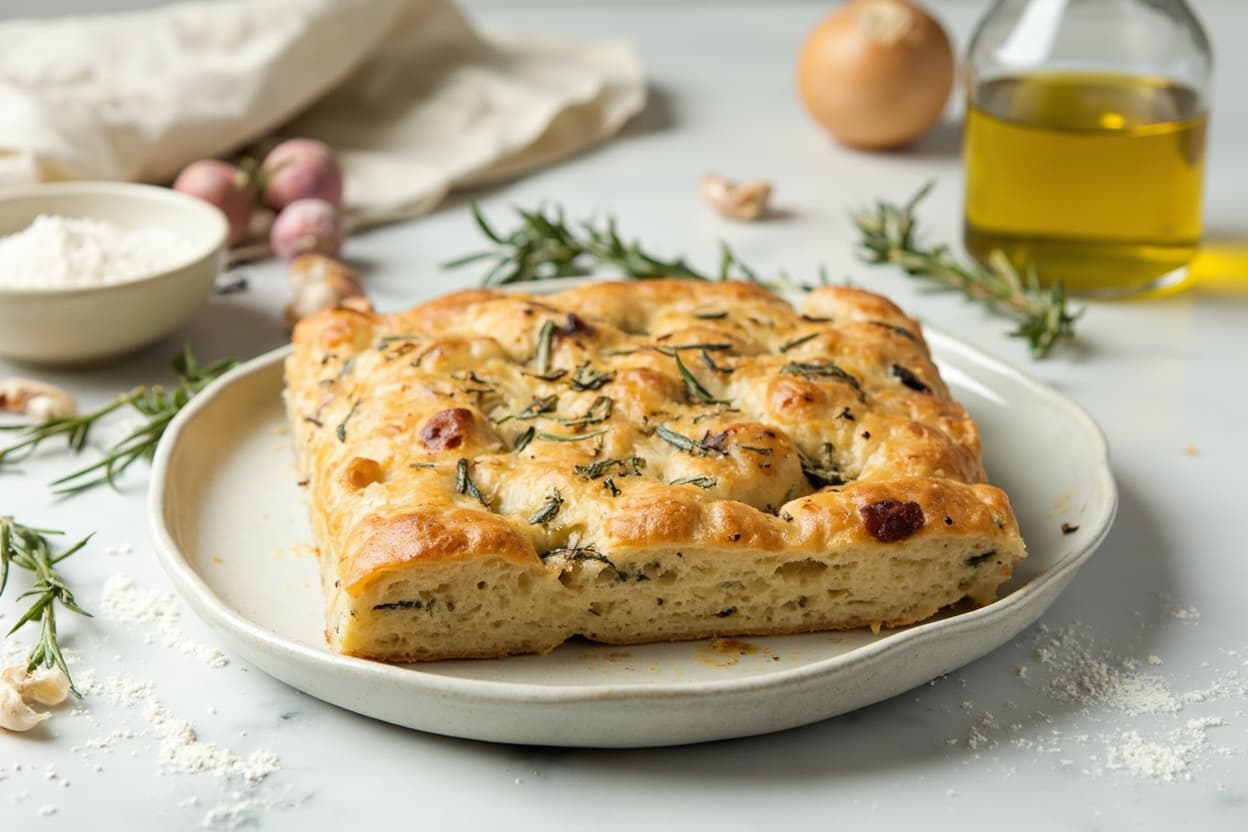
Cold-Fermented Rosemary Olive Oil Focaccia
Eighteen to twenty-four hours in the refrigerator does what no amount of kneading can: it slackens the gluten until the dough almost pours into the pan, and the long fermentation builds a sourness that stays in the background, making every bite taste more of itself. The olive oil pooling in the dimples crisps the underside to a deep amber, and rosemary perfumes the crust without overpowering it. Salt is not optional.
Prep
20 min
Cook
26 min
Rest
13 min
Total
59 min
Method
Autolyse and Mixing
1
Mix by hand until a shaggy, tacky dough forms, about 2 minutes. The dough should feel slightly sticky but pull away from the sides of the bowl.
First Rise at Room Temperature
2
Let rest for 30 minutes. This short rise begins gluten development and allows the yeast to wake up before the long cold ferment.
Cold Fermentation
3
Cover tightly with plastic wrap and refrigerate for 12 to 24 hours. The cold environment slows fermentation, building complex flavor without aggressive yeast activity.
Room Temperature Proof and Shaping
4
The dough should rest uncovered at room temperature (75-78°F/24-26°C) for 1-2 hours until puffed and at least doubled in size. If the dough was refrigerated for 24+ hours, a shorter proof of 1 hour may suffice. Pour 1/4 cup olive oil...
Dimpling and Topping
5
Adjust oven rack to center position and preheat oven to 425°F (220°C). Bake for 22-26 minutes until deep golden brown and the edges are crisp.
Baking
6
Remove from the oven and slide onto a wire rack immediately. Let cool for at least 10 minutes before cutting—this rest is not optional; the crumb sets as it steams.
D
Nutri-Score
Needs balance
A–E · lower is better · score 14
Calories
399
per serving
High in salt · 789mgCalorie-dense · 399 kcalLow sugar · 1g
Protein
7g
Carbs
49g
Fat
19g
Sat. fat
3g
Fiber
3g
Sugar
1g
Sodium
789mg
VegetarianDairy FreeNoneBalanced Carbs
Nutri-Score is a general nutritional-balance guide, not medical or dietary advice.
C
Environmental impact
Moderate impact
A–E · lower is better · includes estimates
kg CO2e
0.2
per serving
CCarbonAEU all-round· carbon sets the grade
Water
0.4m³
Land
17Pt
Runoff
0.02g P
All-Purpose Flour drives 50% of this recipe’s estimated footprint.
Carbon from Poore & Nemecek 2018; water, land & runoff from Agribalyse — modelled averages for comparing recipes, not a measurement of your groceries.
Flavor Profile
6
Umami
2
Sweet
7
Salty
3
Sour
2
Bitter
1
Spicy
Textures
CrispyTenderAiry
Aromas
HerbalEarthyOilyBready
Kitchen Equipment
Techniques
Safety & Storage
Storage
During cold fermentation, keep dough in a tightly sealed container or wrap to prevent drying and absorption of odors from other foods in the refrigerator.
Cooking Temperature
Preheat oven to proper temperature before baking. The focaccia should develop a golden, crackling crust; underbaking results in a gummy center rather than the desired airy crumb.
Handling
When adding warm water to activate yeast, ensure temperature is around 105-110°F. Water that's too hot will kill the yeast and prevent proper fermentation.
Cross Contamination
Clean all bowls, utensils, and surfaces that contact the dough if also preparing allergen-containing foods. Flour can harbor allergens and create cross-contact risks.
Shelf Life
Store finished focaccia in an airtight container at room temperature for up to 2 days. For longer storage, wrap tightly and freeze; thaw and reheat in a warm oven to restore crispness.
High Risk Population
This recipe contains wheat gluten. Individuals with celiac disease or severe gluten sensitivity should use certified gluten-free flour alternatives and ensure no cross-contact occurs during preparation.
Equipment Safety
Pour 1/4 cup olive oil directly onto a baking sheet for shaping. Handle hot baking sheets with care and allow focaccia to cool on a wire rack for at least 10 minutes before cutting.
Pro Tips
Technique
Don't rush the cold fermentation—it's doing the heavy lifting here, building complex flavor that a quick rise simply cannot match. If you can stretch to 24 hours rather than 12, your focaccia will reward you with a deeper, more nuanced crust and those irresistible air pockets.
Substitution
Fresh thyme works beautifully alongside or instead of rosemary for a more delicate herbal note. If you don't have coarse sea salt for finishing, flaky Maldon salt is a perfect substitute—you want those uneven crystals to burst against the olive oil and create little salt bombs of flavor.
From the chef
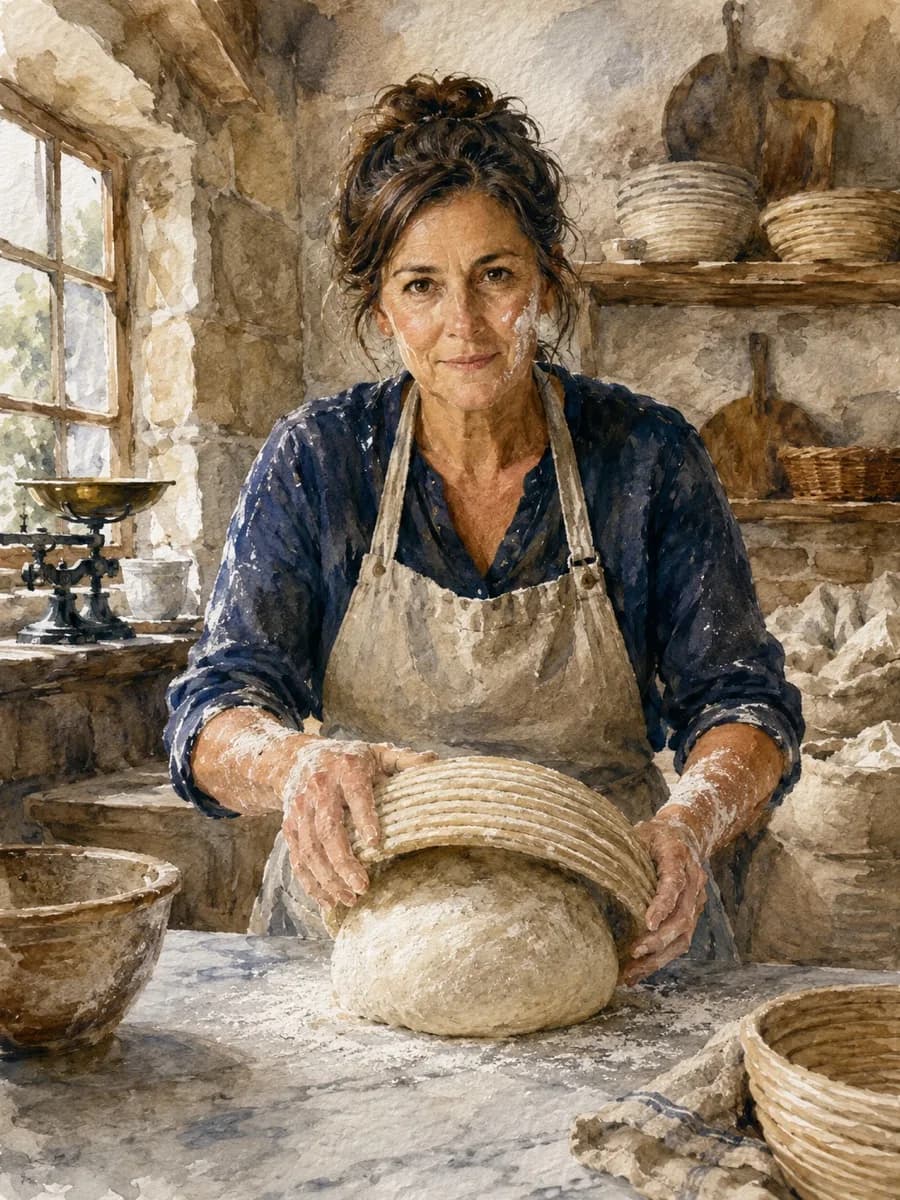
I first fell in love with focaccia at my little Barcelona market stall, watching regulars learn to recognize it by its deep golden crust and the way it filled the air with rosemary and olive oil. Cold fermentation became my quiet obsession—there is something almost meditative about mixing the dough at night and knowing it will be ready by morning, transformed by time and patience into something with real depth. This focaccia rewards you for letting go of urgency; it asks only for your presence, a cold spot in the fridge, and a few hours of trust.
TagsArtisan BreadCold FermentedOlive OilRosemaryItalian FlatbreadNo KneadYeasted
AllergensWheat
Source: generated · May 30, 2026