 Thai
ThaiMedium · Hot
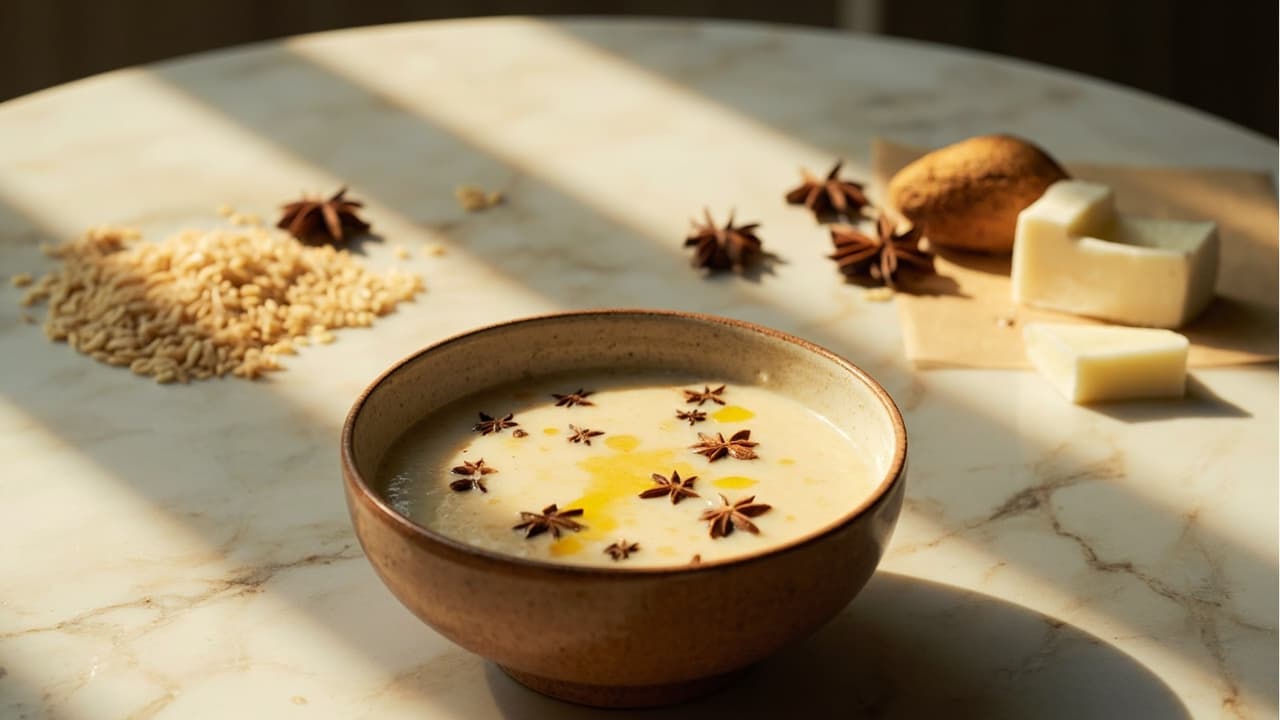
Slow‑Simmered Coconut Buckwheat Rice Pudding with Star Anise
A meditative, slow-simmered porridge that marries nutty buckwheat and jasmine rice in silky whole milk, enriched with coconut oil and scented with star anise until deeply fragrant and creamy.

Prep
15 min
Cook
35 min
Total
50 min
Method
1
Pour the whole milk into a heavy 3–4 quart saucepan. Drop in the star anise pieces and place over medium-low heat. Warm gently, stirring occasionally, until the milk just begins to steam and small bubbles form at the edges, about 5 minutes. Do not boil. Remove from heat, cover, and let the star anise infuse for 10 minutes.
2
Pick through the jasmine rice and buckwheat to remove any debris. Rinse briefly under cold water and drain well.
3
Return the bloomed milk to medium heat. Add the jasmine rice, buckwheat, and white sugar. Stir once to distribute the grains evenly. Bring to a gentle simmer—medium-low heat, occasional small bubbles breaking the surface.
4
Cook uncovered, stirring every 5–6 minutes with a wooden spoon to prevent the bottom from catching. The mixture will slowly thicken as the grains absorb the milk and release their starches. Maintain a gentle, steady simmer throughout.
5
After 20 minutes, stream in the coconut oil and stir to incorporate. Continue simmering until the grains are tender, the liquid has reduced to a thick, porridge-like consistency, and the pudding pulls away from the sides of the pan slightly, another 10–15 minutes. Total simmering time is 30–35 minutes.
6
Remove and discard the star anise pieces. Taste and adjust with salt, adding a small pinch at a time. If the pudding is thicker than desired, stir in a splash of warm milk to reach a creamy, spoonable texture.
7
Ladle into warm bowls and serve immediately, drizzled with a little extra coconut oil if desired.
C
Nutri-Score
Fair balance
A–E · lower is better · score 6
Calories
404
per serving
Protein
10g
Carbs
62g
Fat
13g
Sat. fat
11g
Fiber
1g
Sugar
19g
Sodium
285mg
DairyGluten FreeVegetarianLactose Tolerance CompatibleLow Sodium AlternativeBalanced MealComfort FoodEnergy Sustaining
Nutri-Score is a general nutritional-balance guide, not medical or dietary advice.
B
Environmental impact
Low impact
A–E · lower is better · includes estimates
kg CO2e
0.8
per serving
BCarbonAEU all-round· carbon sets the grade
Water
0.8m³
Land
22Pt
Runoff
0.05g P
whole milk drives 64% of this recipe’s estimated footprint.
Carbon from Poore & Nemecek 2018; water, land & runoff from Agribalyse — modelled averages for comparing recipes, not a measurement of your groceries.
Flavor Profile
6
Umami
7
Sweet
3
Salty
1
Sour
3
Bitter
2
Spicy
Textures
CreamySaucySilkyTender
Aromas
HerbalLicorice LikeNuttySpicyTropical
Kitchen Equipment
Primary Tool
Heavy Bottomed SaucepanSafety & Storage
Cooking Temperature
Maintain gentle simmer (small bubbles) throughout the 30-35 minute cooking period. Do not boil the milk during the blooming phase. Stir every 5-6 minutes to prevent the grain-milk mixture from scorching on the pan bottom, which can create hot spots and affect food safety.
High Risk Population
This dish contains dairy (whole milk). For individuals with lactose intolerance, milk allergies, or those who are immunocompromised, elderly, pregnant, or feeding young children, ensure milk is fully heated to steaming and consumed immediately after cooking. Reheated leftovers must reach 165°F (74°C) throughout.
Storage
Rice pudding is a potentially hazardous food. Cool and refrigerate within 2 hours of cooking. Store in airtight containers at 40°F (4°C) or below for up to 3 days. Reheat to 165°F (74°C) before consuming leftovers.
Cross Contamination
The star anise is bloomed directly in the milk and then removed before serving. Ensure the star anise pieces are completely removed, as they are not edible and pose a choking hazard. If serving to children or elderly, strain the pudding through a fine-mesh strainer as a precaution.
Handling
Use a heavy-bottomed saucepan (3-4 quart) to ensure even heat distribution and reduce scorching risk. When adding coconut oil at the 20-minute mark, stream it slowly while stirring to incorporate evenly and prevent separation.
Pro Tips
Technique
Use a heavy-bottomed saucepan for this pudding—the even heat distribution prevents hot spots that could cause the milk to catch and scorch, and it maintains that gentle, steady simmer the grains need to release their starches gradually.
Substitution
If you prefer a more pronounced coconut presence, you could substitute half of the whole milk with full-fat coconut milk for an even richer, more tropical result.
From the chef
There is a particular kind of peace that comes from standing at the stove, wooden spoon in hand, watching a pot of milk slowly transform. This coconut buckwheat rice pudding is my answer to the rushed weeknight dinner—the kind of dish that demands you slow down, breathe, and trust the process. The star anise blooms in warm milk like a small ceremony, perfuming the grains with its quiet complexity while the slow simmer coaxes out silky starches no pressure cooker could ever replicate. By the time you ladle this into warm bowls, you will have made something far more valuable than breakfast.
TagsThaiCoconutJasmine RiceRice PuddingSlow SimmeredOne PotVegetarianGluten FreeBudget Friendly
AllergensMilk
Source: generated · June 12, 2026