 Mediterranean
Medium · Hot
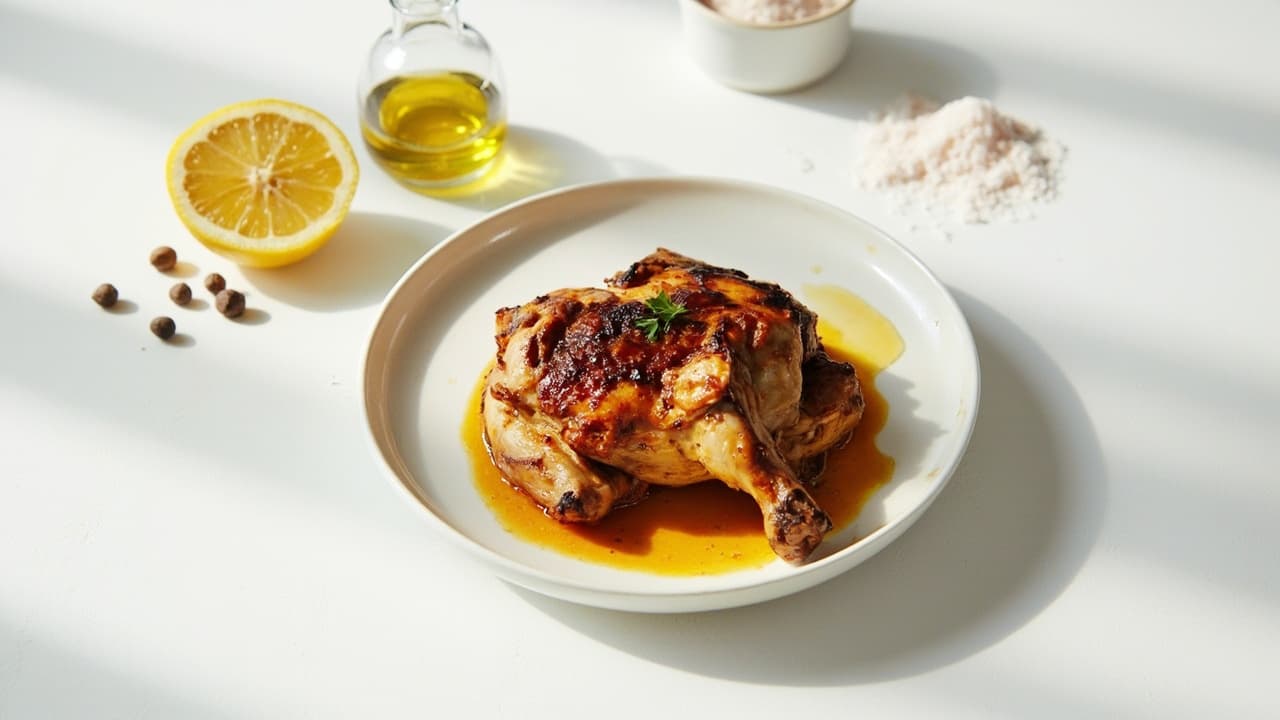
Hard-Browned Lemon Chicken Thighs
Bone-in chicken thighs seared at high heat until the skin shatters into golden shards, finished with a sharp hit of lemon juice cutting through the rendered fat. This is browning as the only sauce you need.

Prep
15 min
Cook
25 min
Rest
3 min
Total
43 min
Method
Prep
1
Remove chicken thighs from refrigerator 20 minutes before cooking. Pat every surface bone-dry with paper towels. Moisture is the enemy of browning.
2
Season both sides of each thigh generously with salt and white pepper. Press the seasoning into the skin.
Sear
3
Heat a cast iron skillet over high heat for 3 full minutes until the pan is smoking. Add olive oil and let it ripple.
4
Place thighs skin-side down in the pan. Do not crowd. The skin should sizzle violently on contact.
5
Cook skin-side down for 10 minutes without touching. Do not touch. You are not checking. The Maillard reaction is doing its work.
Flip and Finish
6
7
Reduce heat to medium. Cook 8 to 10 minutes until internal temperature reads 74°C / 165°F at the thickest point.
8
Reduce heat to medium. Cook 8 to 10 minutes until internal temperature reads 74°C / 165°F at the thickest point. The acid will help lift the fond as you stir, deglazing the browned bits.
D
Nutri-Score
Needs balance
A–E · lower is better · score 11
Calories
320
per serving
High in salt · 984mgHigh in protein · 32gLow sugar · 1g
Protein
32g
Carbs
3g
Fat
20g
Sat. fat
4g
Fiber
1g
Sugar
1g
Sodium
984mg
Gluten FreeDairy FreeLow CarbWhole30Heart HealthyLow InflammatoryPcos FriendlyLow GlycemicHigh ProteinModerate FatLean Muscle
Nutri-Score is a general nutritional-balance guide, not medical or dietary advice.
E
Environmental impact
Very high impact
A–E · lower is better · includes estimates
kg CO2e
1.1
per serving
ECarbonBEU all-round· carbon sets the grade
Water
0.8m³
Land
42Pt
Runoff
0.1g P
chicken thighs, bone-in, skin-on drives 96% of this recipe’s estimated footprint.
Carbon from Poore & Nemecek 2018; water, land & runoff from Agribalyse — modelled averages for comparing recipes, not a measurement of your groceries.
Flavor Profile
7
Umami
4
Sweet
5
Salty
6
Sour
1
Bitter
1
Spicy
Textures
CrispyTenderJuicy
Aromas
CitrusSmokyFattyHerbal
Kitchen Equipment
Primary Tool
Cast Iron SkilletCounter FootprintSmall
Safety & Storage
Cooking Temperature
Chicken thighs must reach 74°C/165°F at the thickest point. Use a calibrated meat thermometer to verify doneness before consumption.
High Risk Population
Raw poultry presents salmonella risk. Vulnerable populations including young children, elderly, pregnant individuals, and immunocompromised persons should ensure thorough cooking.
Cross Contamination
Raw chicken juices are hazardous. Use separate cutting boards, utensils, and plates for raw and cooked poultry. Wash hands thoroughly with soap for 20 seconds after handling raw meat.
Storage
Refrigerate cooked chicken within 2 hours of cooking. Store at 4°C/40°F or below. Consume within 3-4 days or freeze at -18°C/0°F for up to 4 months.
Equipment Safety
Cast iron skillet is heated to smoking (high heat) for searing. Use dry pot holders and long-handled tongs to prevent burns from splattering fat.
Handling
Pat chicken completely dry before seasoning and cooking. Moisture on the skin surface prevents proper browning and Maillard reaction development.
Pro Tips
Technique
Do not press the thighs with a spatula while the skin is down. You are defeating the browning every time you do this. The moisture needs to fully render and evaporate before the skin can shatter into golden shards — this takes the full ten minutes. Touching it early is not checking. It is sabotage.
Substitution
Lime works in place of the lemon if you prefer a more aggressive, Caribbean acidity. Orange is gentler and adds a faint sweetness — acceptable, but not an improvement. The acid is doing two jobs: deglazing the pan and cutting the rendered fat. Any substitution must honor both.
From the chef
Four ingredients, one pan, and thirty-three minutes of your attention. That is the entire transaction. You are not making a sauce. The Maillard reaction already made the sauce — it is the brown crust adhered to that skin, and the lemon simply wakes it up. I did not give you a garnish because the skin is the garnish, and I refuse to pretend a piece of poultry needs flowers to be finished.
TagsWeeknight DinnerOne PanHigh ProteinCast IronHard BrowningLemonFive Ingredient
Source: generated · June 10, 2026