 Spanish
Medium · Hot
Octopus Boiled with Smoked Paprika and Potatoes
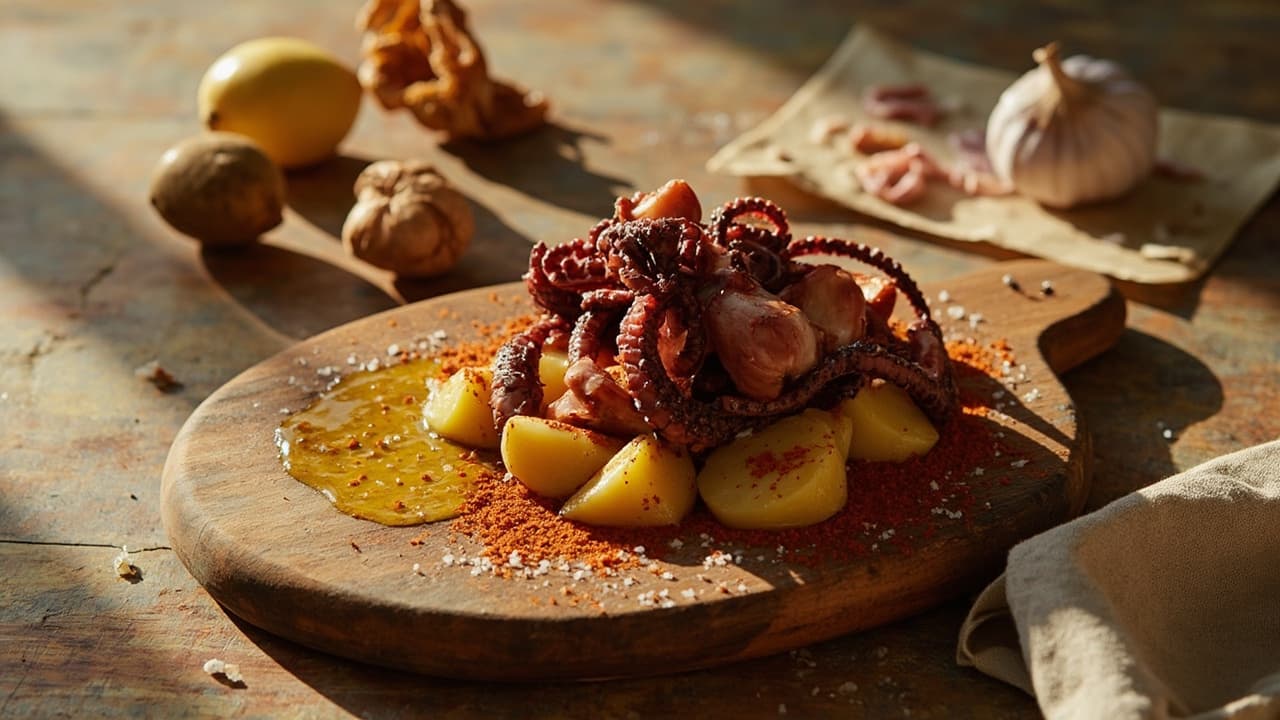
A rustic Galician classic where tender octopus is simmered with sweet onion and garlic, then served over soft boiled potatoes, finished with a generous drizzle of good olive oil and a dusting of smoky paprika.
Prep
20 min
Cook
30 min
Rest
10 min
Total
1h
Method
Prepare the Octopus
1
Rinse the octopus under cold running water. If not already cleaned, remove the beak and eyes with kitchen scissors. Pat dry.
2
Tenderize the tentacles by beating them firmly against the counter or with a wooden spoon for a few minutes—this breaks down the fibers for a softer bite.
Braise the Octopus
4
Place the whole yellow onion and garlic cloves in a large stockpot. Cover with water and add 1 teaspoon of salt. Bring to a vigorous boil.
5
6
Reduce heat to a gentle simmer, cover, and cook for 30 minutes until the flesh is tender when pierced with a knife.
Cook the Potatoes
8
9
Drain the potatoes and slice each one into thick rounds about 1 centimeter thick. Keep warm.
Plate and Finish
10
Lift the octopus from the liquid and drain well. Slice the tentacles into rounds about 2 centimeters thick.
11
Arrange the potato rounds on a wooden board or wide serving dish, slightly overlapping them.
12
13
Dust with 2 teaspoons of smoked paprika and finish with a small pinch of salt. Serve immediately while still warm.
C
Nutri-Score
Fair balance
A–E · lower is better · score 10
Calories
531
per serving
High in salt · 6149mgHigh in protein · 59gLow sugar · 5gLow saturated fat · 3g
Protein
59g
Carbs
30g
Fat
18g
Sat. fat
3g
Fiber
6g
Sugar
5g
Sodium
6149mg
Gluten FreeDairy FreePescatarianMediterraneanLow CarbPaleoHeart HealthyDiabetes FriendlyLow Sodium AdaptableHigh ProteinBalanced MealOmega 3 Rich
Nutri-Score is a general nutritional-balance guide, not medical or dietary advice.
Flavor Profile
7
Umami
4
Sweet
6
Salty
1
Sour
2
Bitter
4
Spicy
Textures
TenderSoftSilkyChewy
Aromas
BrinySmokyHerbalNutty
Kitchen Equipment
Primary Tool
StockpotStockpotSaucepanWooden BoardWooden SpoonKitchen ScissorsChef KnifeServing PlatterKitchen TowelsMixing Bowl
Counter FootprintMedium
Safety & Storage
Cross Contamination
Raw octopus and its cooking liquid can cross-contaminate other foods. Use separate cutting boards, utensils, and containers for raw octopus. Do not allow octopus to contact ready-to-eat foods without thorough cooking.
Cooking Temperature
Octopus must reach a minimum internal temperature of 145°F (63°C) throughout. Simmering at 180-200°F is appropriate but verify with a calibrated food thermometer inserted into the thickest tentacle section.
Handling
When tenderizing octopus by beating against the counter, ensure the work surface is thoroughly cleaned and sanitized afterward. Use a dedicated mallet or wooden spoon that can be sanitized.
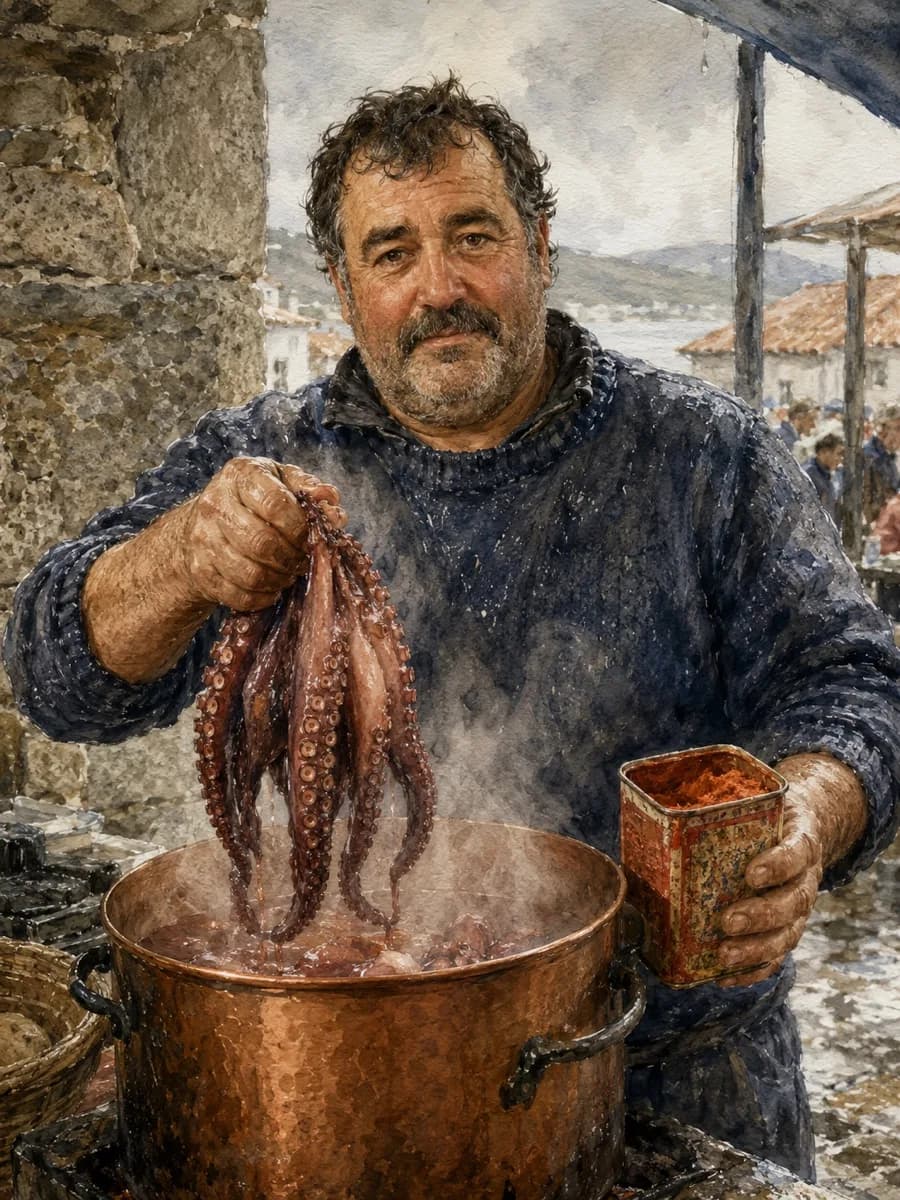
The traditional Galician technique of dipping tentacles into boiling liquid three times requires caution to prevent splashing and burns. Use long tongs or a sturdy spoon for safe handling.
Storage
Cool cooked octopus rapidly within 2 hours and refrigerate at 40°F (4°C) or below. Use within 3 days when refrigerated, or freeze at 0°F (-18°C) for up to 3 months. Reheat to 165°F (74°C) before consuming.
High Risk Population
Pregnant individuals, young children, elderly, and immunocompromised persons should only consume octopus that has been fully cooked to safe temperatures. Raw or undercooked seafood poses heightened risk in these populations.
Pro Tips
Technique
When you beat the octopus tentacles against the counter before cooking, don't be timid about it—you're waking up the fibers, not hurting them. A firm beating means the difference between rubber and silk.
Substitution
If you cannot find fresh octopus, frozen works well since it is often processed right after catching. Just thaw it slowly in the refrigerator overnight for the best texture.
From the chef
Octopus needs patience and a little fearlessness — you beat it firm, you dip it three times in the boil, and then you let the sea do its work. What comes out is tender without being limp, sliced thick over soft potato rounds that have been cooked separately so they hold their shape. The finishing is everything: a generous pour of good olive oil, a dusting of smoked paprika, and nothing else. That is pulpo a la gallega as it has always been made at the Galician feiras — honest, unadorned, and worth every minute of the wait.
TagsGalician ClassicSeafoodSmoked PaprikaOlive Oil DressedTraditionalPotatoesGluten Free
AllergensMollusks
Source: generated · June 10, 2026