 Argentine
Medium · Hot
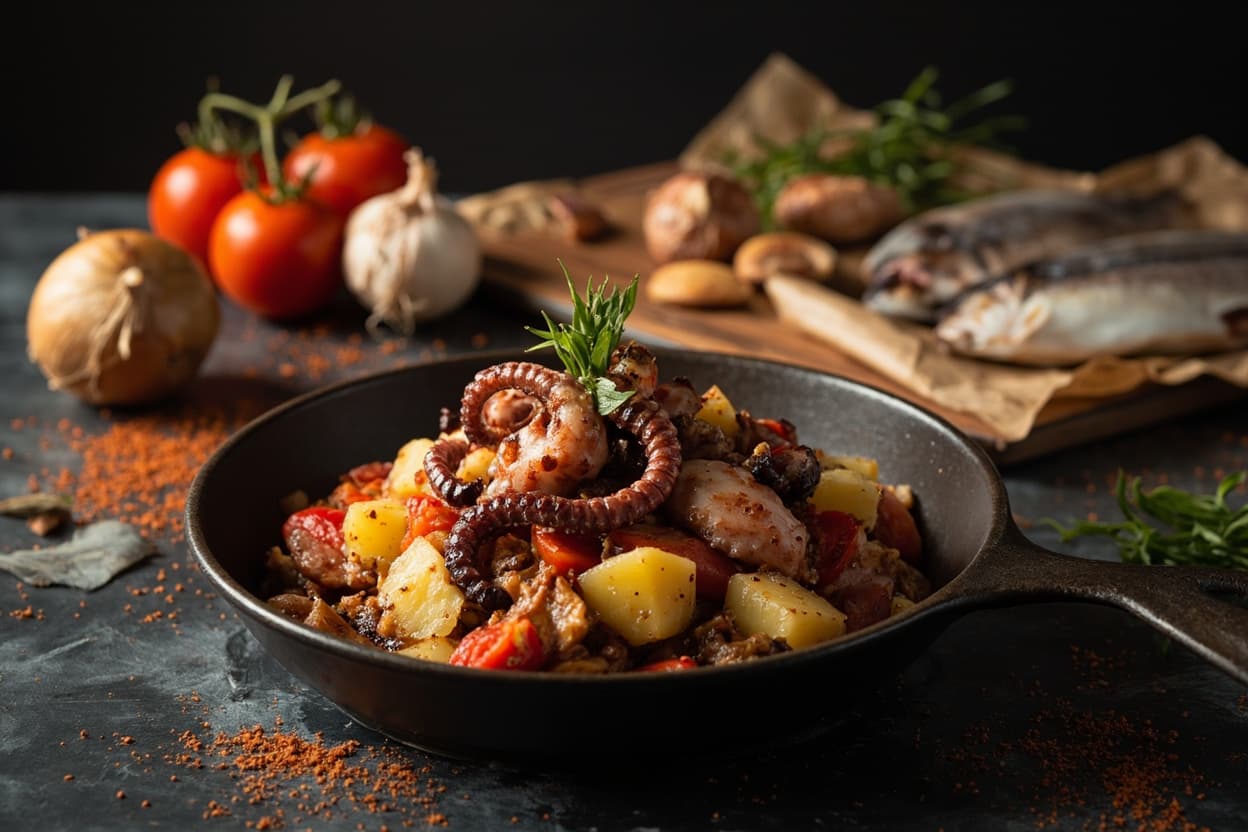
Smoky Octopus and Potato Hash
Octopus earns its tenderness before it earns its char — once it is yielding all the way through, the pieces go onto high heat to caramelize at the edges. Potato crisps in the same olive oil alongside garlic and smoked paprika, and torn tomato collapses into the pan to pull everything into a loose, fragrant hash. Every bite has a different texture and that is exactly right.

Prep
15 min
Cook
1h 15m
Rest
2 min
Total
47 min
Method
Prepare the Octopus
1
Cut the lemon in half.
Build the Potato Hash
2
Heat 4 tablespoons of olive oil in your cast iron skillet over medium-high heat until it shimmers.
3
Add the minced garlic. Stir it through the hash and cook for 1 minute until fragrant.
Char the Octopus
Finish and Plate
5
Drizzle with a thread of good olive oil right before serving.
A
Nutri-Score
Excellent balance
A–E · lower is better · score -2
Calories
524
per serving
High in protein · 31gLow sugar · 6gLow saturated fat · 4g
Protein
31g
Carbs
41g
Fat
26g
Sat. fat
4g
Fiber
8g
Sugar
6g
Sodium
1884mg
Gluten FreeDairy FreeKeto CompatiblePaleoPescatarianHeart HealthyAnti InflammatoryLow Carb FriendlyHigh ProteinOmega 3 RichWhole Foods
Nutri-Score is a general nutritional-balance guide, not medical or dietary advice.
Grade pending
Environmental impact
Estimated footprint
Grade pending · 64% ingredient coverage
kg CO2e
≥0.3
per serving
Potato drives 28% of this recipe’s estimated footprint.
Carbon from Poore & Nemecek 2018; water, land & runoff from Agribalyse — modelled averages for comparing recipes, not a measurement of your groceries.
Flavor Profile
7
Umami
3
Sweet
5
Salty
2
Sour
1
Bitter
4
Spicy
Textures
CrispyTenderChewy
Aromas
SmokyHerbalPungent
Kitchen Equipment
Primary Tool
Cast Iron SkilletCounter FootprintMedium
Safety & Storage
Cooking Temperature
{"classification":"cooking-temperature","text":{"text":"Cook octopus thoroughly to internal temperature of 140°F (60°C) minimum for proper texture. When charring, ensure even cooking without burning — the goal is charred exterior with tender interior, not acrid over-burn."}}
High Risk Population
This recipe contains octopus (mollusks). Individuals with shellfish or mollusk allergies should avoid this dish entirely. Even trace cross-contact during preparation can trigger severe reactions.
Cross Contamination
Keep raw octopus separate from other ingredients during prep. Use dedicated cutting boards and utensils. Wash hands thoroughly after handling raw mollusks before touching other foods.
Storage
If using pre-cooked octopus, store below 40°F and use within 2 days. Fresh octopus should be cleaned and cooked same day or stored on ice for up to 24 hours.
Handling
When grilling or charring octopus, use long tongs and avoid flare-ups from rendered oils. The high smoke point of olive oil (400°F) is suitable for this dish but monitor heat to prevent ignition.
Pro Tips
Technique
When you sear the octopus, give it real estate on the cast iron — don't crowd the pan or the skin steams instead of chars. You want the sizzle, the lift of the tentacle, that resistance. That's your signal the fire is doing the work.
Substitution
If fresh octopus is hard to find, grilled or poached squid works in a pinch — the texture is different but the char carries the same smoke-and-salt soul. Just adjust your cooking time down.
From the chef
Charred octopus and crisp potato share a cast-iron skillet with garlic, smoked paprika, and torn tomato — the result is a loose, fragrant hash where every bite lands differently. Octopus earns its char only after it is yielding all the way through; then the pieces hit high heat and caramelize at the edges. Squeeze lemon over the octopus in the last two minutes while the Maillard magic is still peaking. The smoke settles, the acid brightens, and suddenly you are eating something ancient and new at the same time.
TagsSeafoodGrilledCharredSmokyPotato DishLemonSmoked Paprika
AllergensMollusks
Source: generated · May 30, 2026