 Spanish
Easy · Hot
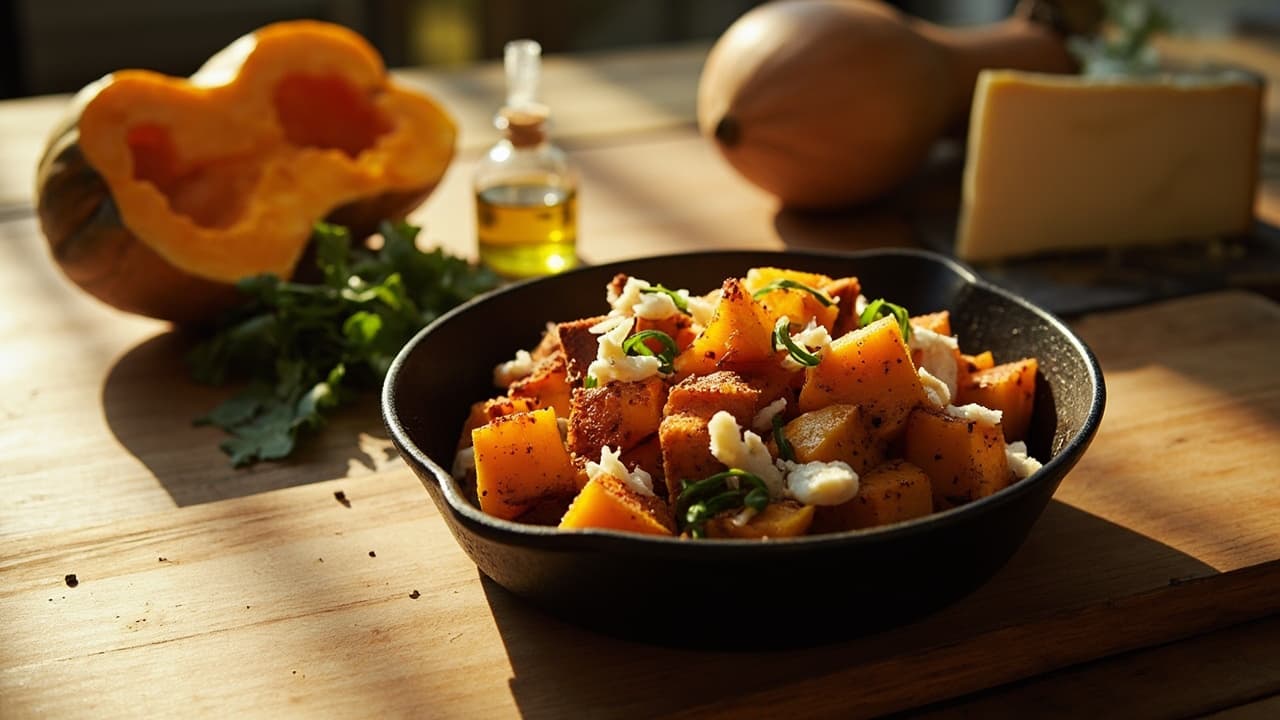
Roasted Butternut Squash Bites with Smoked Paprika and Cured Cheese
Warm roasted squash cubes dusted with smoked paprika and finished with crumbled cured cheese — a simple Galician-style bite that holds its own at any feira table.
Prep
15 min
Cook
30 min
Total
45 min
Method
1
Preheat your oven to 200°C (400°F). Line a large baking sheet with parchment paper.
2
Peel the butternut squash, scoop out the seeds, and cut the flesh into rough 3cm cubes — similar to the size you'd cut potatoes for a Galician stew.
3
4
In a small bowl, mix together the smoked paprika, black pepper, and remaining salt to make the paprika rub.
5
Sprinkle the paprika rub over the squash and toss again until every cube is dusted with the deep red colour.
6
Spread the seasoned squash in a single layer on the prepared baking sheet — do not crowd them or they will steam instead of roast.
7
Slide into the 200°C oven and roast for 25-30 minutes, turning the cubes halfway through with a wooden spoon, until they are tender at the centre when pierced with a knife and darkened slightly at the edges.
8
Transfer the hot roasted squash to a serving platter. Scatter the crumbled cured cheese over the top while everything is still warm so the cheese begins to soften.
9
Dust lightly with a pinch more smoked paprika if you like, then finish with a generous handful of fresh parsley. Serve immediately.
C
Nutri-Score
Fair balance
A–E · lower is better · score 4
Calories
250
per serving
High in saturated fat · 12gSource of fibre · 7gLow sugar · 6g
Protein
7g
Carbs
20g
Fat
17g
Sat. fat
12g
Fiber
7g
Sugar
6g
Sodium
1042mg
DairyGluten FreeLow SodiumAnti InflammatoryDiabetesHeart HealthyWeight ManagementHigh ProteinLow Processed SugarVegetable Forward
Nutri-Score is a general nutritional-balance guide, not medical or dietary advice.
B
Environmental impact
Low impact
A–E · lower is better · includes estimates
kg CO2e
0.6
per serving
BCarbon
Cured cheese, crumbled drives 76% of this recipe’s estimated footprint.
Carbon from Poore & Nemecek 2018; water, land & runoff from Agribalyse — modelled averages for comparing recipes, not a measurement of your groceries.
Flavor Profile
6
Umami
3
Sweet
5
Salty
1
Sour
1
Bitter
4
Spicy
Textures
CrispyCrumblyTender
Aromas
HerbalSavorySmoky
Kitchen Equipment
Safety & Storage
Allergen Warning
This dish contains cured cheese (dairy). For individuals with milk allergies or lactose intolerance, omit the cheese entirely or substitute with a dairy-free alternative. Ensure no cheese cross-contact occurs during preparation.
Cross Contamination
When crumbling cheese for finishing, use clean hands or sanitized utensils. Avoid using the same cutting board or bowl used for raw squash without thorough sanitization between uses.
Storage
Leftover roasted squash topped with cheese must be refrigerated within 2 hours of cooking. Store in airtight containers at 40°F (4°C) or below. Consume within 3-4 days. Reheat to 165°F (74°C) before serving.
Handling
Use oven mitts when handling the baking sheet at 200°C (400°F). The parchment paper may curl at high heat — use tongs to turn squash cubes safely to avoid burns.
High Risk Population
Immunocompromised individuals, pregnant individuals, and young children should ensure cheese is from pasteurized milk and that squash is roasted to proper internal temperature of 200°F (93°C) at center.
Internal Temperature
Butternut squash should reach an internal temperature of at least 63°C (145°F) at the center to ensure food safety. Use a calibrated food thermometer to verify doneness. The squash is done when it is tender when pierced with a knife and has reached the minimum safe temperature.
Pro Tips
Technique
Do not crowd your baking sheet, my friend. Those squash cubes need breathing room or they'll steam and go soft instead of roasting to that golden edge. Give each one its own little patch of hot parchment and they'll caramelize properly.
Substitution
If you cannot find a good cured cheese, aged manchego works beautifully here—just crumble it roughly with your fingers. The saltier and harder the cheese, the better it contrasts with the sweet squash.
From the chef
Butternut squash earns its place on a Galician table the same way any humble vegetable does — by taking a good dusting of smoked paprika and not making a fuss about it. You roast the cubes hot enough that the edges darken and the flesh sweetens, then scatter crumbled cured cheese over the top while everything is still warm so it softens just enough to cling. A handful of parsley, another pinch of paprika, and you have something honest and generous that holds its own at any table. Simple, yes, but simplicity feeds better than any complicated thing.
TagsGalician StyleSmoked PaprikaVegetarianRoastedCheeseSimpleFeira
AllergensMilk
Source: generated · June 13, 2026