Heat & Fire
Pit Barbacoa (Underground Oven)
Slow-cooking meat wrapped in leaves inside a heated underground earth pit.
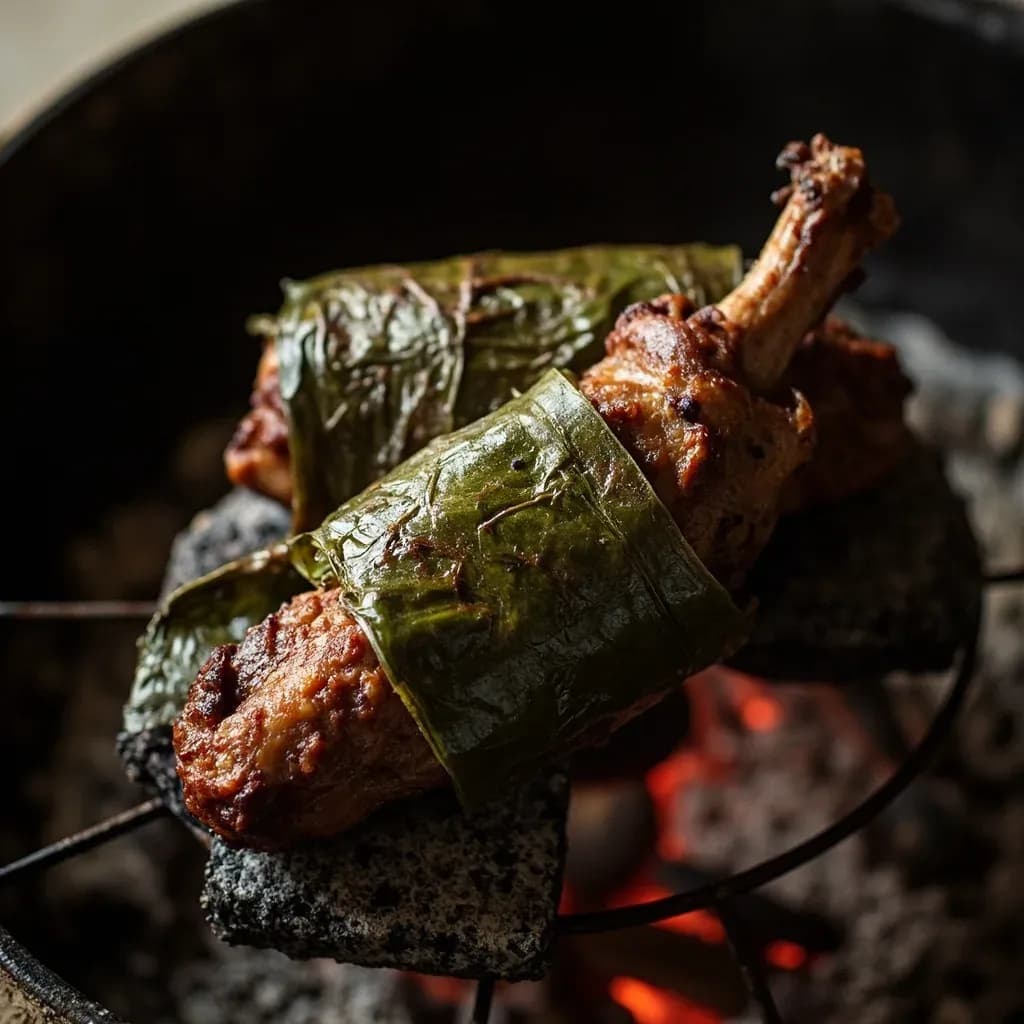
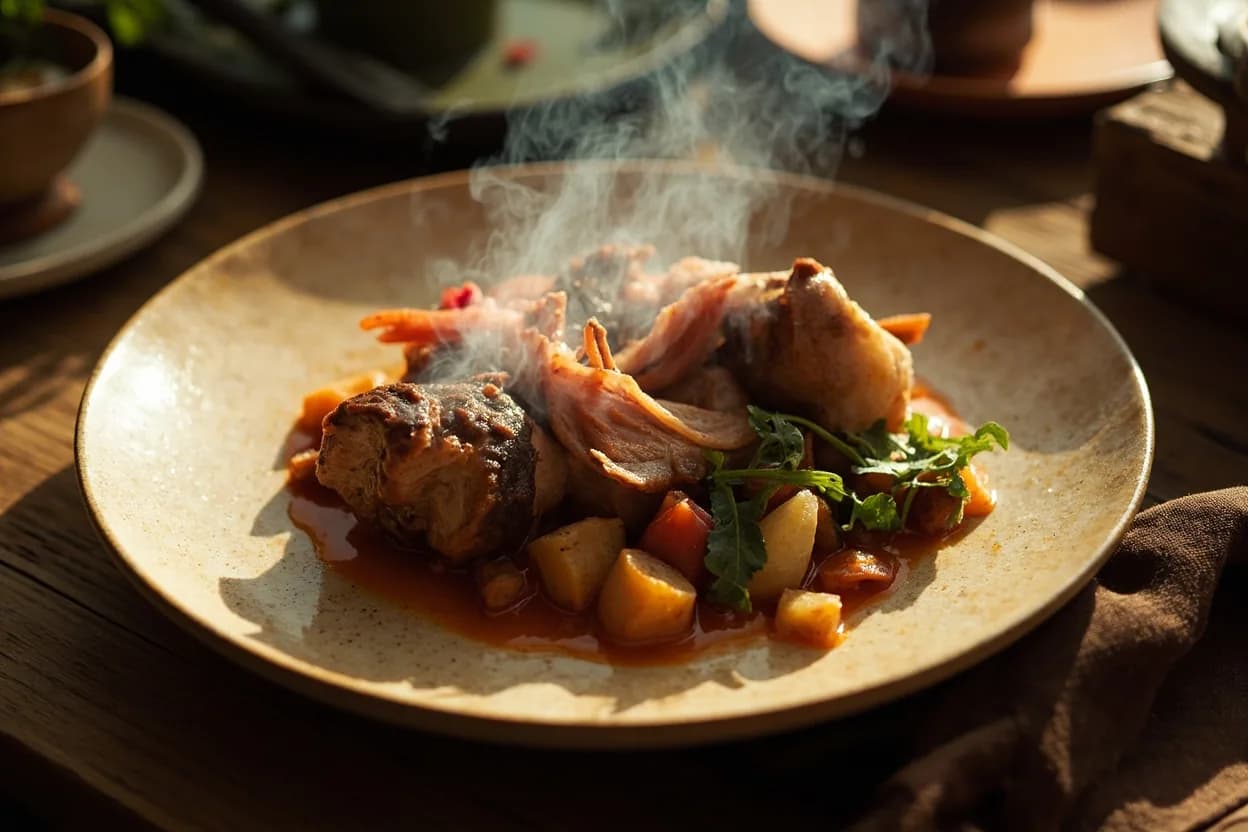
Pit barbacoa cooks seasoned meat in an earthen pit lined with hot stones or embers, wrapped in maguey, banana, or other leaves to trap steam and smoke. The pit is covered and the food roasts for many hours, emerging tender and infused with earthy, smoky flavor. Closely related to Yucatecan pib, Hawaiian kalua, and Arabian mandi, it is one of the oldest live-fire methods still in daily use.
Pit barbacoa is a pre-Columbian earth-oven technique in which meat is buried for many hours in a pit of preheated stones, sealed under earth, and cooked by the gentle, declining heat of the thermal mass. The word itself comes from the Taíno *barbacoa*, meaning a wooden framework over fire; the Spanish later applied it to the Mexican practice of pit cooking, and from there the term traveled to describe grilled food in general. What makes the technique remarkable is not just the cook time — 8 to 14 hours for a whole animal — but the architecture of the cooking environment: the hot stones supply radiant heat, the green-leaf barrier and wet burlap seal generate steam, and the surrounding earth insulates everything, so the meat braises in its own juices while absorbing the grassy, almost herbal aroma of the leaves it is wrapped in.
The result is meat that is simultaneously smoked, steamed, and roasted, with a depth of flavor no indoor oven or smoker can match. Lamb and goat from the central highlands of Mexico — wrapped in maguey (agave) leaves — are the most iconic expression, but the same logic underlies Hawaiian *imu*, Māori *hangi*, Samoan *umu*, Fijian *lovo*, and Mongolian *khorkhog*. Pit barbacoa is not a weeknight method; it is a community project that takes a day of digging, a night of cooking, and a morning of serving, and the consomé pooled in the leaf wrapping is as prized as the meat itself.
- Difficulty
- Hard
Types & varieties
Whole lamb wrapped in maguey leaves and pit-cooked overnight; the most iconic Mexican style, served in tacos on Saturdays and at family gatherings.
Common in northern and highland Mexico; slightly gamier than lamb, cooked by the same method.
Often beef cheek or shank; Mexico City taqueria style, originally pit-cooked but frequently steamed in pots today for practicality.
Whole pig cooked in underground pits in Michoacán and parts of the U.S. Southwest, then crisped on a plancha before serving.
Mayan pit-cooked pork marinated in achiote and sour orange, wrapped in banana leaves — the regional cousin of central Mexican barbacoa.
Whole pig rubbed with Hawaiian salt, wrapped in ti and banana leaves, and cooked in a sand-lined pit with kiawe or guava wood.
Meat and root vegetables lowered in wire baskets onto hot stones, covered with wet sacking and earth; a defining technique of Māori hospitality.
Pacific Island versions using volcanic stones; whole fish, pig, and root vegetables wrapped in banana leaves and buried.
How to do it
- 1
Dig the pit
Excavate a pit roughly 3–4 feet deep and 4–5 feet wide — large enough to hold the meat with at least 6 inches of clearance on all sides. Pile the excavated earth close by for sealing the top later.
- 2
Line with stones
Fill the bottom of the pit with a single layer of fist-sized volcanic or dry river stones. Avoid sandstone, limestone, and any rock that has been exposed to water; porous stones can explode when heated.
- 3
Build the stone-heating fire
Stack hardwood — oak, mesquite, or a local hardwood — over and around the stones and burn continuously for 3 to 4 hours, until the stones are glowing red and the embers have collapsed into a deep bed.
- 4
Prepare the meat
Bone-in lamb shoulder, whole lamb, or goat is traditional. Rub thoroughly with a paste of rehydrated guajillo and ancho chiles, garlic, cumin, oregano, vinegar, and salt. Tuck a few avocado or bay leaves into the cavities.
- 5
Wrap the meat
Wrap tightly in maguey leaves if available, otherwise banana leaves, layering them so no flesh is exposed. Tie with butcher's twine or secure with sharpened green sticks piercing the bundle.
- 6
Rake out coals and create a barrier
When the stones are fully heated, remove all burning wood and ash with a long-handled rake. Lay a layer of green agave stalks, banana leaf trunks, or fresh green branches across the stones — this prevents the meat from touching scorching rock and generates steam as the moisture hits the heat.
- 7
Lower the meat
Using sticks or a makeshift stretcher, lower the wrapped meat onto the green barrier. Insert a probe thermometer through the wrapping into the thickest part of the meat, leaving the wire running to the surface so you can read the temperature without opening the pit.
- 8
Seal the pit
Cover the meat with more leaves, then a layer of wet burlap sacks or cloths, then mound 6 to 8 inches of the excavated earth over the top, packing it down firmly. Leave the thermometer wire exposed above the seal.
- 9
Cook undisturbed
Allow 8 to 14 hours for a whole lamb or goat, 6 to 8 hours for shoulder cuts. Do not open the pit during cooking — heat loss is significant and cannot be recovered. Target an internal temperature of 195 to 205°F (90 to 96°C); the meat should feel like it has no resistance to a probe.
- 10
Unearth and serve
Wearing heavy gloves, scrape away the earth and burlap. Lift out the wrapped meat — it will fall apart. Shred into a large pan, moisten with the consomé pooled in the wrapping, and serve with warm tortillas, chopped cilantro and onion, salsa verde, and lime.
The Global Family of Earth Ovens
Pit barbacoa belongs to a worldwide family of earth-oven cooking that emerged independently wherever people had stone, fire, and time. The unifying principles are identical: heat stones in a fire, place food on or above them, seal with vegetation and earth, and wait. What changes is the wrapping, the wood, and the cultural meaning of the meal.
- Mexican barbacoa uses maguey or banana leaves and hardwoods like oak and mesquite; the meat is the centerpiece, served with consomé.
- Hawaiian imu lines the pit with sand and uses kiawe or guava wood; the pig is seasoned only with salt, letting the smoke and leaves do the work.
- Māori hangi lowers wire baskets of meat and kumara onto the stones, producing a distinctive earth-and-smoke aroma prized in feasts.
- Samoan umu and Fijian lovo emphasize seafood and root vegetables alongside pork, with banana leaves as the universal wrapper across the Pacific.
- Mongolian khorkhog inverts the pattern: hot stones are placed both inside a sealed metal container and tucked into the meat's cavity with vegetables and a splash of broth, then set over the fire to steam in its own juices.
Modern Adaptations and Steam-Pot Barbacoa
Few home cooks dig a pit, and most urban taquerias simulate the technique by sealing seasoned meat (especially beef cheek) in a pot with a tight lid and steaming it overnight in a low oven. The consomé is the same, and the texture is close, but the leaf aroma and the subtle smokiness of stone-heated earth are missing. A reasonable compromise for home cooks is a Dutch oven set inside a covered kettle grill running at 250°F, with a layer of soaked wood chips above the coals to mimic the leaf barrier.
- Steam-pot barbacoa in a 275°F oven for 6–8 hours produces acceptable texture but lacks the leaf and earth aromatics.
- A Dutch oven in a covered kettle grill with soaked wood chips is a workable backyard compromise.
- Maguey leaves are difficult to source in the U.S.; banana leaves are sold frozen at most Latin and Asian markets and are the standard substitute.
Common uses
Tips & pitfalls
- Choose stones that have never been saturated with water; wet or porous rocks can shatter violently when heated. Volcanic basalt and thoroughly dry river stones are the safest choices.
- Burn the stone-heating fire for a full 3 to 4 hours — underheated stones will not sustain the overnight cook, and you cannot add heat once the pit is sealed.
- Use a leave-in probe thermometer and confirm an internal temperature of 195 to 205°F (90 to 96°C) before unearthing; properly cooked barbacoa should shred effortlessly with a fork and offer no resistance to the probe.
- Always place a barrier of green agave stalks, banana leaf trunks, or fresh green branches between the hot stones and the meat; direct contact with scorching rock will scorch the surface and ruin the texture.
- Wet the burlap or cloth used as the top seal thoroughly before mounding earth over it; the steam it generates is what keeps the meat moist and finishes the cook gently.
- Maguey leaves are difficult to source outside Mexico — banana leaves, sold frozen at most Latin and Asian markets, are the most accessible substitute and still impart a grassy, almost tropical aroma.
- Begin digging and gathering materials the day before; the project takes 6 to 8 hours of active work plus an overnight cook, and a small crew of three to four people is far more efficient than going it alone.
- Do not open the pit before the scheduled time — heat loss is dramatic and you cannot recover lost cooking time once the seal is broken.
- Shred the meat while it is still hot and toss it with its own consomé pooled in the wrapping; this is the difference between succulent barbacoa and dry barbacoa.
- Check local fire codes and utility easements before lighting the fire; open pit cooking is restricted in many municipalities, especially during dry seasons.
Good to know
- Origin
- Pre-Columbian Mesoamerica; the Taíno word 'barbacoa' originally described a wooden framework over fire, later applied to Mexican pit cooking and eventually to grilling in general.
- Heat Source
- Volcanic or dry river stones preheated for 3–4 hours in a hardwood fire, then raked clear of coals to act as a thermal mass.
- Effective Temperature
- Roughly 250–325°F (120–160°C) at the start, gradually declining as the pit cools over the long cook.
- Typical Cook Time
- 8–14 hours for a whole lamb or goat, 6–8 hours for shoulder cuts; overnight cooking is traditional.
- Traditional Wrapping
- Maguey (agave) leaves in central Mexico; avocado or guava leaves elsewhere; banana leaves in tropical variants.
- Yield
- A whole lamb produces 18–25 lb of shredded meat, with roughly 40–50% weight loss from raw to cooked.
- Difficulty
- High — requires pit digging, fire management, overnight timing, and usually a small crew; not a weeknight method.
- Cultural Relatives
- Hawaiian imu, Māori hangi, Samoan umu, Fijian lovo, and Mongolian khorkhog all use the same earth-oven logic.
Also called
pib-pit-roasting · kalua-roasting · layering-mandi · pit roasting · earth oven
Dishes that rely on it
Related

Sear
Blast the surface hot for a deep-browned, savory crust

Sauté
Cook quickly in a little fat over lively heat, tossing as you go

Stir-Fry
Toss bite-sized pieces over roaring heat for fast, smoky cooking

Pan-Fry
Crisp food in a shallow layer of hot fat, turning once or twice

Deep-Fry
Submerge in hot oil for an all-over crackling crust

Roast
Cook uncovered in dry oven heat for browned edges and tender centers

Bake
Cook with steady, surrounding oven heat — the soul of bread and pastry

Broil
Hit food from directly above with fierce overhead heat