Heat & Fire
Deep Frying (Bhaja)
Frying fish, vegetables, or fritters in hot oil until crisp, a staple Bengali preparation.
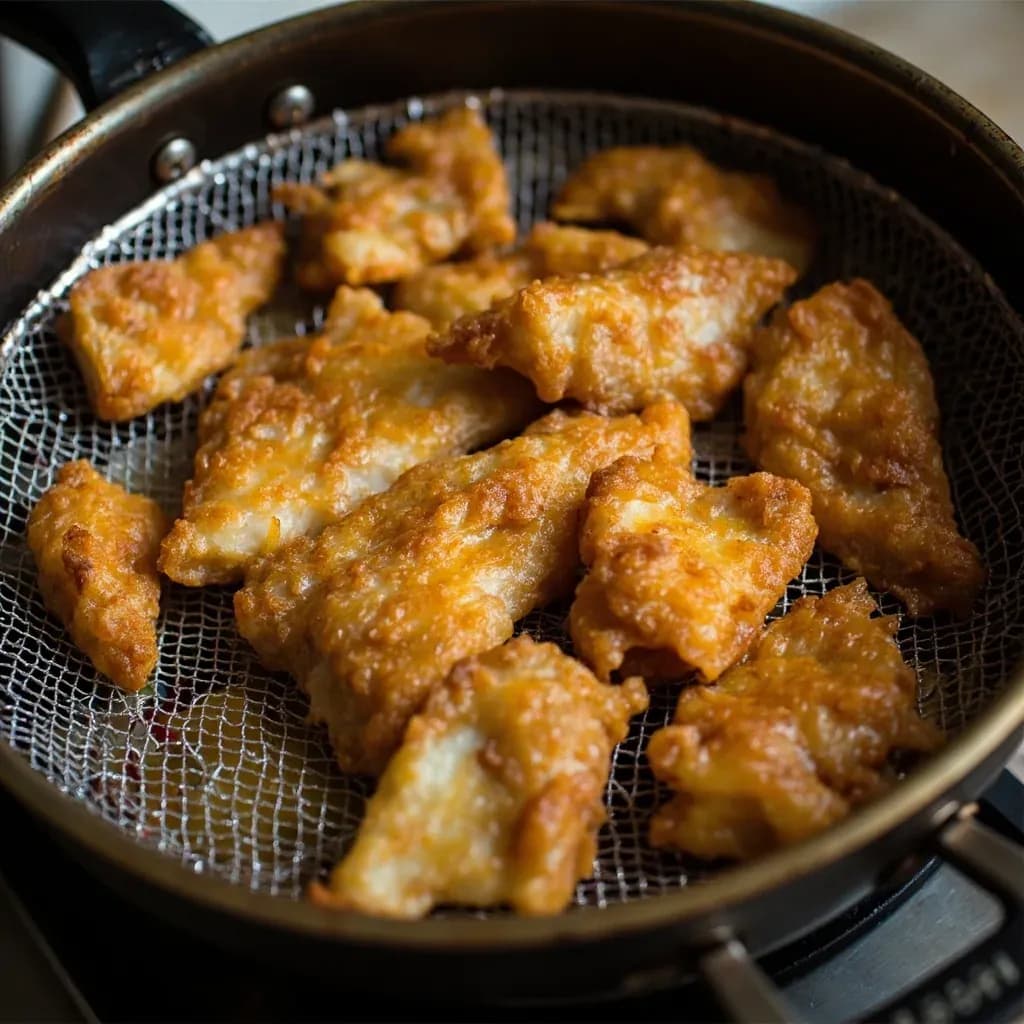
Bhaja is the Bengali technique of deep or shallow frying ingredients, most often fish, vegetables, or lentil fritters, in plenty of hot mustard oil. The food is typically seasoned with turmeric and salt before frying until the exterior turns deeply golden and crisp. It serves as a first course or accompaniment and relies on oil hot enough to crisp the surface without making it greasy.
Bhaja is the Bengali verb and noun for the act of deep-frying food in hot oil, and the family of crisp, golden finished dishes that result. Where North Indian cooking reaches for pakoras fried in groundnut or sunflower oil, and Maharashtra turns to bhajjis cooked in peanut oil, Bengal's bhaja tradition is defined almost entirely by one ingredient: mustard oil (sorshe tel), with its sharp, pungent, almost horseradish-like aroma that softens and sweetens only when brought to its smoking point. The technique is the everyday workhorse of Bengali snacks — the food of rainy afternoons at the adda (tea stall), of monsoon train journeys, of the first plate set down when guests arrive unannounced.
At its core, bhaja is a study in contrasts and in restraint. A paper-thin alu (potato) round fried until its edges lace and crisp; a slice of baingan (eggplant) sheathed in a featherweight besan batter; a piece of freshwater fish rubbed only with turmeric and salt, then lowered into a small pool of well-tempered mustard oil until the skin crackles. The technique is technically simple — slice, season, lower, lift — but the discipline of oil temperature, batch size, and timing is what separates a bhaja that shatters on the bite from one that weeps oil and sags. Unlike batters built around onion, ajwain, and gram-flour bulk in the North, Bengali batters lean on kalo jeere (nigella seeds) and a touch of turmeric, and they are almost always applied as a thin coat rather than piled thick.
Bhaja also behaves differently from generic deep frying in one important way: it is meant to be eaten almost immediately. The Bengali kitchen does not fry ahead, hold, and reheat. A bhaja that has waited twenty minutes has already lost half its soul — partly because the mustard-oil crust is delicate, and partly because the snack is woven into a slow, sociable rhythm of tea, conversation, and rain. It is a category of food that arrives hot, is consumed hot, and is finished before anyone thinks to ask for seconds an hour later.
- Difficulty
- Medium
Types & varieties
Thin baingan (eggplant) slices in spiced besan batter; the iconic adda tea-stall bhaja.
Onion rings or chopped onion bound with besan, chilli and ajwain; lighter than the North Indian onion pakora.
Paper-thin potato rounds, sometimes dusted with turmeric and salt, fried until lacy and crisp at the edges.
Marinated fish (rui, koi, or hilsa) rubbed with turmeric and salt, occasionally with a mustard-paste coating.
Taro root slices, battered and fried; the leaves (kochu shak) are also prepared as a fritter.
Cauliflower florets dipped in besan batter and deep-fried.
Spiny gourd slices, lightly battered — a summer monsoon favourite.
Bitter gourd rings, often paired with potato to balance the bitterness.
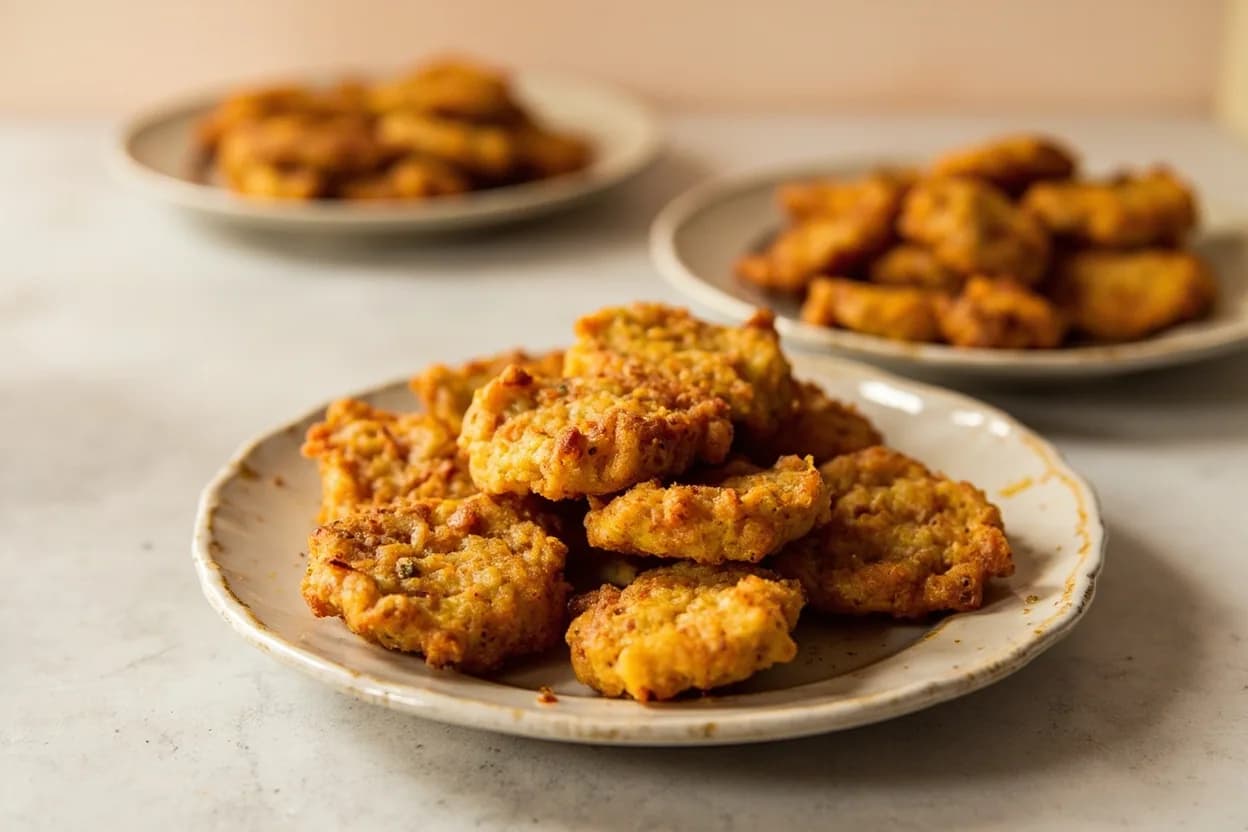
Generic term for a thick batter-based drop fritter (dal bora, peyaj bora, begun bora) — bhaja in fritter form.
Bottle gourd paired with small prawns, batter-fried together — a Bengal–Bihar border specialty.
How to do it
- 1
Select and prepare the oil
Pour mustard oil into a heavy kadai to a depth of at least 5–6 cm (the food should be submerged by 2.5 cm once added). Heat on medium-high until the first pale wisp of smoke appears, then drop in 2–3 dried amla pieces or a thick slice of raw mango. Swirl for 20–30 seconds, fish them out, and lower the heat to the frying zone. The oil is now tempered: pungency mellowed, aroma rounded, ready to receive food.
- 2
Bring oil to the correct frying temperature
Aim for 170–180°C for vegetables, closer to 160°C for fish. Test with a pea-sized drop of batter: it should rise to the surface within 2 seconds with a steady, confident fizz. If it sinks and lies dormant, the oil is too cold and bhaja will absorb oil and turn greasy. If it browns on contact, the oil is too hot and the outside will scorch before the inside cooks. Adjust with patience, and let the temperature settle, before the first batch goes in.
- 3
Prepare and season the main ingredient
Slice vegetables uniformly at roughly 3 mm thickness for potatoes and eggplant; thicker for cauliflower florets and taro. Salt and rest the slices for 10–15 minutes, then pat thoroughly dry with a clean cloth — this prevents violent oil splatter and removes surface moisture that would otherwise steam the crust. For fish, rub with turmeric and salt, optionally smear with a thin layer of yellow mustard paste, and pat dry. For batter-fried bhaja, mix besan with water to a thick ribbon-falling consistency, then season with turmeric, kalo jeere (nigella seeds), a little chilli powder, and a pinch of baking soda for a lighter, lacier crust.
- 4
Coat the ingredient just before frying
Pat the ingredient dry one final time. Dip batter-coated items immediately before they enter the oil — never let coated pieces sit in a pile, or the batter goes slack, slumps off, and absorbs oil. For dry bhaja (alu, kochu, fish), dredge lightly in rice flour or fine semolina for an extra-crisp finish. A thin, even coat is the goal; thick batter is pakora territory, not bhaja.
- 5
Fry in small, careful batches
Lower 6–8 pieces at a time along the inside edge of the kadai — never drop from height, as splattering oil is the single most common kitchen injury in Bengali homes. Let each batch cook undisturbed for 30–45 seconds so the crust sets and grips the surface, then turn with a slotted steel spatula for even colour. Fry vegetables until the edges turn a deep amber-gold; fry fish until a thin skewer meets gentle resistance and the surface crackles visibly.
- 6
Drain, then salt
Lift bhaja with a wire-mesh skimmer (jharna) rather than a flat spoon — the mesh drains oil more efficiently than any solid surface. Hold the skimmer above the oil for 2–3 seconds to drip, then transfer to plain newsprint or paper towels. Do not cover: trapped steam will soften the crust within minutes. Wait 10 seconds before salting; salting immediately draws surface moisture and softens the crisp shell you just built.
- 7
Serve immediately, the way bhaja is meant to be eaten
Bhaja waits for no one. Plate hot with a few rings of raw onion, one or two whole green chillies, a small bowl of kasundi (Bengali mustard sauce) or tamarind-date chutney, and a cup of cha (tea). The window of perfect crispness is roughly 20–30 minutes — by the time the kettle has boiled twice, the crust has surrendered. Plan accordingly: fry in waves timed to the conversation, not all at once.
Mustard Oil: The Tempering That Defines Bhaja
No single choice shapes a bhaja more than the oil it is fried in. Mustard oil carries allyl isothiocyanate — the same compound family that gives raw mustard its heat — and in its raw state it can taste and smell aggressively pungent. Heating the oil until the first wisp of smoke appears drives off much of this volatility and leaves behind a deeper, nuttier, almost roasted aroma. Bengalis traditionally add two or three dried amla (Indian gooseberry) pieces or a thick slice of raw mango to the warming oil; the fruit absorbs residual pungency and imparts a faint tang. Once tempered, the oil is unmistakably Bengali — smoky, sharp, and faintly sweet — and it seasons the crust of the bhaja from the outside in. Substituting neutral oil is possible but produces a fundamentally different dish; for anything involving fish, especially hilsa, the substitution is not advised.
- Always temper mustard oil to its smoking point before frying; raw oil tastes harsh and grassy.
- Add dried amla or a slice of raw mango to the warming oil for traditional pungency control.
- Reuse mustard oil no more than 2–3 times for bhaja, and switch batches when frying delicate fish.
Bhaja, Pakora, Bhaji: Sorting the Family
The South Asian deep-fried snack universe overlaps confusingly, but a few markers reliably identify Bengali bhaja. Where a North Indian pakora is built around a thick, often onion-heavy batter, bhaja batter is almost always a thin glaze — sometimes just a film of besan and water clinging to a slice. Where regional bhajjis and pakoras are typically seasoned with ajwain, chilli, and assorted spices, bhaja seasoning leans on nigella and turmeric. Where a Punjabi aloo tikki or a Gujarati bhajiya may be served as part of a structured meal, bhaja is most often consumed on its own, between meals, as a tea-time or weather-driven indulgence. Fillings also separate the categories: bhaja contains no stuffed pastry (that is shingara or samosa), no hollow crisp sphere filled with spiced water (that is phuchka), and no thick dal-paste centre (that is the bora, which is bhaja's own drop-fritter cousin).
- Bhaja batter is a thin coat, not a thick shell — if it looks like pakora, it is pakora.
- Bhaja contains no stuffed pastry (that is shingara), no hollow crisp sphere filled with spiced water (that is phuchka), and no thick dal-paste centre (that is bora).
- The defining choice of oil — mustard, not groundnut or sunflower — is the quickest way to identify a Bengali bhaja at a glance.
Hilsa Bhaja and the Monsoon Apotheosis
Among all bhaja, hilsa (ilish) bhaja is considered the peak form, and it is deliberately seasonal. The silver, oil-rich fish swims upriver from the Bay of Bengal only during the south-west monsoon, and Bengalis regard the window — roughly June through September — as the only legitimate time to eat it. The preparation is austere: hilsa steaks are rubbed with turmeric and salt, patted dry, and lowered into a small pool of tempered mustard oil with nothing more elaborate than a single green chilli for company. The skin crackles, the flesh turns flaky and custardy, and the oil beneath takes on a fishy, fragrant richness that is poured over plain steamed rice. There is no batter, no crumb, no embellishment — and this restraint is the entire point. A batter-fried hilsa would be considered wasteful, even vulgar; the technique's job here is to honour the fish, not disguise it.
- Hilsa bhaja is un-battered — turmeric, salt, and tempered mustard oil only.
- The fish is fried in a shallow pool of oil rather than submerged, so the skin crisps without drying the flesh.
- Cook only during monsoon (June–September) when hilsa is at its prime; off-season hilsa is not used for this preparation.
Common uses
Tips & pitfalls
- Heat mustard oil to its smoking point before adding any food; this mellows its pungency and unlocks the characteristic Bengali aroma.
- Test oil temperature with a small drop of batter — it should rise within 2 seconds and sizzle steadily, not sink or explode on contact.
- Fry in small batches: overcrowding drops the oil temperature and turns bhaja greasy, limp, and oil-logged.
- Salt and rest sliced vegetables (eggplant, potato, karela) for 10–15 minutes before frying, then pat dry — this prevents splatter and removes the surface water that causes sogginess.
- Add a pinch of baking soda or a splash of hot oil to the besan batter for lighter, lacier bhaja with a more delicate crust.
- Drain on plain paper or newsprint and never cover — trapped steam is the fastest way to lose crispness.
- Reuse mustard oil no more than 2–3 times; switch to fresh oil for delicate fish bhaja so flavours stay clean.
- Pat fish thoroughly dry after marinating — surface moisture causes violent oil splatter and uneven crust formation.
- Keep a wire-mesh skimmer (jharna) ready; it lifts more oil than a slotted spoon and keeps the bhaja from sitting in a greasy puddle.
Good to know
- Bengali name
- ভাজা (Bhaja)
- Traditional oil
- Mustard oil, tempered with raw mango or dried amla pieces to mellow pungency
- Oil temperature
- 170–180°C / 340–355°F for vegetables; 160°C / 320°F for delicate fish
- Equipment
- Heavy kadai with high sides; modern deep-fryer acceptable but loses the smoky mustard-oil note
- Batter base
- Besan (gram flour) seasoned with turmeric, kalo jeere (nigella seeds), optional pinch of baking soda
- Cook time
- 3–5 minutes per batch for thin vegetable slices; 4–6 minutes for fish fillets
- Serving
- Hot, with raw onion, green chilli, kasundi, or tamarind-date chutney
- Seasonal peak
- Monsoon and winter, when fresh vegetables, small fish, and tea-time culture converge
- Difficulty
- Easy to intermediate — technique is straightforward but oil-temperature control matters
- Best eaten
- Within 20–30 minutes of frying; reheated bhaja lose their crispness
Also called
deep-fish-frying · Bhaja
Dishes that rely on it

Related

Sear
Blast the surface hot for a deep-browned, savory crust

Sauté
Cook quickly in a little fat over lively heat, tossing as you go

Stir-Fry
Toss bite-sized pieces over roaring heat for fast, smoky cooking

Pan-Fry
Crisp food in a shallow layer of hot fat, turning once or twice

Deep-Fry
Submerge in hot oil for an all-over crackling crust

Roast
Cook uncovered in dry oven heat for browned edges and tender centers

Bake
Cook with steady, surrounding oven heat — the soul of bread and pastry

Broil
Hit food from directly above with fierce overhead heat