Heat & Fire
Bistecca alla Fiorentina Searing
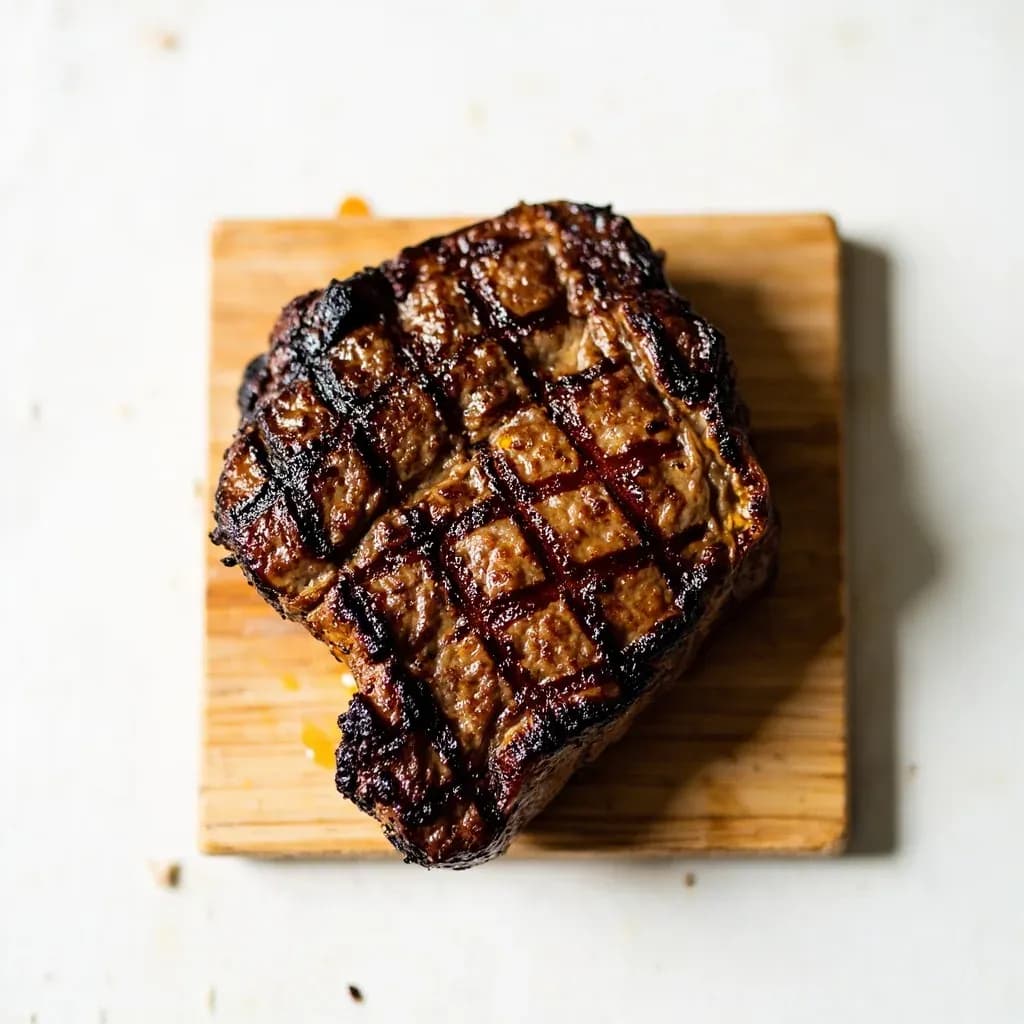
Searing a thick T-bone over wood embers to a charred crust and rare interior, Florentine style.
Bistecca alla Fiorentina searing grills a very thick T-bone or porterhouse steak over hot wood or charcoal embers, charring each side hard then standing it on the bone, finishing rare and juicy inside. The steak is seasoned simply with salt, oil, and sometimes lemon after cooking, never overcooked. Its thickness is what allows a deep crust while the center stays red.
Bistecca alla Fiorentina searing is a short but unforgiving cooking discipline built around a single idea: deliver a wall of radiant heat from a thick bed of hardwood embers to a dry, room-temperature T-bone, fast enough to scorch a charcoal crust but short enough to leave the center barely warmed. The technique only works if the meat itself is right — a bone-in costata, 4–6 cm thick, ideally from Chianina or another slow-maturing Tuscan breed — and if the fire has been allowed to settle into glowing coals rather than crackling flame. The steak is salted only at the last moment, seared on two flat sides, stood on its fat rim to render the suet, then rested long enough for the center to climb to a true rare.
What distinguishes the method from a generic grill sear is the absence of compromise: no marinade, no compound butter, no pepper baste, and almost no oil. The crust that forms is pure Maillard browning on a dry surface, lightly smoked by the hardwood, and it carries the entire flavor of the dish. Inside, the meat stays cool enough to read as rare to the eye yet warm enough on the palate, because the steak was tempered for hours before it ever touched the grill. The discipline is brief in steps and long in patience, and most failures come from shortcuts taken before the embers are even ready.
- Difficulty
- Medium
Types & varieties
The canonical version from the great white Tuscan breed; pale, very lean, mild, with a mineral note.
From the dark-coated Maremma cattle of southern Tuscany; slightly more beefy flavor and a little more fat.
Southern Italian grey cattle, used in Maremma kitchens; gamier and more aromatic than Chianina.
From young heifers rather than mature steers; tender, pale, and increasingly common on Florentine menus.
Chianina crossed with French beef breeds, favored by modern trattorias for a balance of marbling, flavor, and price.
How to do it
- 1
Select and trim the cut
Use a single bone-in costata — T-bone with the sirloin and fillet intact — 4 to 6 cm thick and around 1 kg. Trim only the loose hanging edges of fat so the steak sits flat on the grill; leave the bone clean but uncut.
- 2
Temper the meat
Unwrap and rest the steak on a rack at room temperature for 1.5 to 2 hours so the chill leaves the center. Pat completely dry with a cloth right before cooking.
- 3
Build the wood fire
Light seasoned hardwood — oak, holm oak, olive, or grapevine prunings — well in advance. Let it burn down to a thick, even bed of glowing embers with no active flame, usually 45 to 60 minutes after lighting.
- 4
Position the grill
Set the heavy iron graticola 15 to 20 cm above the coals. The grill should be hot enough that a drop of water skitters instantly, not so fierce that fat flares on contact.
- 5
Salt at the last moment
Season the surface generously with coarse sea salt just before laying the steak on the grill. Do not salt earlier and do not oil the meat — the dry surface is what forms the cracked, charcoal-colored crust.
- 6
Sear the first side
Lay the steak on the hottest part of the grill and leave it 4 to 5 minutes. If a zone threatens to blacken before a crust has formed, slide the steak briefly to a cooler area; do not flip early.
- 7
Flip and sear the second side
Turn the steak once, again leaving it 4 to 5 minutes. Both flat faces should emerge dark, dry, and slightly cracked, with the scent of hardwood smoke rather than burned fat.
- 8
Crisp the fat rim
Stand the steak on its fat edge and hold it against the grill with tongs for 1 to 2 minutes, until the suet renders, chars lightly, and stops flaring.
- 9
Rest the steak
Lift the steak off and set it on a warm wooden board or rack. Rest 5 to 10 minutes loosely tented; the internal temperature will climb roughly 3 to 5 °C during this time.
- 10
Carve and serve
Slide the bone out and set it aside for the tradition of l'osso all'oste. Slice the sirloin against its grain in thick pieces and the fillet against its own grain; arrange on a warmed platter. Finish at the table with a drizzle of Tuscan extra-virgin olive oil, cracked pepper, and lemon wedges if desired, then serve immediately.
Why embers, not flame
A bed of glowing hardwood gives even, radiant heat from below with almost no convection above. That is what allows the crust to darken and crackle while the heat slowly creeps inward, instead of scorching the surface black before the center has moved. A live flame licks fat, burns salt, and deposits soot; a charcoal grill burns hot but in bursts, and gas simply cannot lay down the thin veil of hardwood smoke that defines the dish. The fire should be lit at least 45 minutes before the steak goes on, and the grill set high enough that a hand held over the coals feels strong heat but no licking tongues of fire.
Reading two muscles at once
The T-bone in a true bistecca carries two muscles that cook at different rates and run in different directions. The longissimus (sirloin) on one side is denser and more developed in flavor; the psoas (fillet) on the other is smaller, more tender, and warms through a few degrees faster. The cook treats them as one piece, but the carver must treat them as two: the sirloin sliced against its long grain, the fillet against its own. Forgetting this turns tender meat into something that feels chewy on the plate, even when the fire did its job.
Common uses
Tips & pitfalls
- Bring the steak fully to room temperature, 1.5 to 2 hours on the counter; a cold center will read rare by the thermometer but feel cold on the palate.
- Salt only at the last moment. Salting earlier pulls moisture to the surface and prevents the dry, craggy char that defines the dish.
- Use only real hardwood embers. Briquettes burn hot and uneven, and gas cannot reproduce the aromatic smoke — the crust will taste of fuel, not wood.
- Let the fire burn down to a thick, even bed of coals before the meat goes on; live flame burns the surface before the center has time to warm.
- Move the steak around the grill rather than parking it. Shifting evens the char and prevents flare-ups from fat hitting hot spots.
- Cook by feel and time, not by piercing the meat. Florentine purists never probe the steak at all — the timing, the press of the resting meat, and the rise of juice on the board tell the story.
- Stand the steak on its fat rim for the last minute or two so the suet renders and crisps instead of dripping into the fire and smoking the meat.
- Rest on a warm wooden board, not a cold plate. A cold surface drops the crust temperature and dulls the sear you just spent minutes building.
- Slice across the grain on each side of the bone separately. The sirloin and fillet run in different directions; treating them as one piece turns tender meat into something that feels chewy.
- Serve with a green salad dressed generously with olive oil (and sometimes shaved raw fennel). The acid and bitterness are the traditional counterpoint to the rich, rare meat.
- Never serve well-done. If a guest insists, cut a thinner piece from the edge and sear it harder on its own; do not punish the whole steak for one diner.
Good to know
- Origin
- Florence, Tuscany, codified in city trattorie with roots in 16th-century Medici feast-day cooking.
- Traditional breed
- Chianina, the large white Tuscan cattle; Maremmana and Podolica are also accepted.
- Cut
- Costata with the lumbar vertebra — a T-bone holding both the longissimus dorsi (sirloin) and the psoas major (fillet).
- Required thickness
- Minimum about 3 cm; the Florentine standard is 4–6 cm, roughly four fingers at the butcher's counter.
- Typical weight
- 800 g to 1.2 kg per steak, shared between two people, accounting for bone and trim.
- Fuel
- Seasoned hardwood embers — oak, holm oak, olive, or grapevine prunings. Charcoal briquettes and gas are not traditional.
- Grill height
- Heavy iron graticola set 15–20 cm above a thick bed of glowing coals, with no open flame licking the meat.
- Target doneness
- Center reads 45–50 °C right off the grill and finishes at roughly 50–55 °C after resting — rare, never beyond medium-rare.
- Rest time
- 5–10 minutes on a warm wooden board, loosely tented.
- Bone custom
- The bone is removed after carving and given to the host or the diner paying — the tradition of l'osso all'oste.
Also called
Fiorentina Searing · Florentine Steak
Related

Sear
Blast the surface hot for a deep-browned, savory crust

Sauté
Cook quickly in a little fat over lively heat, tossing as you go

Stir-Fry
Toss bite-sized pieces over roaring heat for fast, smoky cooking

Pan-Fry
Crisp food in a shallow layer of hot fat, turning once or twice

Deep-Fry
Submerge in hot oil for an all-over crackling crust

Roast
Cook uncovered in dry oven heat for browned edges and tender centers

Bake
Cook with steady, surrounding oven heat — the soul of bread and pastry

Broil
Hit food from directly above with fierce overhead heat