Heat & Fire
Blooming Whole Spices in Hot Oil
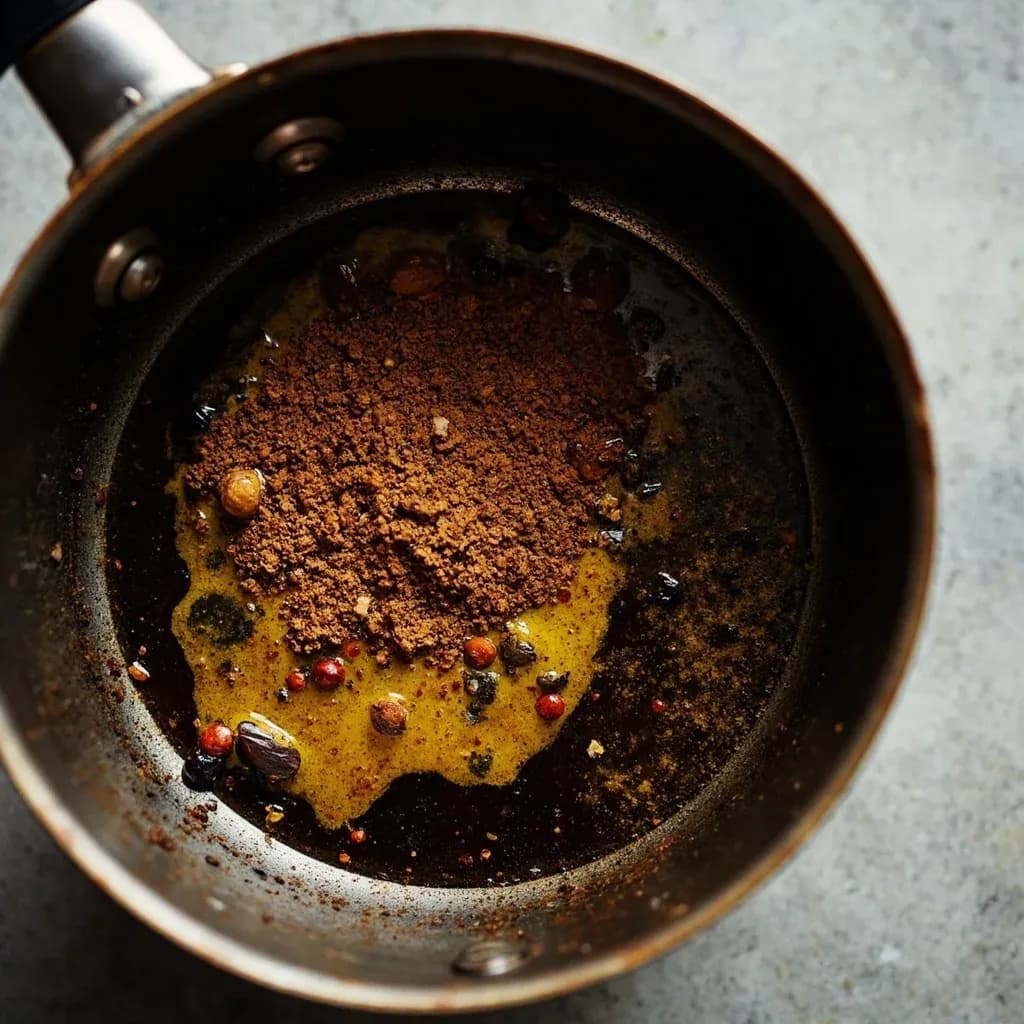
Frying whole spices in hot oil to release flavor into the fat (tadka).
Blooming spices fries whole spices and aromatics in hot oil or ghee for a few seconds until they sizzle and pop, dissolving their fat-soluble flavors into the cooking fat. Known as tadka or tempering in Indian cooking, this fragrant oil is used to start a dish or poured over a finished dal. The oil must be hot enough to bloom the spices but not so hot that they scorch and turn bitter.
Blooming whole spices in hot oil — called tadka, chaunk, chhonk, tarka, baghar, vaghaar, thalippu, or popu depending on the region — is the South Asian technique of frying whole or coarsely broken spices in a small amount of hot fat to extract their fat-soluble aromatics and carry them into a dish. It is the moment when a dal stops smelling of boiled lentils and starts smelling like dinner, and it is the single most important aromatic step in the cuisines of the Indian subcontinent.
The technique works because many of the most prized spice compounds — cuminaldehyde in cumin, eugenol in cloves, cinnamaldehyde in cinnamon, allyl isothiocyanate in mustard — are lipophilic. They only become perceptible in meaningful concentration when dissolved in hot fat; steeped in water, they remain muted and earthy. Hot oil also drives off volatile top notes quickly, which is why a well-timed tadka smells brighter than the same spices cooked for an hour.
Practically, the technique splits into two distinct uses: a base tempering at the start of cooking, where spices are bloomed and then cooked with onions, tomatoes, or lentils, and a finishing tadka, where hot seasoned oil is poured over a finished dish to deliver a final aromatic jolt. Both rely on the same physics but demand different timing and different spice choices.
- Difficulty
- Easy
Types & varieties
Classic North Indian finish for dals and kadhi; lends a nutty, toasted note
Pungent, sharp base favored in Bengali, Bihari, and some Maharashtrian cooking; oil is usually heated until it just stops smoking to mellow the raw bite
Default in Kerala, Tamil Nadu, Karnataka, and Sri Lanka; pairs with curry leaves, mustard seeds, and dried red chilies
Used in Andhra and Telangana temperings (popu/thalippu) for a deep, roasted character
Modern or fusion adaptation; gentler flavor, used when the dish is already spice-forward
Spices briefly toasted in a dry pan before oil is added — a deeper, less oily flavor with more roasted notes
Hot oil-and-spice mixture poured over a finished dish as a final aromatic layer rather than cooked in
How to do it
- 1
Choose and measure the fat
Use 1–2 tablespoons of ghee, mustard oil, coconut oil, or a neutral oil per small batch. A small tempering ladle (about 100–150 ml) concentrates the heat and keeps the spice-to-fat ratio generous enough to actually flavor the dish.
- 2
Heat the fat to the right temperature
Set the ladle or small skillet over medium to medium-high heat. Wait until the fat is shimmering and just beginning to thin and ripple. A quick test: drop in one cumin or mustard seed — it should sizzle and color within 2–3 seconds. If it sits inert, the fat is too cool; if it smokes or blackens instantly, pull it off the heat and let it cool 20–30 seconds.
- 3
Add hard, dense spices first
Toss in cinnamon sticks, cardamom pods, cloves, star anise, black cardamom, or bay leaves. Stir once and let them sizzle for 15–30 seconds until fragrant and slightly darkened. These need the most contact time to release their oils.
- 4
Add medium seeds next
Add cumin, mustard, fennel, nigella (kalonji), or caraway seeds. Listen for the mustard to pop and the cumin to turn a shade deeper and release its aroma — typically 15–30 seconds. Stir gently so they do not scorch on one side.
- 5
Add delicate seeds and fresh aromatics
Fenugreek seeds, dried red chilies, curry leaves, slit green chilies, asafoetida, and sliced shallots or garlic go in last. Curry leaves should crisp in 5–10 seconds; garlic and shallots need 20–30 seconds to turn pale gold, not brown.
- 6
Pour or proceed
For a finishing tadka, immediately tip the hot seasoned oil over the finished dish so it sizzles on contact. For a base tempering, add the next ingredients (onions, tomatoes, lentils, rice) into the same pan within seconds so the spices cook into the food rather than burning in empty oil.
- 7
Rest and serve
A bloomed tempering is at its peak for 1–2 minutes. Plate the dish soon after so the volatiles — the very point of the technique — reach the eater while still airborne.
Why fat, not water
The case for blooming in oil is chemistry, not tradition. The aldehydes, phenols, and isothiocyanates that give cumin, clove, cinnamon, and mustard their characteristic aroma are all far more soluble in fat than in water. Steeped in a dal, they remain muted; dissolved in ghee at 160 °C, they volatilize and reach the nose within seconds. The fat then carries that aroma into every grain of rice or lentil it touches, distributing flavor more evenly than any spice powder stirred in at the end could. Dry toasting achieves a similar lift through pyrolysis rather than extraction — a different, more roasted profile — but cannot deliver the glossy, infused quality of a fat-based bloom.
Ordering the spices
The order in which spices enter the hot fat matters more than the exact combination. Hard, dense materials need the longest contact with the oil; delicate, fresh aromatics need almost none. A practical rule of thumb:
- First: cinnamon sticks, cardamom pods, cloves, star anise, black cardamom, bay leaves — 15 to 30 seconds.
- Second: cumin, mustard, fennel, nigella, caraway seeds — 15 to 30 seconds, until mustard pops and cumin darkens a shade.
- Third: fenugreek seeds, dried red chilies, curry leaves, slit green chilies, sliced shallots, garlic — 5 to 30 seconds, until curry leaves crisp and garlic turns pale gold.
- Last (often off heat): asafoetida, ground spice blends like garam masala or sambar powder — a few seconds only.
Base tempering versus finishing pour
A base tempering is structural: the bloomed spices stay in the pan and become the foundation for everything that follows — onions, tomatoes, lentils, rice. A finishing pour is decorative and aromatic: the seasoned oil is tipped over a finished dish so it sizzles on contact and delivers a fresh burst of volatiles at the table. They use the same technique but different spice blends and different timing. Base temperings lean on sturdy seeds that can sustain further cooking; finishing pours lean on fragile aromatics — curry leaves, fresh chilies, hing — that would otherwise be lost.
Common uses
Tips & pitfalls
- Heat the fat until a single cumin seed sizzles and darkens within 2–3 seconds — that is your cue to add the rest.
- Add spices in order of density: bark and buds (cinnamon, cloves, cardamom) first, then small seeds (cumin, mustard, fennel), then delicate items (asafoetida, curry leaves, dried chilies) last.
- Mustard seeds are ready the moment they stop popping — a second longer and they turn bitter.
- Never leave the pan; the difference between nutty and acrid is roughly 5–10 seconds for ground spices.
- If using mustard oil, bring it to a smoking point and let it cool slightly to shed the raw, pungent note before adding spices.
- A small, heavy ladle concentrates heat better than a wide skillet — the spices sizzle rather than fry.
- Have the destination dish staged and ready; bloomed spices wait for no one.
- Bloomed spices should be used within a minute or two — they lose their lift as the volatile aromatics dissipate.
- For ground spice blends (garam masala, sambar powder), bloom off-heat or at the very end to avoid scorching.
- Add a pinch of asafoetida (hing) to the hot fat last; it needs only a few seconds and a little goes a very long way.
Good to know
- Also known as
- Tadka, chaunk, chhonk, tarka, baghar, vaghaar, thalippu, popu — collectively, tempering
- Cuisines of origin
- South Asian (Indian, Bangladeshi, Pakistani, Sri Lankan), with parallels in North African, Ethiopian, and Middle Eastern cooking
- Fat medium
- Any heat-stable fat — ghee, mustard oil, coconut oil, sesame oil, peanut oil, neutral vegetable oil, or clarified butter
- Target oil temperature
- Roughly 150–180 °C / 300–350 °F; hot enough to sizzle instantly but below the fat's smoke point
- Typical duration
- 30 seconds to 2 minutes for whole spices; 10–20 seconds for ground spices
- Mechanism
- Hot fat extracts fat-soluble aromatic compounds and carries flavor through the dish
- When applied
- At the start of cooking to build a base, or as a finishing pour over dals, khichdi, sambar, rasam, yogurt, soups, or rice
- Equipment
- A small tempering ladle (tadka pan / vagharia lotā) or a small skillet; commonly a dedicated copper, steel, or iron ladle heated directly over flame
- Difficulty
- Low, but timing-sensitive — the line between bloomed and burnt is short
Also called
oil-aromatics-blooming · toast-aromatics · toasting-aromatics · tadka · tempering
Dishes that rely on it
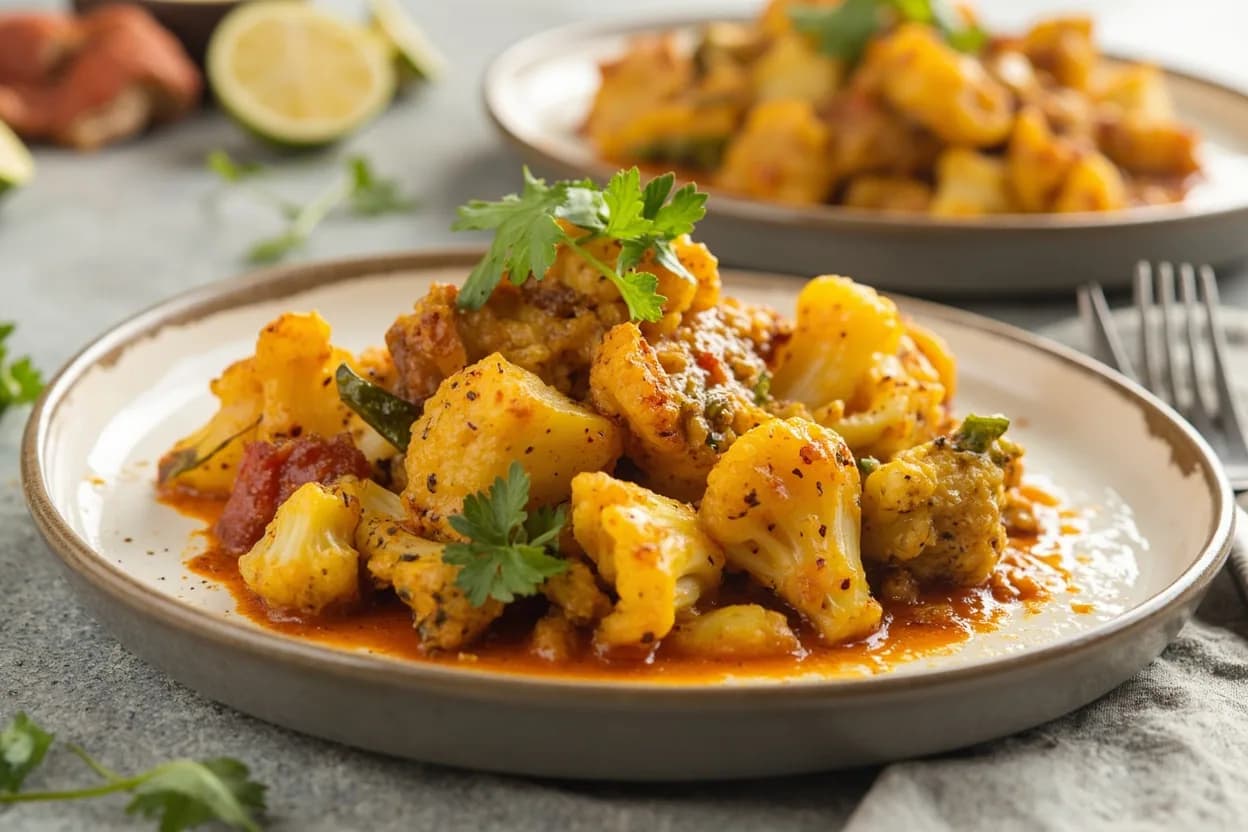
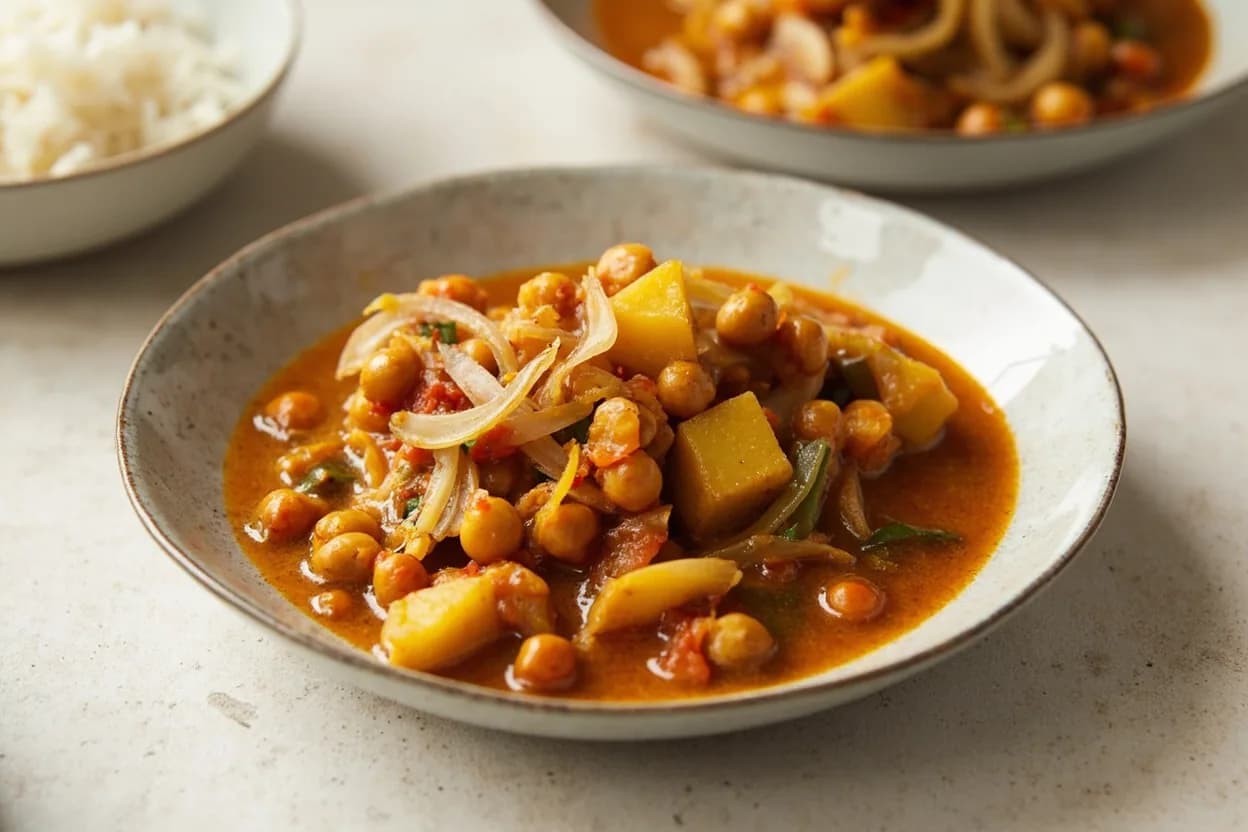
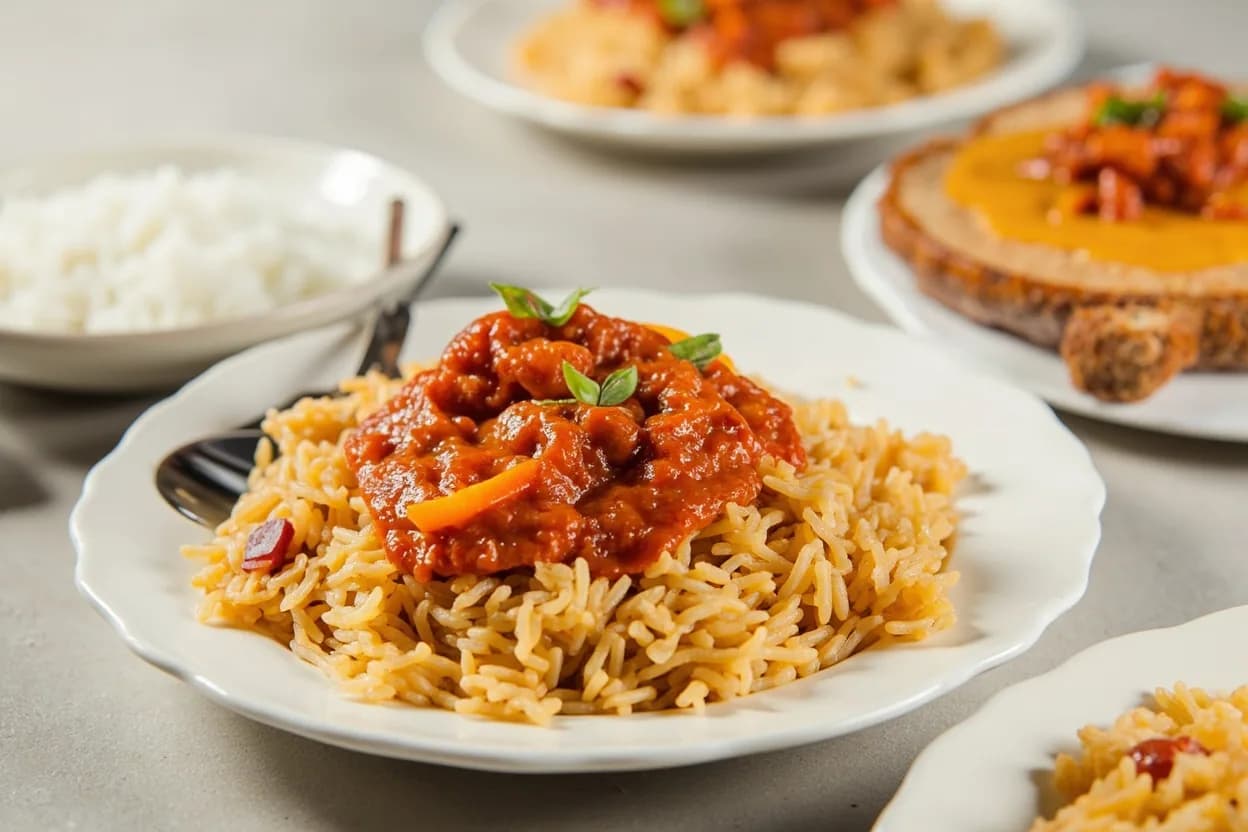
Related

Sear
Blast the surface hot for a deep-browned, savory crust

Sauté
Cook quickly in a little fat over lively heat, tossing as you go

Stir-Fry
Toss bite-sized pieces over roaring heat for fast, smoky cooking

Pan-Fry
Crisp food in a shallow layer of hot fat, turning once or twice

Deep-Fry
Submerge in hot oil for an all-over crackling crust

Roast
Cook uncovered in dry oven heat for browned edges and tender centers

Bake
Cook with steady, surrounding oven heat — the soul of bread and pastry

Broil
Hit food from directly above with fierce overhead heat