Prep & Assembly
Bunching & Tying Herbs
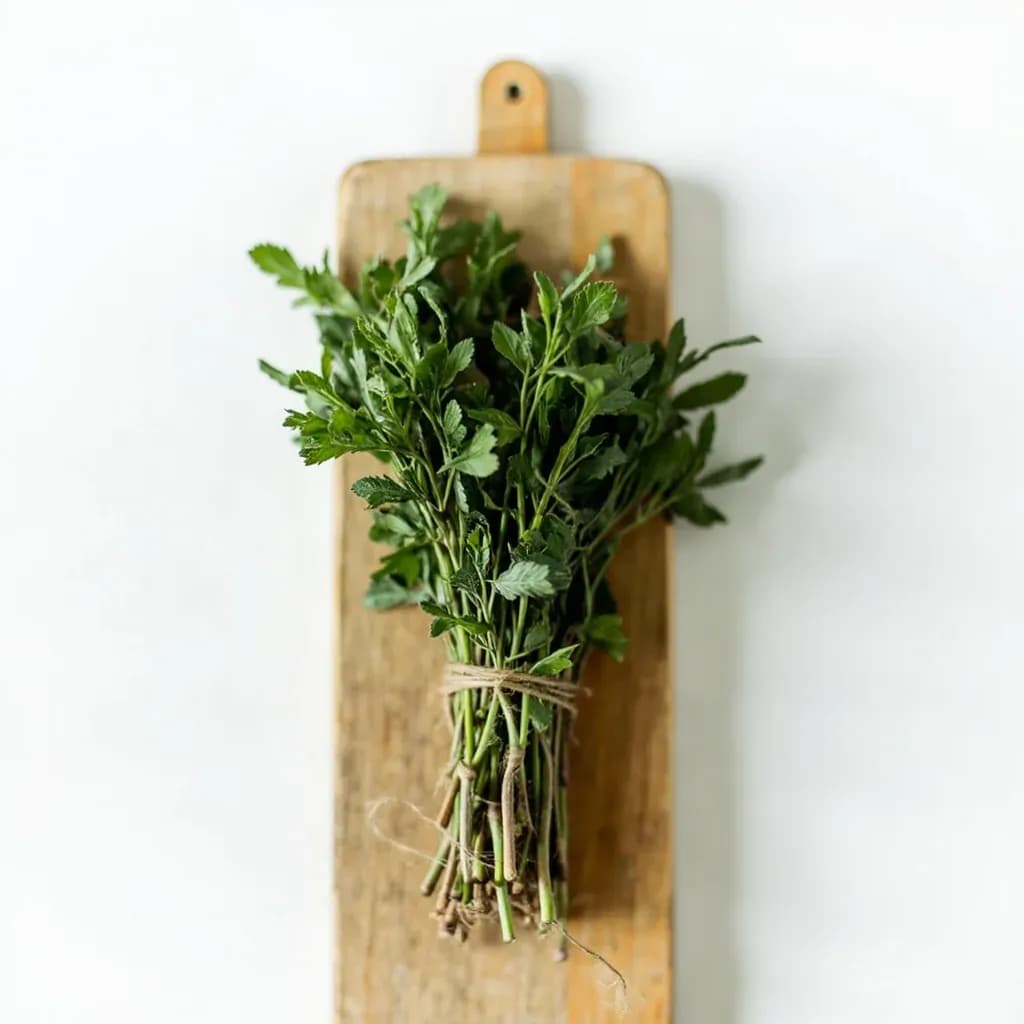
Tying herbs and aromatics into a bundle so they flavor a dish and lift out cleanly.
Bunching and tying herbs gathers stems and aromatics into a bound bundle, most familiarly a bouquet garni, secured with kitchen twine. The bundle steeps flavor into soups, stocks, and braises and is then pulled out whole, leaving no loose leaves behind. Tying also keeps delicate herbs together so they can be hung to dry.
Bunching and tying herbs — assembling them into a single, retrievable bundle before submerging them in a simmering liquid — is one of those kitchen habits that quietly determines the quality of a stock, braise, or court-bouillon. The bundle holds woody stems, leaves, and aromatics together so their flavor seeps steadily into the cooking liquid over minutes or hours, while the cook can lift them out in one motion without fishing through the pot with a slotted spoon. In French cooking this bundle is the bouquet garni; the same logic shows up as the Italian mazzetto, the British faggot, and the cheesecloth-bound sachet d'épices. The principle is identical across all of them: bind what would otherwise scatter, infuse what would otherwise boil away, and remove what would otherwise be unpleasant to eat.
The real skill is less about which herbs you choose and more about matching the toughness of each herb to the cook time. Hardy stems — thyme, rosemary, savory, parsley stems — and a bay leaf release their flavor slowly and tolerate long simmers; tender leaves such as basil, chervil, and tarragon break down, turn bitter, or muddy the color of a clear stock, so they belong in shorter applications or wrapped protectively inside a leek green or cheesecloth. Securing the bundle with a long tail of twine that drapes over the pot's rim is the small habit that makes retrieval effortless and prevents the cook from forgetting the bundle is buried in the pot — a surprisingly common mistake in busy kitchens.
Once the method is internalized, the contents become regional and seasonal: a strip of dried orange peel in a Provençal braise, leek greens in a Norman stew, sage and rosemary in a Tuscan ragù, peppercorns and a smashed garlic clove tucked alongside for body. Bunching and tying is a framework rather than a fixed recipe, and it scales from a two-herb sachet for a quick court-bouillon to a fat bundle of six or seven aromatics for an overnight stock.
- Difficulty
- Easy
Types & varieties
Parsley stems, fresh thyme, and a bay leaf tied with twine — the default for stocks and braises
Adds rosemary, summer savory, and often a strip of dried orange peel to the classic trio
Herbs and whole spices enclosed in a square of cheesecloth, tied with twine; ideal when clarity matters or herbs are very fine
Tender herbs (parsley, chervil, tarragon) enclosed in a softened green leek leaf and tied — protects leaves from breaking apart in delicate broths
Herbs tucked into a curved celery rib and tied — a rustic Italian-American approach that adds celery flavor as a bonus
Flat-leaf parsley, basil, sage, and/or rosemary tied together, often dropped into soffritto-based braises and ragù
Parsley, thyme, bay, leek greens, and sometimes celery tied into a long bundle for stocks, stews, and braised mutton
How to do it
- 1
Select and prep the herbs
Choose herbs suited to long cooking: parsley stems, thyme sprigs, and a bay leaf form the base. Strip any large, bruised leaves from the stems of herbs you don't want to submerge. If the herbs are dusty or sandy, rinse them under cold water and pat dry so grit doesn't fall into the pot.
- 2
Align the stems
Lay the parsley stems and thyme sprigs flat on the counter with all stems pointing the same way. Place the bay leaf on top, lying flat, so its sharp edges won't cut through the twine later.
- 3
Wrap or gather the bundle
Gather the stems snugly but not so tight that the herbs crush or split. If using a leek green or a square of cheesecloth, lay the herbs on the wrapper first and fold it around them so they are fully enclosed.
- 4
Tie with kitchen twine
Wrap the bundle with 3–4 inches of plain cotton butcher's twine, knotting firmly enough to hold the shape without strangling the herbs. Leave a 6–8 inch tail that will drape over the pot edge or hook onto a handle so the whole bundle can be lifted out in one motion.
- 5
Add to the cooking liquid
Drop the bouquet garni into cold or warm liquid at the start of cooking so its flavor builds gradually. Push it fully under the surface with a spoon — herbs that float above the liquid don't infuse.
- 6
Adjust and remove
Simmer as the recipe directs. Taste the liquid after 20–30 minutes and add a second small bundle if you want more intensity. Always remove the bundle before serving — bay leaves in particular must not be eaten because they stay rigid and sharp.
Choosing the right wrapper
The wrapper is what you tie around the herbs — or what you tie the herbs inside — and it changes the character of the finished liquid. A naked bundle tied directly with twine gives the roundest, fullest flavor because herbs sit in direct contact with the liquid; this is the right choice for braises, ragù, and any cloudy stock where clarity is not the priority. A cheesecloth sachet contains even fine leaves and cracked peppercorns so nothing escapes into the liquid, which makes it the right choice for consommé, court-bouillon, and any stock you plan to clarify. A leek-green or celery-rib wrapper splits the difference: it protects delicate herbs from disintegrating while still allowing flavor to pass through, and it adds its own aromatic note. Pick the wrapper that matches the dish's desired texture and clarity.
Matching herbs to cook time
Herb selection is governed by how long the bundle will simmer. Use this as a rough guide:
- Under 20 minutes (quick court-bouillon, light poaching liquid): tender herbs only — parsley, chervil, tarragon, basil — wrapped in a sachet or leek green so they don't disintegrate
- 20–60 minutes (sauces, short braises, ragù): the classic parsley-stems-plus-thyme-plus-bay trio handles this range well
- 1–3 hours (pot roast, daube, chicken stew, cassoulet): add rosemary and savory to the classic trio; rosemary's piney oils need time to mellow
- Over 3 hours (overnight stocks, consommé): woody herbs dominate; consider a sachet so any leaf fragments can be lifted cleanly out of a long, reduced liquid
Common uses
Tips & pitfalls
- Use plain, unflavored cotton kitchen twine; synthetic string can melt against the pot wall or leach color into a pale stock.
- Leave a generous tail of twine and drape it over the rim of the pot or hang it on the handle — this is what stops you from forgetting the bundle is in there.
- Group herbs by stem thickness so the woody ones (thyme, rosemary, bay) release steadily while tender leaves don't dissolve into the liquid.
- Wrap a bay leaf flat inside the bundle with its edges tucked in; its rigid edges will otherwise saw through the twine and let the bundle fall apart mid-simmer.
- Rinse and dry dusty or sandy herbs before tying them — grit that clings to stems will drop into the cooking liquid and cloud a clear stock.
- Reach for a cheesecloth sachet when making a clear consommé or court-bouillon; reach for a loose tied bundle when making a full-bodied braise where roundness matters more than clarity.
- Tuck a few cracked black peppercorns and a smashed garlic clove into the bundle to round out the flavor without having to season the liquid twice.
- Never eat the bay leaf — remove the whole bundle before plating, and give the pot a final stir so any loose herb fragments float to the surface where they can be skimmed.
Good to know
- Also known as
- Bouquet garni (French); faggot or fagot (British); mazzetto (Italian); sachet d'épices when wrapped in cheesecloth
- Origin
- French classical cuisine; the term 'bouquet garni' appears in printed cookbooks by the early-to-mid 19th century
- Traditional composition
- Parsley stems, fresh thyme, and a bay leaf; Provençal versions add rosemary, savory, and sometimes a strip of dried orange peel
- Purpose
- Infuse slow-cooked liquids with herb flavor while keeping leaves and stems contained for easy removal
- Materials needed
- Fresh herbs and plain cotton kitchen twine; optionally cheesecloth, a leek green, or a celery stalk as a wrapper
- Best cooking methods
- Long, moist-heat cooking: simmering, braising, poaching, and reducing
- Tie length
- 6–8 inches of twine left as a tail so the bundle can be lifted out cleanly
- When to add
- At the start of cooking so flavor releases gradually; delicate herbs are added near the end if not bundled
- Removal
- Always removed before serving — bay leaves in particular stay rigid and sharp and must not be eaten
- Storage of prepped bundle
- Can be assembled up to 1 day ahead, wrapped in a damp paper towel and refrigerated
Also called
Bouquet Garni · Tying Herbs
Related

Whisk
Beat ingredients smooth and aerated with a looping wire motion

Sift
Pass dry ingredients through mesh to aerate and remove lumps

Strain
Pour through mesh to separate solids from liquid for a smooth result

Filter
Pass liquid through fine material to clarify out the smallest particles

Rice
Press cooked potatoes through small holes for fluffy, lump-free texture

Mash
Crush soft cooked food into a rustic, creamy purée

Grind
Crush food into a coarse to fine texture, from spices to meat

Grate
Shred food into fine bits against a sharp-toothed surface