Knife Skills
Butterflying
Slicing a protein nearly through and opening it flat for even, fast cooking.
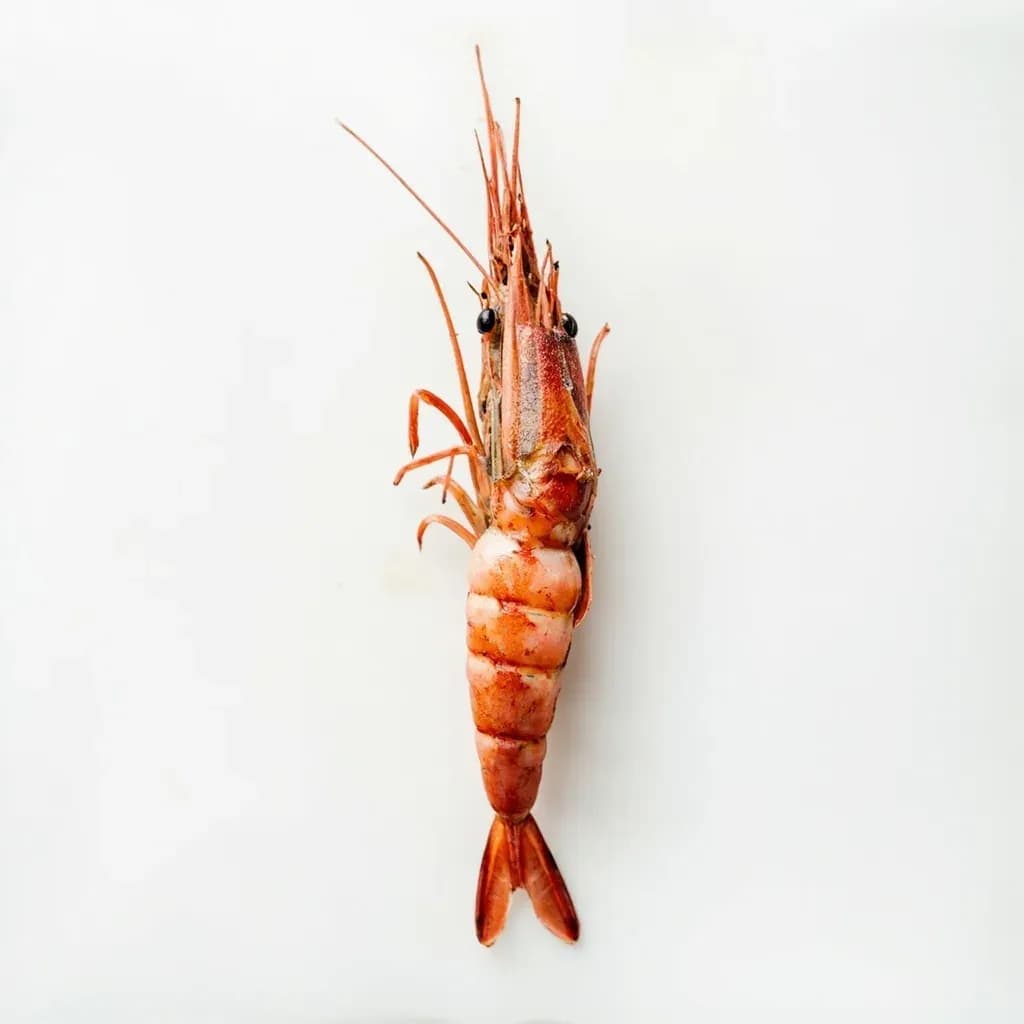
Butterflying cuts a thick piece of meat, shrimp, or fish almost all the way through horizontally so it opens out flat like a book, doubling the surface and halving the thickness. The flattened shape cooks faster and more evenly and creates a surface for stuffing or rolling. With shrimp it also deveins them and makes them curl attractively when cooked.
Butterflying is the knife work of slicing a protein nearly through its center and opening it flat, hinged like a book. The name comes from the silhouette of the opened cut — two halves spread outward resemble wings. It is one of the most useful transformations a cook can perform: a single thick, uneven piece of meat, poultry, or fish becomes two thin halves of equal thickness that cook in roughly half the time, take seasoning evenly, and can be stuffed, rolled, or pounded thinner still. For most home cooks, the technique first earns its keep on boneless skinless chicken breasts, whose teardrop shape is the classic offender — thin at one end, thick at the other, prone to drying out on the thin side while staying raw in the middle. Once you learn to open that breast flat, the same logic extends to pork tenderloin, lamb loin, whole fish, shrimp, and entire chickens (where the variant is called spatchcocking).
The structural change is what makes butterflying powerful. By doubling surface area and equalizing thickness, you move a cut from the realm of slow, careful roasting into the realm of fast, high-heat cooking — a hot pan, a hot grill, a broiler. A butterflied chicken breast sears in about three minutes per side and reaches around 160°F without drying. A spatchcocked whole bird roasts flat in under an hour with crisp skin from sternum to thigh. A butterflied trout or branzino lies open on the grate and cooks through in eight minutes. The technique is also the gateway to stuffing and rolling — chicken Kiev, braciole, porchetta-style stuffed pork loin, prosciutto-wrapped chicken — because the open cut becomes a natural pocket or canvas.
Butterflying has been a named technique in English-language cookbooks since at least the mid-19th century, and it remains a foundational knife skill rather than a specialty flourish. The execution is straightforward: a sharp knife held horizontally, a steady hand, and the discipline to stop about half an inch before the far edge so the piece stays hinged. Everything else — even thickness, drying the surface, salting ahead, finishing with high heat — builds on that single, clean cut.
- Difficulty
- Medium
Types & varieties
Slice horizontally through the center of a boneless cut, stopping short of the far edge, and open the piece flat like a book.
Cut into the thickest side to create a deep pocket for stuffing, leaving the other three sides intact — a common approach for stuffed chicken breasts.
A whole chicken or other bird with backbone removed so it opens and lays flat for grilling or roasting.
Shrimp split along the back curve and opened flat; common for grilling, stuffing, or dramatic plating.
Trout, branzino, snapper, or mackerel gutted and opened along the back so both fillets lay flat in one piece, often for grilling or broiling.
A butterflied cut (usually chicken, veal, or pork) pounded between plastic to an even 1/4-inch thickness for very fast cooking.
How to do it
- 1
Chill the protein
Place the protein on a stable board. If it is soft or very thick — boneless chicken breast, pork tenderloin, whole fish — chill uncovered in the freezer for 20 to 30 minutes so the fibers firm up. Firm protein resists drift and tears less under the knife.
- 2
Position the knife horizontally
Hold a sharp chef's knife, slicing knife, or boning knife parallel to the board, with the blade pointing horizontally through the middle of the protein rather than down into it. Place your non-cutting hand on top in a claw grip for stability, knuckles against the side of the blade.
- 3
Make the horizontal cut
Slice slowly and evenly through the center along the longest axis, keeping the blade level. Watch the emerging seam on top so the two halves stay the same thickness. Stop about 1/2 inch before the far edge so the cut stays hinged and the piece opens like a book rather than separating into two.
- 4
Open and flatten
Open the cut like a book. Press gently with the flat of your hand to flatten. If one half is noticeably thicker than the other, make a shallow horizontal slice inside that half to even the thickness — a 'butterflied and leveled' cut.
- 5
Optional: pound to a paillard
For chicken, veal, or pork, place the opened cut between two sheets of plastic wrap. Use a flat meat mallet or rolling pin to pound evenly to about 1/4 inch thickness, working from the center outward so the meat spreads rather than tears.
- 6
Dry, season, and cook
Pat the butterflied cut thoroughly dry with paper towels — moisture is the enemy of a good sear. Season and cook over high heat: grill, cast-iron pan, or broiler. Thin, even pieces finish in 2 to 4 minutes per side, far faster than the original whole cut.
- 7
Poultry variation: spatchcock
Place a whole chicken breast-side down. Using heavy kitchen shears, cut along both sides of the backbone from tail to neck and remove it (reserve for stock). Flip the bird breast-side up and press firmly on the breastbone with the heel of your hand to flatten. Tuck the wing tips behind the shoulders to prevent scorching.
- 8
Shrimp variation
Hold a peeled or shell-on shrimp and make a shallow lengthwise cut along the back curve, just deep enough to expose the vein. Remove the vein, rinse, and pat dry. The shrimp will lay open and flat for grilling or stuffing; leave the tail shell on for presentation and to keep the flesh from curling off the heat.
- 9
Whole fish variation
Gut and scale the fish. With a sharp knife, cut along one side of the backbone from head to tail, then along the other side, leaving the head and tail intact. Open the fish flat, remove the freed backbone, and score the skin lightly if you like. The fish will grill or broil in one piece.
Why even thickness matters
Uneven cuts are the most common cause of overcooked-on-the-outside, raw-in-the-middle meat. A chicken breast is 1 inch thick at one end and 2 inches at the other; the thin end reaches the safe internal temperature long before the thick end does, so by the time the center is cooked the thin side has gone dry and stringy. Butterflying solves this by mechanically leveling the cut. Once opened and flattened, every part of the surface is the same distance from the heat, and the entire piece reaches doneness at the same moment. The same logic applies to whole birds: a spatchcocked chicken lays flat so that the breast and thighs — which cook at very different rates on a standing bird — share the same plane and finish together.
- Surface area roughly doubles after butterflying.
- Cooking time drops by about half for boneless cuts.
- Seasoning adheres and penetrates more uniformly on an even surface.
- Stuffing and rolling become far more practical once the cut is opened flat.
Butterflying vs. spatchcocking vs. paillard
These three terms describe a family of related techniques on a spectrum of intensity. A standard butterfly is the entry point: slice, open, flatten. Spatchcocking is butterfly extended to a whole bird by removing the backbone — same principle, applied at a larger scale, almost always with shears rather than a knife. Paillarding is butterfly taken further: after opening, the cut is pounded thin between plastic to about 1/4 inch, which moves it into the territory of scaloppine, piccata, schnitzel, and chicken paillard. Each step adds speed and evenness at the cost of some presentation weight and stuffing capacity.
- Butterfly: open flat, cook the original cut in half the time.
- Spatchcock: remove backbone, lay whole bird flat for even roasting and grilling.
- Paillard: pound the butterflied cut thin for searing in 60–90 seconds per side.
Common uses
Tips & pitfalls
- Sharpen the knife before you start — a dull blade tears and slips more than a thin, sharp one glides.
- Chill the protein 20 to 30 minutes in the freezer; firmer meat gives a straighter, cleaner cut.
- Keep your non-cutting hand in a claw grip, knuckles against the side of the blade, and slice away from yourself.
- Stop the cut about 1/2 inch before the far edge so the piece opens like a book instead of separating into two halves.
- Pat the opened cut thoroughly dry before seasoning; surface moisture is the single biggest obstacle to a proper sear.
- Use heavy kitchen shears (not a knife) to remove a poultry backbone — it is faster, safer, and gives cleaner cuts along the ribs.
- Salt butterflied cuts 30 to 60 minutes ahead as a dry brine for better-seasoned, juicier results, especially on chicken.
- Do not over-butterfly shrimp — leave the tail shell on for presentation and to keep the flesh from curling and shrinking off the heat.
Good to know
- Also called
- Book-cut, butterfly cut
- Category
- Knife skill / portioning technique
- Common proteins
- Chicken breast, pork tenderloin, lamb loin, whole fish (trout, branzino), shrimp, leg of lamb
- Primary tools
- Sharp chef's or slicing knife; boning knife for poultry; heavy kitchen shears for poultry backbone; meat mallet for optional pounding
- Blade angle
- Held parallel to the cutting board, horizontal through the center of the protein
- Effect on cooking
- Doubles surface area, evens thickness, cuts cooking time roughly in half, promotes even doneness
- Related techniques
- Spatchcocking (whole bird with backbone removed); paillard (butterflied, then pounded to even thinness)
- Difficulty
- Beginner to intermediate for boneless cuts; intermediate to advanced for whole poultry and boneless whole fish
Also called
Butterflying Shrimp · Butterflying Sardines · Spatchcocking
Dishes that rely on it
Related

Chop
Cut into rough, irregular pieces — the everyday workhorse cut

Dice
Cut into uniform cubes for even cooking and a tidy look

Mince
Cut as fine as possible so flavor melts evenly into the dish

Slice
Cut into even, flat pieces for consistent cooking and presentation

Julienne
Cut into thin matchsticks for fast cooking and elegant garnish

Brunoise
Cut into tiny, precise cubes — the finest dice in the kitchen

Chiffonade
Roll and slice leafy greens into delicate ribbons

Batonnet
Cut into tidy sticks, thicker than julienne — think classic fries