Heat & Fire
Coal-Bed Cooking
Cooking food directly on or buried in a bed of glowing coals.
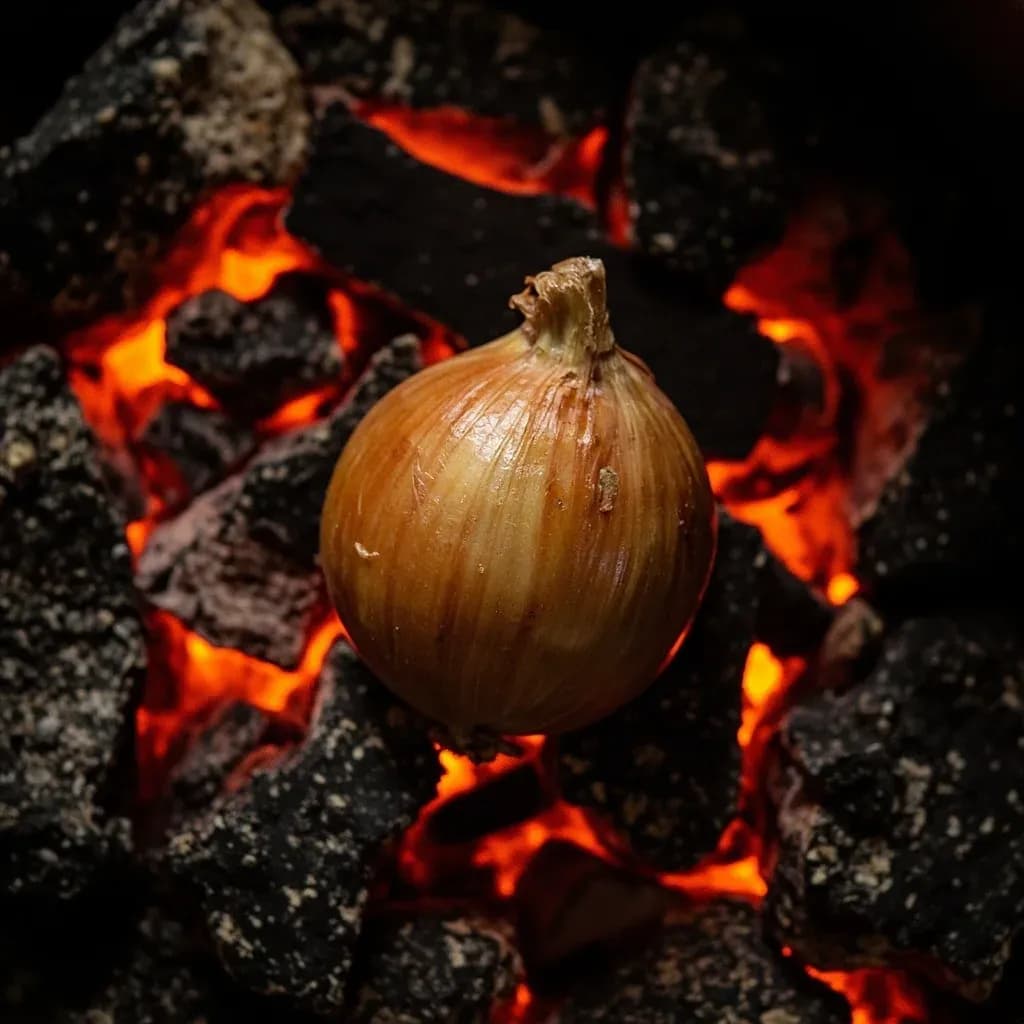
Coal-bed cooking places food right in the embers — directly on the coals or buried among them — to cook with intense, direct heat and char. Used for whole vegetables, tubers, and foil-wrapped items, it gives a deep smoky, earthy flavor. The technique, sometimes called cooking in the embers or 'dirty' grilling, relies on a clean hardwood coal bed.
Coal-bed cooking is a family of techniques that use glowing wood embers — not flame, not a metal grate, not a pan — as the direct cooking medium. Food may sit on top of the coals, be nestled into a bed of ash, or be buried under a thick mound of embers inside a sealed pit. What unifies the family is the heat source: a deep bed of radiant hardwood coals that delivers a dry, even, very high temperature on the surface and a slower, oven-like heat underneath.
This is among the oldest cooking methods humans practiced, and it survives because it works. Embers radiate intense heat from every grain, so a potato in contact with coals cooks through in under an hour and a wrapped fish buried in ash steams and smokes simultaneously with no flipping or basting. The technique also concentrates flavor in a way that grills and ovens rarely match: surface sugars caramelize, skins char, and the food takes on a soft woodsmoke character without the acrid bite of flame-licked soot. The two variables a cook controls are coal depth (deeper bed = more direct, hotter cooking) and ash cover (a blanket of fine ash moderates temperature and prevents flare-ups, mimicking a low oven).
- Difficulty
- Medium
Types & varieties
Vegetables, fish, or small birds set straight on glowing coals or nestled in a bed of fine ash; the ash insulates and prevents flare-ups.
Wrapped food is raked under a mound of hot coals and ash, like a thick blanket of radiant heat.
A pit lined with pre-heated stones and filled with embers; food is lowered in, often wrapped in leaves or foil, then covered with earth, sod, or a lid to steam-smoke for hours.
New Zealand earth oven; food in cloth-lined baskets lowered onto heated stones inside a pit, covered with earth, and steamed for 3–4 hours.
Pit lined with lava rocks, filled with burning wood; food wrapped in ti or banana leaves is buried and slow-roasted 6–8 hours, traditionally for a whole pig (kalua pig).
Pit lined with hot stones, layered with nalca or rhubarb leaves, shellfish, meat, and potatoes, then buried; the food steams and smokes at once.
Whole lamb, goat, or beef wrapped in maguey or agave leaves, set on hot coals in a stone-lined pit, covered with earth and more agave leaves, and cooked slowly overnight.
European farmhouse and Italian method where bread or vegetables are raked into the embers of a wood-fired oven after the main bake is finished.
How to do it
- 1
Choose and prepare the site
Pick a flat, non-flammable surface outdoors — bare earth, sand, stone, or a fire pit. Clear a 3-foot radius of dry leaves and grass. For a pit cook, dig a hole roughly 2 feet deep and wider than the food; for ash-roasting, a metal ring, brick hearth, or open ground is enough.
- 2
Build the fire with the right wood
Stack seasoned hardwood (oak, hickory, beech, maple, fruitwood) into a dense pile. Avoid softwoods, plywood, and anything treated, painted, or glued. Light with natural tinder and let the fire burn freely for 1–2 hours until it collapses into a deep bed of glowing embers with white-ash surfaces.
- 3
Rake and condition the coals
Spread the embers into an even bed 2–4 inches deep. For a gentler cook, cover the bed with 1–2 inches of fine white ash from a previous burn or a small auxiliary fire; this drops surface temperature by roughly 150°F and prevents flare-ups from dripping fat.
- 4
Prepare the food
Pat food dry. Wrap delicate items in 2–3 large green leaves (banana, fig, cabbage, corn husks) or a double layer of heavy foil. Leave skins on vegetables and pierce each once with a knife tip so steam can vent. Rub fish and poultry with oil and salt to encourage a clean char.
- 5
Place food on or in the coals
Set sturdy items — potatoes, beets, corn, whole onions, heads of garlic — directly on the ash bed, pressing down so they contact hot coals. Bury smaller wrapped items under 2–3 inches of embers and ash. For pit cooking, lay food on heated stones or a rack above the coal bed, then shovel remaining embers on top and around.
- 6
Insulate and seal (pit method)
Cover the pit with a sheet of plywood, burlap sacks soaked in water, or a metal lid, then mound 4–6 inches of earth, sand, or sod on top to trap steam. Leave undisturbed; large pit cooks can run 4–12 hours at a steady low temperature.
- 7
Monitor and turn
For surface ash-roasting, turn vegetables with long tongs every 8–12 minutes for even color; roots take 30–60 minutes, peppers 10–15 minutes. For pit cooks, rely on time and an instant-read probe thermometer rather than visual cues — the lid stays on.
- 8
Recover and clean
Lift food out with tongs or a long-handled grill spatula and let it rest 5 minutes. Brush off loose ash, then rinse root vegetables under running water and rub skins off with a cloth. For foil- or leaf-wrapped items, unwrap once the interior steam has cleared.
- 9
Extinguish and dispose of coals
Spread remaining embers thin, douse with water, stir, and douse again. Hot coals can hold ignition for hours; never leave a coal bed unattended, and bag ash only after it is fully cold to the touch.
How embers cook differently from flame
An open flame is mostly hot gas — it licks food unevenly, deposits soot, and pulls moisture out through vapor. A glowing coal is a dense solid radiating heat in every direction at once, with no rushing airstream. That is why a potato half-buried in coals cooks through evenly while a potato held over a flame scorches on the side facing the fire. A thin layer of fine white ash behaves like a thermostat: it blocks direct contact, slows oxygen flow, and drops the effective surface temperature by roughly 150°F, turning a roaring coal bed into a steady 500°F oven. Mastering the depth of the coal bed and the thickness of the ash cover is the whole skill of the method.
Choosing and judging wood
Good coal-bed fuel is dry, dense hardwood that has been seasoned for at least six months. Oak and hickory give long, steady embers; fruitwoods (apple, cherry) add a faint sweet smoke; mesquite burns hot and fast and suits short cooks. The cook's signal that the fire is ready is visual: flames have died down, the coal surface is dusted with white ash, and prodding the bed with a stick produces a soft crackle rather than a hiss. Anything that spits, pops, or throws sparks still has volatiles burning off and will taste resinous on the food.
Common uses
Tips & pitfalls
- Burn wood down to glowing embers with no active flame; flames deposit soot and acrid smoke, embers give clean radiant heat.
- Use only seasoned hardwood — pine, spruce, and any painted or treated wood produce resinous or toxic fumes.
- Rake a 2–3 inch bed of fine ash over the coals for vegetables; the ash moderates temperature and prevents scorching.
- Wrap delicate foods (fish, chicken breast, bread dough) in wet banana leaves, cabbage leaves, or parchment-plus-foil to keep ash out and moisture in.
- Brush cooked vegetables under running water or with a dry cloth to remove ash; the skin slips off roasted peppers and eggplant effortlessly.
- For pit cooking, build the fire 2–4 hours ahead so stones are fully heated and the wood is reduced to a deep coal bed before food goes in.
- Common mistake: placing food over coals that are still producing flame — wait until the surface of the embers is white-ashed and crackles softly when prodded.
- Common mistake: lifting the pit lid too often — each peek releases trapped steam and adds hours to the cook.
- Common mistake: not having a metal ash shovel and water source ready; a stray ember can scorch skin or start a yard fire.
Good to know
- Origin
- One of the oldest cooking methods; predates pottery and metal vessels and was used wherever wood fires could be built.
- Heat source
- Glowing hardwood embers (oak, hickory, mesquite, beech, or fruitwoods), never active flames.
- Temperature
- Exposed embers run 600–1000°F (315–540°C); ash-covered coals settle to 450–700°F (230–370°C) for gentler roasting.
- Typical fuel
- Seasoned hardwood burned down to white- or red-glowing coals; softwoods and treated wood are avoided.
- Time range
- About 15 minutes for small vegetables in hot ash; 4–12+ hours for whole hogs or pit feasts in insulated earth ovens.
- Skill level
- Beginner-friendly for simple ash-roasting; advanced for buried pit ovens and large animal cooks.
- Key equipment
- Long-handled tongs, metal rake or ash shovel, stiff wire brush, foil or large green leaves, optional pit lid or Dutch oven for insulation.
- Flavor profile
- Subtle woodsmoke, charred depth, and a dry oven-like heat that concentrates natural sugars.
Also called
ember cooking · cooking in the coals
Dishes that rely on it
Related

Sear
Blast the surface hot for a deep-browned, savory crust

Sauté
Cook quickly in a little fat over lively heat, tossing as you go

Stir-Fry
Toss bite-sized pieces over roaring heat for fast, smoky cooking

Pan-Fry
Crisp food in a shallow layer of hot fat, turning once or twice

Deep-Fry
Submerge in hot oil for an all-over crackling crust

Roast
Cook uncovered in dry oven heat for browned edges and tender centers

Bake
Cook with steady, surrounding oven heat — the soul of bread and pastry

Broil
Hit food from directly above with fierce overhead heat