Water & Steam
Couscous Steaming
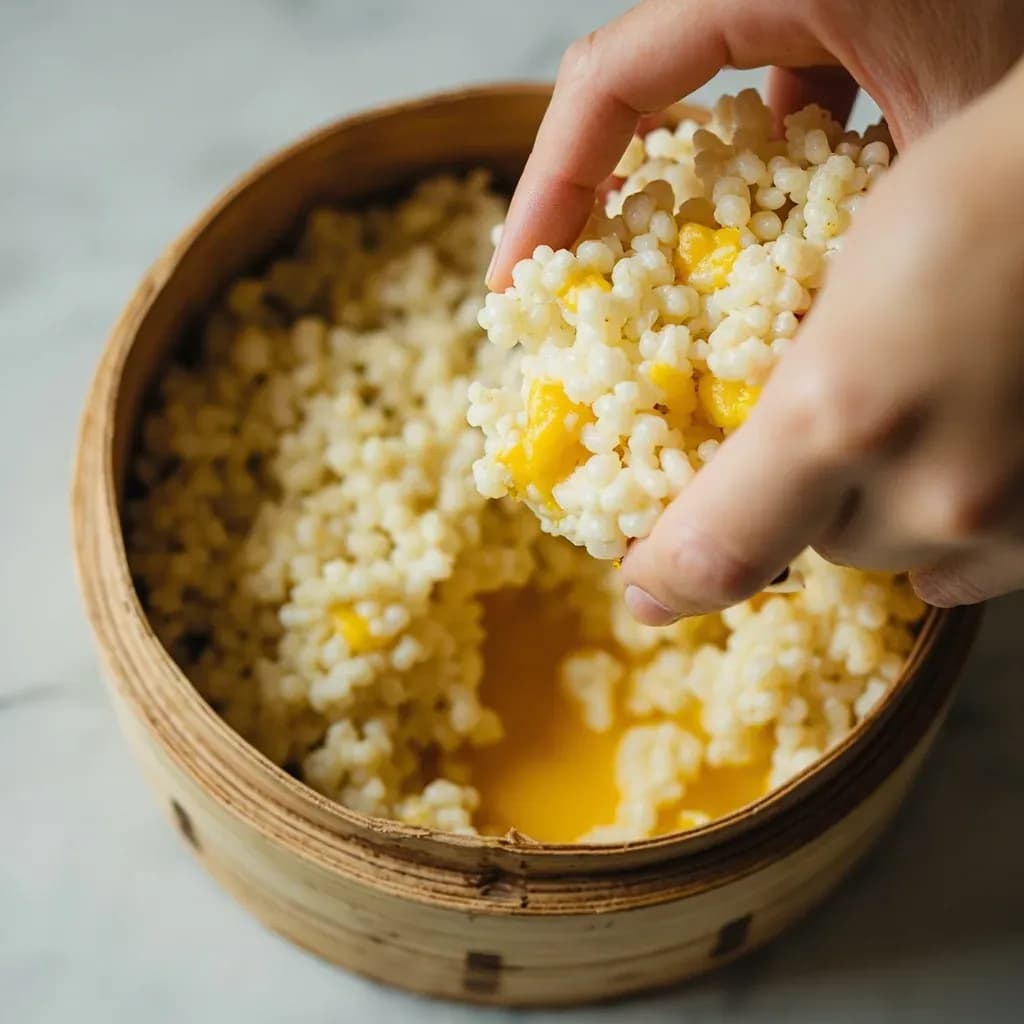
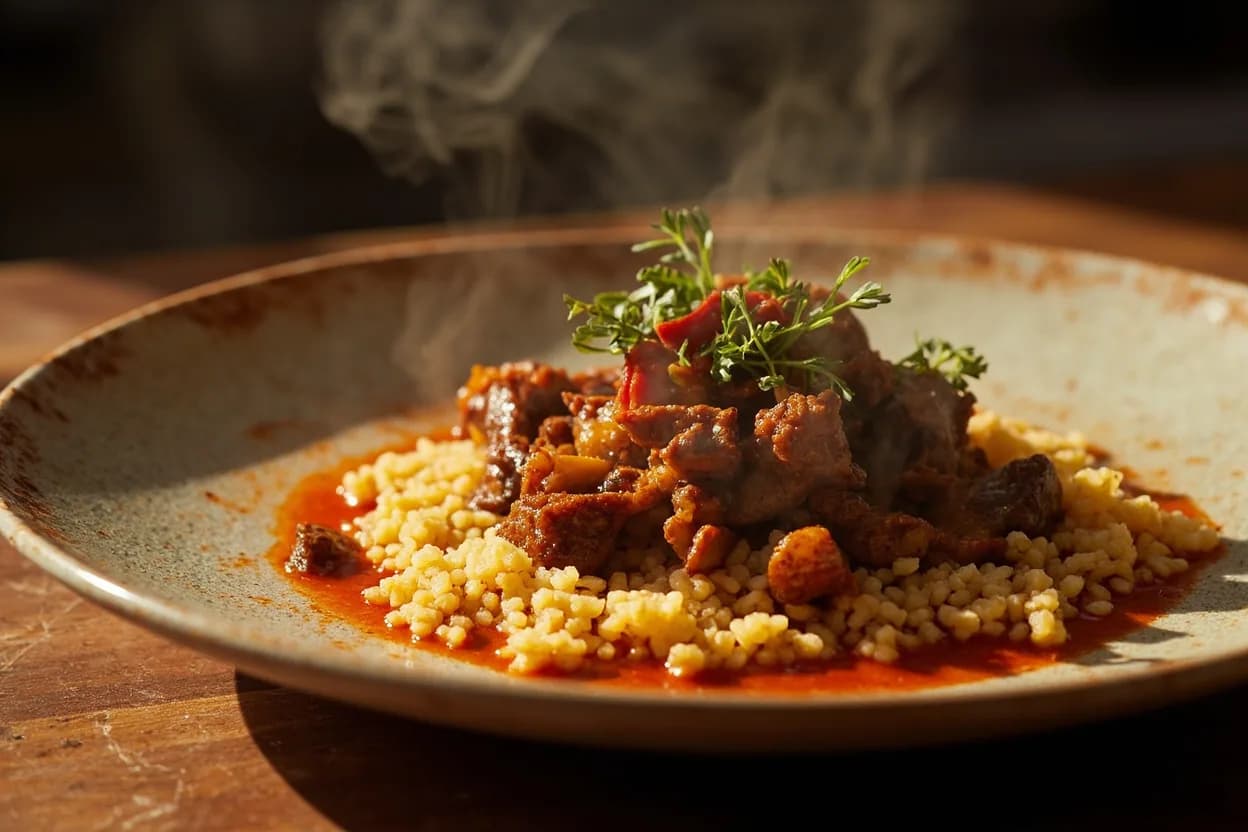
Steaming couscous in a couscoussier over simmering stew for fluffy, separate grains.
Traditional couscous steaming cooks the grains over a bubbling stew in the perforated top of a couscoussier, often in several rounds with fluffing and oiling between. The rising steam swells the semolina gently while flavored vapor seasons it. Repeated steaming and raking keeps the grains light and individual rather than gummy.
Couscous steaming is the defining technique of Maghrebi cookery: hydrating coarse semolina by passing it through the steam of a simmering liquid, traditionally held in a two-tier pot called a couscoussier. The steam is the visible part of the method, but it is not really doing the hard work. In the traditional North African approach, the semolina is first moistened by hand with salted water, rested, and only then steamed — and the steam is largely a vehicle for finishing what the cook has already begun. What separates a properly steamed couscous from a pot of gummy paste is the rubbing done between steamings, which breaks clumps and gives each grain its own starchy coat.
There are really two techniques hiding under this name. The traditional hand-rolled method uses two or three separate steamings of fine semolina, with cooling and vigorous palm-rubbing between each pass, and only the final steam sets the insert directly over the finished stew so the grains can absorb its aroma. The modern, single-steam method — used for the pre-steamed dried couscous sold in most supermarkets and for large Israeli or pearl couscous — leans entirely on the steam, since the grains have already been partially cooked and dried at the factory. Treating these two products the same way is the single most common cause of disappointing couscous.
Done correctly, the result is a mound of pale, translucent, springy grains that hold their shape under a ladle of broth without sinking into it. The grains feel dry to the touch yet tender to the bite, with no chalky core and no sticky surface. That texture — light enough to be a bed, sturdy enough to be eaten with the hands — is what the technique exists to produce.
- Difficulty
- Medium
Types & varieties
The classic Maghrebi method for fine semolina, with intermediate cooling and palm-rubbing to break clumps and aerate each grain.
Used for pre-steamed supermarket couscous and for large or pearl couscous; one 10–15 minute steam over water or broth does the whole job.
Couscous is mounded on a platter and the stew ladled over and around it, often with preserved lemon, olives, and a seven-vegetable broth.
Stew is served alongside or poured over at the table; Algerian preparations lean on smen, Tunisian versions often feature fish or merguez.
Usually a single steam over a tomato-and-potato stew, finished generously with fresh herbs and garlic.
After the final steam, the grains are tossed with melted butter and salt in a wooden bowl (gsaa) until glossy and entirely separate.
How to do it
- 1
Prepare the couscoussier
Fill the lower pot with water or the stew you intend to serve, leaving enough headroom so the liquid does not touch the perforated insert when it is seated. Bring to a boil, then reduce to a steady simmer.
- 2
First moistening
Spread the dry semolina in a wide, shallow bowl or on a sheet pan. Sprinkle or mist it evenly with lightly salted water, working it through with one hand as you go, until every grain is damp but none are sitting in liquid — roughly 1 cup water per 1.5–2 cups dry semolina. Let it rest 10–15 minutes so the water is absorbed.
- 3
First steam
Transfer the moistened semolina to the steamer insert, level it, and cover with a clean kitchen towel. Set the insert over the simmering pot, cover with the couscoussier lid (set slightly ajar if the towel puffs up), and steam 15–20 minutes.
- 4
First rub
Tip the steamed couscous back onto a large tray, spread it to a thin layer, and rub it briskly between clean palms or with the heel of your hand to break every clump. Mist again with a small amount of salted water and repeat the rubbing. Let cool to lukewarm.
- 5
Second steam
Return the grains to the insert and steam a second time for 15–20 minutes, again covered with the towel.
- 6
Second rub
Spread, cool slightly, and rub the grains apart a second time. At this point fine Maghrebi semolina is traditionally ready — pale, translucent at the edges, and springy. Larger grains continue to a third pass.
- 7
Optional third steam
Steam the couscous a third time for 15–20 minutes, then rub apart one more time on the tray.
- 8
Final steam over the stew
If your base is a finished stew, skim excess fat so the steam stays clean, set the insert of couscous on top, and steam 10–15 minutes so the grains pick up aroma without becoming greasy. Reserve a few ladles of broth in case the stew reduces too far during this pass.
- 9
Finish and fluff
Transfer the hot couscous to a large wooden bowl (gsaa). Pour over melted butter or a good olive oil, season with salt, and work it in by lifting and tossing the grains with a fork or your hands for 2–3 minutes until every grain is glossy and separate. Mound on a platter and serve with the stew.
Why the rubbing matters more than the steam
A cook who rushes the steam and skips the intermediate rub will get heavy, pasty couscous no matter how long the pot boils. The reason is mechanical: dry semolina is dusted with fine starch and full of clumps, and only friction between the palms breaks those clumps and coats each grain evenly with its own starch. The steam then sets that coat. Two steamings with two rubs, or three steamings with three rubs, are not redundant; each pass firms the grain a little more and lets the next steam penetrate a wider surface. If you remember nothing else, remember that the rubbing is the work, and the steaming is the finishing.
- Spread steamed couscous in a thin layer on a large tray before rubbing so clumps are easy to see.
- Use clean, dry palms; wet hands glue the grains back together.
- Aim for grains the size of a pinhead after each rub, with no visible white powder.
Setting up the couscoussier
The couscoussier is built so that the perforated insert sits well above the liquid line, allowing pure steam — not boiling splash — to reach the grains. A deep stockpot fitted with a perforated metal colander or a heatproof metal sieve set over the rim works as a substitute, provided the gap between water and grains is generous (at least 5–7 cm / 2–3 inches). The bottom pot should hold enough liquid to steam for the full duration without boiling dry, especially if the final steam runs over a reducing stew.
- Fill the lower pot only two-thirds full so a rolling boil cannot reach the insert.
- Bring the liquid to a full boil before seating the insert, then drop to a steady simmer; a hard boil drives starch droplets up through the holes.
- Lay a clean kitchen towel over the semolina and tuck it under the lid so condensate runs into the pot, not back into the grains.
Common uses
Tips & pitfalls
- Always add water to the semolina by sprinkling or misting, never by pouring; pooled liquid turns it to paste.
- Between steamings, spread the grains on a large tray and rub briskly between clean palms — this step, not the steaming, is what produces a fluffy texture.
- Cover the semolina with a clean kitchen towel during each steam and tuck it under the lid so condensation runs into the pot, not back into the grains.
- Keep the bottom liquid at a bare simmer; a hard boil drives starch droplets up through the holes and coats the couscous in glue.
- Do not lift the lid repeatedly to peek; every lift costs steam and lengthens the cook.
- Season every pass lightly — salt the sprinkling water and the finishing butter; unsalting leaves bland grains no matter how well they are steamed.
- If using smen, fold it in only after the final steam; the volatile aromatics fade with prolonged heat.
- Common mistake: skipping the intermediate rub, which yields heavy, pasty couscous regardless of steam time.
- Common mistake: steaming too long, which dries the grains and makes them tough and rubbery.
Good to know
- Origin
- Maghreb (Morocco, Algeria, Tunisia, Libya); the technique is inseparable from the couscoussier, recorded in North African cookery for centuries.
- Traditional equipment
- A couscoussier — a large stew pot topped with a perforated bowl or insert that holds the semolina well above the simmering liquid.
- Number of steamings
- Two to three for hand-rolled fine semolina, with cooling and grain-rubbing between passes; one steam suffices for pre-steamed or pearl couscous.
- Per-steam time
- Roughly 15–20 minutes per pass, depending on grain size and quantity; 10–15 minutes for the final aroma-steam over the stew.
- Moistening ratio
- About 1 cup salted water sprinkled over 1.5–2 cups dry semolina for the first pass; liquid is misted or sprinkled, never poured.
- Cooking liquid
- Plain water for an unadorned base; a well-flavored stew (lamb, chicken, seven-vegetable, fish, or harissa-tomato) for the final pass so the grains absorb aroma.
- Yield
- Dry semolina roughly doubles to triples in volume after full steaming.
- Doneness test
- Grains look translucent, feel springy, and bite cleanly with no chalky white core.
Also called
couscoussier steaming
Dishes that rely on it
Related

Boil
Cook in vigorously bubbling liquid at full rolling heat

Simmer
Hold liquid at a gentle shimmer for tender, unhurried cooking

Poach
Cook gently in barely-trembling liquid for silky, tender results

Steam
Cook in rising vapor to keep color, nutrients, and shape intact

Blanch
Plunge briefly in boiling water, then shock cold to lock color

Braise
Sear, then cook slow in a little liquid until fall-apart tender

Stew
Simmer bite-sized pieces fully submerged into a rich, unified pot

Sous-Vide
Seal and cook in precise warm water for edge-to-edge doneness