Water & Steam
Dashi Stock Brewing
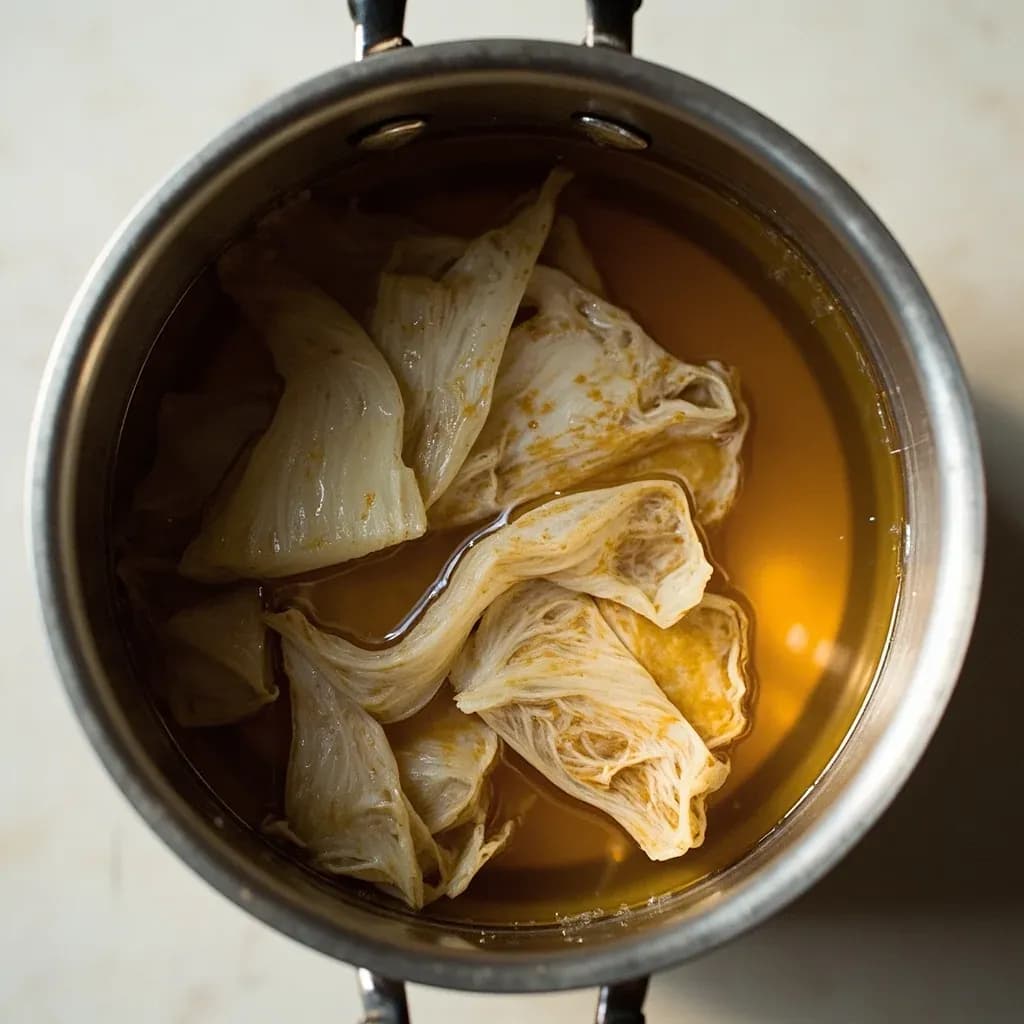
Steeping kombu and bonito flakes in hot water to extract a clear, umami-rich Japanese stock.
Dashi brewing infuses hot (not boiling) water with kombu kelp and katsuobushi bonito flakes to produce the foundational Japanese stock. The kombu is steeped first to release glutamates, then removed before the bonito is added briefly off the boil so the dashi stays clean and never bitter. The strained liquid carries pure umami and underpins miso soup, simmered dishes, and noodle broths.
Dashi is the foundational stock of the Japanese kitchen, the single technique that most defines the flavor of the cuisine. Unlike a Western stock, which simmers bones and aromatics for hours to extract collagen, fat, and deep savory depth, dashi is built on a very different principle: a short, gentle, sub-boiling extraction of umami compounds from dried kelp (kombu) and smoked, mold-cured bonito flakes (katsuobushi). The result is a clear, pale-gold liquid that tastes unmistakably of the sea — savory, lightly smoky, and lightly sweet — and that quietly seasons nearly every savory Japanese dish worth naming.
The magic is in the chemistry. Kombu supplies glutamic acid, the free amino acid that the tongue reads as umami; katsuobushi supplies inosinic acid, a related nucleotide. Alone, each is pleasant. Together, they multiply each other's perceived intensity several times over — the classic synergy of Japanese cooking. That synergy is why even a splash of dashi can lift a bowl of vegetables or a simple simmered dish from flat to complete, and why Japanese vegetarian temple cuisine (shojin ryori) gets such profound savory depth from kombu and dried shiitake alone.
The technique is forgiving in difficulty but strict in temperature. Kombu is soaked, then heated only to the edge of a simmer; katsuobushi is added off the heat and steeped passively. Let the water boil with either ingredient and you turn the liquid bitter, slimy, and grassy, and cloud what should be a clear stock. A cook who masters two things — keeping the temperature just below boiling, and resisting the urge to squeeze the strainer — has effectively mastered dashi.
- Difficulty
- Easy
Types & varieties
The first extraction from fresh kombu and katsuobushi; the clearest and most aromatic — used for clear soups, chawanmushi, and refined simmered dishes.
Re-extraction of the already-used kombu and katsuobushi in fresh water; deeper, less aromatic, used as a working broth for miso soup and simmered dishes.
The standard combined kombu + katsuobushi dashi; the default for most Japanese cooking.
Kelp-only dashi, vegan/vegetarian; milder, sweeter, more vegetal — used in shojin ryori and as a base when a lighter flavor is wanted.
Bonito-only extraction; sharper, smokier, more forward than awase.
Made from niboshi (dried small sardines/anchovies), briefly simmered; stronger, fishier, common in Kanto-style miso soup and home cooking.
Cold-soaked dried shiitake mushrooms; deep, woodsy, vegan — frequently combined with kombu dashi.
Made with iriko (dried anchovies or sardine relatives) — used in western Japan, especially for udon broth.
How to do it
- 1
Prep the kombu
Wipe each piece of kombu with a damp cloth (do not wash) to remove grit while preserving the white powdery surface — that is concentrated glutamic acid. Cut into 5–10 cm pieces if using thick kombu.
- 2
Cold-soak the kombu
Place the kombu in a pot of cold water (roughly 1 L per 10 g kombu) and let it soak 30 minutes at room temperature, or overnight in the refrigerator for a sweeter, clearer extraction.
- 3
Heat gently to extract kombu
Set the pot over medium-low heat. Watch the pot and remove the kombu with chopsticks or tongs the moment small bubbles begin to rise from the bottom of the pot and the water reaches roughly 60–80 °C. Do not let it boil.
- 4
Raise the heat for the katsuobushi step
Bring the kombu liquid just to the edge of a boil (about 90 °C), then turn off the heat completely. Discard or reserve the kombu (it can be used for niban dashi, simmered vegetables, or furikake).
- 5
Add katsuobushi off the heat
Scatter 20–30 g of katsuobushi evenly across the surface of the water. Let it steep undisturbed for 2–4 minutes — the flakes will first float, then slowly sink.
- 6
Strain without pressing
Line a fine-mesh sieve with cheesecloth (or a rinsed coffee filter for the very clearest result) set over a clean container. Pour the dashi through gently. Do not squeeze or press the katsuobushi; gravity straining only.
- 7
Use immediately or cool quickly
Use the ichiban dashi right away for maximum aroma, or chill it rapidly in an ice bath and refrigerate. Reserve the strained katsuobushi for niban dashi or furikake.
- 8
Optional: make niban dashi from the lees
Return the used kombu and katsuobushi to a pot with fresh water, bring to a gentle simmer, and cook 10–15 minutes. Strain to yield a darker, more robust dashi suited to miso soup, nimono, and rice cooking.
The synergy of glutamates and nucleotides
The reason dashi tastes so much greater than the sum of its parts is a measurable chemical phenomenon. Glutamic acid from kombu, on its own, registers on the umami receptors; inosinic acid from katsuobushi registers only weakly. Combine them, and the perceived intensity jumps several-fold — research puts the amplification at roughly seven to eight times. This is why a teaspoon of dashi can transform a dish, why Japanese cooks can stretch expensive ingredients by making niban dashi from the lees and still end up with a stock that tastes coherent, and why the proportions matter: a kombu-heavy dashi tastes sweet and vegetal, a katsuobushi-heavy dashi tastes smoky and assertive, and a balanced awase tastes unmistakably of the sea.
First and second dashi
Japanese kitchens habitually extract their kombu and katsuobushi twice. The first extraction, ichiban dashi, is the bright, perfumed, golden liquid that anchors a refined soup, a custard, or a delicate simmered dish — anywhere clarity and aroma matter. The second extraction, niban dashi, is made by simmering the same ingredients in fresh water for 10–15 minutes. It is darker, cloudier, and less aromatic, but fuller and more savory in a quieter way, which is exactly what you want in miso soup, nimono, and seasoned rice, where other ingredients (miso, soy, mirin) will carry the fragrance.
- Use ichiban dashi for: suimono, chawanmushi, refined nimono, clear soups, and any dish where the broth's flavor stands alone.
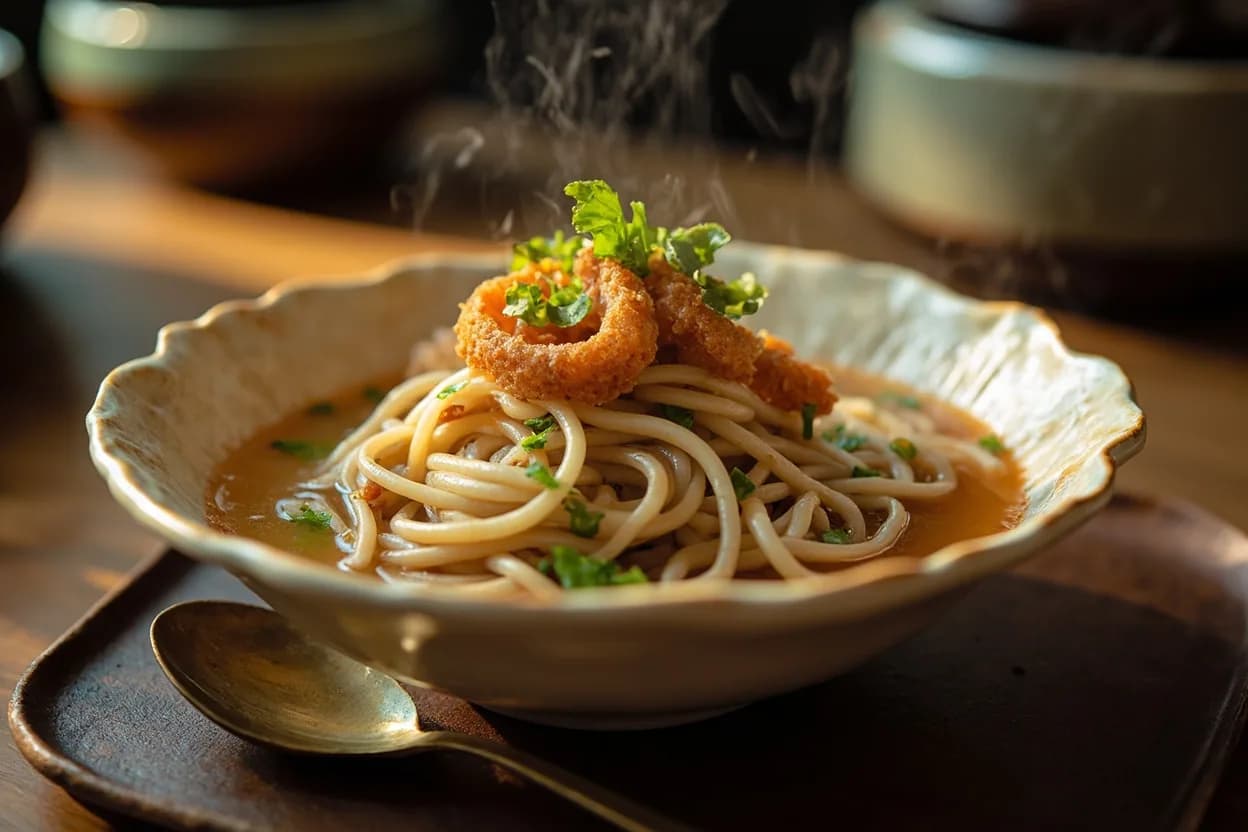
- Use niban dashi for: miso soup, takikomi gohan, udon broth, hearty nimono, and any dish where the dashi will be combined with other strong seasonings.
- Never reuse kombu or katsuobushi more than twice — by the third extraction you are simply diluting flavor and pulling bitter compounds.
Modern shortcuts
Instant dashi granules, paper tea-bag packets of ground kombu and katsuobushi, and concentrated dashi soy sauces (mentsuyu) are useful pantry items. They are not equivalent to a freshly brewed ichiban dashi — they tend to be saltier, flatter in aroma, and lack the volatile compounds that only come from a fresh steep — but they earn their place when time is short, when you need a small amount for a single dish, or when you are building a base that will be heavily masked by other strong flavors anyway. Treat them as emergency substitutes, not equivalents, and adjust salt separately when you swap them in for a brewed dashi.
Common uses
Tips & pitfalls
- Wipe the kombu with a barely damp cloth — do not rinse it under running water, which strips the surface glutamates that form as a white powder during drying.
- Use soft water when possible; hard water mutes umami and can cause cloudiness.
- Never let the water boil with kombu in it: it turns bitter, slimy, and develops a grassy off-flavor.
- Add katsuobushi off the heat and let the flakes steep passively; active simmering releases harsh, fishy notes.
- Strain gently — do not squeeze or press the katsuobushi. Pressing releases fines that cloud the dashi and adds bitterness.
- For the clearest ichiban dashi, line a sieve with cheesecloth or a coffee filter rather than a standard mesh strainer.
- Strain while the katsuobushi is still gently moving in the pot; if you wait until every flake has fully sunk, the dashi will be cloudier.
- If the dashi smells overtly fishy or the smoke dominates, you have over-extracted; reduce steep time or katsuobushi quantity next time.
- Katsuobushi loses aroma within hours of opening — buy small bags, seal tightly, and smell before using; flat or musty flakes make flat dashi.
Good to know
- Origin
- Japan, with deep roots in Buddhist temple cuisine (shojin ryori) where vegetarian kombu and shiitake-based dashi predated bonito versions
- Primary ingredients
- Dried kombu (edible kelp, traditionally from Hokkaido — Rishiri, Rishiri-rebun, or Dashi kombu varieties) and katsuobushi (shaved flakes of dried, smoked, and mold-cured bonito)
- Flavor profile
- Savory umami, clean oceanic sweetness, light smokiness from katsuobushi; very low in fat, transparent golden color when well-made
- Standard ratio (ichiban)
- Roughly 10 g kombu and 20–30 g katsuobushi per 1 L water; many kitchens work closer to 1 L water : 30 g kombu : 30 g katsuobushi for a robust first extraction
- Yield
- Approximately 900 ml of clear dashi per 1 L of water for ichiban dashi
- Kombu steeping temperature
- 60–80 °C (140–176 °F); kombu is removed the moment small bubbles begin to rise from the bottom of the pot — it must not reach a full boil
- Katsuobushi steeping
- Added after the heat is turned off; steeped 2–4 minutes until flakes sink, then strained without pressing
- Total active time
- 30–60 minutes including a cold-water pre-soak; an overnight cold soak for kombu is common in professional kitchens
- Storage
- Refrigerate up to 2–3 days in a sealed container; freeze in portioned containers or ice cube trays for up to 1 month
- Difficulty
- Beginner-friendly; the main skills are temperature control and not over-extracting
- Equipment
- Heavy-bottomed pot, fine-mesh sieve, cheesecloth or coffee filter for crystal-clear dashi, ladle
- Key umami compounds
- Glutamic acid from kombu and inosinic acid from katsuobushi — together they produce a synergistic umami effect far greater than either alone
Also called
hot-steep-dashi · Dashi Making
Dishes that rely on it
Related

Boil
Cook in vigorously bubbling liquid at full rolling heat

Simmer
Hold liquid at a gentle shimmer for tender, unhurried cooking

Poach
Cook gently in barely-trembling liquid for silky, tender results

Steam
Cook in rising vapor to keep color, nutrients, and shape intact

Blanch
Plunge briefly in boiling water, then shock cold to lock color

Braise
Sear, then cook slow in a little liquid until fall-apart tender

Stew
Simmer bite-sized pieces fully submerged into a rich, unified pot

Sous-Vide
Seal and cook in precise warm water for edge-to-edge doneness