Transform & Preserve
Cold Aging / Curing Dough
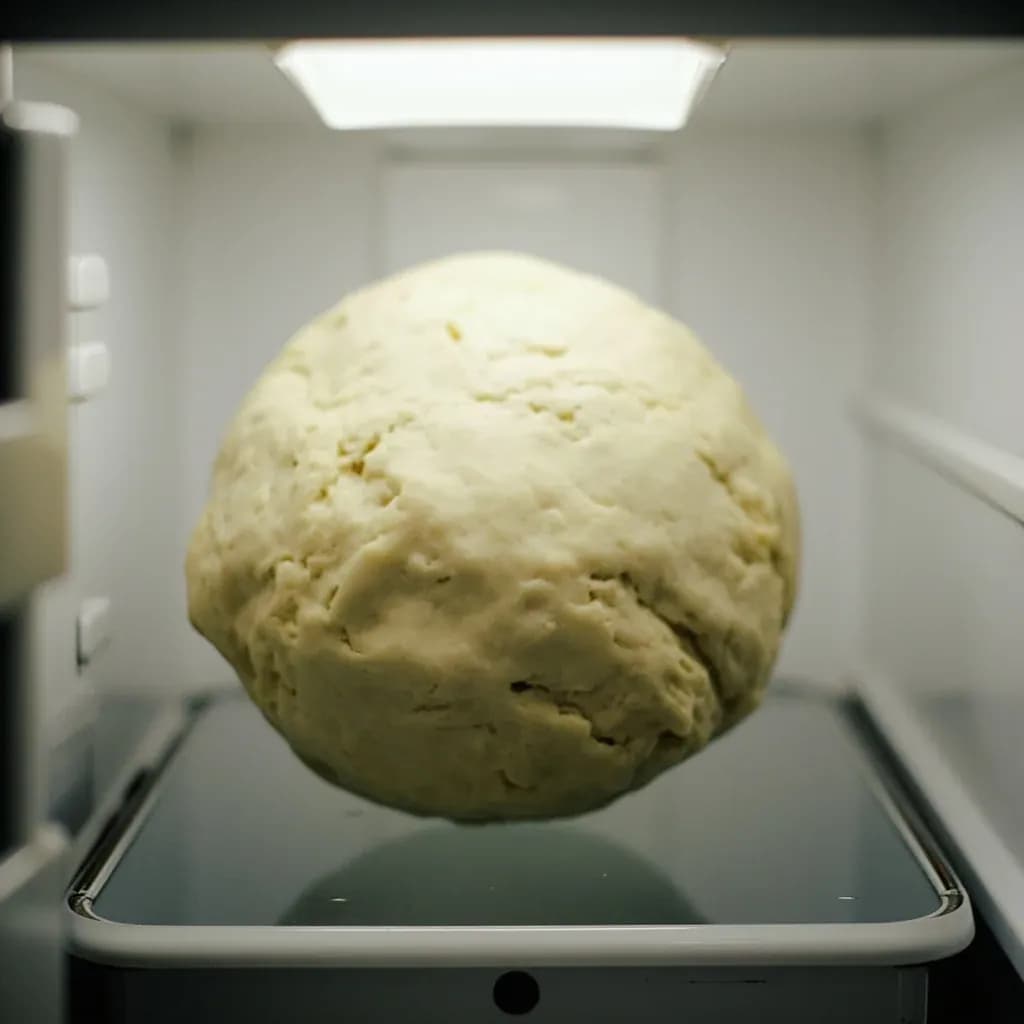
Resting dough cold for hours or days to develop flavor and extensibility before baking.
Cold aging holds dough in the refrigerator for an extended fermentation, slowing yeast activity while enzymes and bacteria develop deeper flavor and better extensibility. The long, cool rest is common for pizza and bread doughs, where a day or more of cold proofing yields a more flavorful, easier-to-shape result. It also lets bakers schedule mixing and baking on different days.
Cold aging, also called cold retarding or cold fermenting, is the practice of holding dough in a refrigerator for anywhere from a few hours to several days before baking. The technique exploits a simple but powerful asymmetry: at 35–40°F (1.7–4.4°C), commercial yeast slows to roughly one-eighth to one-thirtieth of its room-temperature pace, but native flour enzymes (proteases and amylases) and lactic-acid bacteria continue to work. The result is dough that keeps rising very slowly while its flavor, color potential, and gluten structure are quietly transformed.
The practical payoff is significant. Cold-aged dough tastes more complex, with mild tang, rounder sweetness, and deeper aromatic notes from organic acids, esters, and alcohols that accumulate over time. The gluten network relaxes in the cold and protease activity continues to break cross-links, making the dough easier to shape and less likely to snap back—especially in high-hydration and whole-grain recipes. Cold-aged loaves also tend to brown more deeply and develop cracklier, more blistered crusts because the slow enzymatic breakdown of starch releases free sugars that fuel Maillard browning in the oven.
Mastering the technique is less about a recipe than about reading variables: dough temperature, hydration, yeast or starter percentage, and time. Start with a standard overnight retard of 8–14 hours, then extend toward 48–72 hours once you understand how your flour and starter behave. The dough tells you when it is ready through visible cues—rise, bubbles, aroma—rather than the clock.
- Difficulty
- Easy
Types & varieties
8–14 hours at refrigeration temperature; the standard for same-day-mix, next-day-bake loaves and most pizza doughs.
24–72 hours; deepens flavor, raises acidity, and is favored for rustic sourdough and baguettes.
Up to 5 days for lean doughs; produces pronounced tang and very relaxed gluten, but requires lower yeast levels to prevent over-proofing.
Poolish, biga, or pâte fermentée mixed and held cold 12–24 hours before being incorporated into the final dough.
Shaped loaves held cold 12–24 hours to balance wild-yeast and lactic-acid activity right before baking.
Brioche, panettone, and other buttery or sweet doughs chilled after shaping to firm fat, slow yeast, and develop flavor overnight.
How to do it
- 1
Mix and develop the dough
Combine flour, water, salt, and yeast or starter and mix to a shaggy mass. Knead by hand or machine until the dough reaches medium development—smooth and elastic, passing a windowpane test for lean breads, or until the butter is fully incorporated for enriched doughs.
- 2
Optional autolyse
After an initial mix, rest the dough 20–60 minutes before adding salt and finishing. This pre-hydrates the flour, shortens kneading, and is especially useful for whole-grain doughs.
- 3
Bulk ferment (warm or cool)
Let the dough ferment at room temperature until roughly 50–75% larger, with a domed top and bubbles at the edges. In kitchens above 75°F (24°C), shorten this stage and move to the cold earlier.
- 4
Pre-shape and bench rest
Gently divide and pre-shape into loose rounds or logs. Rest 15–30 minutes, lightly covered, so the gluten relaxes before final shaping.
- 5
Final shape
Shape into loaves, rolls, baguettes, or pizza balls. Place seam-up in a banneton, on a sheet, or in an oiled container; enriched doughs go into pans.
- 6
Cover and refrigerate
Seal with plastic wrap, a lid, or a damp towel. Refrigerate at 35–40°F for 8–72 hours depending on the recipe. Dough can sit directly on a sheet pan or in stackable tubs.
- 7
Check fermentation at the cold stage
After 12 hours, peek: visible rise and bubbles mean it is on track. If it has nearly doubled, bake soon; if flat, give it more time; if strongly acidic with a collapsed dome, bake immediately.
- 8
Temper before baking
Remove from the fridge 20–60 minutes before baking—longer for large loaves, shorter for rolls. Cold dough will not spring well and may crack in unwanted places.
- 9
Score and bake
Score with a sharp blade or lame to direct expansion. Transfer to a preheated oven, stone, or Dutch oven. Bake at high initial heat with steam, then reduce for crust color.
- 10
Cool fully before slicing
Lean breads need at least 1 hour to set; enriched breads need 30–60 minutes. Cutting too early traps steam and produces a gummy crumb.
The science in plain language
Three forces operate on cold dough at different rates. Yeast prefers warmth and slows dramatically near 40°F, so commercial yeast contributes minimal gas during the cold stage. Enzymes—proteases that tenderize gluten and amylases that break starch into simple sugars—remain active, which is why flavor and crust color keep developing. Lactic-acid bacteria, whether in a sourdough starter or native to the flour, also keep producing organic acids that build tang and improve keeping quality. The dough rises only modestly in the fridge, but it changes in flavor, color potential, and handling.
Reading the dough, not the clock
Reliable bakers treat time as a guideline and look at the dough itself. After 12 hours in the fridge, a properly retarded dough shows visible lift—usually 50–75% larger—small bubbles at the edges, and a faintly tangy, yogurty aroma. A flat, dense dough needs more time. A dough that smells sharply acidic, has a collapsed dome, or shows large surface bubbles has gone too long and should be baked immediately to salvage structure.
Common uses
Tips & pitfalls
- Cover dough tightly with a lid, plastic wrap, or a damp towel to prevent a dry skin from forming.
- Reduce yeast or starter by roughly 25–50% compared to a same-day recipe—cold slows but does not stop fermentation, and an over-leavened dough will collapse.
- Let dough warm 20–60 minutes at room temperature before scoring and baking to recover oven spring; very cold dough will not rise as aggressively in the oven.
- Cold shaping is far easier with high-hydration doughs—cold dough is less sticky and holds its form better, which is why cold retarding is standard for ciabatta and Neapolitan pizza.
- Use the fridge for bulk fermentation when ambient kitchen temperatures exceed 75°F (24°C) to prevent over-proofing.
- Score just before baking on a cold, firm surface for a clean cut; warm dough drags and seals the blade.
- Cut cold-retarded loaves in half after about 30 minutes of cooling so trapped interior steam does not gum up the crumb.
- A faint sour or yogurty aroma is normal, but a sharp vinegary smell or collapsed dome means the dough has gone too long—bake it now or use it for croutons or flatbread.
Good to know
- Technique type
- Time-and-temperature manipulation during dough fermentation
- Refrigerator temperature
- 35–40°F (1.7–4.4°C)
- Typical duration
- 8 hours to 5 days, depending on dough and desired flavor
- Yeast activity at fridge temp
- Slowed to roughly 1/8 to 1/30 of room-temperature rate, not stopped
- What continues working
- Native and bacterial enzymes (proteases, amylases) and lactic-acid bacteria
- Effect on gluten
- Cold relaxes the network, increasing extensibility and reducing shrinkage
- Effect on crust
- Deeper browning, more blistered and crackly surface
- Also called
- Cold retard, cold ferment, cold proof, retard, refrigerator rise
Also called
Resting Dough · Dough Aging · Cold Proofing · Retarding
Dishes that rely on it




Related

Confit
Cook slowly submerged in fat for silky tenderness and keeping

Cure
Draw out moisture with salt and time to preserve and concentrate

Pickle
Steep in acidic brine for bright, tangy, crunchy preservation

Ferment
Let friendly microbes transform food into tangy, complex flavor

Marinate
Soak in a seasoned mix to flavor and tenderize before cooking

Brine
Soak in salt water so meat stays juicy and seasoned throughout

Dehydrate
Slowly dry out moisture to concentrate flavor and extend shelf life

Cold-Smoke
Perfume cured food with smoke without cooking it through