Transform & Preserve
Freezing Tofu (for Texture)
Freezing and thawing tofu to create a chewy, sponge-like texture that soaks up sauce.
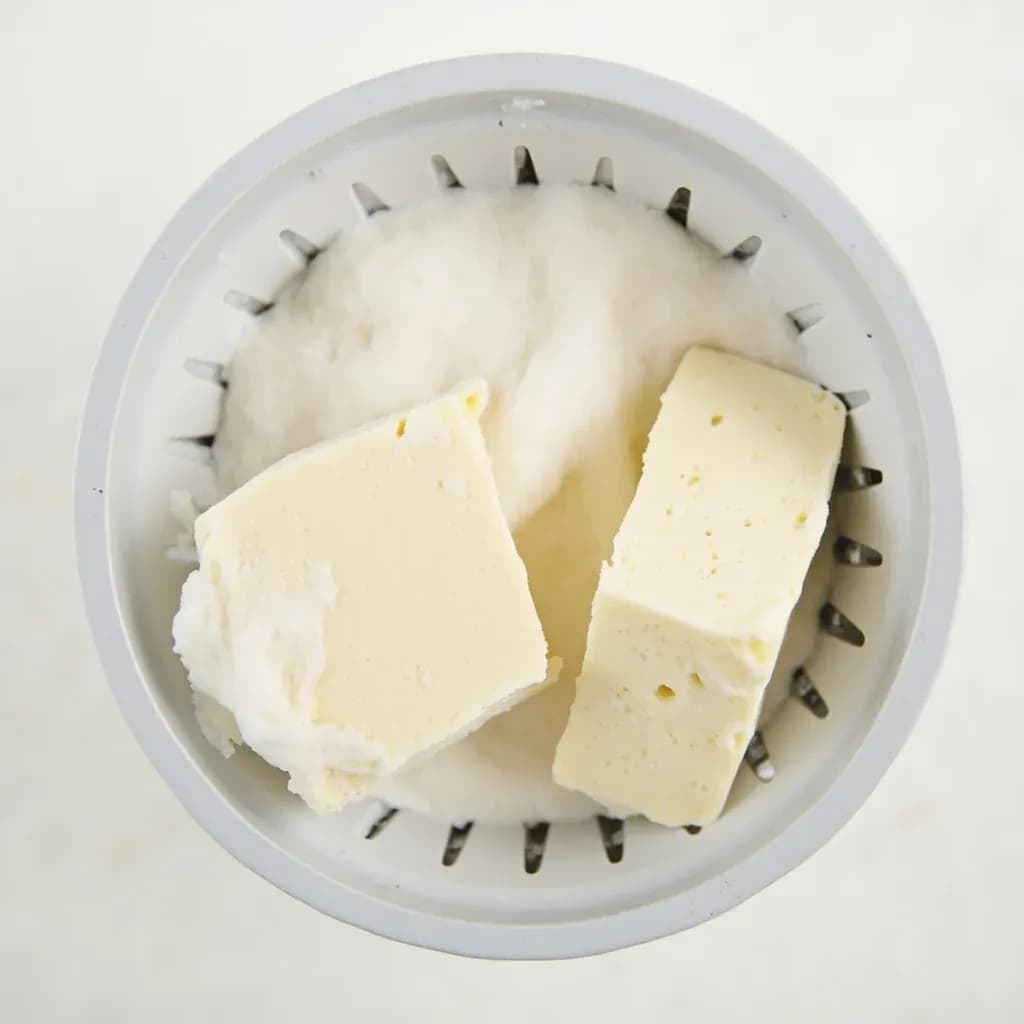
Freezing tofu forms ice crystals that rupture its structure, so when thawed and pressed it becomes spongy, chewy, and porous. This texture grips marinades and braising liquid far better than fresh tofu, making it a favorite in stews and stir-fries. The result is sometimes called frozen tofu or, when dried, the Japanese koya-dofu.
Freezing tofu is a simple, mostly passive technique that fundamentally changes the texture of water-packed block tofu, turning a soft, slippery curd into something chewy, meaty, and porous. The transformation happens because the water trapped inside the soy protein network expands into ice crystals, physically puncturing the curd. When thawed, the proteins reform around those void spaces, leaving behind a dense matrix of tiny channels that absorb liquid like a sponge. It is one of the most useful techniques in a vegetarian or vegan kitchen, where ordinary tofu's tendency to stay soft and pale is often the biggest barrier to a satisfying bite.
Beyond texture, the process shifts tofu's color to a pale yellow and gives it a faintly nuttier, more savory flavor. That said, freezing is not magic: it only works on firm, extra-firm, or high-protein tofu with enough structure to survive the ice expansion. Silken, soft, and delicate Japanese-style tofus collapse into a watery paste on thaw. Used correctly, the technique costs almost nothing beyond freezer space and a little patience, and it can be done on any scale from a single block to a months-ahead batch.
The practical payoff is absorption: frozen-thawed tofu soaks up 2–3 times more marinade, sauce, or broth than the same block unfrozen, which is why it is favored for stir-fries, braises, and grilled preparations in Chinese, Korean, and Japanese home cooking.
- Difficulty
- Easy
Types & varieties
Standard choice; balanced protein-water ratio gives a chewy, meaty result with excellent sauce absorption.
Holds shape best through the freeze-thaw; slightly drier and almost steak-like after cooking.
Lower water content yields the densest, chewiest texture; ideal for grilling and stir-fry.
Behaves like firm tofu with a slightly nuttier flavor after thaw.
Increasingly available in Asian grocers; skips the freezing step but typically costs more.
How to do it
- 1
Choose and prep the tofu
Use firm or extra-firm water-packed block tofu. Drain the package and press the block for 20–30 minutes wrapped in a clean kitchen towel with a weighted plate on top, or in a tofu press, to remove surface water. Pat dry.
- 2
Slice for convenience (optional)
Cut the block into slabs, planks, or 1.5–2 cm (about ¾-inch) cubes depending on the intended dish. Smaller pieces freeze and thaw faster and are easier to portion later, and they cut cleanly while still frozen.
- 3
Package for freezing
Place tofu in a single layer in a freezer-safe zip-top bag or airtight container. If stacking, separate pieces with parchment so they do not fuse into a single block. Press out excess air to prevent freezer burn; for longer storage, wrap the block tightly in plastic wrap before bagging.
- 4
Freeze
Freeze for at least 24 hours; 48–72 hours yields a more porous, sponge-like structure. The tofu keeps safely for up to 3 months, though quality is best in the first month.
- 5
Thaw
Thaw overnight in the refrigerator (8–12 hours) for the best texture, or submerge the sealed bag in a bowl of cold water for 2–4 hours. The microwave on low or defrost works in a pinch but can make the edges rubbery.
- 6
Press again
Once thawed, the tofu will be soft and spongy and sitting in a pool of released liquid. Press firmly for 15–20 minutes — the block will compress substantially, and that is expected. This step is what allows the tofu to sear rather than steam.
- 7
Optional second freeze for extra sponginess
For an even more porous, chewy result, re-wrap the pressed tofu and freeze for another 24 hours, then thaw and press again.
- 8
Cook or marinate
Pat the pressed tofu dry. It is now ready to marinate (20–60 minutes for sauces to penetrate) or cook directly by pan-searing, grilling, baking, frying, or adding to soups and stews.
The science of the texture change
What you are doing when you freeze tofu is deliberately damaging its structure in a controlled way. A block of fresh tofu is a gel of soy protein trapping a lot of water. When that water freezes, it expands and pushes the protein strands apart, leaving long needle-like voids. On thawing, the protein network does not fully recover its original geometry — it sets into a looser, more open honeycomb. That honeycomb is the sponge.
A second freeze-thaw cycle creates another round of ice expansion, opening the structure further. This is why double-frozen tofu feels almost airy and can absorb an astonishing amount of marinade. The mild color shift and slightly nuttier, more savory flavor come from oxidation and from small amounts of free amino acids becoming more pronounced once the structure loosens, in the same flavor direction prized in aged or yellow tofu in Chinese cuisine.
Marinating frozen-thawed tofu
Frozen-thawed tofu behaves less like tofu and more like a piece of raw chicken breast when it comes to marination: it benefits from time, salt, and a little fat. Press it thoroughly first; a surface slick of water will repel oil-based marinades. Salted or soy-based marinades penetrate fastest because the salt begins to dissolve the protein matrix at the surface. A 20–60 minute rest in a strong marinade is usually enough; an overnight rest turns the cubes almost silky within while keeping a chewy skin after a hot sear.
Common uses
Tips & pitfalls
- Press before freezing: 20–30 minutes gives more even ice-crystal formation and reduces iciness in the final texture.
- Always press thawed tofu thoroughly — it releases a surprising amount of water that would otherwise steam the tofu in the pan rather than sear it.
- Pat the surface completely dry before searing or grilling; surface moisture is the single biggest reason frozen tofu sticks and steams instead of browning.
- Do not use silken or soft tofu: the delicate curds collapse into a watery paste on thaw and will not hold shape.
- Marinate after thawing and pressing, not before freezing — marinade will not penetrate frozen tofu well.
- For maximum sponginess, freeze, thaw fully, press out liquid, and then freeze a second time.
- A shift to pale yellow is normal after freezing and thawing and is not a sign of spoilage; the flavor is mildly nuttier than fresh tofu.
- For long freezer storage, wrap tightly in plastic wrap before bagging, and freeze pieces in a single layer or with parchment between them so they do not fuse into a single block.
Good to know
- Best tofu type
- Firm and extra-firm water-packed block tofu; silken and soft tofu turn mushy.
- Minimum freeze time
- 24 hours for a noticeable change; 48–72 hours for pronounced sponginess.
- Active vs. elapsed time
- 10–15 minutes of hands-on work; 24–48 hours total including freezing and thawing.
- Thaw methods
- Refrigerator overnight (8–12 hr), cold-water bath (2–4 hr), or low/defrost microwave.
- Texture result
- Chewy, meaty, sponge-like with a dense network of small holes that absorb liquid.
- Color change
- Pale yellow or off-white as the protein structure opens up — normal, not spoilage.
- Freezer storage
- Up to 3 months in airtight packaging without significant quality loss.
- Cycles for effect
- One freeze-thaw is good; two cycles yield a noticeably more porous, spongier result.
Related

Confit
Cook slowly submerged in fat for silky tenderness and keeping

Cure
Draw out moisture with salt and time to preserve and concentrate

Pickle
Steep in acidic brine for bright, tangy, crunchy preservation

Ferment
Let friendly microbes transform food into tangy, complex flavor

Marinate
Soak in a seasoned mix to flavor and tenderize before cooking

Brine
Soak in salt water so meat stays juicy and seasoned throughout

Dehydrate
Slowly dry out moisture to concentrate flavor and extend shelf life

Cold-Smoke
Perfume cured food with smoke without cooking it through