Transform & Preserve
Hollandaise / Béarnaise Method
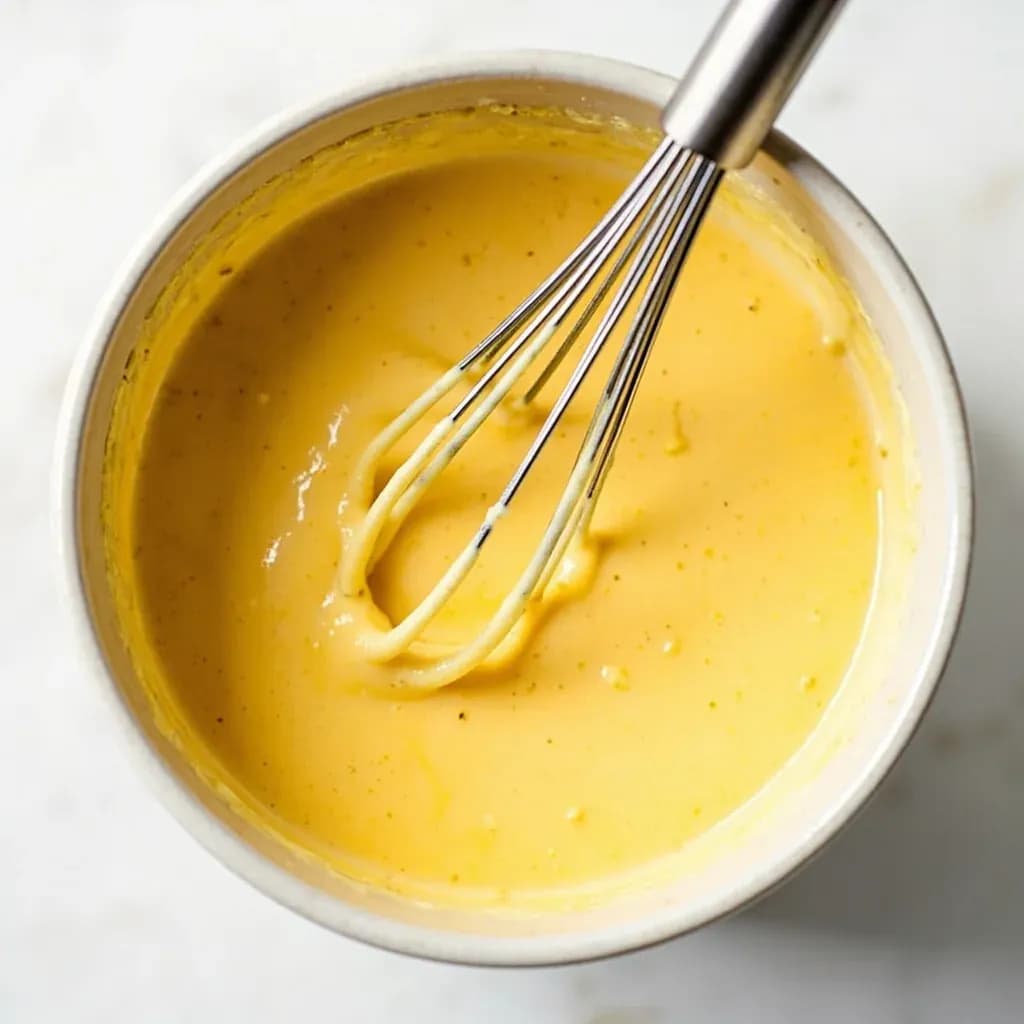
Whisking egg yolks with warm butter into a stable warm emulsion sauce, optionally flavored for béarnaise.
The hollandaise method whisks egg yolks over gentle heat while slowly streaming in warm melted butter, forming a rich, stable emulsion bound by the yolks' lecithin, finished with lemon. Béarnaise is the same emulsion built on a tarragon-shallot-vinegar reduction. Temperature control is critical: too hot scrambles the yolks, too cool and the sauce breaks.
Hollandaise and béarnaise are twin warm emulsions built from the same skeleton: egg yolks whipped over gentle heat while clarified butter is streamed in to create a thick, glossy sauce that holds its shape on a spoon. Hollandaise finishes with lemon juice, salt, and white pepper; béarnaise swaps that simple acid for a strained reduction of white wine, vinegar, shallots, and tarragon, then folds fresh herbs back in at the end. Both are unforgiving of inattention and rewarding of rhythm, and mastering one is mastering the other.
The sauce lives in a narrow thermal window. Egg-yolk proteins begin to coagulate around 65–70 °C, so the bowl must stay warm enough to thicken the yolks and keep the butter liquid, but never hot enough to scramble them. Clarified butter is non-negotiable for reliability: milk solids, especially casein, destabilize the emulsion, which is the single most common reason home cooks end up with broken, greasy sauce. When the balance holds, the result is one of the great luxuries of the kitchen — rich, fluid, and scented with butter — and, in Escoffier's classification, the parent of an entire family of small sauces.
- Difficulty
- Hard
Types & varieties
Base version: yolks, clarified butter, lemon juice, salt, white pepper, pinch of cayenne
Hollandaise built on a reduction of white wine, white wine vinegar, shallots, tarragon, and chervil; finished with chopped fresh tarragon and chervil
Hollandaise lightened with softly whipped heavy cream folded in just before serving
Hollandaise finished with blood orange juice and grated blood orange zest
Béarnaise with tomato purée or concassé folded in; herbs omitted
Hollandaise strained and finished with meat glaze (glace de viande) and a little sherry or Madeira
Béarnaise-style sauce using fresh mint in place of tarragon, associated with Pau
Hollandaise variation with white wine, tarragon, and chopped herbs
Hollandaise finished with horseradish and whipped cream
Hollandaise blended with crème fraîche, used for gratinéed dishes
How to do it
- 1
Clarify the butter and set up the bain-marie
Melt 225 g (1 cup) unsalted butter gently and skim off the white milk solids, or pour off the clear golden fat and discard the milky bottom. Keep the clarified butter warm at 60–65 °C. Fill a saucepan with an inch or two of water and bring it to a bare simmer; set a medium heatproof bowl over it so the bottom does not touch the water.
- 2
Prepare the flavor base
For Béarnaise: combine 60 ml white wine vinegar, 60 ml dry white wine, 2 finely chopped shallots, 1 tsp cracked black pepper, and 2 sprigs each of tarragon and chervil in a small pan. Reduce over medium heat to about 2 tablespoons, then strain and reserve both the liquid and the herbs. For Hollandaise, simply juice a lemon and have it ready to finish.
- 3
Whisk the yolks to the ribbon stage
Whisk 3 large egg yolks (room temperature) with 1 tablespoon of the strained béarnaise reduction, or with a splash of water for hollandaise, over the barely simmering water. Whisk constantly until the mixture is thick, pale, and falls in a ribbon when the whisk is lifted, 3–5 minutes. The bowl should feel barely warm, never hot.
- 4
Build the emulsion
Begin adding the warm clarified butter drop by drop, whisking constantly. After about 1–2 tablespoons, the sauce will 'catch' and thicken. From that point you can pour in a thin, steady stream while whisking. If the sauce ever looks greasy or you see butter pooling on the surface, stop adding fat and whisk vigorously off heat to bring it back before continuing.
- 5
Finish with acid and seasoning
Off the heat, whisk in 1–2 tablespoons lemon juice (a few drops more for hollandaise), a pinch of fine salt, a grind of white pepper, and a pinch of cayenne. For béarnaise, fold in 1 tablespoon each of finely chopped fresh tarragon and chervil. Taste and adjust acid and salt.
- 6
Strain and hold
Strain the sauce through a fine-mesh sieve into a warm serving bowl or pitcher; this catches any curdled bits and gives a satin texture. Hold in a bain-marie at 55–60 °C, whisking occasionally, and use within about 1 hour. If the sauce thickens, loosen it with a teaspoon of warm water.
How the emulsion holds together
A warm butter-and-yolk sauce is a true emulsion: butterfat is the dispersed phase, the watery yolk is the continuous phase, and lecithin plus yolk proteins wrap each fat droplet so it cannot merge with its neighbors. Whisking does the mechanical work, but the chemistry is what makes or breaks the sauce. Clarified butter removes milk solids (especially casein), which would otherwise disrupt the protein film; warm, not hot, butter keeps the fat liquid so it can be incorporated in tiny droplets; and yolks whipped to the ribbon stage give the emulsion enough body to hold its structure. Drift above 65–70 °C and the yolk proteins coagulate into a solid — scrambled eggs, not sauce. Drift below about 50 °C and the butter seizes into clumps the yolks cannot absorb.
- Clarified butter is clarified for a reason: milk solids are the most common cause of a broken sauce.
- Whisk the yolks over barely simmering water until they fall in a ribbon before any butter goes in — this gives a stable base to emulsify into.
- Add the first tablespoon of butter drop by drop. Once the sauce 'catches' and thickens, you can pour a thin, steady stream.
- If the bowl ever feels hot to the touch, lift it off the water; if you can hear the water bubbling, you are too close to scrambling.
Hollandaise vs. Béarnaise: what actually changes
The technique is identical — yolks, butter, and acid emulsified over gentle heat, finished with seasoning. The structural difference is the source of acid and aromatics. Hollandaise leans on lemon juice added at the end, which brightens the butter and cuts its richness. Béarnaise builds the emulsion on a strained reduction of white wine, white wine vinegar, shallots, cracked pepper, tarragon, and chervil, then folds chopped fresh tarragon and chervil into the finished sauce. The reduction carries more savory, herbal depth than a squeeze of lemon ever can, which is why béarnaise pairs naturally with red meat while hollandaise gravitates toward eggs, fish, and vegetables.
Troubleshooting a broken sauce
A broken sauce looks greasy, thin, and separated, with pools of butter sitting on top. It almost always traces to one of four causes: butter added too fast, butter too hot, the bowl too hot, or insufficient whisking. The fix is not to throw it out. Start a fresh yolk in a clean warm bowl, whisk it over the bain-marie for a moment, and add the broken sauce to it drop by drop, whisking constantly. The new lecithin gives the fat a fresh surface to bind to, and within a minute or two you should have a smooth, thick sauce again. Prevention is simpler: clarify the butter, warm it to 60–65 °C, and never stop whisking while the fat goes in.
Common uses
Tips & pitfalls
- Clarify the butter, or at minimum skim the white milk solids; casein is the most common reason emulsions break.
- Keep the bowl over barely simmering water — if you can hear it bubbling, lift the bowl off the heat.
- Add the butter in a thin, steady stream once the sauce has caught; rushing is the surest way to break it.
- If the sauce gets too thick, whisk in a teaspoon of warm water to loosen it; never add cold water, which can seize the butter.
- If the sauce breaks, start a fresh yolk in a clean warm bowl and whisk the broken sauce into it drop by drop to re-emulsify.
- Add the lemon juice for Hollandaise at the very end, off heat; acid added too early dulls flavor and can thin the sauce. For Béarnaise, the wine reduction goes into the yolks from the start; only the finishing herbs are folded in off heat.
- Use room-temperature yolks — cold yolks whip slowly, take longer over heat, and are more likely to scramble.
- Strain the finished sauce through a fine-mesh sieve for a satin texture and to catch any curdled bits.
- Hold in a warm bain-marie at 55–60 °C, whisking occasionally; never reheat over direct high heat.
- A pinch of cayenne and a few drops of lemon added at the end brighten the sauce without making it sharp.
Good to know
- Family
- Warm emulsion sauce; Hollandaise is one of Escoffier's five mother sauces (Le Guide Culinaire, 1903); Béarnaise is a daughter sauce derived from Hollandaise
- Core components
- Egg yolks, clarified butter, and an acid — lemon juice for Hollandaise, or a reduced white-wine-and-vinegar shallot base for Béarnaise
- Yolk coagulation range
- Egg yolks begin to set at 65–70 °C (149–158 °F); the sauce must stay below this or it scrambles
- Butter temperature
- Clarified butter should be warm, around 60–65 °C (140–150 °F); too hot breaks the emulsion, too cold seizes it
- Standard ratio
- 3 large yolks to roughly 225 g (1 cup / 8 oz) clarified butter, yielding about 1 cup of finished sauce
- Active time
- 10–15 minutes of whisking from start to finish
- Holding and storage
- Best within 1 hour; can hold 30–60 minutes off heat in a bain-marie at 55–60 °C; refrigerate up to 2 days and reheat gently over barely simmering water, whisking
- Attributed invention
- Béarnaise is traditionally credited to chef Collinet at Le Pavillon Henri IV, Saint-Germain-en-Laye, around 1836 (widely repeated but not firmly documented)
Also called
hollandaise · béarnaise · warm emulsion sauce
Dishes that rely on it

Related

Confit
Cook slowly submerged in fat for silky tenderness and keeping

Cure
Draw out moisture with salt and time to preserve and concentrate

Pickle
Steep in acidic brine for bright, tangy, crunchy preservation

Ferment
Let friendly microbes transform food into tangy, complex flavor

Marinate
Soak in a seasoned mix to flavor and tenderize before cooking

Brine
Soak in salt water so meat stays juicy and seasoned throughout

Dehydrate
Slowly dry out moisture to concentrate flavor and extend shelf life

Cold-Smoke
Perfume cured food with smoke without cooking it through