Water & Steam
Master-Stock Braising (Lu)
Simmering meats in a reusable spiced soy master stock that deepens over time.
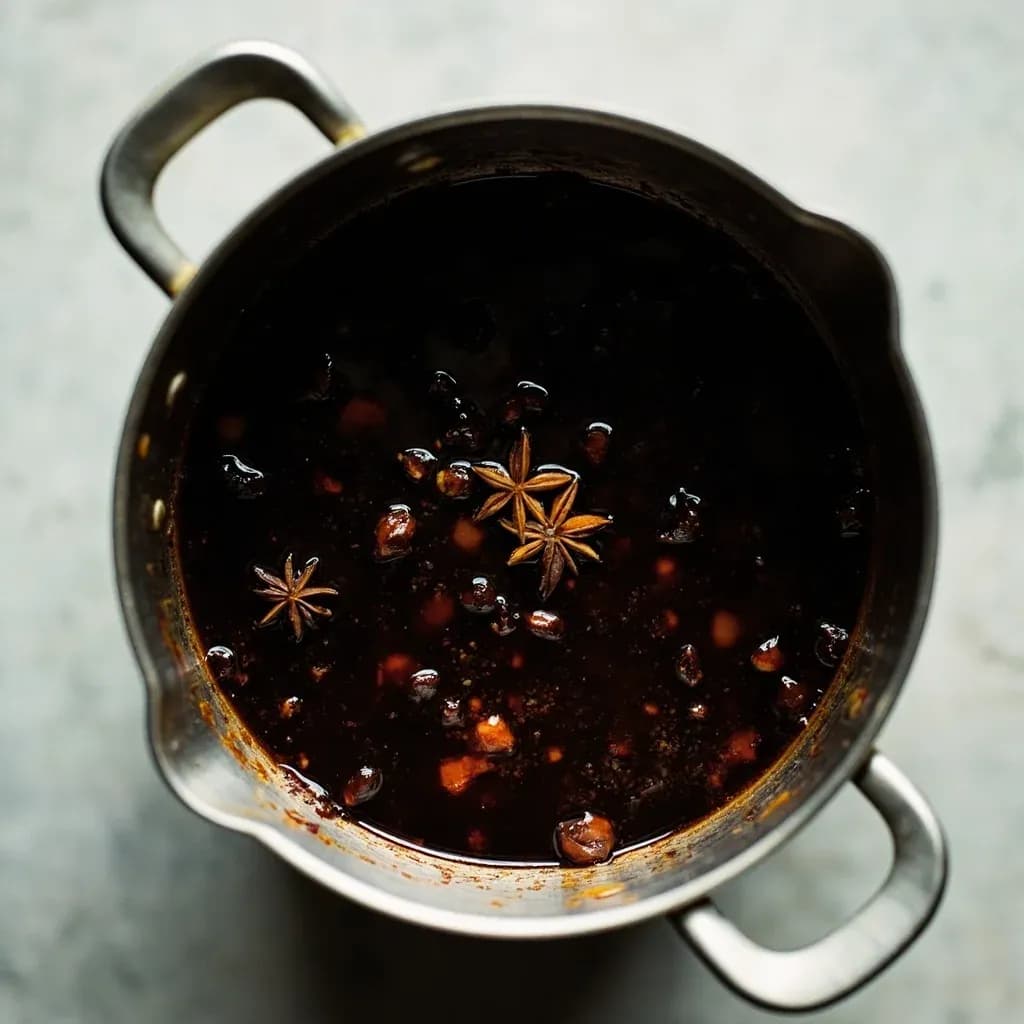
Master-stock braising, known as lu in Chinese cooking, gently simmers meat, tofu, or eggs in a richly spiced soy-and-sugar stock seasoned with star anise, cinnamon, and other aromatics. The same stock is strained, refrigerated or frozen, and reused for years, gaining depth with each batch. It produces deeply savory, lacquered braised dishes and is sometimes called flavor-potting.
Master-stock braising, known in Chinese as lǔ (滷), is a wet-cooking method organized around a single, continuously reused broth seasoned with soy, Shaoxing wine, rock sugar, and a bundle of whole spices. Unlike a one-shot braise where the liquid is poured off at the end, the master stock is the centerpiece of the technique: each batch of protein cooked in it deposits flavor and receives flavor in return, so the stock grows deeper, darker, and more complex with every use. This is why the finished foods are called lǔ wèi — "braised things" — and why the stock itself is sometimes called lǎo tāng, or "old soup."
The method behaves more like a long-running cure than a single recipe. A fresh stock reads as competent but generic — straightforward soy and five-spice notes on day one — while a stock that has simmered dozens of proteins becomes something harder to fake: rounded, savory, faintly resinous, and stained nearly black. Proteins cooked in it emerge fully seasoned through to the center, with a glossy mahogany exterior and a tender, sliceable texture that holds whether served hot or chilled. The cost is patience and discipline; the reward is a working asset that improves your cooking for years.
Because the stock is reused indefinitely, lǔ is best understood as a maintenance practice as much as a recipe. Cooks build a base, blanch proteins separately to protect it, simmer gently, rest the cooked food in the cooling liquid, then strain, skim, and "feed" the stock before storing it for next time. Regional and family recipes diverge widely on sweetness, salinity, and spice load, but the workflow is remarkably constant from Shandong to Taipei.
- Difficulty
- Medium
Types & varieties
Salt- and soy-forward, beef- and pork-leaning; the style that gives the technique its name and its saltiest profile.
Lighter color and salinity, more aromatic-driven; the standard for offal, goose, and soy-stained eggs.
Distinctly sweeter from a higher rock-sugar ratio, often with five-spice powder; sold as street snacks and bento toppings.
Adds dried chilies, a heavier hand of Sichuan peppercorns, and sometimes doubanjiang for numbing heat.
Sweet-leaning and very dark from extra dark soy and sugar; classic for pork belly and hard-boiled eggs.
Includes black or oolong tea for tannin and amber color; popular for eggs, tofu, and dried tofu skin.
How to do it
- 1
Build the initial master stock
In a heavy pot, combine water with light soy sauce, a smaller amount of dark soy for color, Shaoxing wine, and rock sugar. Tie star anise, cassia bark, Sichuan peppercorns, cloves, fennel, white pepper, bay leaf, and dried tangerine peel in cheesecloth or a spice bag. Add smashed ginger, halved scallions, and crushed garlic. Bring to a boil, then lower to a simmer for 30–60 minutes to bloom the aromatics before any protein goes in.
- 2
Blanch the protein separately
Bring a separate pot of plain water to a boil. Add the meat (beef, pork, chicken, duck) and blanch 3–8 minutes, until grey scum rises and the surface looks cooked. Drain and rinse under cool water. This step protects the master stock from cloudiness, blood, and off-flavors, and should not be skipped — even on day one.
- 3
Add protein to the master stock
Lower the blanched protein into the barely simmering stock. The liquid should cover the meat by 2–3 cm; top up with water if needed. Maintain a gentle tremor on the surface — small bubbles occasionally breaking, never a rolling boil.
- 4
Simmer to doneness
Cook uncovered or with the lid tilted: eggs and tofu 30–40 minutes, chicken and duck 1.5–3 hours, pork belly and shoulder 2–3 hours, beef brisket and shank 2.5–4 hours. Skim foam in the first 20 minutes; do not stir once the simmer is established.
- 5
Rest in the cooling stock
Turn off the heat and leave the protein submerged in the cooling stock for 20–40 minutes (longer for large cuts). It finishes cooking gently and absorbs seasoning and color from the surrounding liquid.
- 6
Remove and portion
Lift the protein out and drain briefly. Serve warm, or chill for cold slicing — lǔ ròu is often served at room temperature. For eggs and tofu, peel and return them to the warm stock for 1–2 hours for a deeper stain.
- 7
Strain and store the stock
Strain the master stock through a fine-mesh sieve (line with cheesecloth for a clearer result). Cool to room temperature, then refrigerate. Skim the congealed fat the next day if you want a cleaner flavor; keep a thin layer if you want richer mouthfeel and a protective lid during storage.
- 8
Maintain and replenish
Before the next use, reboil the stock for 5–10 minutes. Top up with water, light soy, and a small amount of rock sugar to taste. Add fresh scallion, ginger, and a pinch of whole spices if the aroma has flattened. Reuse indefinitely — the stock is the point.
The living stock
The defining feature of lǔ is that the braising liquid is not a byproduct but an asset. A stock that has cooked ten batches of pork belly, four batches of eggs, and a duck or two will taste nothing like a freshly built one. This is partly concentration — water leaves as steam, soy and sugar darken and reduce — and partly extraction: collagen, amino acids, and rendered fat from each batch accumulate and round out the profile. Treat the stock like sourdough starter or a balsamic vinegar solera: keep it alive, taste it before each use, and feed it accordingly.
- Top up with water, light soy, and a knob of rock sugar after every use.
- Refresh tired aromatics (scallion, ginger, star anise, cassia) every two or three cooks.
- Bring to a full boil for 5–10 minutes before each new use to kill stray bacteria.
- Strain through a fine-mesh sieve; line with cheesecloth if you want a clear stock.
Regional styles at a glance
The same workflow produces strikingly different results depending on the seasoning balance. Knowing the regional archetypes makes it easier to build a stock that matches the protein you have in mind.
- Shandong: saltiest and soy-heaviest; built for beef shank, tendon, and pork offcuts.
- Cantonese: lighter and more aromatic; the benchmark for silky soy eggs and goose.
- Taiwanese: sweet-leaning with five-spice powder; the snacking-and-bento style.
- Sichuan mala: heat and numbing in addition to the savory-sweet base.
- Shanghai: dark, sweet, and glossy; the classic match for pork belly and eggs.
- Tea-leaf: tannic backbone that pairs especially well with eggs, tofu, and mushrooms.
What the stock does to protein
Master stock braising is doing two things at once: cooking the protein gently in seasoned liquid, and dyeing it. Soy sauce provides both salt and color; dark soy contributes deep mahogany without much additional salt; rock sugar slows protein toughening and gives the glaze its shine. The aromatic bundle — dominated by star anise and cassia in most variants — penetrates the surface and flavors the outer centimeter or two, while the salt and glutamates of the soy carry further inward. Long, gentle cooking is what lets a 4 cm cube of pork belly read as seasoned all the way through rather than just on the outside.
Common uses
Tips & pitfalls
- Always blanch proteins in plain water before they enter the master stock; raw scum permanently clouds and dulls the broth, and no amount of skimming will save it.
- Hold the stock at a bare tremor, not a boil — vigorous bubbling emulsifies fat, muddies flavor, and toughens meat fibers.
- Rest cooked proteins in the cooling stock for 20–40 minutes off the heat; they finish cooking and pull in color and seasoning that immediate draining would throw away.
- After every use, strain, reboil briefly, cool, and refrigerate with a loose lid — never airtight while still warm, or condensation will drip back in and spoil the batch.
- Replenish the stock after each cook: top up with water, a splash of light soy, a knob of rock sugar, and refreshed aromatics (scallion, ginger, star anise) so it does not slowly turn thin and flat.
- Never add raw vegetables, raw bloody bones, or strongly flavored novel ingredients (curry, fish sauce, dairy) directly to an established stock — they unbalance or contaminate a long-running flavor project.
- Label the container with the date and the last feeding so the stock's age and diet are tracked, especially in a shared kitchen.
Good to know
- Technique family
- Chinese wet braising / spiced soy simmering
- Chinese name
- Lǔ (滷); finished foods are lǔ wèi (滷味)
- Liquid base
- Water, light soy, dark soy, Shaoxing wine, rock sugar
- Core spices
- Star anise, cassia bark, Sichuan peppercorns, cloves, fennel, white pepper, bay leaf, dried tangerine peel (chén pí)
- Heat level
- Bare simmer, 85–95 °C / 185–205 °F; never a rolling boil
- Typical times
- 30–40 min for eggs and tofu; 1.5–3 h for chicken and duck; 2–3 h for pork belly and shoulder; 2.5–4 h for beef brisket and shank
- Stock lifespan
- Reused indefinitely; restaurant stocks commonly 20–50 years old; topped up with water, soy, sugar, and aromatics after each use
- Equipment
- Heavy pot (clay, cast iron, or stainless); fine-mesh strainer; spice bag or cheesecloth; dated storage container
Also called
lu-master-stock-braising · lu-master-braising · flavor-potting · red braising
Dishes that rely on it
Related

Boil
Cook in vigorously bubbling liquid at full rolling heat

Simmer
Hold liquid at a gentle shimmer for tender, unhurried cooking

Poach
Cook gently in barely-trembling liquid for silky, tender results

Steam
Cook in rising vapor to keep color, nutrients, and shape intact

Blanch
Plunge briefly in boiling water, then shock cold to lock color

Braise
Sear, then cook slow in a little liquid until fall-apart tender

Stew
Simmer bite-sized pieces fully submerged into a rich, unified pot

Sous-Vide
Seal and cook in precise warm water for edge-to-edge doneness