Water & Steam
Skimming Broth
Lifting foam, scum, and rendered fat off the surface of a simmering stock or broth.
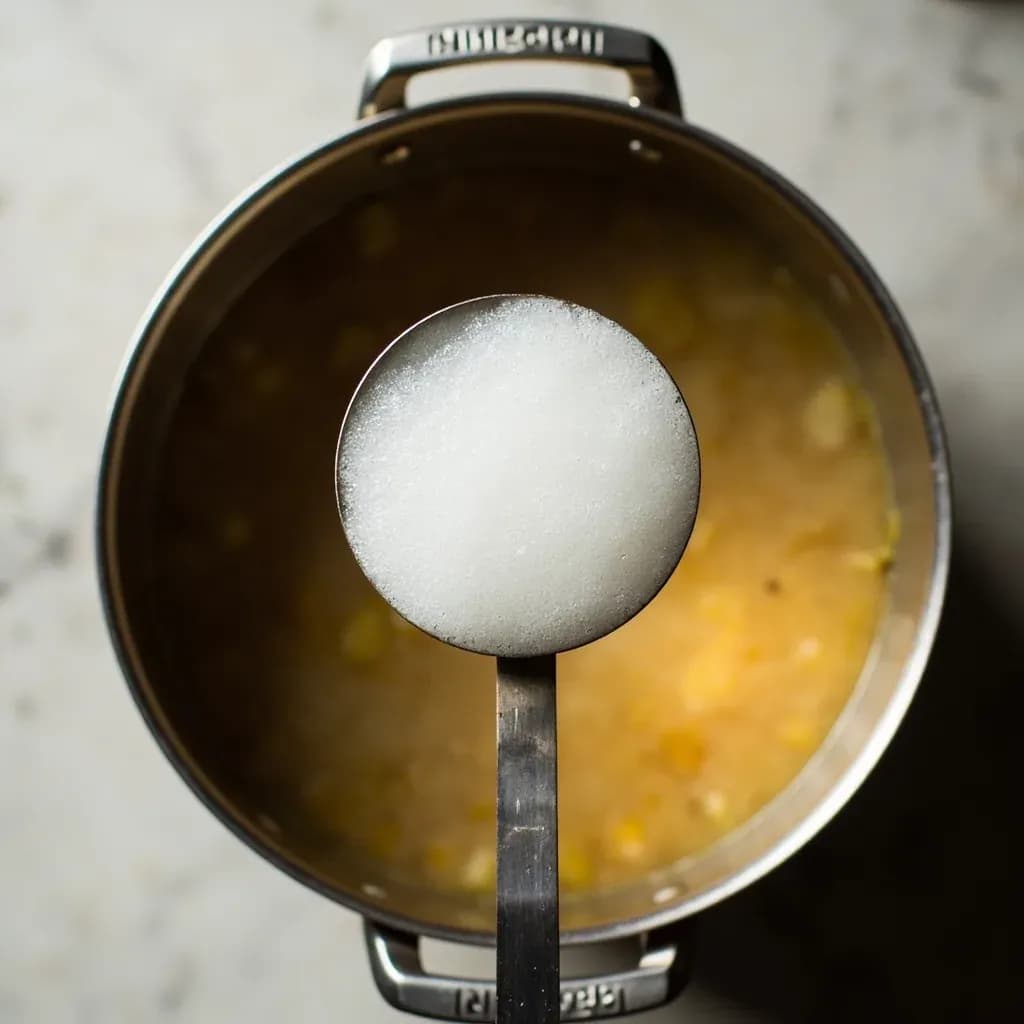
Skimming removes the grey protein scum and floating fat that rise to the top of a stock or broth as it simmers. Done with a ladle, spoon, or fine skimmer, it keeps the liquid clear and clean-tasting and prevents off flavors. The most scum appears early as the pot first comes up to heat, so skimming is most active in the first stage of cooking.
Skimming is the disciplined lifting of floating matter from a simmering liquid, and it works in two distinct phases that a cook must read separately. In the first 20 to 45 minutes of a cold-water stock, a gray-white foam and pale-brown patches collect at the surface and at the edges of the pot: this is coagulated albumen and blood protein, the same material that turns egg whites opaque, and it is what clouds a broth and lends it a muddy, faintly bitter edge. Later in the cook, once that protein raft has spent itself, a clear, glossy layer of rendered fat (tallow, schmaltz, pork fat) gathers on top and is removed for clarity, mouthfeel, and the success of any finishing step that depends on a non-greasy surface, from aspics to pan reductions.
The technique depends entirely on temperature control. A bare simmer, roughly 85 to 95 °C with only lazy bubbles at the edges, lets the impurities coalesce into a coherent raft that can be drawn off cleanly; a rolling boil shatters that raft and drives it back into suspension as a fine haze that is almost impossible to recover. This is why classical pot-au-feu and consommé work begins cold and climbs slowly, and why a cook who is patient at the start is rewarded with a jewel-bright broth without filtration.
Formalized in Escoffier's Le Guide Culinaire under fonds, potages, and consommés, skimming is the single biggest lever a cook has over stock quality, and the same surface-lifting logic generalizes to bean-cook foam, starchy pasta water, jam scum, and the gray film that forms on a reducing sauce.
- Difficulty
- Easy
Types & varieties
Done at the start of a simmer to lift coagulated proteins that rise from meat, bones, and mirepoix.
Removing rendered fat from the surface, either during the simmer or after a brief chill so the fat solidifies.
Damp cheesecloth laid flat on the surface absorbs fat and fine scum in one pass.
A sheet of plain paper towel pulled across the surface wicks up fat and micro-scum.
A plastic squeeze bottle is squeezed to expel air, then placed at the fat layer and released to draw up the fat by vacuum.
A pitcher with a low-spout pours broth from beneath the floating fat cap.
A clarifying raft of lean ground meat, egg whites, and aromatic vegetables traps impurities as it simmers; the clear liquid is then ladled or filtered.
Light skimming of impurities from reductions, glazes, and pan sauces after enrichments such as butter.
How to do it
- 1
Bring to a bare simmer
Heat the stock or broth gently from cold or strained liquid until you see small, lazy bubbles breaking only at the edges of the pot. Do not allow a rolling boil; violent motion breaks the protein raft and re-emulsifies scum into the liquid.
- 2
Watch for the first raft
Within the first 20–30 minutes, gray-white foam and pale-brown scum will gather in patches on the surface, often drifting to the edges and the lid. This is coagulated albumen, blood proteins, and fine solids — not fat.
- 3
Position the skimmer
Hold a flat skimmer or a small, shallow ladle so its rim just kisses the surface. Angle the bowl nearly parallel to the liquid so it lifts only the top 2–3 mm.
- 4
Draw across and lift
In one smooth motion, draw the skimmer across the surface to gather foam into the bowl, then tilt up and let the liquid drain back through the perforations before discarding the solids into a side bowl.
- 5
Repeat through the early simmer
Skim every few minutes until the rate of new foam slows to almost nothing, typically by the 45-minute mark of a meat stock. Continue skimming lightly through the cook whenever fresh patches appear.
- 6
Skim fat as it renders
Once the simmer has settled and the protein raft has stopped forming, fat will begin to gather as a clear, glossy layer. Lift it the same way with a ladle, or use a damp paper towel, damp cheesecloth, squeeze bottle, or degreaser pitcher.
- 7
Finish with a final pass
Off the heat, do one last surface pass with a clean skimmer or a paper towel dragged corner-first across the broth. For consommé and aspics, chill briefly so the fat cap firms, then lift it cleanly with a slotted spoon.
- 8
Strain if needed
If any fine particles remain, pass the broth through a fine chinois, optionally lined with a double layer of rinsed cheesecloth. Do not press the solids; let gravity do the work to preserve clarity.
Reading the two phases
A cook must learn to tell the early raft from the late fat cap, because the tools and timing differ. The early foam is gray-white to pale brown, flecked, and breaks apart easily; it should be lifted while the pot is still hot and the proteins are still mobile. The late fat layer is transparent and glossy, often with a yellow or amber tint, and it beads up rather than breaks; it can be lifted hot, chilled until firm and peeled, or drawn off with a degreaser pitcher. Skimming the wrong phase with the wrong tool is the most common reason home cooks feel the job is futile.
- Early foam = coagulated albumen; skim hot, fast, and often with a flat skimmer.
- Late fat = rendered tallow or schmaltz; lift hot with a ladle, chill and peel, or decant from below.
- A clean surface between phases means you have done the early work correctly.
Tools and when to reach for each
The right tool depends on what you are lifting and how much liquid you can afford to lose.
- Flat skimmer (araignée/spider): the workhorse for early foam; lifts cleanly with minimal broth loss.
- Shallow ladle, held nearly level: the everyday substitute when a skimmer is not at hand.
- Damp cheesecloth laid flat: the fast finish for fine foam and fat in one pass.
- Plain paper towel, dragged corner-first: a kitchen hack for a final pass on small pots.
- Squeeze bottle: best for thin fat layers and for working at the back of a tall, narrow pot.
- Degreaser pitcher: the cleanest method for large batches of chilled broth.
- Chinois lined with cheesecloth: the rescue tool when early skimming was missed.
Common uses
Tips & pitfalls
- Start with cold water and bring it up slowly; a gradual heat climb pulls more impurities to the surface as a cohesive raft.
- Hold a true bare simmer. A rolling boil shatters the scum layer and drives it back into the liquid as suspended particles — the most common mistake in home stocks.
- Skim early and often in the first 30–45 minutes; once impurities re-circulate, they are very hard to lift again.
- Use the shallowest tool that works. A flat skimmer or small ladle held almost level takes foam with minimal loss of stock.
- Do not stir the pot while skimming — stirring redistributes what you have just lifted.
- Wet a piece of cheesecloth and lay it flat on the surface for a near-instant surface clean of fine foam and fat; lift straight up.
- For fat, chill the broth until the cap firms, then lift the solid layer with a slotted spoon or peel it off in one piece.
- If you missed early skimming and the broth is cloudy, finish by straining through a chinois lined with cheesecloth, or convert the batch into a consommé via clarification.
Good to know
- Technique family
- Liquid surface clarification and degreasing
- French term
- Écumer (to skim)
- Primary target (early)
- Coagulated albumen and blood impurities
- Primary target (late)
- Rendered and emulsified fat
- Temperature window
- Bare simmer, roughly 85–95 °C / 185–205 °F
- When most foam rises
- First 20–45 minutes of a cold-water stock
- Effect on clarity
- Greatly improves visual and textural clarity of stocks, broths, consommés, and pan sauces
- Effect on flavor
- Removes bitter, muddy, or greasy notes; yields a cleaner, sweeter savor
- Documented in
- Escoffier's Le Guide Culinaire (fonds, potages, consommés)
Also called
Skimming Broth · Skimming Scum · Skimming Fat
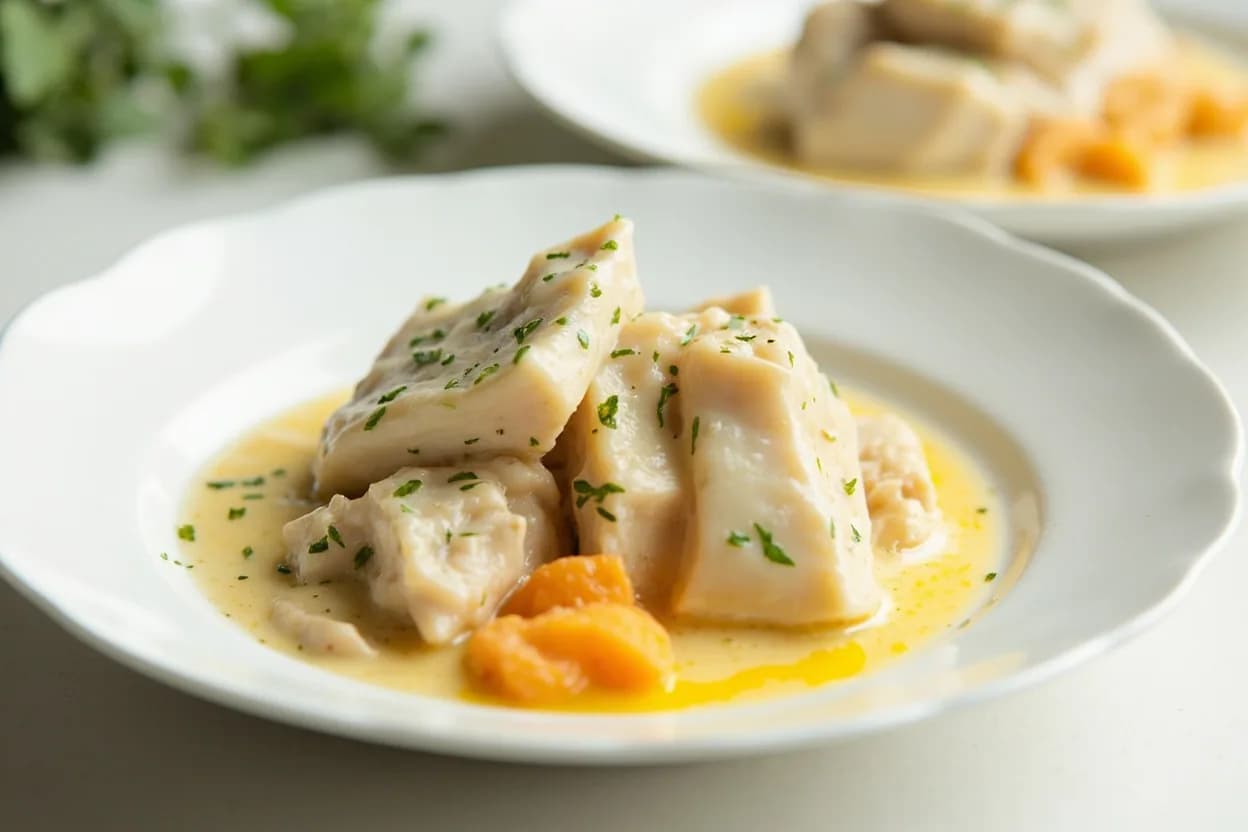
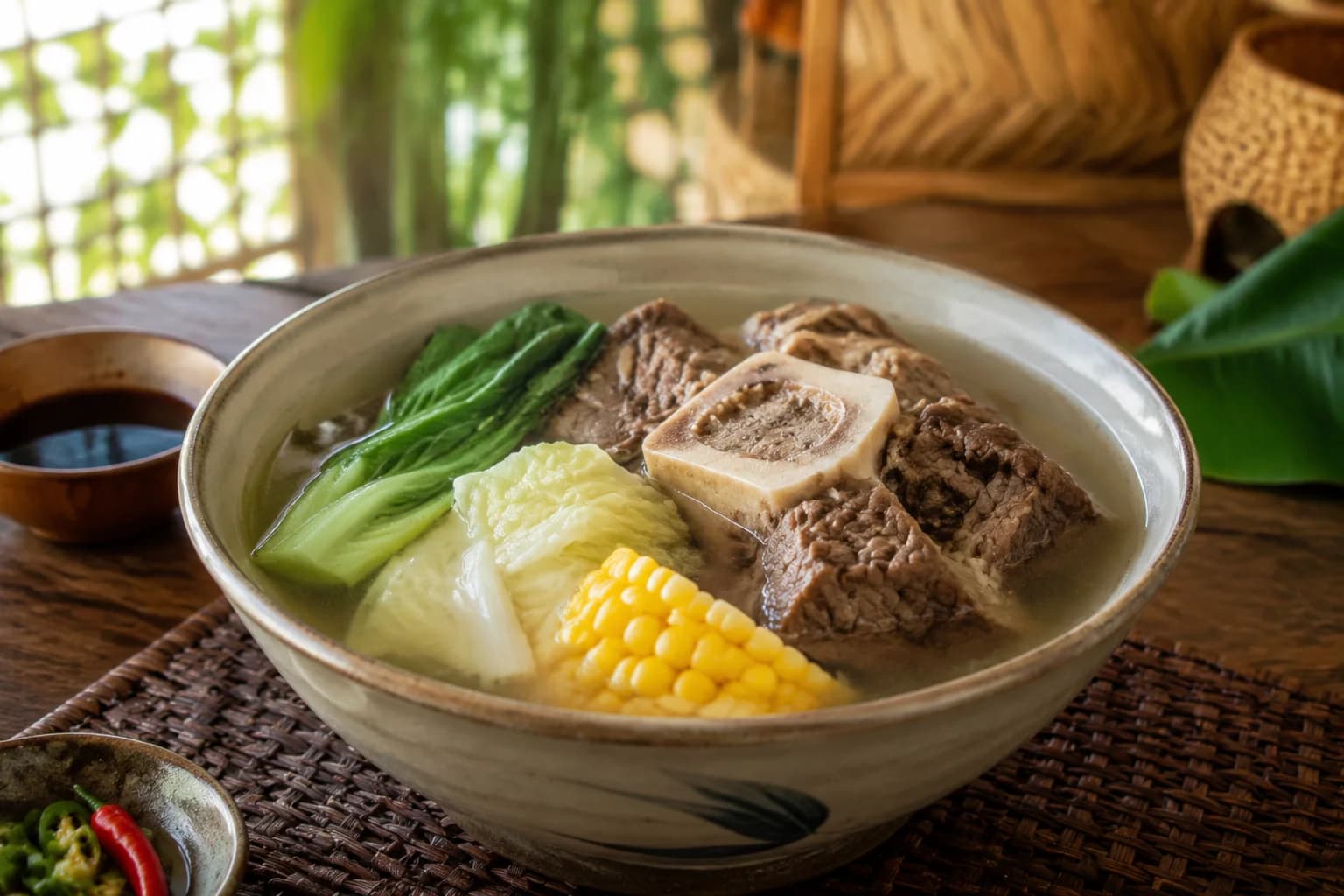
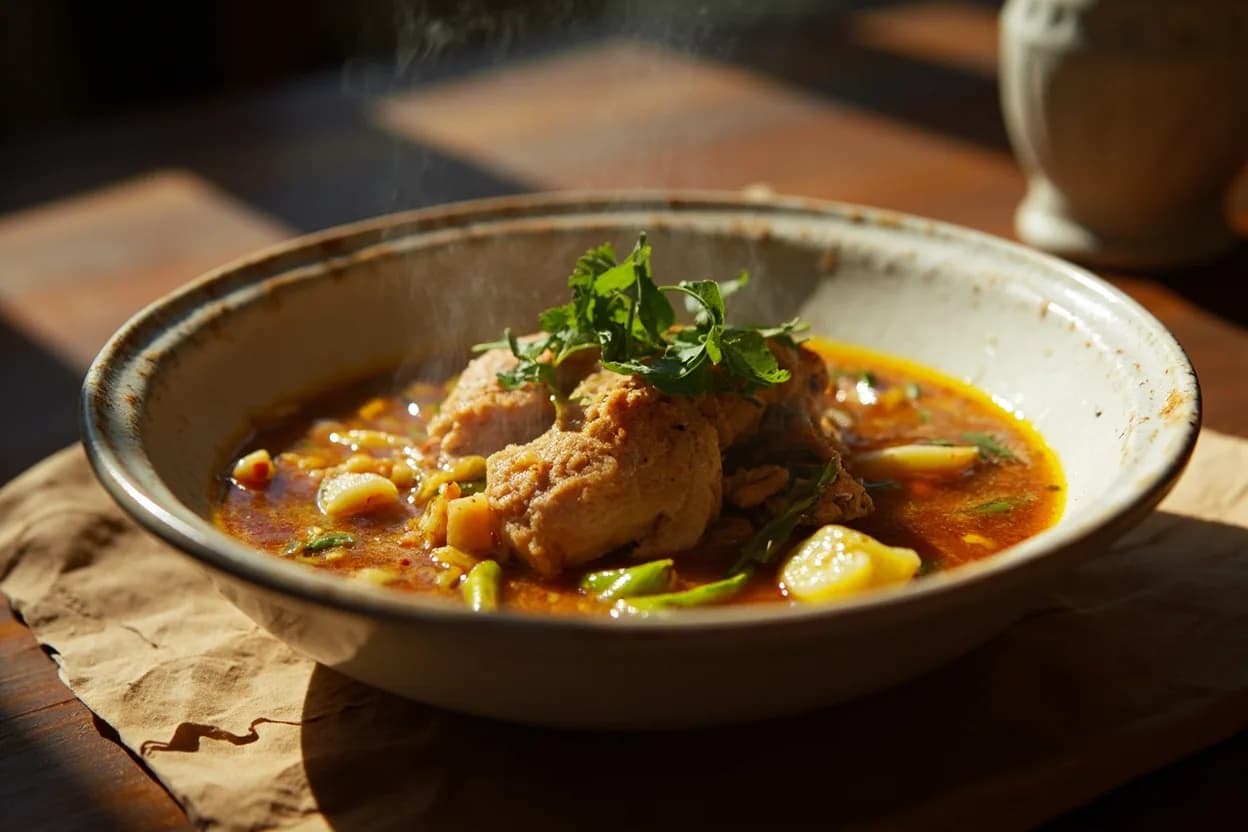
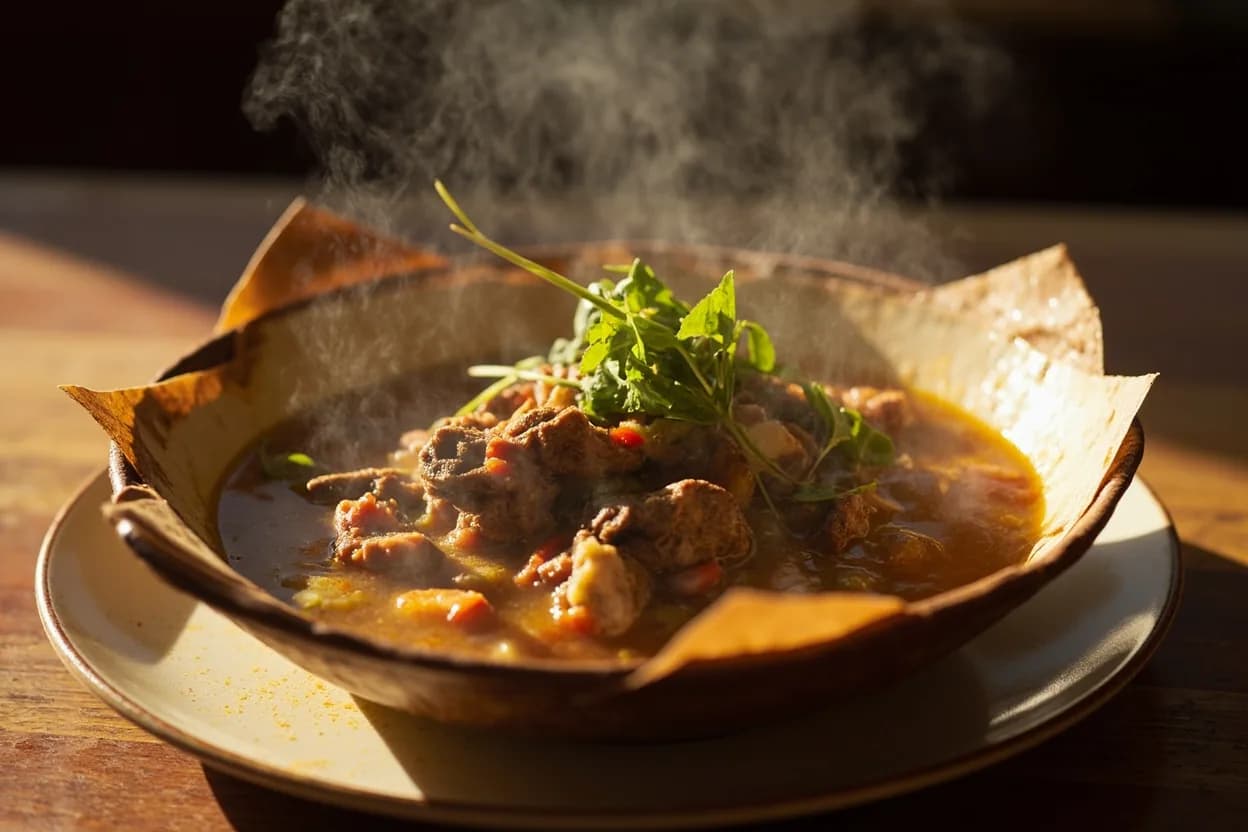
Dishes that rely on it

Related

Boil
Cook in vigorously bubbling liquid at full rolling heat

Simmer
Hold liquid at a gentle shimmer for tender, unhurried cooking

Poach
Cook gently in barely-trembling liquid for silky, tender results

Steam
Cook in rising vapor to keep color, nutrients, and shape intact

Blanch
Plunge briefly in boiling water, then shock cold to lock color

Braise
Sear, then cook slow in a little liquid until fall-apart tender

Stew
Simmer bite-sized pieces fully submerged into a rich, unified pot

Sous-Vide
Seal and cook in precise warm water for edge-to-edge doneness