Water & Steam
Blanching Bones
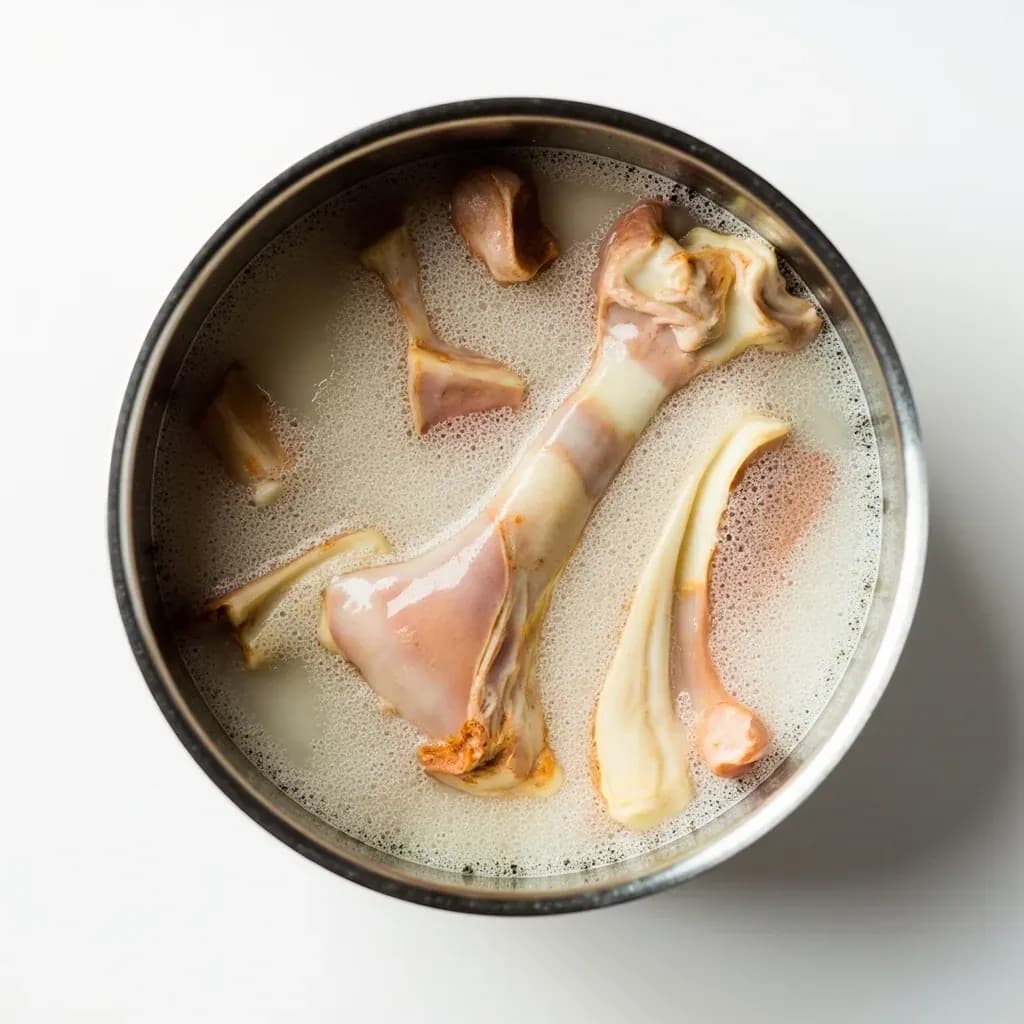
Boiling bones briefly and discarding the water to remove scum for a clear, clean stock.
Blanching bones covers them with cold water, brings it to a boil, then drains and rinses away the released blood, scum, and impurities. It is a key first step for clear stocks and broths, especially in Chinese and French kitchens. Starting from cold water draws impurities out before the bones go into fresh water for the real simmer. The result is a cleaner-tasting, less cloudy stock.
Blanching bones is a preliminary boil-and-discard step that purges raw bones of blood, marrow, and soluble proteins before the real stock is made. The bones are covered in cold water, brought to a rolling boil, and held at a hard boil for a short window before the cloudy water is tipped down the drain. The principle is simple: heat drives impurities to the surface, and the water carries them away. What remains is a noticeably cleaner, paler set of bones that will give up a clear, refined liquid during the long simmer that follows.
The technique matters most when the goal is a pale, clean-tasting stock — white stocks, poultry broth, fish fumet, and especially consommé. Coagulated albumin and blood proteins are the main culprits behind a cloudy pot and a muddy, metallic-tasting broth; getting them out of the way early means the simmer that follows produces a clear, golden liquid with a clean savory backbone. French classical cooking treats blanching as a non-negotiable first step for any refined stock, codified by Escoffier and the brigade tradition.
The cost is flavor. The blanching water takes with it fat-soluble aromatics, dissolved meat juices, and a meaningful share of free glutamates from marrow and clinging meat — which is why deeply roasted bones for brown stock, rustic Italian brodo, Vietnamese pho, and Japanese tonkotsu skip the step entirely. In those traditions opacity, body, and depth are the point, and a long gentle simmer with aggressive skimming does the clarifying work instead. The choice is not whether blanching is right or wrong, but what the finished stock is meant to do.
- Difficulty
- Easy
Types & varieties
Standard 5–10 minute boil; sufficient for most white stocks and clear broths.
Repeat the boil-and-rinse step a second time; used for very pale, crystal-clear consommé bases or for particularly bloody bones such as venison and duck.
Especially recommended for chicken and turkey carcasses, whose fat and blood readily emulsify and cloud stock.
Used when the goal is a pale, refined consommé rather than a richly colored brown stock.
Applied briefly to white fish bones and shells before a fumet, to lift off surface slime and blood.
How to do it
- 1
Place bones in a large stockpot
Put raw, defatted bones into a heavy stockpot. Use enough bones to fill roughly two-thirds of the pot — they will shrink and float as water is added.
- 2
Cover with cold water
Add cold water to cover the bones by 3–4 inches (about 8–10 cm). Cold water is essential: it slowly draws blood and soluble proteins out of the bones so they coagulate on the surface rather than locking back into the meat.
- 3
Bring slowly to a boil
Set the pot over high heat and bring it to a rolling boil. As the temperature climbs, a thick gray-brown foam — coagulated albumin, blood, and marrow — will rise to the surface.
- 4
Boil actively for 5–10 minutes
Hold the boil for 5–10 minutes so the proteins fully coagulate. Do not skim; the goal here is to drive the impurities out of the bones and into the water.
- 5
Drain the bones
Tip the pot into a large colander set over the sink, or lift the bones out with a spider skimmer. Discard the blanching water — it is cloudy, foamy, and full of the impurities you want gone.
- 6
Rinse the bones thoroughly
Rinse each bone under cold running water, rubbing with your hand or a brush to dislodge any clinging scum or coagulated fat. The bones should look noticeably cleaner and paler.
- 7
Wash the stockpot
Scrub the pot with hot soapy water to remove every trace of scum and fat film from the sides — any residue will cloud your finished stock.
- 8
Return bones to the clean pot and begin the stock
Put the rinsed bones back into the clean pot, cover with fresh cold water, and proceed with your stock recipe — aromatics, seasoning, and a low, gentle simmer.
When to blanch and when to skip
The decision hinges on what you want the finished stock to look and taste like. Use blanching as the default for any pale, clean, refined liquid; skip it whenever opacity, body, or deep color is part of the dish's identity.
- Blanch for white stock, veal stock, chicken or turkey stock, fish fumet, and any consommé or aspic work where clarity is judged at the table.
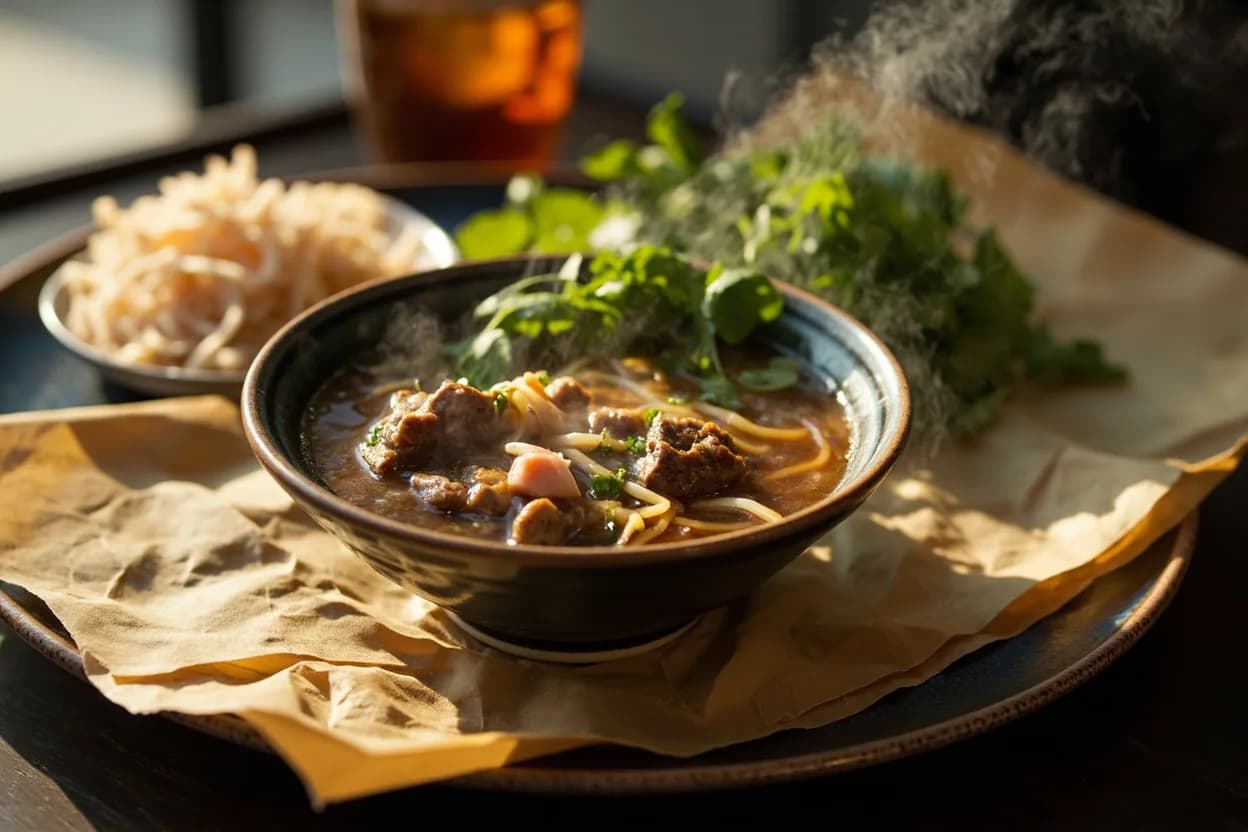
- Skip for deeply roasted brown stock, Italian-style brodo, Vietnamese pho, Japanese tonkotsu, and any rustic preparation that prizes body and color over clarity.
- Double-blanch only when the bones are unusually bloody (duck, venison, beef shank) or when the finished dish demands an almost jewel-like clarity, such as a classical consommé.
- Remember that blanching is a flavor trade as well as a clarity move: you are deliberately discarding some of the meat juices and glutamates clinging to the bones.
The science in a saucepan
The visible gray-brown foam that rises during blanching is mostly coagulated albumin and hemoglobin — proteins that would otherwise set into a fine haze throughout the simmering stock and mute its color. A slow climb from cold water gives those proteins time to migrate out of the bone and marrow and into the surrounding liquid, where the rolling boil drives them to the surface as a thick raft. Tipping that water away, then rinsing the bones, removes the bulk of the impurities before the real stock begins.
Common uses
Tips & pitfalls
- Start in cold water — bringing bones up to temperature slowly pulls more protein and blood out into the water where it can be discarded rather than sealing it into the meat.
- Do not stir the blanching water; let the scum rise undisturbed so it lifts cleanly away from the bones.
- Rinse the bones aggressively under cold running water, agitating with your hand; any scum left clinging will re-emerge in your real stock.
- Wash the stockpot with soap and hot water before reusing it — residual scum on the pot sides will seed cloudiness in the finished stock.
- For deeply roasted bones intended for brown stock, blanching is usually skipped: the dark color and roasted flavor are the point, not a problem.
- Blanched bones should smell faintly of clean cooked meat; a strong barnyard or iron-like odor after rinsing means they need another blanch.
- If you are short on time, you can blanch and immediately proceed to the stock — there is no need to chill the bones first.
- Save the blanching water only if you are also making a rustic, deeply flavored stock where clarity does not matter; otherwise discard it.
- Skimming during a long simmer and blanching beforehand are complementary, not substitutes — blanching removes what skimming cannot catch later.
Good to know
- French term
- Blanchir les os — briefly boiling bones and discarding the cooking water
- Primary purpose
- Removes blood, bone marrow, and coagulated proteins that would cloud stock and produce off-flavors
- Typical boil time
- 5–10 minutes once the water reaches a rolling boil
- Water temperature at start
- Cold water, enough to cover the bones by 3–4 inches
- End result
- Noticeably clearer, cleaner-tasting stock with less sediment and a lighter color
- Best suited to
- White stocks, poultry stock, veal stock, fish fumet, and consommé
- Less necessary for
- Deeply roasted bones destined for brown stock, where cloudiness and roasted flavor are acceptable
- Difficulty
- Easy; minimal skill, mostly timing
- Yield impact
- No reduction in stock volume — only flavor and clarity are altered
- Common sign of success
- A thick raft of gray-brown foam on the blanching water; bones look paler after rinsing
- Storage note
- Blanched bones can be used immediately or refrigerated for 1–2 days before starting the real stock
Also called
Blanching Bones
Dishes that rely on it
Related

Boil
Cook in vigorously bubbling liquid at full rolling heat

Simmer
Hold liquid at a gentle shimmer for tender, unhurried cooking

Poach
Cook gently in barely-trembling liquid for silky, tender results

Steam
Cook in rising vapor to keep color, nutrients, and shape intact

Blanch
Plunge briefly in boiling water, then shock cold to lock color

Braise
Sear, then cook slow in a little liquid until fall-apart tender

Stew
Simmer bite-sized pieces fully submerged into a rich, unified pot

Sous-Vide
Seal and cook in precise warm water for edge-to-edge doneness