Transform & Preserve
Mead Fermentation
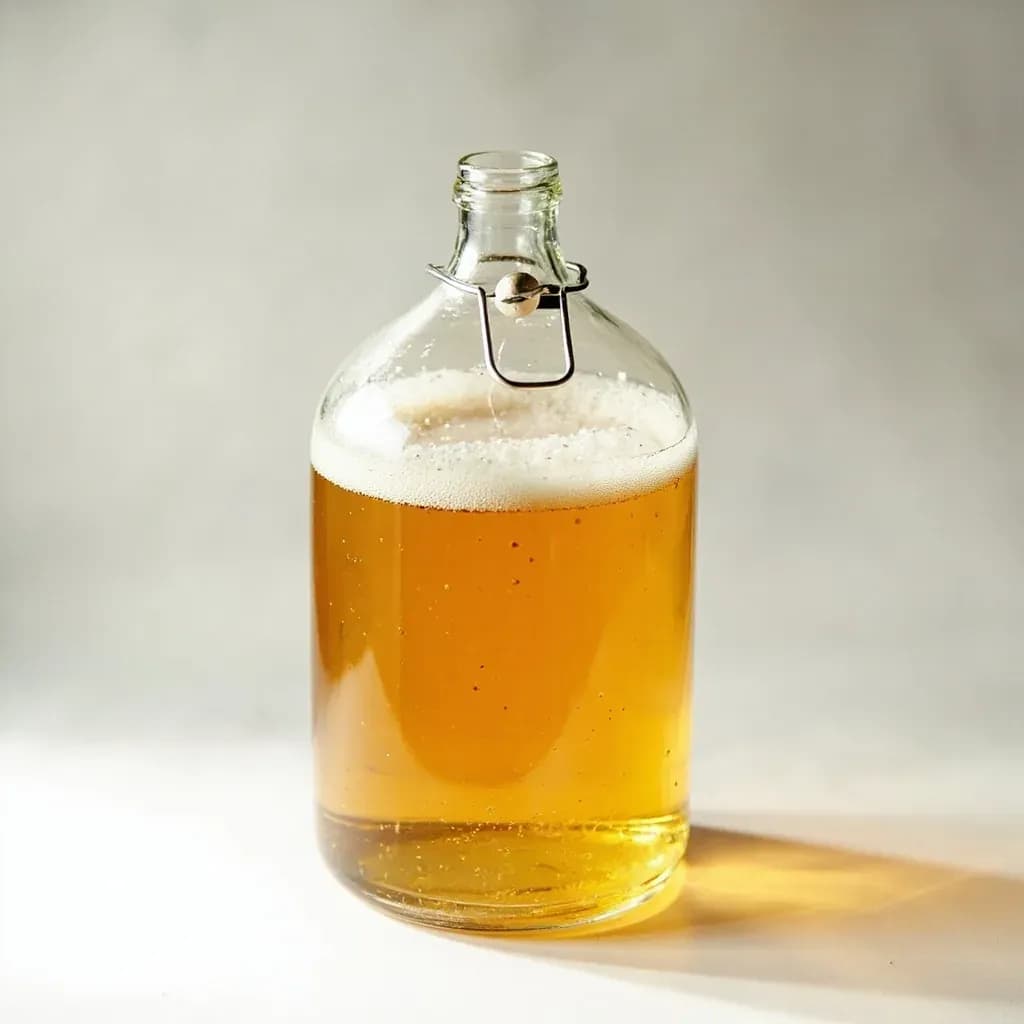
Fermenting honey diluted in water with yeast to produce honey wine.
Mead fermentation dissolves honey in water (the must), often with added nutrients, then pitches yeast to convert the honey sugars into alcohol over weeks to months. The result, mead or honey wine, can range from dry to sweet and still to sparkling depending on the honey, yeast and additions like fruit or spices. Because honey is low in nitrogen, careful yeast nutrition is needed for a clean ferment.
Mead fermentation is the controlled conversion of a dilute honey solution — the must — into an alcoholic beverage by yeast, producing what is arguably the oldest fermented drink known. The cook's basic inputs are simple: honey, water, and a yeast strain tolerant of the sugar load, with optional fruit, spices, grains, hops, or maple syrup steering the style. What makes the technique more demanding than its three-ingredient bill suggests is honey's near-total lack of fermentable nitrogen, minerals, and acids; without management, yeast stall partway through and produce off-aromas such as hydrogen sulfide or stuck, overly sweet fermentations. Successful mead-making is essentially a winemaker's discipline applied to a brewing substrate: track gravity, feed the yeast on a schedule, hold a stable temperature, and give the result time to mature.
The process behaves much like wine fermentation: 2–4 weeks of primary under airlock at cool room temperature, followed by racking off heavy lees, bulk aging in glass, and optional stabilization, clarification, and backsweetening before bottling. Final character depends heavily on honey-to-water ratio (a hydromel at about 1 pound per gallon drinks like a delicate table wine; a sack mead at 3+ pounds per gallon can hit 18% ABV and taste of raisined fruit and toasted caramel) and on aging — mead is famously harsh young and magnificent after a year or more in carboy or bottle. The result is a versatile product that ranges from a dry, light apéritif-style wine to a richly spiced, dessert-weight sipper, and it slots naturally into the kitchen for reductions, glazes, and poaching liquids.
- Difficulty
- Medium
Types & varieties
Honey, water, and yeast only — no fruit, spices, or adjuncts. The benchmark for the technique itself.
Mead fermented with fruit such as blackberry, cherry, raspberry, or elderberry.
Mead made with grapes or grape juice; bridges mead and country wine.
Mead made with apple juice or whole apples; often crisp and tart.
Mead made with herbs and/or spices — cinnamon, clove, ginger, chamomile, and the like.
High-honey, high-gravity mead, typically 16–20% ABV; rich, often sweet, and slow to mature.
Short mead with low honey and ~5–7% ABV; light, refreshing, and quick to age.
Mead made from caramelized honey, producing toffee, marshmallow, and burnt-sugar notes.
Mead brewed with malted barley and often hops, sitting between mead and beer.
Mead blended with maple syrup.
Mead made with chili peppers; ranges from a warm tingle to full heat.
How to do it
- 1
Sanitize and gather equipment
Assemble a food-grade fermenter (carboy or bucket), airlock, hydrometer, racking cane and tubing, and bottles. Sanitize every surface that will contact the must with a no-rinse sanitizer such as star-san or a sulfite solution.
- 2
Mix honey and water (must)
Heat roughly half the measured water to about 140°F (60°C) and dissolve the honey thoroughly, then top up with the remaining cool water in the fermenter. Alternatively, stir room-temperature water and honey vigorously without heat; the no-heat method preserves delicate honey aromatics but takes longer to homogenize.
- 3
Adjust volume, gravity, and temperature
Top up to the target batch volume with water. Check the specific gravity with a hydrometer and adjust with more honey or water to hit roughly 1.090–1.120 for standard mead. Aerate well by splashing or shaking. Cool the must to within 5°F of the yeast's recommended fermentation temperature.
- 4
Pitch yeast
Rehydrate dried wine or mead yeast (Lalvin D-47, EC-1118, RC-212, or Wyeast 4184 Sweet Mead / 4632 Dry Mead are common choices) per manufacturer directions, or build a starter for high-gravity sack meads. Pitch into the must and seal with an airlock.
- 5
Manage nutrients and fermentation
Add yeast nutrient per a staged schedule (TOSNA or 3 additions at 24 h, 48 h, and one-third sugar depletion). Maintain a steady fermentation temperature; degas or stir gently for the first 5–7 days to release CO2 and let yeast access oxygen early, then seal for the remainder.
- 6
Primary fermentation
Ferment under airlock for 2–4 weeks until bubbling slows and gravity drops. Confirm fermentation is approaching completion with two hydrometer readings taken 2–3 days apart — they should match.
- 7
Rack to secondary
Siphon the mead off the heavy lees into a clean carboy, leaving sediment behind. Top up if needed to minimize headspace and oxidation. Fit an airlock and move to a cool, dark location for aging.
- 8
Age and clarify
Bulk-age for 2–3 months minimum (longer for sack, bochet, or metheglin). Optional: cold-crash to near 32°F (0°C) for 1–2 weeks, fine with bentonite or sparkolloid, or age on oak cubes for added complexity.
- 9
Stabilize and backsweeten (optional)
If sweetening, add 1/4 tsp potassium sorbate and 1 crushed campden tablet per gallon after fermentation is verifiably complete, then dissolve additional honey, fruit, or non-fermentable sweetener to taste.
- 10
Bottle and condition
Rack into clean, sanitized bottles. Cork with a floor corker for long cellaring, or crown-cap — crown caps seal reliably and are commonly used for both short- and long-term aging. Store upright for a few days, then on the side if corked. Mead improves with age, especially traditional and sack styles.
Why honey is uniquely challenging to ferment
Honey is the cleanest fermentable sugar source a cook can buy: nearly pure fructose and glucose, with only trace sucrose, plus trace pollen and minerals. That purity is exactly the problem. Compared to grape must or barley wort, honey must is starving for free amino nitrogen (FAN), B vitamins, and sterols — the very nutrients yeast need to build cell walls, complete fermentation, and resist stress. The practical consequence is that an unmanaged pitch stalls partway, leaves residual sweetness, and can produce reductive off-aromas (rotten egg, burnt rubber) from stressed yeast. The fix is a staged nutrient regimen — TOSNA, SNA, or Fermaid-O schedules — that front-loads DAP, complex nutrients, and oxygen in the first 24–72 hours, then backs off as the yeast population matures.
- Front-load oxygen and DAP in the first 24–48 hours; minimize oxygen once fermentation is active.
- Add complex nutrients (Fermaid-O) at 24 h, 48 h, and one-third sugar depletion for high-gravity musts.
- Watch for sulfur-smelling off-aromas in the first week — they are almost always a nitrogen, not a sanitation, problem.
Common uses
Tips & pitfalls
- Rehydrate dried yeast in Go-Ferm or warm water at the package-recommended temperature (95–105°F / 35–40°C) before pitching; never sprinkle directly into the must.
- Run a staged nutrient schedule (TOSNA, SNA, or Fermaid-O additions) — honey is nitrogen-poor, and skipping this is the most common cause of stuck fermentations and hydrogen sulfide off-aromas.
- Keep fermentation temperature stable and within the yeast's stated range; excess heat produces harsh fusel alcohols and a hot finish.
- Rack off the heavy lees within 2–3 weeks of fermentation completing — extended contact with yeast sediment gives yeasty, bitter, autolytic off-flavors.
- Do not backsweeten before fermentation is verifiably complete; use potassium sorbate and campden, or unfermentable sweeteners, to avoid bottle bombs.
- Confirm stable gravity with two hydrometer readings 2–3 days apart before bottling — airlock silence alone is not proof fermentation is finished.
- Sanitize everything that touches the must after the mixing step; a single no-rinse sanitizer pass is faster and more reliable than improvised methods.
- Cold-crash finished mead to near freezing for 1–2 weeks before bottling to drop tartrate, residual yeast, and haze for a clearer product.
- Oak aging (cubes, chips, or barrels) can round out young mead and add vanilla, vanillin, and tannin structure.
- Watch tannin balance — very tannic meads from tea, oak, or grape skin additions pair better with rich foods and age longer.
Good to know
- Origin
- Among the oldest fermented beverages known; documented across Chinese, Greek, Roman, Egyptian, Norse, Celtic, and Slavic traditions, with archaeological evidence from Jiahu (c. 7000 BCE).
- Basic composition
- Honey, water, and yeast; optional fruit, spices, grains, hops, or maple syrup.
- Typical honey ratio
- 1.5–3 lb honey per US gallon (180–360 g/L) for standard mead; hydromel ~1 lb/gal; sack mead 3+ lb/gal.
- Target original gravity
- Roughly 1.090–1.130 for standard mead; above 1.150 for sack mead.
- Final gravity
- ~0.990–1.010 when fully fermented dry.
- ABV range
- About 5–6% for hydromel up to 18–20% for sack mead, capped by yeast alcohol tolerance.
- Primary fermentation
- 2–4 weeks under airlock at 60–75°F (15–24°C), depending on yeast strain.
- Aging
- Minimum 2–3 months off sediment for a drinkable standard mead; 6–18+ months typical; premium meads benefit from years.
- Yield
- Approx. 1 gallon of finished mead per 2.5–3 lb of honey used, depending on final gravity.
- Water quality
- Chlorine and chloramine inhibit or kill yeast; use spring, filtered, or treated water (campden tablet or 24-hour off-gassing).
- Difficulty
- Moderate; forgiving of small errors but sensitive to nutrient deficiency, temperature swings, and oxidation.
Also called
honey wine fermentation · making mead
Related

Confit
Cook slowly submerged in fat for silky tenderness and keeping

Cure
Draw out moisture with salt and time to preserve and concentrate

Pickle
Steep in acidic brine for bright, tangy, crunchy preservation

Ferment
Let friendly microbes transform food into tangy, complex flavor

Marinate
Soak in a seasoned mix to flavor and tenderize before cooking

Brine
Soak in salt water so meat stays juicy and seasoned throughout

Dehydrate
Slowly dry out moisture to concentrate flavor and extend shelf life

Cold-Smoke
Perfume cured food with smoke without cooking it through