Water & Steam
Risottata (Cooking Pasta in Sauce)
Cooking pasta risotto-style directly in sauce, adding liquid gradually until creamy.
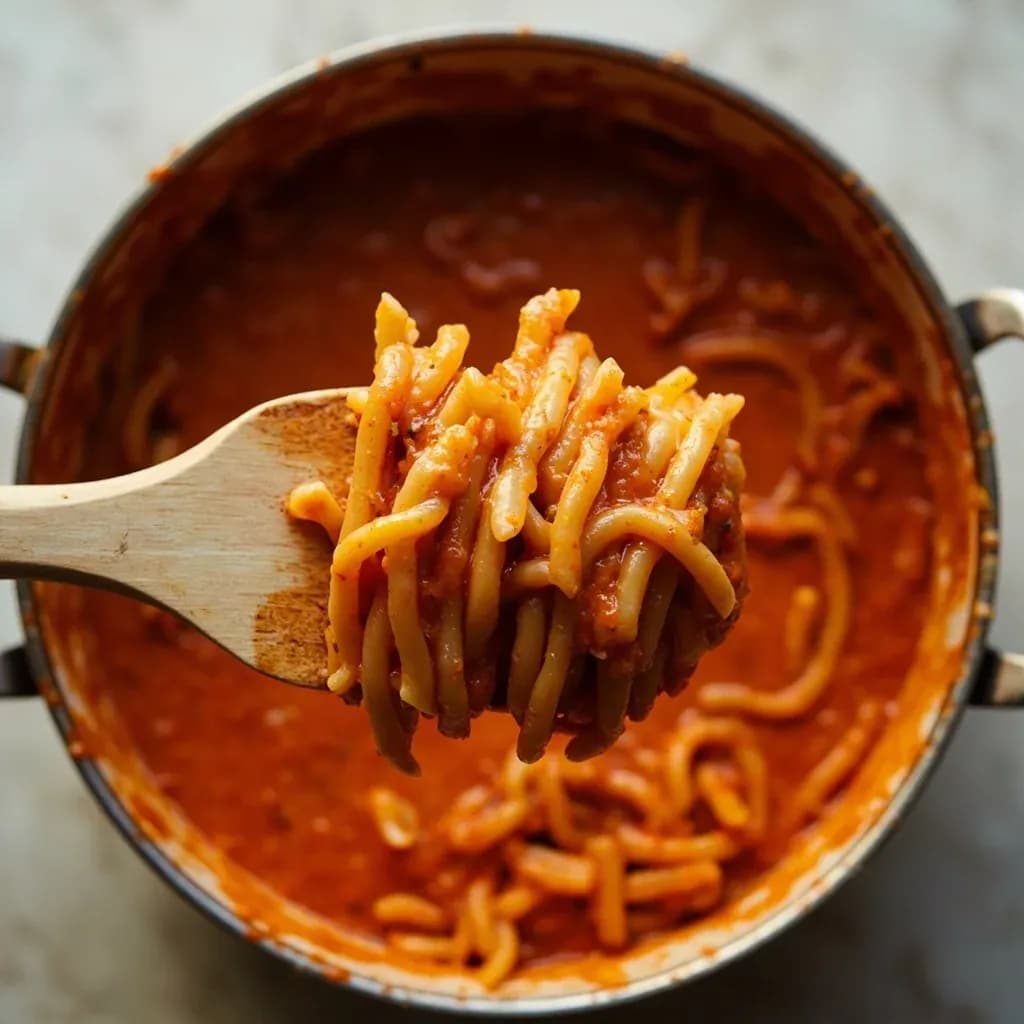
In the risottata method, dried pasta is toasted then cooked directly in its sauce, with stock or water ladled in gradually as it absorbs, exactly as you would build a risotto. The starch released by the pasta stays in the pan and thickens the sauce into a glossy, clingy emulsion instead of being poured down the drain. It concentrates flavor and gives a creamier, more cohesive plate than boiling and tossing separately.
Pasta risottata is the Southern Italian habit of cooking dried pasta directly in its sauce, adding liquid a ladle at a time the way you would for risotto, until the noodles are tender and the pan holds a starchy, glossy, sauce-clinging emulsion. The method replaces the usual routine of boiling pasta in a large pot of salted water, draining it, and tossing it with a separately made sauce; instead, the sauce is the cooking liquid, and the starch the pasta releases becomes the thickener. The result is a finished dish where every strand or tube carries flavor, body, and seasoning all the way through, with none of the dilution that comes from draining in a colander.
What makes the technique feel different from plain saucy pasta is texture. Because the liquid reduces in the pan as the pasta cooks, and because the pan is finished with vigorous off-heat stirring (the same mantecatura you do for risotto), the sauce tightens around each piece and emulsifies into a creamy, almost velvety coating without a drop of cream. The pasta also absorbs the seasoned liquid as it hydrates, so the flavor is deeper and more integrated than pasta merely tossed with sauce at the end. It is, in practice, a very fast risotto in which the starch source is wheat rather than rice.
Risottata is beginner-friendly but it rewards attention: the cook trades the passive ease of boiling for the active rhythm of a risotto, and the trade is paid back in body, flavor, and the convenience of one-pan cooking with no draining step.
- Difficulty
- Medium
Types & varieties
Sicilian; rigatoni or maccheroni finished in tomato sauce with fried eggplant, basil, and salted ricotta.
Cooked in meat or vegetable broth rather than water; the method behind many versions of pasta e fagioli and Northern Italian first-course pastas.
Spaghetti or tonnarelli toasted in butter, then loosened with starchy water and emulsified off heat with Pecorino Romano — the same logic as the Roman classic, executed risotto-style.
The simplest version: tomato passata thinned with a little water, pasta cooked in it, finished with basil and good olive oil.
A modern adaptation favored by chefs like Luciano Monosilio: pasta goes into cold liquid and is brought up to a simmer, releasing starch more gently and producing an especially silky sauce.
How to do it
- 1
Build the flavor base
Heat olive oil (or a mix of oil and butter) in a wide, heavy skillet over medium heat. Sauté aromatics — garlic, onion, anchovies, chili, or shallot — until soft and fragrant, about 2–3 minutes. Add any quick-cooking vegetables such as zucchini, cherry tomatoes, or peas and cook 2 minutes more, until they begin to soften and release their own liquid.
- 2
Add the sauce foundation
Pour in tomato passata, crushed tomatoes, a splash of wine, or simply a couple of ladles of hot broth, depending on the dish. Season lightly with salt — the liquid will concentrate as it reduces. Bring to a steady simmer.
- 3
Toast the dry pasta
Add the dry pasta straight from the bag and stir so every piece is coated in the sauce. Toast for about 1 minute: the pasta should look glossy and slightly translucent at the edges, but it should not brown. This step wakes up the wheat and gives the finished dish a rounder flavor.
- 4
Add liquid in stages
Pour in enough hot water or broth to cover the pasta by about 1 cm — roughly 2.5–3 times the volume of the dry pasta. Return to a gentle boil, then drop to a steady simmer. Stir every 30–60 seconds and add another ladle of hot liquid whenever the level drops below the pasta, the same rhythm you would use for risotto.
- 5
Cook to al dente
Continue for 8–14 minutes depending on shape, tasting from minute 7. The pasta should be tender with a faint bite in the center, and the sauce should be thick, starchy, and loose enough to flow slowly when the pan is tilted — not dry, not soupy. If the pan dries out before the pasta is done, add hot liquid a ladle at a time.
- 6
Mantecare off the heat
Pull the pan off the burner. Add a small knob of cold butter, grated cheese, and/or a generous drizzle of raw olive oil. Toss vigorously with a wooden spoon or by flicking the pan for 30–60 seconds, until the sauce turns glossy and clings to every piece. Rest 1 minute, then serve immediately.
Choosing the right pasta shape
Shape matters more for risottata than for boiled pasta, because the noodles have to stand up to active stirring and to a sauce that reduces around them rather than running off. Pick short, sturdy tubes and curves with ridges, hollows, or rough surfaces — rigatoni, mezze maniche, paccheri, ditali, tubetti, casarecce, calamarata — and prefer bronze-die extruded pasta when you can. The rougher surface holds sauce and releases more starch into the pan, which is exactly what feeds the mantecatura. Long shapes are not off-limits: spaghetti and tonnarelli are the classic choice for cacio e pepe risottata, where the strands are broken or coiled into the pan and tossed almost like rice.
- Bronze-die, rough-surface pasta releases more starch and grips sauce better than smooth Teflon-extruded pasta.
- Tubular shapes (rigatoni, paccheri, ditali) trap sauce inside as well as outside, doubling the flavor payload.
- Long shapes work only if broken or coiled so they sit in the liquid rather than arching above it.
The mantecatura, explained
Mantecatura is the step that turns a pan of starchy pasta and liquid into something that looks and feels sauced rather than soupy. Done off the heat, with cold butter (or raw olive oil) and grated cheese, and finished with 30–60 seconds of vigorous tossing, it whips the starch-laden liquid into an emulsion in the same way you finish a Milanese or Norma-style risotto. Skipping it, or doing it on the burner, is the single most common reason a risottata pan turns out gluey or thin. Think of the final toss as the moment that decides the dish: the liquid should look glossy, coat the pasta evenly, and cling when you tilt the pan — not pool, not clump.
- Always add butter, oil, and cheese OFF the heat; residual pan heat is plenty, and direct flame breaks the emulsion.
- Cold or cool butter emulsifies readily and helps the sauce tighten; a small knob, 10–20 g per 100 g of pasta, is plenty.
- Toss by flicking the pan or stirring with a wooden spoon in steady circles — do not stir in a way that mashes the pasta.
Liquid, salt, and heat: the three controls
Three dials govern every risottata: how much liquid goes in and when, how salty that liquid is, and how hot the pan stays. Get any of them wrong and the dish suffers — too much liquid dilutes the sauce, too little burns the pasta, oversalting concentrates as the liquid reduces, and a rolling boil breaks down the noodles before they cook through. Think of it as a risotto in miniature: a steady, audible simmer, frequent stirring, and the cook tasting the liquid the way a risotto cook would.
- Keep extra liquid in a second pot just below a simmer; cold liquid drops the pan temperature and makes pasta gummy.
- Season the cooking liquid a touch under what you'd use for pasta water — the sauce carries salt, and the liquid concentrates.
- Aim for a gentle simmer, not a hard boil; aggressive bubbling breaks pasta surfaces and clouds the sauce.
Common uses
Tips & pitfalls
- Keep extra liquid in a separate pot just below a simmer; adding cold liquid drops the pan temperature and makes the pasta gummy.
- Season the cooking liquid a touch under what you'd use for pasta water — the sauce already carries salt and the liquid will concentrate as it reduces.
- Stir every 30–60 seconds, not constantly. Over-stirring breaks down the pasta and clouds the surface; under-stirring causes sticking and uneven cooking.
- Do not cover the pan: you need evaporation so the sauce tightens around the pasta. A lid traps steam and dilutes the result.
- Pull the pan off the heat 1–2 minutes before the pasta tastes done. It will keep cooking and absorbing sauce during the mantecatura — finishing 'early' is what prevents a gluey, overcooked bowl.
- Finish with cold butter or a generous drizzle of raw olive oil, added OFF the heat and tossed vigorously. This is what creates the silky, risotto-like creaminess; doing it on the burner breaks the emulsion.
- Choose ridged, bronze-die pasta when possible. The rougher surface holds sauce and releases more starch for a better emulsion.
- If the pan dries out before the pasta is cooked, add hot liquid a ladle at a time, exactly as you would for risotto — never splash in cold water.
- Do not rinse, do not drain — the starchy liquid left in the pan is the sauce. If you must pause, undercook the pasta by a minute and finish it in a fresh ladle of hot liquid when you resume.
Good to know
- Italian name
- Pasta risottata, also 'risottare la pasta' or 'cuocere la pasta nel sugo'; Sicilian recipes often say cooked 'a risotto'.
- Origin
- Southern Italian home cooking, especially Sicily and Calabria, where pasta was traditionally finished in sauce rather than boiled separately.
- Liquid ratio
- Roughly 2.5–3 parts liquid to 1 part dry pasta by volume, added in 2–4 additions rather than all at once.
- Cook time
- 8–14 minutes — about 2–4 minutes less than the package's standard boiling time, since the pasta finishes in residual heat during mantecatura.
- Best pasta shapes
- Short, sturdy shapes with ridges or hollows: rigatoni, mezze maniche, paccheri, ditali, tubetti, casarecce, calamarata. Long shapes work if broken or coiled.
- Equipment
- A wide, heavy skillet (not a deep pot) so liquid reduces efficiently, plus a wooden spoon and a second pot to keep extra liquid hot.
- Key finishing step
- Mantecatura: vigorous off-heat stirring with cold butter or olive oil and grated cheese to emulsify the starchy liquid into a glossy coating.
- Difficulty
- Beginner-friendly but requires attention — closer to cooking risotto than to boiling pasta.
Also called
risottata · pasta risotto method · one-pan pasta
Related

Boil
Cook in vigorously bubbling liquid at full rolling heat

Simmer
Hold liquid at a gentle shimmer for tender, unhurried cooking

Poach
Cook gently in barely-trembling liquid for silky, tender results

Steam
Cook in rising vapor to keep color, nutrients, and shape intact

Blanch
Plunge briefly in boiling water, then shock cold to lock color

Braise
Sear, then cook slow in a little liquid until fall-apart tender

Stew
Simmer bite-sized pieces fully submerged into a rich, unified pot

Sous-Vide
Seal and cook in precise warm water for edge-to-edge doneness