Knife Skills
Cutting Noodles
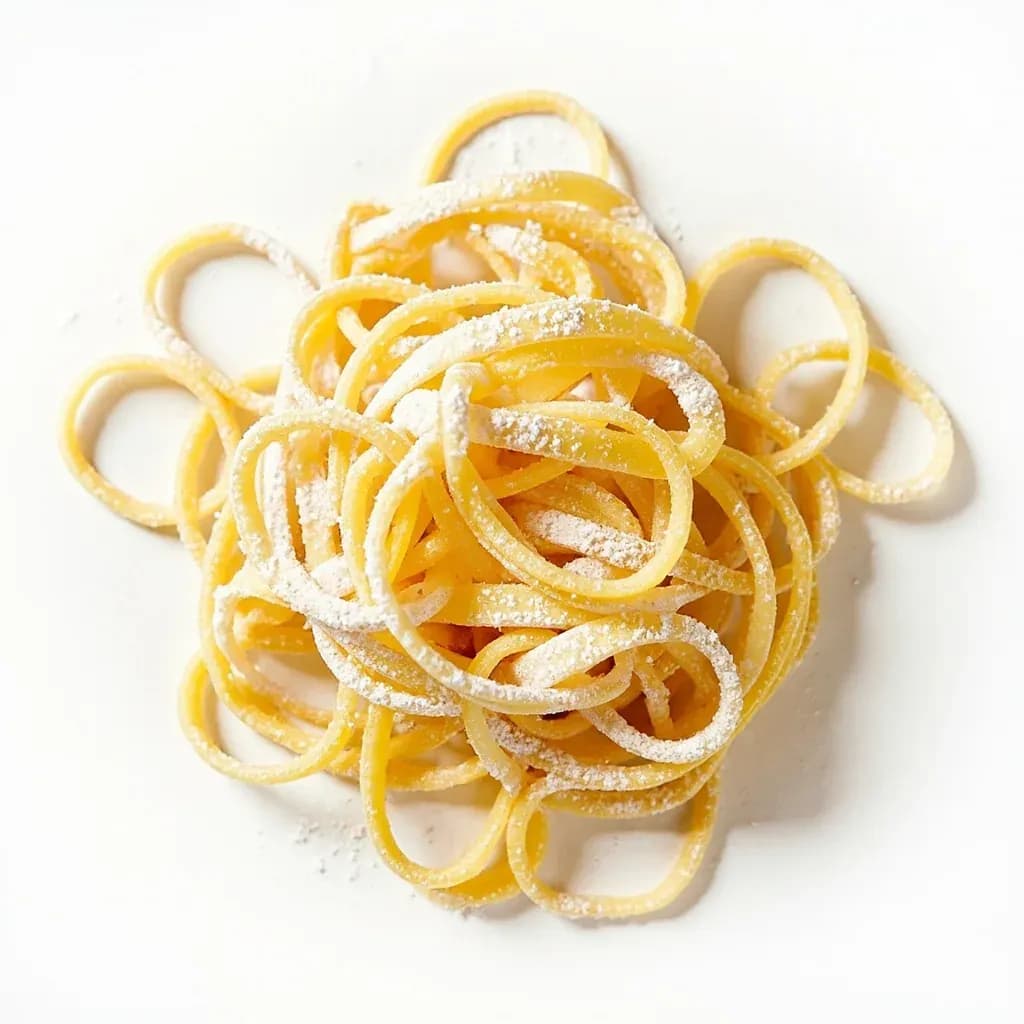
Cutting rolled or extruded dough into uniform noodle strands.
Cutting noodles slices a sheet of rolled dough, or shaves a pressed block, into even strands of the desired width. Consistent width is what makes noodles cook at the same rate and feel right in the mouth, whether wide pappardelle or thin somen. Some traditions fold the dough and cut by hand, others use a rotary cutter or knife-shaving directly into the pot.
Cutting noodles is the bridge between a rested dough and a finished strand of pasta or Chinese-style noodle, and the entire skill lives in uniformity rather than speed. A good cut produces strips of consistent width and thickness so every strand reaches the same moment of doneness in the pot — ragged, uneven strands inevitably leave some mushy and some chalky. The technique covers a wide family of shapes, from delicate 2 mm capellini-style strands to 25 mm pappardelle, and works equally well on rolled sheets, folded dough logs, or hand-stretched ropes.
The choice of blade and the state of the dough do most of the work. A sharp, thin knife or pastry wheel glides through a relaxed, lightly floured sheet with clean edges; a dull or serrated blade tears the gluten strands and leaves fuzzy noodles that clump in the water. Dough temperature matters too: too cold and the sheet shatters, too warm and it smears against the blade. Aim for a cool room-temperature dough, well dusted with semolina or rice flour, and the cut almost takes care of itself.
Most home cooks will use a long knife or chef's blade on a wooden board, a rotary pastry wheel for fast, even strips, or the cutting attachment of a pasta machine for repeatable precision. A chitarra (a wire-strung frame) gives the cleanest square cut for spaghetti-style strands, while a Chinese cleaver is the right tool for firmer, alkaline doughs cut straight from a block.
- Difficulty
- Medium
Types & varieties
Tagliatelle (~8 mm), fettuccine (~6 mm), pappardelle (~20–25 mm), and tagliolini (~3–4 mm), rolled into thin sheets and sliced on a lightly floured board.
Firmer, often alkaline dough flattened to a slab and sliced into 3–5 mm strips; shares its alkaline dough with Shanxi-style knife-shaved noodles (dao xiao mian, 刀削面), which are planed from a block rather than sliced from a sheet.
Medium-firm egg dough rolled to 2–3 mm and cut into 5–10 mm ribbons for stir-fries and broths.
A rope of dough stretched flat by hand, split down the center, and snapped into wide, irregular ribbons before a quick trim to length.
A sheet of dough cut with a fluted or straight pastry wheel, popular for rustic shapes and for folding dumpling wrappers into noodle strips.
A dough sheet pressed through taut wire strings of a chitarra to produce square-edged strands resembling spaghetti.
Yellow enriched dough rolled thin, folded, and cut for soups, stir-fries, and pasta salads.
How to do it
- 1
Mix and rest the dough
Combine flour with the appropriate liquid — eggs and water for Italian pasta, water and sometimes an alkaline agent (kansui or baked soda) for Chinese noodles — and knead 5–10 minutes until smooth and elastic. Wrap tightly in plastic and rest at least 30 minutes at room temperature, or overnight in the refrigerator. Resting relaxes the gluten so the sheet holds its shape when rolled and cut; cutting un-rested dough produces noodles that shrink and curl in the pot.
- 2
Shape the dough for cutting
For long pasta, roll the rested dough into a thin, even sheet 1–2 mm thick on a lightly floured surface, or pass it through a pasta machine from the widest setting down to your target thickness. For Chinese knife-cut style, pat the dough into a thick, flat block about 2–3 cm tall. To cut many strips quickly, fold the sheet loosely into thirds like a letter; a single cut through the layers yields many strips of equal length that open out into long noodles.
- 3
Flour the dough and the blade
Dust the sheet (or top of the block) with semolina, rice flour, or a 50/50 blend of all-purpose flour and cornstarch. Lightly flour the knife, cleaver, pastry wheel, or chitarra wires as well. Semolina's coarse texture grips the dough better than fine all-purpose flour and dramatically reduces sticking.
- 4
Cut even strips
Hold the blade perpendicular to the dough and slice with one smooth forward stroke per cut — never saw. For ribbons, cut parallel strips to the desired width: 2–3 mm for delicate capellini-style, 6–8 mm for everyday fettuccine, 20+ mm for pappardelle. For Chinese knife-cut noodles, brace the dough block with your non-dominant hand curled well back from the blade, and bring the cleaver across the top in quick, even, slightly angled strokes; consistency of stroke is what gives uniform thickness.
- 5
Separate and dust the strands
Immediately toss the cut strips with additional flour or semolina and gently shake to separate them. Even a few minutes of contact without dusting lets residual moisture fuse strands into clumps that will never cook evenly. Spread cut noodles on a floured tray or hang in loose nests while you finish the rest of the batch.
- 6
Use, dry, or store
Cook fresh noodles right away in a large pot of well-salted boiling water — typically 1–4 minutes depending on thickness and whether the noodles contain eggs or alkaline. To store, arrange on a floured rack or hang in nests and air-dry 12–24 hours, then bag and refrigerate up to 2 days or freeze up to 2 months. Fully dried noodles should bend before snapping; chewy flexibility means more drying time is needed.
Why uniformity matters more than the cut itself
The single biggest mistake home cooks make with fresh noodles is cutting at random widths and trusting the boiling water to sort it out. It cannot. Strands of the same sheet that vary from 3 mm to 10 mm will finish cooking 90 seconds apart, and overcooking the wide ones to set the narrow ones turns the dish into glue. Pick a target width, measure the first cut with a ruler or the gap on a pasta machine, and hold to it for the whole sheet. With practice the eye calibrates and the ruler becomes optional, but the discipline does not.
- A ruler or marked pasta-machine setting is the fastest path to consistent cuts.
- Folded-sheet cuts (thirds or accordion folds) multiply efficiency without sacrificing uniformity.
- Even a 1–2 mm difference in width becomes very noticeable once noodles are sauced and plated.
Choosing a blade
The right blade depends on the dough and the shape. Long, thin slicers and pastry wheels produce the cleanest edges on delicate sheets; a heavy chef's knife or Chinese cleaver excels on firmer, thicker doughs and on block-cut styles. A serrated blade should almost never touch fresh noodle dough — the teeth tear the gluten strands and leave ragged edges that absorb too much water. For square spaghetti-style strands, the chitarra's taut wires beat any knife for clean, consistent cuts.
- Long slicing knife or pastry wheel: clean edges on thin egg or semolina sheets.
- Chinese cleaver: best for alkaline doughs cut from a block.
- Chitarra: unmatched for square-cut spaghetti and spaghettini.
- Pasta-machine cutter attachment: the most repeatable option for beginners.
Common uses
Tips & pitfalls
- Rest the dough at least 30 minutes (up to overnight, refrigerated, wrapped) so gluten relaxes and the sheet holds its shape when cut.
- Generously dust the sheet and the blade with semolina or rice flour — coarse semolina prevents sticking far better than all-purpose flour.
- Fold the sheet into thirds like a letter before cutting long noodles; this produces many even strips with fewer strokes and uniform length.
- Use a sharp, thin blade; a heavy chef's knife works, but a long slicing knife or pastry wheel gives cleaner edges with less drag on the dough.
- Cut with a confident, even forward motion — sawing drags the dough and tears the strands.
- Aim for a consistent width: 2–3 mm for delicate noodles, 6–8 mm for everyday strands, 20+ mm for wide ribbons.
- For Chinese knife-cut style, hold the cleaver in the dominant hand and the dough block in the other, slicing across the top in quick, even strokes with the non-dominant hand curled well clear of the blade.
- If strips stick together after cutting, dust again with flour and toss gently to separate before they hit the water.
- Aim for a dough temperature of roughly 18–22 °C / 65–72 °F — too cold and the sheet shatters, too warm and it smears against the blade.
Good to know
- Category
- Knife Skills / Pasta & Noodle Making
- Core motion
- Repeated straight, even strokes with a blade through rolled or folded dough
- Typical dough hydration
- 30–50% (firmer than bread, softer than pie crust)
- Common width range
- 2 mm (capellini-style) to 25 mm (pappardelle)
- Standard thickness before cutting
- 0.5–3 mm sheet, or ~2–4 cm rope or block
- Primary tools
- Chef's knife, Chinese cleaver, pastry wheel, rotary cutter, chitarra, pasta-machine cutter
- Best flouring agents
- Wheat flour, semolina, rice flour, or potato starch; coarse semolina resists sticking best
- Active cutting time
- Roughly 5–15 minutes per batch once dough is rested and rolled
- Yields
- Roughly 100 g of dough produces one generous main-course portion
- Storage window
- Same day fresh; up to 2 days refrigerated; 2–3 months fully dried
- Difficulty
- Beginner to intermediate (knife skills)
Also called
Cutting Noodles · Noodle Cutting
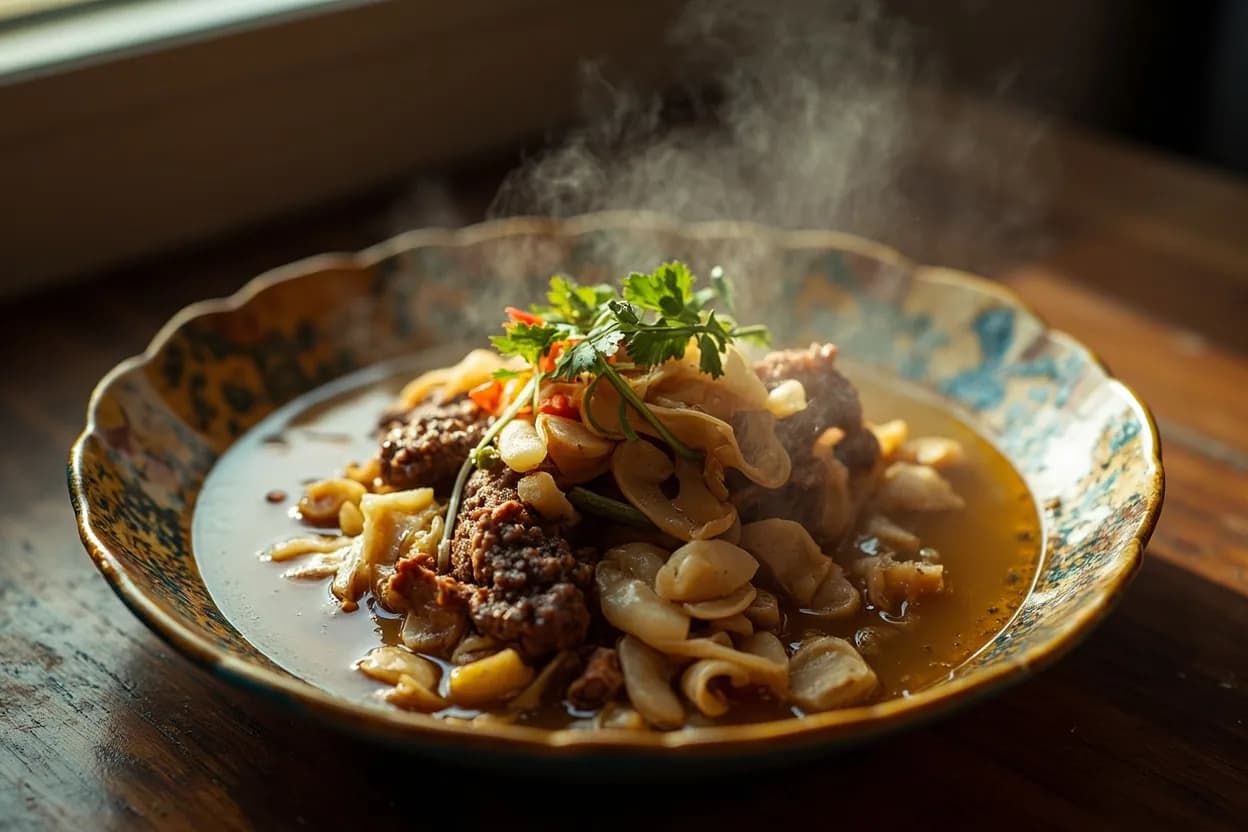
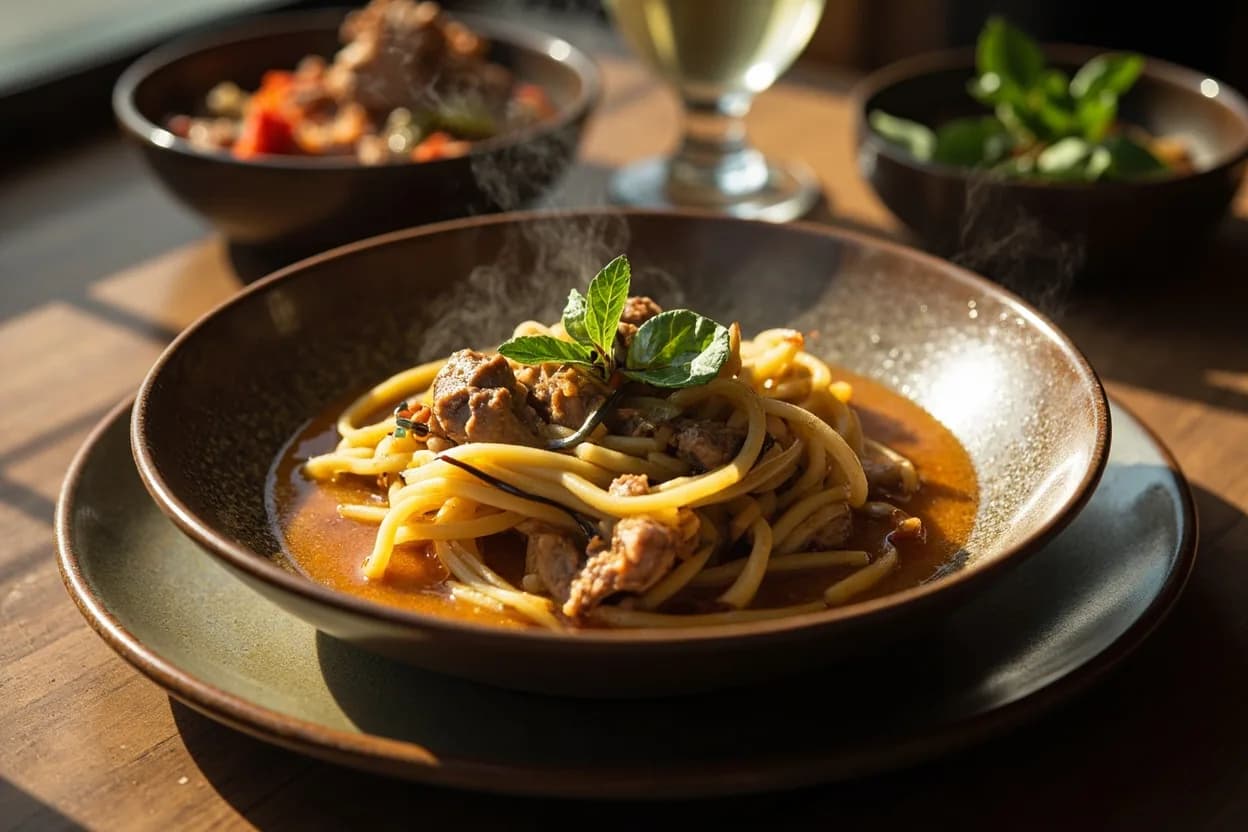
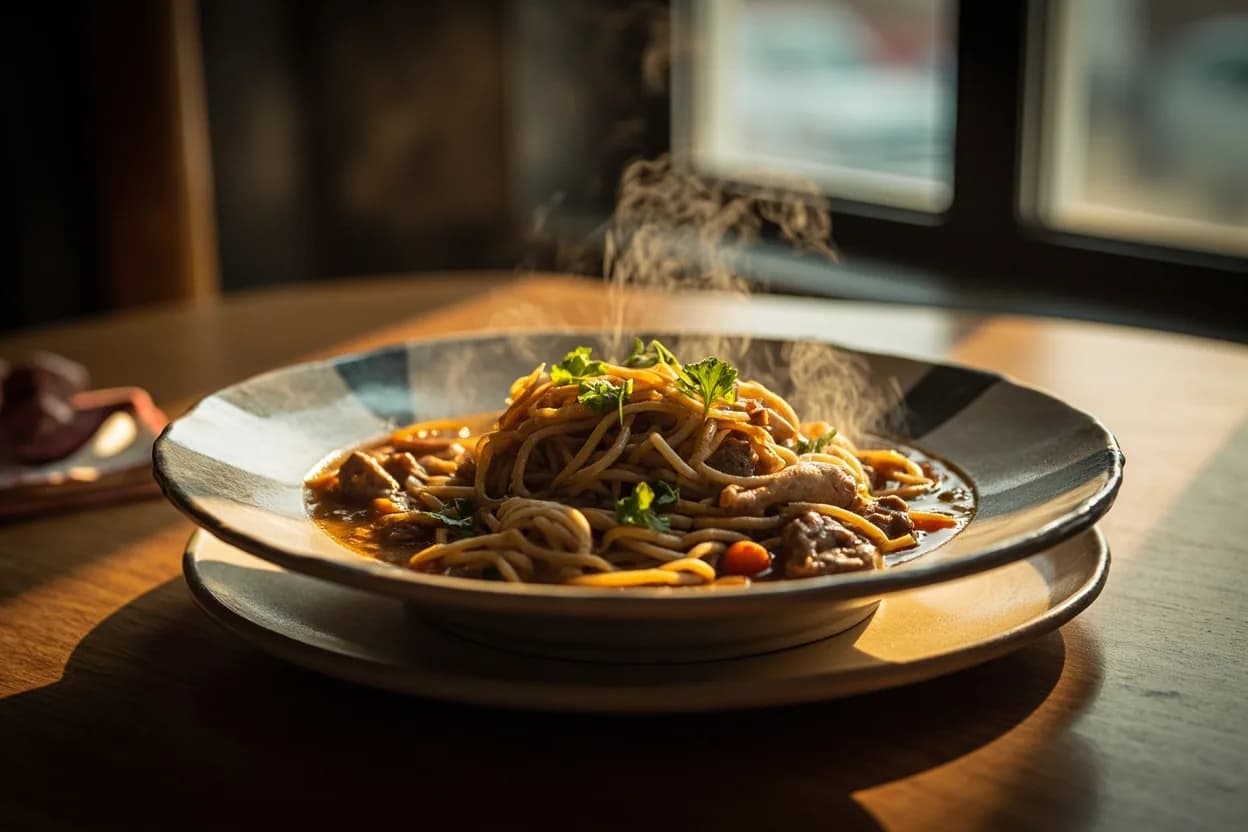
Dishes that rely on it
Related

Chop
Cut into rough, irregular pieces — the everyday workhorse cut

Dice
Cut into uniform cubes for even cooking and a tidy look

Mince
Cut as fine as possible so flavor melts evenly into the dish

Slice
Cut into even, flat pieces for consistent cooking and presentation

Julienne
Cut into thin matchsticks for fast cooking and elegant garnish

Brunoise
Cut into tiny, precise cubes — the finest dice in the kitchen

Chiffonade
Roll and slice leafy greens into delicate ribbons

Batonnet
Cut into tidy sticks, thicker than julienne — think classic fries