Heat & Fire
Smoke Ring Development
Coaxing the pink ring just under the bark of smoked meat through low-temperature wood smoke.
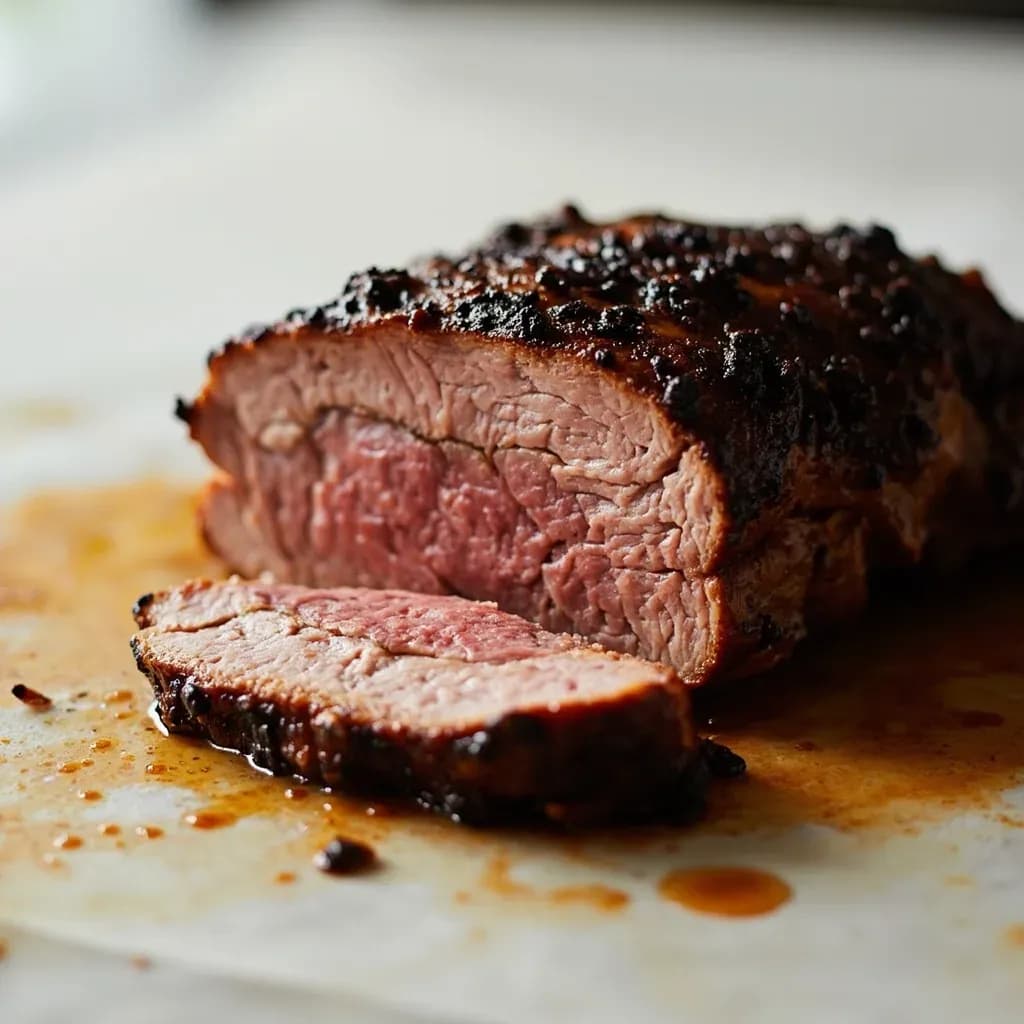
The smoke ring is the prized band of pink just beneath the surface of barbecued meat, formed when nitric oxide from burning wood reacts with the meat's myoglobin and fixes its color before cooking sets it. It develops during slow smoking while the surface is still cool and moist, so cooks keep the meat damp and the smoke clean in the early hours. The ring is purely cosmetic and a sign of proper technique, not extra flavor.
Smoke ring development is the slow, deliberate coaxing of that photogenic pink band — typically 1/8 to 1/2 inch deep — that sits just under the dark bark of properly smoked meat. It forms when nitric oxide (NO) and carbon monoxide (CO) gases from clean wood combustion bind to the myoglobin in raw meat, creating nitrosomyoglobin and carboxymyoglobin, both of which retain a bright pink hue even after cooking. The reaction only happens while the surface meat is still in the 40–140°F window, which is why pit temperature and timing matter so much: get the fire too hot too fast, wrap too early, or flood the chamber with white billowing smoke, and the ring stops forming before it has a chance to deepen.
In American barbecue tradition — Central Texas brisket, Kansas City ribs, Carolina whole hog — the ring has become a cosmetic benchmark of quality and a visual cue that smoke has actually done its work on the meat. Pitmasters chase it for competition points and bragging rights, while smokehouses use it as proof that the cook held steady at low temperature with clean combustion. It is, however, purely cosmetic: the ring contributes no flavor, no tenderness, and no preservation of its own. All of the eating quality lives in the bark, the rub, the rendered fat, and how the meat was rested.
Developing a reliable ring is a discipline of restraint more than equipment. A steady 225°F pit, thin blue smoke from low-resin hardwoods, a low-acid rub, fresh (not previously frozen) meat, and at least two to three hours of unwrapped smoke time before any wrap or spritz — these are the levers that move the ring from a faint blush to a vivid 1/2-inch band. Skip any one of them and you can still eat well, but the cross-section won't tell the story you want it to.
- Difficulty
- Hard
Types & varieties
Uncured ring from clean combustion; paler pink, typically 1/8–1/4 inch deep.
Brisket or sausage rubbed or injected with Prague Powder #1 or celery powder; vivid pink, can reach 1/2 inch or more.
Hours of cold smoke (under 100°F) before the hot cook to deposit maximum NO onto a still-raw surface.
Heavy early spritzing dilutes surface gases and can mute the ring; un-spritzed or late-spritzed surfaces ring better.
Salt–phosphate–water injection (with or without nitrite) carries NO deep into the muscle for ring that penetrates further than surface-only methods.
How to do it
- 1
Select fresh, well-marbled meat
Choose whole primal cuts — packer brisket, bone-in rib rack, whole pork butt — with intact muscle structure. Avoid previously frozen product when possible; ice crystals rupture muscle cells and dull the color the ring depends on.
- 2
Trim and apply a thin binder
Trim hard fat to about 1/4 inch. Coat the surface lightly with water, yellow mustard, or a thin neutral oil so the rub adheres without sealing out smoke gases.
- 3
Season with a low-acid rub
Use a coarse salt-and-pepper base (or your house rub) with little to no added vinegar powder or citric acid. Press the rub in rather than rubbing it, so the surface stays gas-permeable.
- 4
Bring the pit to 225°F with thin blue smoke
Light a small, clean fire of quality lump charcoal or split hardwood. Add two to four fist-sized splits of oak, hickory, pecan, cherry, or apple at a time. The smoke should be almost invisible — you should be able to read through it.
- 5
Smoke uncovered for the first 2–3 hours
Place the meat fat-side up (or oriented toward the heat source for your pit) and leave it alone. Resist any urge to spritz during this window; let NO and CO saturate the still-cool surface.
- 6
Manage bark development
Once the surface dries to a tacky paste — rub darkens, membrane releases cleanly — you may begin light spritzing. Keep pit temperature at 225°F and smoke continuous but light.
- 7
Wrap only after the ring has set
If you wrap in foil or peach butcher paper, wait until the bark is mahogany and the meat has been on for at least 3–4 hours, so the nitrosomyoglobin reaction is locked in. Expect ring depth to plateau once the internal surface hits roughly 140°F.
- 8
Probe and rest
Pull at target internal temperature (203°F brisket, 195–203°F pork shoulder, 195°F ribs). Rest loosely tented for 30–60 minutes so juices redistribute without steaming the ring back to gray.
- 9
Slice perpendicular to the grain
Cut cleanly across the muscle fibers with a sharp slicing knife. A bright, even pink band should be visible just under the dark bark — against-the-grain cuts give the best cross-section for presentation.
Smoke Ring vs. Bark: What You're Actually Looking At
The smoke ring lives just under the bark — it is not the bark itself, and confusing the two is one of the most common beginner mistakes. Bark is the dark, crusty exterior built from rendered fat, dehydrated rub, and a thin polymerized protein layer; the ring is the chemical reaction zone where combustion gases met raw myoglobin before heat denatured it. A slice cut perpendicular to the grain should show three distinct layers: a dark mahogany crust, then a pink-to-red band, then fully cooked interior meat. If you see pink only at the surface or streaking inward, the ring set unevenly — usually a sign of hot spots in the pit, early wrapping, or acidic mop interference.
- Bark = rendered fat + dehydrated rub + thin polymerized protein.
- Ring = gas-bound myoglobin, locked in below ~140°F internal surface temp.
- Both develop in the first hours of the cook and stop once the surface moves past the reaction window.
The Chemistry of Nitric Oxide and Myoglobin
Myoglobin is the iron-bearing protein that gives raw meat its red color and holds oxygen in muscle tissue. When combustion gases — primarily NO, with CO contributing — meet myoglobin on the surface of cold meat, they bind to that iron and lock the molecule into a pink configuration (nitrosomyoglobin, and to a lesser extent carboxymyoglobin) that survives cooking. Heat above about 140°F normally denatures myoglobin and turns it brown-gray, but the NO-bound form resists that denaturation, so the pink persists. This is why a thin, cool, NO-rich smoke stream early in the cook does the real work, and why a roaring, oxygen-starved fire that produces mostly black soot and creosote does not.
- NO is generated when wood burns with limited but sufficient oxygen.
- CO shares the binding site and contributes to color stability.
- Curing salts (sodium nitrite) supply pre-formed NO and bypass the need for combustion-derived gas.
- pH below ~6.0 protonates the myoglobin and blocks NO binding.
How to Maximize Ring Without Curing Salts
Cured competition entries can ring an inch deep, but most home pitmasters and traditional barbecue styles prefer an uncured ring built entirely from clean wood smoke. Three reliable levers: (1) a long cold-smoke phase of one to three hours under 100°F before the hot cook, which loads the surface with NO while myoglobin is fully reactive; (2) a salt–phosphate injection (no nitrite) that carries water deep into the muscle and keeps the interior surface cool and permeable longer; and (3) a celery-powder rub, which contributes natural nitrates that surface bacteria convert to nitrite — a legal "uncured" route used in many natural-meat products. None of these will match a true Prague Powder ring, but they reliably push a natural ring from a faint blush to a confident pink band.
- Cold-smoke 1–3 hours at under 100°F for maximum NO loading.
- Inject with a salt–phosphate–water solution (1.5% salt, 0.5% phosphate) to carry moisture and gas deeper.
- Use celery powder as a natural nitrate source.
- Hold pit at 225°F and resist wrapping for at least 3 hours.
Common uses
Tips & pitfalls
- Hold pit temperature at 225°F; spikes above 275°F shut the ring reaction down before it can build.
- Chase thin blue smoke, not billowing white — a handful of small splits, not a roaring fire, gives the NO-rich combustion the ring needs.
- Use fresh, never-frozen meat when possible; freezing ruptures muscle cells and dulls the color.
- Hold acidic mops early in the cook — vinegar or citrus-heavy spritzes lower surface pH and fade the ring before it locks in.
- Don't wrap in foil or butcher paper until the bark has set and you've banked 2–3 hours of smoke time, or you'll halt the reaction mid-build.
- Cherry and apple wood produce a vivid, photogenic ring; hickory and oak deepen it further with stronger smoke flavor.
- A light coat of yellow mustard or water as a binder helps rub adhere without forming a barrier that blocks gas penetration.
- Slicing perpendicular to the grain reveals the ring most dramatically and is worth doing for presentation even if you plan to chop or pull the meat afterward.
- If you want a deeper ring without going to curing salts, a celery-powder rub, a salt–phosphate injection, or a 1–3 hour cold-smoke phase are the three most reliable paths.
- The ring forms only while the surface is below ~140°F — once the meat stalls or gets wrapped, the remaining cook is just for tenderness, not color.
Good to know
- What it is
- A pinkish-red layer (1/8–1/2 in deep) just beneath the bark, formed by NO and CO gases binding to myoglobin as nitrosomyoglobin and carboxymyoglobin.
- Chemistry window
- The reaction proceeds while surface meat is between roughly 40°F and 140°F; above ~140°F internal surface temp, the color is locked in but stops deepening.
- Optimal pit temperature
- 225°F (107°C); hotter cooks close the window before the ring can build.
- Smoke quality
- Thin blue smoke from clean combustion. Heavy white smoke deposits creosote (bitter, black) and does not improve ring depth.
- Wood choices
- Low-resin hardwoods — oak, hickory, pecan, cherry, apple, maple, alder — produce the clean combustion gases needed.
- pH window
- Favored at pH above ~6.0; acidic rubs or vinegar-heavy mops can suppress the ring.
- Curing salts
- Prague Powder #1 (6.25% sodium nitrite) or celery powder supply pre-formed NO and dramatically deepen the ring.
- Flavor impact
- None — the ring is cosmetic. Flavor and tenderness come from bark, rub, rendered fat, and rest.
Also called
smoke ring · pink smoke ring
Related

Sear
Blast the surface hot for a deep-browned, savory crust

Sauté
Cook quickly in a little fat over lively heat, tossing as you go

Stir-Fry
Toss bite-sized pieces over roaring heat for fast, smoky cooking

Pan-Fry
Crisp food in a shallow layer of hot fat, turning once or twice

Deep-Fry
Submerge in hot oil for an all-over crackling crust

Roast
Cook uncovered in dry oven heat for browned edges and tender centers

Bake
Cook with steady, surrounding oven heat — the soul of bread and pastry

Broil
Hit food from directly above with fierce overhead heat