Heat & Fire
Sofrito / Sofregit Sauté
Slowly frying aromatics into a deep, sweet flavor base for stews and rice.
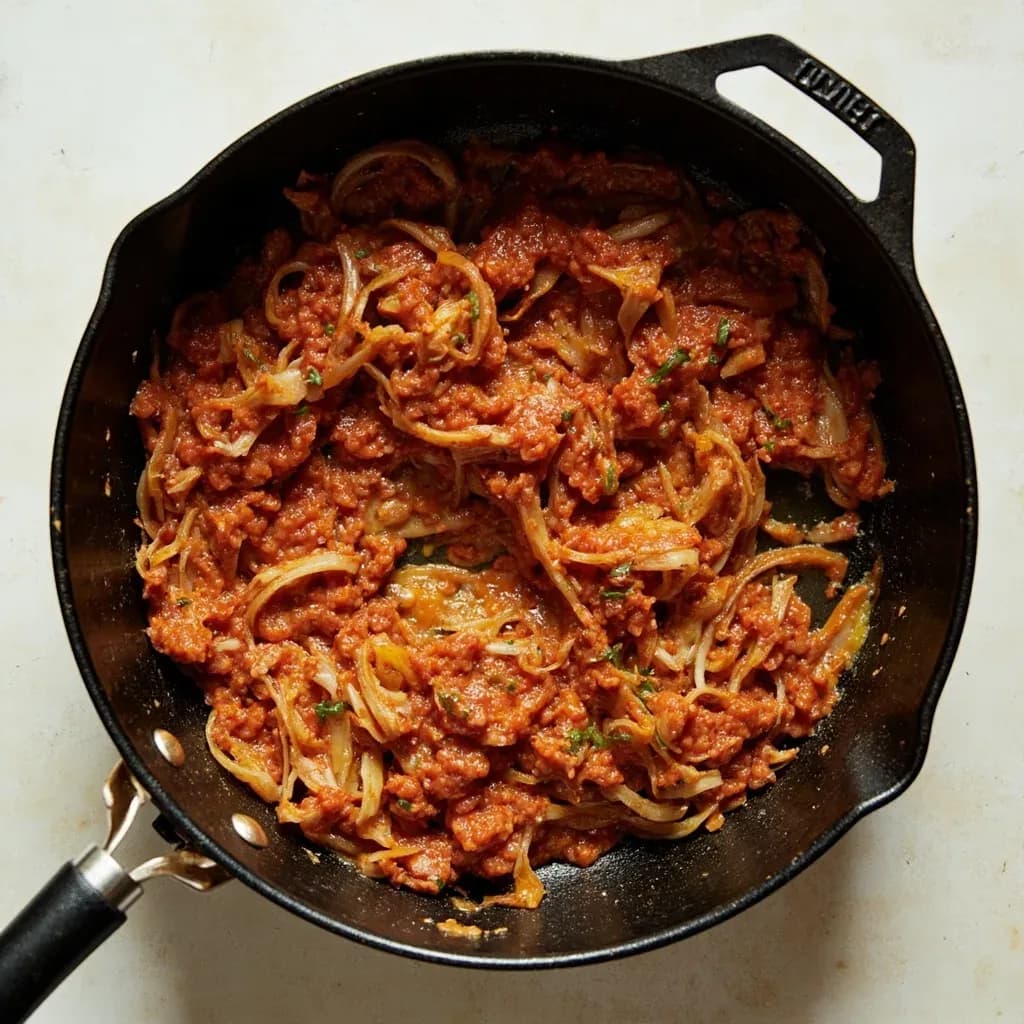
Sofrito sauté slowly cooks onion, garlic, tomato, and peppers in oil until they collapse into a sweet, jammy concentrate that forms the flavor foundation of a dish. The Catalan sofregit and Latin American sofrito are the backbone of paellas, beans, stews, and sauces. Patience is essential: low heat and long cooking drive off water and build caramelized depth without scorching.
Sofrito is a family of slow aromatic bases rather than a single recipe. At its core, finely chopped onion, almost always joined by garlic and frequently by sweet pepper and tomato, is gently fried in fat over low-to-medium heat until raw pungency converts into a sweet, jammy, deeply savory foundation. It is the quiet workhorse behind much of Spanish, Catalan, Italian, Latin American, Caribbean, and Filipino cooking; when you taste a paella, a pot of black beans, a ragù, or a sancocho, what you are really tasting is the sofrito underneath, and the quality of that base sets the ceiling for the whole dish.
What separates a good sofrito from a bad one is time and restraint. The aromatics must collapse slowly enough for their cell walls to break down and their sugars to caramelize without ever scorching, which means a wide pan, enough oil to conduct heat, and the discipline to stay at a low sizzle. Tomato, when used, is added later and cooked until the oil visibly re-emerges at the edges of the pan — a small but unmistakable cue that the acidity has cooked off and the base has unified. Garlic is held back until the onion is translucent because it browns (and turns bitter) far faster than onion does.
Because it is essentially a cooked condiment, sofrito rewards batch cooking. A double batch made on a Sunday fuels weeknight rice, beans, soups, and braises for months from the freezer, losing surprisingly little of its depth. Cooks who treat it as a side task rather than a real step are usually the ones whose finished dishes taste raw or thin.
- Difficulty
- Easy
Types & varieties
Onion, garlic, often tomato, sometimes ñora pepper or a splash of wine; the starting point for samfaina, arròs a la cassola, and escudella.
Onion, garlic, tomato, sometimes pimentón; the flavor base for paella and many Spanish stews.
Green version: cilantro, recao (culantro), ají dulce, onion, garlic, sometimes pepper — no tomato; aromatics are blended raw and briefly fried.
Onion, garlic, bell pepper, cilantro, oregano, ají cubanela, sometimes tomato and vinegar; base for beans, rice, and la bandera.
Onion, garlic, green and red bell pepper, tomato, oregano, bay leaf, cumin; foundation for ropa vieja, arroz con pollo, and frijoles negros.
Onion, carrot, and celery in olive oil, often with pancetta; the mirepoix-style base of ragù, risotto, and minestrone — garlic and tomato are usually added later.
Onion, garlic, sometimes tomato in dendê or olive oil; base for feijoada, moqueca, and bean dishes.
Long-cooked onion, scallion, garlic, tomato, and achiote; thick, almost sauce-like, served over beans and rice or with bandeja paisa.
Garlic, onion, and tomato sautéed in oil; base for afritada, mechado, and many braises.
How to do it
- 1
Gather and prep the aromatics
Finely dice the onion (and any pepper, carrot, or celery the tradition calls for) into a uniform small dice so everything cooks at the same rate. Mince the garlic separately and hold it aside. If using tomato, grate it on a box grater or chop it very finely. Reserve any fresh herbs for the end.
- 2
Heat the fat
Pour a generous film of olive oil — about 4–6 tablespoons per kilogram of aromatics — into a wide heavy skillet over medium-low heat. The oil should shimmer but not smoke, roughly 130–150 °C. Hotter and the sofrito scorches; cooler and the aromatics stew in their own juices.
- 3
Sweat the firm aromatics
Add the onion (and carrot, celery, or pepper if using) with a small pinch of salt. Cook, stirring every minute or two, for 15–20 minutes until the pieces are completely translucent, soft, and just starting to turn golden at the edges. This slow sweat is what builds the sweetness.
- 4
Add the garlic
Stir in the minced garlic and cook 1–2 minutes more, just until fragrant and softened. Garlic should never color; if it starts to brown, pull the pan off the heat — it will turn bitter within seconds and ruin the base.
- 5
Add the tomato if using
Stir in the grated or finely chopped tomato, plus pimentón, ñora paste, or a splash of wine for Spanish and Catalan versions. Cook, stirring frequently, for 8–15 minutes until the mixture darkens, thickens to a jam-like consistency, and the oil visibly separates and pools at the edges of the pan.
- 6
Add herbs and finish
Stir in chopped parsley, oregano, cilantro, or a bay leaf depending on the tradition, and cook 1–2 minutes more to wilt and meld. The finished sofrito should be glossy, cohesive, and richly aromatic — never browned or crisp.
- 7
Use or store
Add the sofrito to your dish as the base layer, or cool it quickly, then refrigerate or freeze. A thin film of oil over the surface in storage prevents oxidation and rancidity.
Reading doneness
Across every regional variant the cues for a finished sofrito are essentially the same, and learning to read them is more useful than any timer. The onion should be fully translucent and beginning to color at the edges, never browned or crisp. If tomato is in the pan, the mixture should have darkened, thickened to a jam-like consistency, and the oil should visibly pool and separate at the edges — the Spanish call this "suelta el aceite," and it is the single most reliable visual signal that acidity has cooked out. Finally, the smell should be unified: if you can still pick out raw onion, raw garlic, or tinny tomato, it is not done. A finished sofrito smells like the dish it is about to become.
- Onion translucent and starting to color — never browned or crisp.
- Tomato cooked until oil re-separates at the edges ("suelta el aceite").
- Aroma unified, with no single raw ingredient jumping out.
- Texture glossy and cohesive, holding together when stirred.
Choosing the fat and the pan
Olive oil is the default across Iberian and most Latin American sofritos, while lard or annatto oil appears in some Caribbean and Brazilian versions. The fat is doing real work — it conducts heat evenly into the aromatics and carries fat-soluble flavor compounds — so use more than you think you need: roughly 4–6 tablespoons per kilogram of aromatics. The pan should be wide and heavy; a deep saucepan traps steam and dilutes the base, while a wide skillet or shallow cazuela gives the moisture somewhere to go and concentrates flavor through evaporation.
- Use enough fat to conduct heat — about 4–6 tablespoons of oil per kilogram of aromatics.
- Choose a wide, heavy pan; a deep saucepan steams rather than fries.
- Aromatics should sit in a thin, even layer with the oil just coating them.
Common uses
Tips & pitfalls
- Cut the onion in a uniform small dice so pieces collapse at the same rate — uneven cuts leave raw bits in the finished base.
- Start onion (and pepper or carrot) cold in the oil so they soften before any browning can occur; this is what builds sweetness without scorching.
- Salt the onions lightly at the start; the salt draws out moisture and slows browning, giving a softer, sweeter result.
- A small pinch of sugar deepens caramelization in slow-cooked versions but is optional.
- Add garlic only after the onion is translucent — garlic scorches and turns bitter well before onion does.
- When using tomato, cook it until the oil visibly re-emerges at the edges of the pan; that "suelta el aceite" moment is the cue that acidity has cooked out and the base is ready.
- Use a wide pan, not a deep saucepan — evaporation concentrates flavor and prevents the aromatics from steaming in their own liquid.
- For green Caribbean versions, pulse aromatics in a food processor but do not purée; a coarse chop fries better and doesn't leach excess water into the pan.
- Make a double batch and freeze in flat bags; it loses little flavor and saves 30+ minutes on weeknight cooking.
- Never rush with high heat — burnt sofrito cannot be rescued, and its bitterness will travel through every spoonful of the finished dish.
Good to know
- Etymology
- From Spanish "sofreír" — to fry gently — with the "-ito" suffix denoting the resulting mixture; the Catalan sofregit (or sofreig) is the same idea under a different name.
- Heat level
- Low to medium-low, roughly 130–150 °C / 265–300 °F in the oil. The surface should shimmer, not sizzle or smoke.
- Time range
- 20–45 minutes depending on quantity and desired depth; rushed sofrito tastes raw and thin.
- Target texture
- Soft and jammy — onion fully translucent and just beginning to color, tomato cooked until the oil re-separates at the edges.
- Yield
- Volume roughly halves: 1 kg of raw aromatics yields about 400–500 g of cooked base.
- Pan
- Wide, heavy-bottomed skillet or cazuela. A wide surface drives off moisture and concentrates flavor; a deep saucepan steams the aromatics.
- Storage
- Refrigerated up to 1 week in a sealed jar with a thin oil cover; frozen in ice-cube trays or flat bags for 3–6 months with little loss of quality.
- Other names
- Soffritto (Italian), refogado (Brazilian/Portuguese), ginisà (Filipino), recaíto (Puerto Rican green version), hogao (Colombian).
Also called
sofrito-saute · making-sofrito · tomato-onion-base · making-base-sauce · sofregit
Dishes that rely on it
Related

Sear
Blast the surface hot for a deep-browned, savory crust

Sauté
Cook quickly in a little fat over lively heat, tossing as you go

Stir-Fry
Toss bite-sized pieces over roaring heat for fast, smoky cooking

Pan-Fry
Crisp food in a shallow layer of hot fat, turning once or twice

Deep-Fry
Submerge in hot oil for an all-over crackling crust

Roast
Cook uncovered in dry oven heat for browned edges and tender centers

Bake
Cook with steady, surrounding oven heat — the soul of bread and pastry

Broil
Hit food from directly above with fierce overhead heat