Transform & Preserve
Steep Timing
Controlling how long an ingredient soaks in liquid to dial in flavor extraction without bitterness.
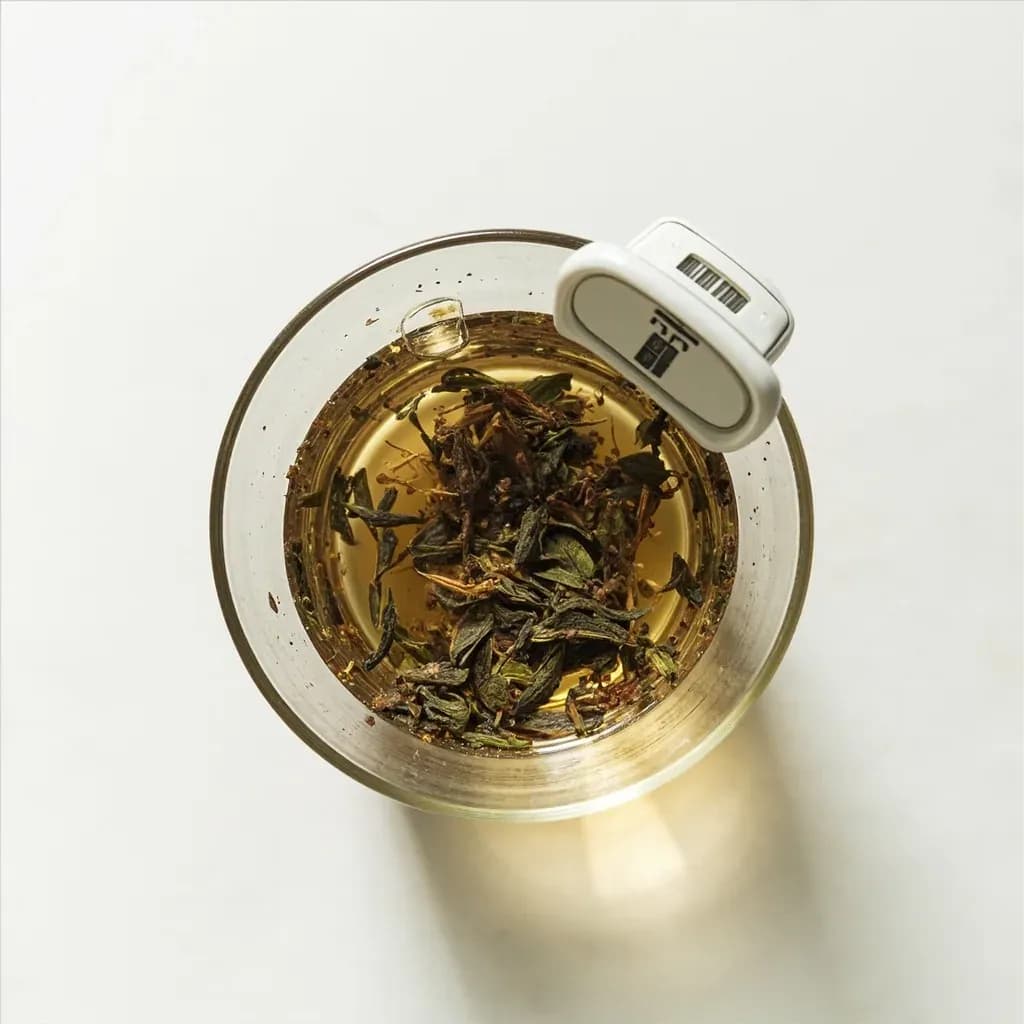
Steep timing is the deliberate control of how long teas, herbs, spices, or aromatics sit in hot or cold liquid before being strained out. Too short and the infusion is weak; too long and it turns bitter or astringent as harsher compounds extract. Cooks and bartenders track steep time precisely to capture the desired balance of flavor, color, and aroma.
Steep timing is the practice of controlling how long an ingredient rests in a liquid so that the compounds you want arrive in balance before the compounds you don't. Every infusion — tea, broth, vanilla extract, cold brew, infused oil — runs on the same four levers: time, temperature, particle size, and the ratio of ingredient to liquid. Change any one of them and the others must be adjusted to hit the same target flavor. What makes timing uniquely important is that extraction is non-linear: pleasant sugars, acids, and volatile aromatics dissolve quickly, but tannins, alkaloids, and bitter polyphenols only emerge late, then arrive in a rush. A few extra minutes can swing a cup of tea from honeyed to bracing, or a pot of chai from fragrant to medicinal.
The good news is that the variable most under a cook's control is also the cheapest. You can change steep time without buying new equipment, swapping ingredients, or altering the dish — just set a timer and strain at the moment the liquid peaks. Learning the timing curves for the ingredients you cook with most is one of the highest-return skills in the kitchen, because it works across tea, coffee, stocks, braises, desserts, and bar work. The cooks who get it right aren't following recipes more carefully; they're tasting at checkpoints and learning where each ingredient crosses from balanced to harsh.
The plant-part rule is a useful starting point: leaves and flowers steep shortest because they release flavor fast and turn bitter fast; seeds and bark need more time to surrender their oils and resins; roots and woody pieces need the longest contact to soften cell walls and pull out deep, earthy notes. Temperature scales the whole process — roughly doubling extraction speed for every 18°F (10°C) rise — and particle size does the same, with broken or ground material extracting two to five times faster than whole. Once you internalize those relationships, timing becomes a feel rather than a fixed number.
- Difficulty
- Easy
Types & varieties
Under 1 minute; espresso pulls, whisked matcha, brief herbal tisanes.
1–5 minutes; green, white, and most black teas, fresh herbs in hot liquid, saffron blooming.
10–30 minutes; dried mushrooms for stock, whole spices in broth, vanilla bean in warm cream.
1–4 hours; stocks, court bouillon, brothy braises, milk infusions for desserts.
8–12 hours at room temperature or chilled; cold brew coffee, infused oils, flavored syrups, oats, beans, dried fruit in liquor.
24–72 hours; cold brew concentrates, lacto-fermentation starters, drinking vinegars (shrubs).
1–6 weeks; flavored vinegars, tinctures, limoncello, homemade vanilla extract, slow oil infusions.
Ingredient steeped directly on ice or in chilled water; gentler extraction prized for delicate floral teas, including cold-water adaptations of oolongs like shui xian.
How to do it
- 1
Identify the ingredient and target compounds
Decide whether you want light aromatics, deep flavor, color, or full extraction. Delicate leaves need short contact; woody roots and seeds need long soaks. This choice sets the rest of the timing and the temperature that goes with it.
- 2
Choose and prepare the liquid
Heat, cool, or leave the liquid at room temperature based on the ingredient. Filtered water tastes cleaner and extracts predictably. Milk and cream carry fat-soluble flavor (cinnamon, vanilla, tea polyphenols) and need slightly longer contact than water to release the same intensity.
- 3
Set the ratio and adjust particle size
Measure ingredient to liquid by weight for repeatability. Whole leaves and sticks buffer extraction; cracked, torn, or ground material extracts 2–5× faster, so cut steep time accordingly. If a recipe calls for whole and you're in a hurry, split the difference with a coarse crush rather than a fine grind.
- 4
Combine and start the clock
Pour liquid over the ingredient (or vice versa for delicate teas and small leaves), cover the vessel, and start a timer the moment they meet. A lid traps volatile aromatics that would otherwise escape and holds the liquid at temperature.
- 5
Hold the target temperature
For hot steeps, insulate the vessel with a towel or set it over gentle heat to prevent the liquid dropping below the target range. For cold steeps longer than four hours, refrigerate after the first 30 minutes to keep the liquid clear and safe.
- 6
Taste or smell at checkpoints
Sample at the low end of the expected range, then again near the high end. Note when color deepens, aroma peaks, and tannic grip appears — these are your signs that the steep is approaching its end. The first steep of a new ingredient teaches you more than any chart.
- 7
Strain promptly at peak
Pour through a fine strainer, cheesecloth-lined sieve, or remove the sachet at the exact target time. Residual heat in the liquid and the ingredient continues to extract, so don't let it sit; a delayed strain of even 30 seconds matters in a delicate steep.
- 8
Cool and store or use immediately
Use the infused liquid fresh, or cool it quickly to halt further extraction. Refrigerate infusions in a sealed container; most keep 5–7 days, while vinegar- and alcohol-based ones last months because the liquid itself is the preservative.
The four levers of extraction
Every steep is governed by the same four variables, and changing one requires rebalancing the others. Understanding how they interact is what turns timing from guesswork into a controllable technique.
- Time: the most flexible lever; a few minutes up or down often moves a steep from flat to balanced to bitter.
- Temperature: the accelerant; hotter liquid extracts faster, so hot steeps must be shorter, cold steeps much longer.
- Particle size: more surface area means faster extraction; cracked, torn, or ground material needs steep time cut, often by half or more.
- Ratio: more ingredient per cup of liquid means quicker saturation; dense brews hit peak fast and turn harsh faster.
Reading the steep
You can predict when an ingredient is done by watching the liquid, not just the clock. A few sensory cues reliably signal the move from balanced to over-extracted.
- Color: the liquid should reach a hue that looks like the finished product — pale gold for green tea, deep ruby for black, opaque tan for cold brew.
- Aroma: the first bright, volatile notes peak early; when the smell turns heavy, flat, or slightly dusty, the steep is ending.
- Taste: pleasant bitterness arrives before harsh bitterness; the moment the back of the tongue grips or the finish turns dry, pull it.
- Texture: in milk and cream infusions, a silky mouthfeel precedes graininess — strain just as the surface looks fully colored.
Common uses
Tips & pitfalls
- Always set a timer; extraction is non-linear and bitter compounds arrive sharply once they start — 'I'll just watch it' is how most over-steeps happen.
- Match water temperature to the ingredient: boiling water on green tea leaves or finely ground coffee extracts bitterness in under a minute; let the kettle cool to the right range first.
- Strain at the steep time, don't let the ingredient sit in the liquid; carryover heat keeps working even after the timer goes off.
- Err on the short side with cloves, star anise, and cassia — their eugenol and cinnamaldehyde turn medicinal fast, so taste at half the suggested time and keep going.
- Coarse grinds and whole leaves buffer themselves; fine grinds and fannings over-extract in roughly half the listed time, so cut steep time or lower the temperature.
- For cold brew, longer is not always better — 18–24 hours is the sweet spot before woodiness and dull acidity creep back in.
- Tasting in 30-second increments the first time you steep something new teaches the curve faster than any chart and builds the instinct you can't get from recipes.
- Acidic liquids (vinegar, citrus juice) extract faster and turn bitter sooner; halve the steep time you would use with water or milk.
Good to know
- Definition
- The controlled duration an ingredient rests in liquid to extract flavor, color, or aroma before compounds tip from pleasant to bitter, harsh, or muddy.
- Typical range
- 30 seconds (delicate green tea) to 4–6 weeks (vinegars, tinctures, and infused spirits).
- Key variables
- Time, liquid temperature, particle size, and the ratio of ingredient to liquid.
- Extraction curve
- First sugars, acids, and light aromatics dissolve; deeper flavors follow; tannins, alkaloids, and bitter polyphenols arrive last and arrive suddenly.
- Temperature effect
- Roughly doubles extraction speed for every 10°C (18°F) rise; boiling water pulls 3–4× faster than 80°C (176°F).
- Surface area effect
- Broken, cracked, or ground material extracts 2–5× faster than whole.
- Plant-part rule
- Leaves and flowers steep shortest; seeds and bark medium; roots and woody material longest.
- Common failure
- Over-steeping tannins and catechins from tea, cloves, cinnamon, and over-ground coffee, producing bitterness and astringency.
Also called
Steep Timing · Infusion Timing
Related

Confit
Cook slowly submerged in fat for silky tenderness and keeping

Cure
Draw out moisture with salt and time to preserve and concentrate

Pickle
Steep in acidic brine for bright, tangy, crunchy preservation

Ferment
Let friendly microbes transform food into tangy, complex flavor

Marinate
Soak in a seasoned mix to flavor and tenderize before cooking

Brine
Soak in salt water so meat stays juicy and seasoned throughout

Dehydrate
Slowly dry out moisture to concentrate flavor and extend shelf life

Cold-Smoke
Perfume cured food with smoke without cooking it through