Prep & Assembly
Trussing
Tying meat or poultry with twine into a compact shape so it cooks evenly and stays neat.
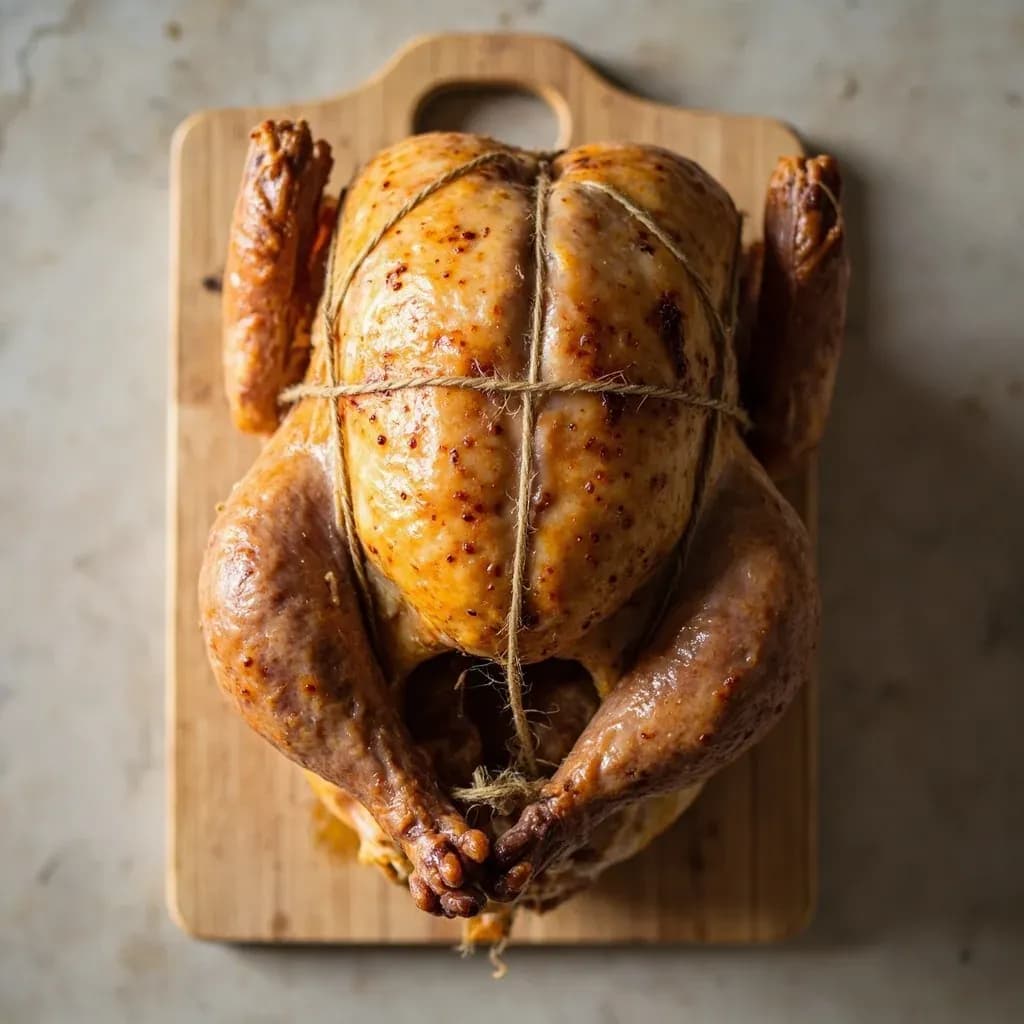
Trussing binds a roast or whole bird with kitchen twine, tucking in the wings and legs so the piece holds a tight, uniform shape during cooking. The compact form promotes even cooking, prevents thin extremities from overcooking, and gives a tidy presentation. For poultry it also keeps any stuffing in place and helps the breast stay juicy.
Trussing is the kitchen skill of binding meat, poultry, or fish into a compact, even shape with loops of twine before cooking. The word comes from the Old French trousser, "to pack or bundle" — the classical French term is brider — and the technique is one of the oldest in the garde-manger repertoire, recorded in the work of Carême and Escoffier and still standard in professional roasteries.
The practical payoffs are three: even cooking, because a tight, regular shape exposes the thickest parts of the bird to heat at a more uniform rate than a floppy carcass; tidy presentation, since a trussed roast holds the silhouette shown in the cookbook rather than collapsing on the platter; and structural containment, which keeps a stuffing inside a cavity, a butterflied roll, or a re-formed boned roast (ballotine or galantine) from escaping into the pan juices.
Trussing is done with undyed 100% cotton butcher's twine — the only material that belongs in a roasting pan. Plain cotton tolerates normal oven temperatures; synthetic or dyed string can scorch, melt, or leach. Modern cooks sometimes skip the full classical method in favor of minimal trussing (legs only) to let hot air reach the breast and wings for crispier skin, a real and worth-knowing trade-off rather than a fad.
- Difficulty
- Medium
Types & varieties
Drumsticks drawn tight to the body and wings tucked behind the back; the compact, uniform shape used for stuffed whole birds and galantines.
Only the drumsticks are tied together at the ankles; wings left free so hot air reaches the breast and wings for crispier skin. Advocated by many modern chefs.
Loops of twine at 2.5–5 cm (1–2 in) intervals along a butterflied, stuffed, and rolled roast — beef tenderloin, pork loin, porchetta, leg or saddle of lamb.
Boned and stuffed meat (usually poultry, veal, or pork) re-formed into its original shape and tied or netted so the forcemeat stays enclosed during poaching or roasting.
Pre-made cotton or elastic netting stretched over a roast or ballotine — a hand-tying shortcut long standard in classical garde-manger.
Thin escalope of veal, pork, or fish rolled around a stuffing and tied at both ends (or at intervals) with fine twine, then braised or pan-finished.
How to do it
- 1
Prepare the bird and the twine
Pat the bird thoroughly dry inside and out, season the cavity, and (if stuffing) fill the cavity loosely — never packed tight, or it will expand and slow the cooking. Cut about 90 cm (3 ft) of cotton butcher's twine for a chicken; more for a turkey or capon. Have kitchen shears and, for larger birds, a long trussing needle to hand.
- 2
Tuck the wings first
Fold each wing tip behind the back so the wing joint locks flat against the shoulder. This stops the thin tips from burning against the pan and pulls the shoulder meat flush against the breast for a smooth profile.
- 3
Anchor the twine under the tail
Slip the centre of the twine under the parson's nose (the tail) of the bird so both ends point forward toward the drumsticks.
- 4
Loop around the drumsticks
Bring each end of the twine down the outside of the nearest drumstick, then cross the ends over the top of the legs so they form a clean X just above the tail.
- 5
Pull snug and knot
Draw the twine taut so the drumsticks sit high and tight against the body, then finish with a firm double knot over the tail. The breast should look plump and rounded, not pinched — compact, not compressed, so heat can still reach the thickest part.
- 6
Truss a rolled roast
Butterfly or roll the meat into a tight, even cylinder with the stuffing inside. Cut 4–6 lengths of twine, each roughly 25 cm longer than the roast. Slip each loop under the roast, bring the ends up the top, and tie a surgeon's knot (or a secure bow) at 3–5 cm intervals so the roast is bound firmly along its length.
- 7
Rest and remove
After roasting, lift the bird or roast and snip the twine with kitchen shears before carving. For a stuffed breast or galantine served whole, leave one neat loop of twine on top and tell diners it is a handle, not food.
The trussing debate: tight versus open
Classical training teaches the full brider — drumsticks to the body, wings behind the back — and it remains the right choice when you are cooking a stuffed bird, a ballotine, or anything that must hold a defined silhouette. The case against heavy trussing is most strongly made for roast chicken, where the goal is often crackly skin and a fully cooked breast before the legs dry out. Tying the legs only and leaving the breast and wings exposed lets the oven's hot air circulate over the largest surface area, and the improvement in browning is noticeable in most home ovens. The practical answer is to learn the full classical method first, then loosen it where your bird and your result call for it.
- Tie tight when shape, stuffing retention, or even cooking of a boned-and-rolled roast is the priority.
- Tie loose (legs only) when crisp skin and fast breast browning are the priority, as with a simple roast chicken.
- Wing tips should always be tucked behind the back, even in minimal trussing — left loose they scorch against the pan and break the breast line.
Common uses
Tips & pitfalls
- Use only undyed 100% cotton butcher's twine — never synthetic, jute baling twine, or dyed string, which can melt, smoke, or leach chemicals at oven heat.
- Don't pull so tight that the bird looks strangled; the goal is compact, not compressed, so heat can still penetrate to the thickest part of the breast.
- For crispier skin on roast chicken, try minimal trussing (legs only) — leaving the breast and wings exposed to moving air noticeably improves browning.
- Always tuck the wing tips behind the back of a bird; left loose they scorch against the pan and break the shape of the breast.
- Tie with a series of half-hitches or surgeon's knots rather than granny knots — they hold under hours of oven heat and the weight of a heavy bird.
- For a large turkey or capon, use a long trussing needle to anchor the twine under the breastbone or along the back; the finished shape is far neater than finger-tying alone.
- Cut the working end of the twine on a sharp diagonal — the pointed tip threads easily between skin and flesh.
- Remove every piece of twine before carving or plating, and warn guests if any must stay on (stuffed breast, galantine) so no one bites into it.
- If you tie a rolled roast before seasoning, salt the inside of the meat before you roll; salt rubbed on the outside cannot penetrate a tight bundle.
- On long roasts (turkey over 3 hours, porchetta over 2 hours), glance at the twine halfway through — dry heat can fray cotton and loosen knots.
- Wrap a small piece of twine in foil before tying if you want a built-in pull-tab for easy removal after roasting.
Good to know
- Etymology
- From Old French trousser, "to pack or bundle"; the classical French term is brider.
- Twine material
- Undyed, food-safe 100% cotton butcher's twine (also called kitchen twine).
- Length per bird
- Roughly 90–120 cm (3–4 ft) for a chicken; proportionally longer for turkey, goose, or capon.
- Skill level
- Beginner to intermediate; a single bird takes 2–5 minutes once practiced.
- Heat tolerance
- Plain cotton twine is oven-safe to normal roasting temperatures; never substitute dyed or synthetic string, which can scorch, melt, or leach.
- Core purpose
- Even cooking, neat presentation, and containment of stuffing or rolled shape.
- Origin / tradition
- A classical butchery and garde-manger technique documented in French cuisine from at least the 19th century (Carême, Escoffier) and standard in professional roasteries for whole birds and galantines.
Also called
Tying a Roast · Trussing
Dishes that rely on it
Related

Whisk
Beat ingredients smooth and aerated with a looping wire motion

Sift
Pass dry ingredients through mesh to aerate and remove lumps

Strain
Pour through mesh to separate solids from liquid for a smooth result

Filter
Pass liquid through fine material to clarify out the smallest particles

Rice
Press cooked potatoes through small holes for fluffy, lump-free texture

Mash
Crush soft cooked food into a rustic, creamy purée

Grind
Crush food into a coarse to fine texture, from spices to meat

Grate
Shred food into fine bits against a sharp-toothed surface